Soap Making Safety (How to Handle Lye)
The gear, habits and first aid that make working with lye routine.
On this page
Soap making safety comes down to one ingredient. Lye (sodium hydroxide) burns skin and eyes. That’s the whole risk, and five habits handle almost all of it.
The five habits
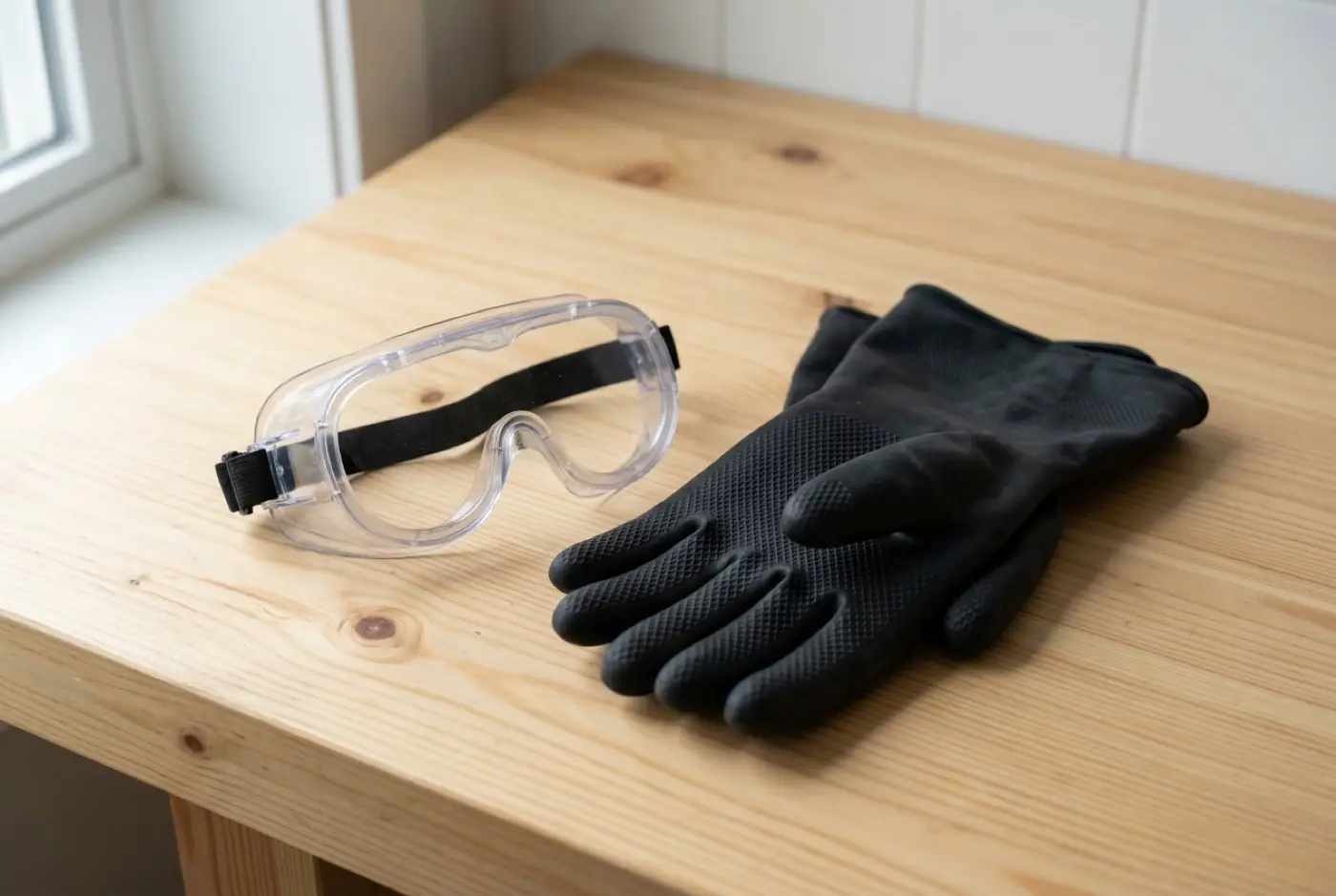
- Goggles and gloves, every time. Splash goggles, not glasses. Nitrile gloves.
- Lye into water, never water into lye. Pouring water onto lye can make it boil up violently.
- Ventilate. Mix the lye solution near an open window or under a fan, and don’t breathe the steam.
- Label and store lye out of reach. In its original container, high up, away from kids and pets.
- Treat raw batter as caustic. It stays harsh until it saponifies, so keep gloves on until cleanup.
First aid
FAQ
Should I neutralize lye on skin with vinegar?
No. Rinse with plenty of running water for at least 15 minutes. Vinegar can make a burn worse by adding heat from the reaction.
Is finished soap safe if it was made with lye?
Yes. In properly made, cured soap, the lye has reacted with the oils. None is left in the bar.
What containers are safe for lye?
Stainless steel, or heat-safe polypropylene plastic (recycling #5). Never aluminum, which reacts with lye.
Comments
No comments yet. Made this recipe? Be the first to say how it went.