Your First Batch of Soap, Step by Step
One forgiving recipe, a shopping list, and every step from gearing up to cutting your first bar.
On this page
Your first batch of soap should be boring: a forgiving recipe, room-temperature ingredients, no fragrance, no color. That’s how you learn what trace looks like without fighting the batter. Plan about an hour, then four to six weeks of waiting. If soap making is completely new, read soap making 101 first, and keep the glossary open for unfamiliar terms.
What you’ll need
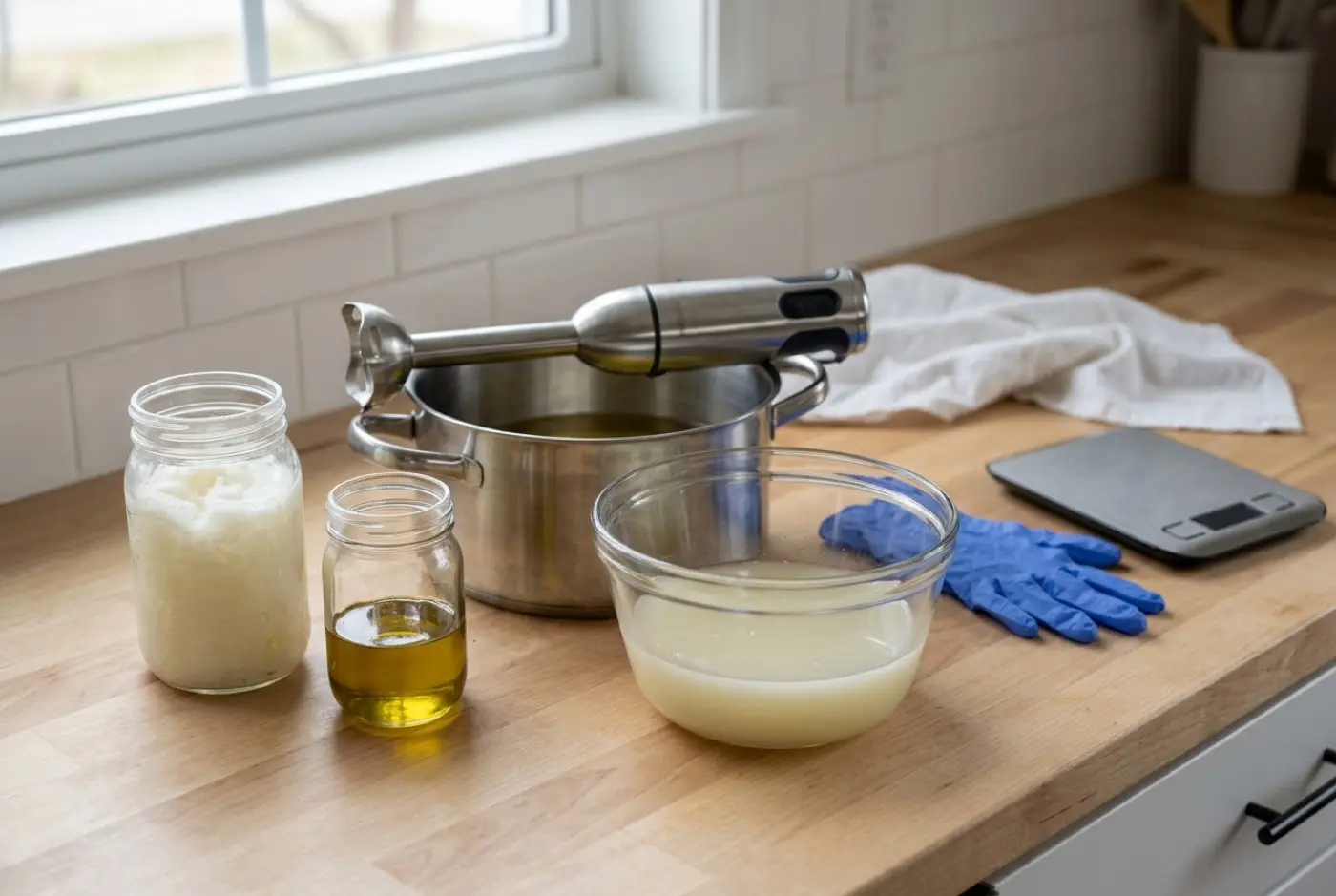
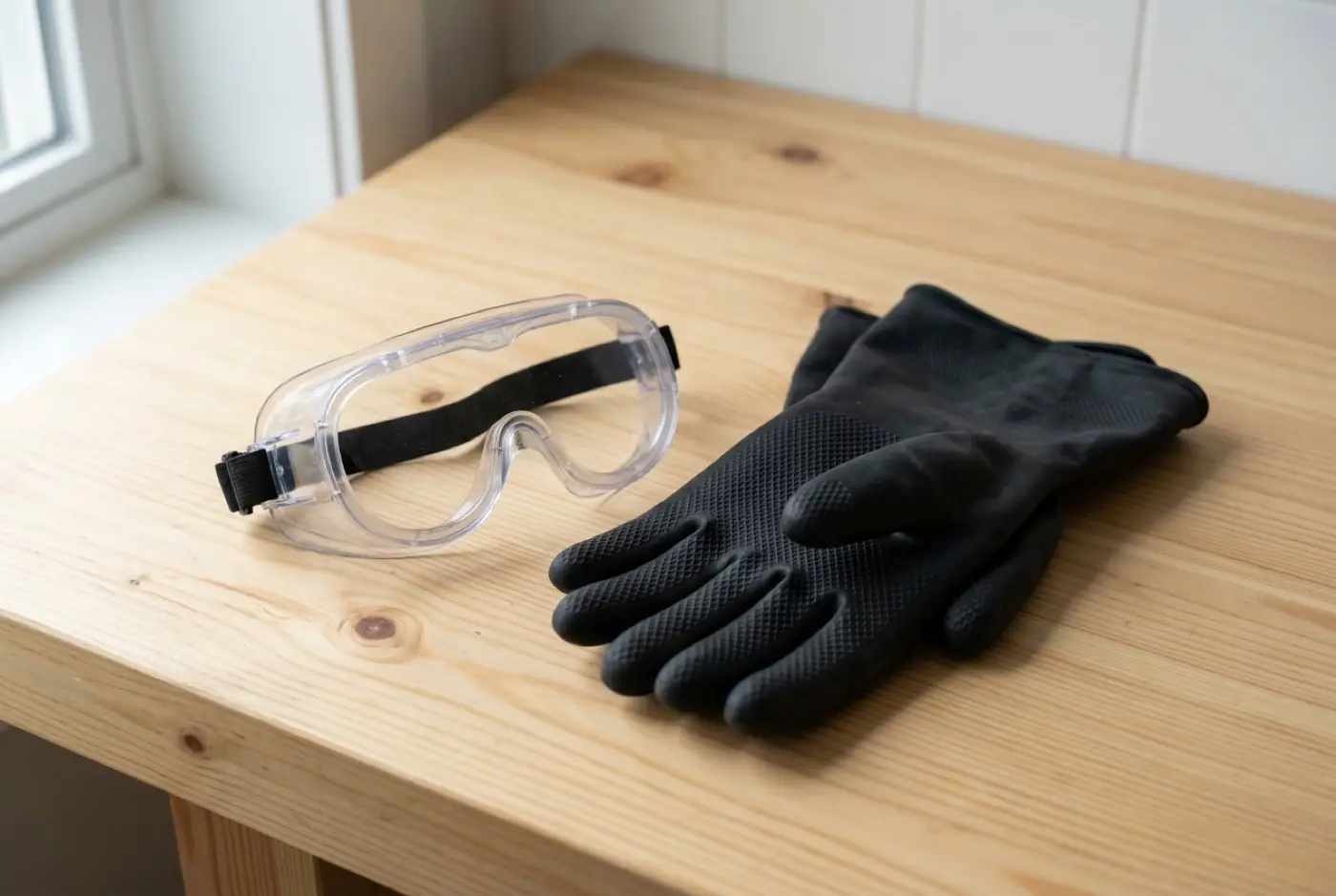
Everything is on our printable beginner checklist. The short version: goggles, gloves, a digital scale, a stick blender, a heat-safe pitcher, a mold, and the ingredients for a simple three-oil recipe like our beginner soap.
The process
Gear up. Goggles, gloves, long sleeves. Kids and pets out of the room.
Weigh everything first. Lye, water and oils into separate, labeled containers. Weigh in grams.
Make the lye solution. In a ventilated spot, sprinkle the lye into the water, never the reverse, and stir until clear. It gets hot fast and gives off fumes for a minute; don’t lean over it.
Blend to trace. When both are around 100°F (38°C), pour the lye solution into the oils. Stick blend in short bursts until the batter thickens and a drizzle leaves a faint trail. That’s trace.
Pour, cover, wait. Pour into the mold, cover it, and leave it alone for a day or two.
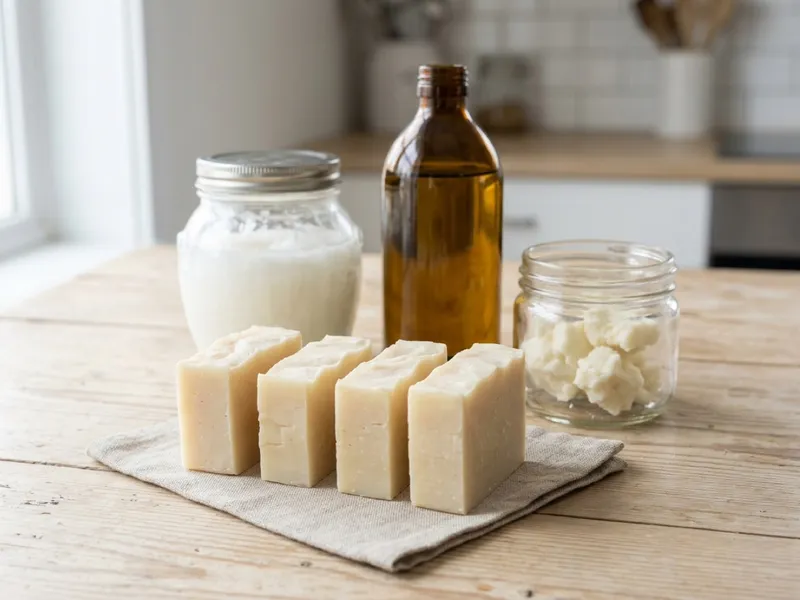
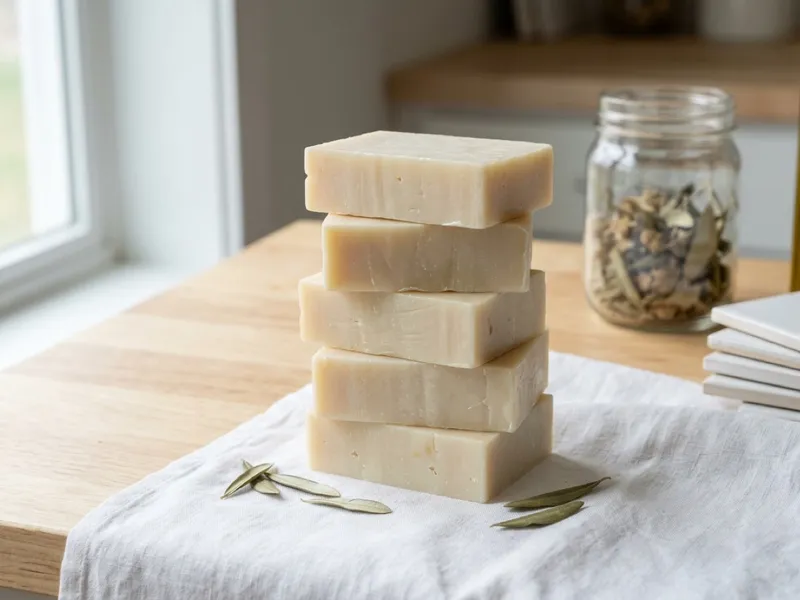
Cut and cure. Unmold, cut into bars, and let them cure on a rack for four to six weeks.
Cleaning up
Raw batter is still caustic. Wipe out bowls with paper towels, leave tools to sit for a day (the residue turns into soap), then wash them as normal.
FAQ
Is making soap with lye dangerous?
Lye can burn skin and eyes, so it needs care, the same way a hot oven does. With goggles, gloves and the rule "lye into water", home soap making is routine.
Do I need special equipment?
A digital scale, a stick blender, a heat-safe plastic or stainless pitcher, and a mold. Our beginner checklist covers the rest.
When can I use my soap?
After 4–6 weeks of curing. It's safe sooner, but much milder and longer lasting once cured.
Comments
No comments yet. Made this recipe? Be the first to say how it went.