How to Store Handmade Soap So It Lasts
Store cured handmade soap somewhere cool, dry and dark, with some airflow, in breathable boxes rather than sealed plastic. Here's how to set up storage, separate scents, control humidity, and keep bars in use from turning to mush.
On this page
To store handmade soap so it lasts, keep cured bars somewhere cool, dry and dark, with some airflow, in breathable containers like cardboard boxes or paper-lined drawers rather than sealed plastic. Separate strongly scented batches, label everything with the make date, and use the oldest bars first. Stored this way, most cold process bars stay in good shape for a year or more, though scent and color fade sooner.
Storage is about slowing down three things: moisture getting back in, oils oxidizing, and scent escaping.
What good soap storage looks like
| Factor | Aim for | Avoid |
|---|---|---|
| Temperature | A cool, stable room, around normal indoor temperatures or a little below | Attics, garages that bake in summer, shelves near radiators or stoves |
| Humidity | A dry room; if things in it feel damp, it’s too humid | Bathrooms, laundry rooms, damp basements |
| Light | Dark, or at least out of direct sun | Sunny windowsills, bright shelves |
| Airflow | Some air moving around the containers | Sealed plastic tubs packed tight |
| Contact | Cardboard, paper, wood, coated shelving | Bare metal that can rust or mark bars |
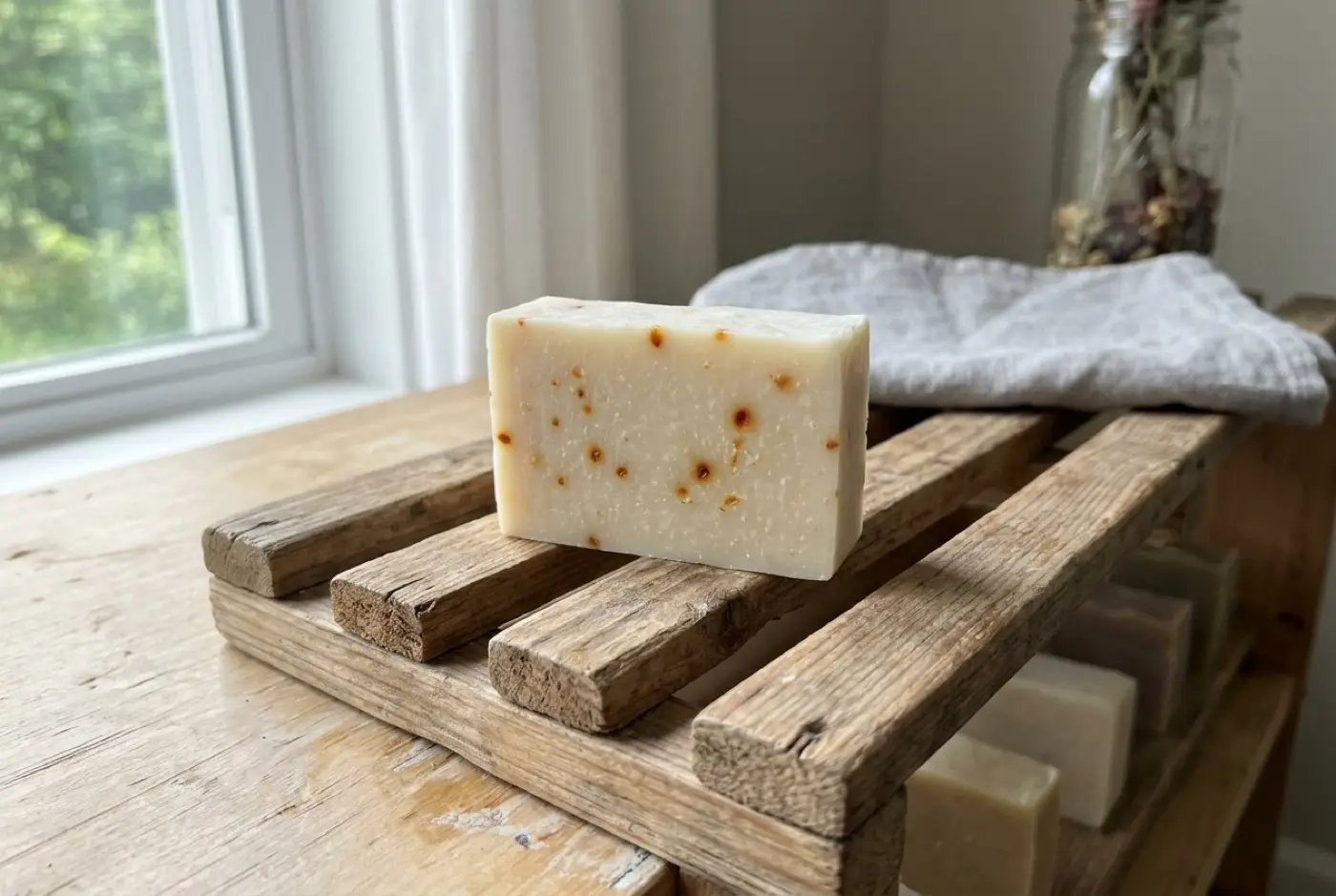
Light fades many colorants and some essential oils, and sun-warmed bars can sweat. Heat speeds up the oxidation of oils, which is one of the main factors behind dreaded orange spots. Humidity brings moisture back to the surface of bars, because glycerin in handmade soap draws water from the air.
If you’re not sure how damp your storage room is, an inexpensive hygrometer will tell you. If readings stay high for weeks at a time, a dehumidifier in the room or a move to a drier space is worth it.
Containers that work
- Cardboard boxes. The default for good reason. Cardboard breathes, blocks light and absorbs a little moisture. Shoe boxes and shipping boxes both work; leave the lid slightly ajar in humid seasons.
- Paper-lined drawers or shelves. Good for a small stash. Line with plain paper to keep bars off bare wood or metal.
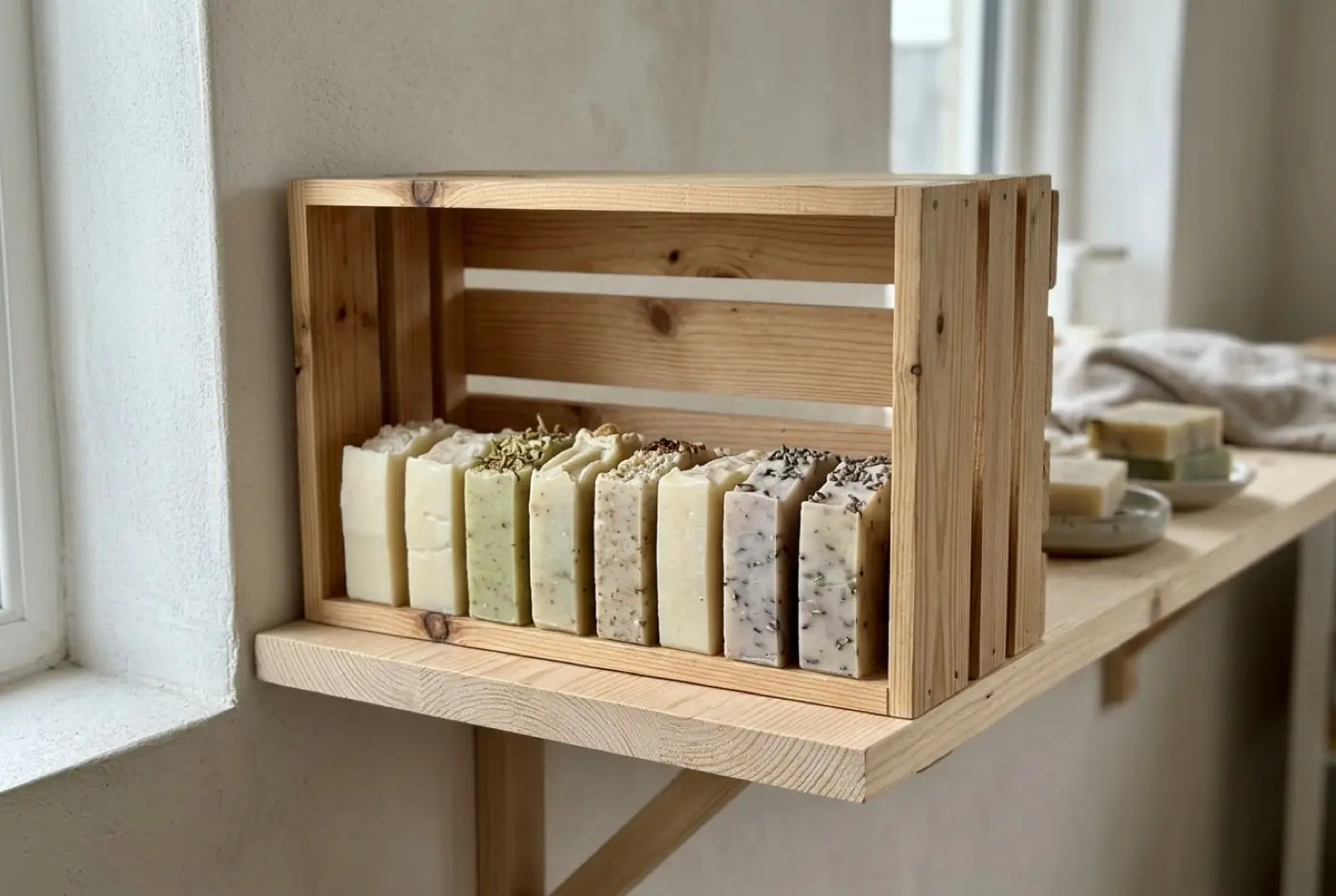
- Wooden crates or open shelves. Good airflow. Cover with a cloth to keep dust and light off.
- Plastic tubs, used carefully. They keep out pests and dust but trap moisture. If you use them, leave the lid cracked or drill a few holes, and check bars for sweating.
Stack bars in single layers where you can, or with paper between layers, so the faces that touch can still breathe.
Separate by scent and batch
Fragrance moves. An unscented baby bar stored next to a box of peppermint will smell of peppermint within weeks. Keep:
- strongly scented batches (mint, clove, spice, pine tar) in their own boxes,
- unscented and lightly scented bars well away from them,
- each batch labeled with its name and make date, so you know what’s oldest.
Labeling also means that if one batch develops spots or an off smell, you can identify every bar from it.
The bar in use
Storage doesn’t stop at the shelf. Most handmade soap that “doesn’t last” is lost in the shower, not the cupboard.
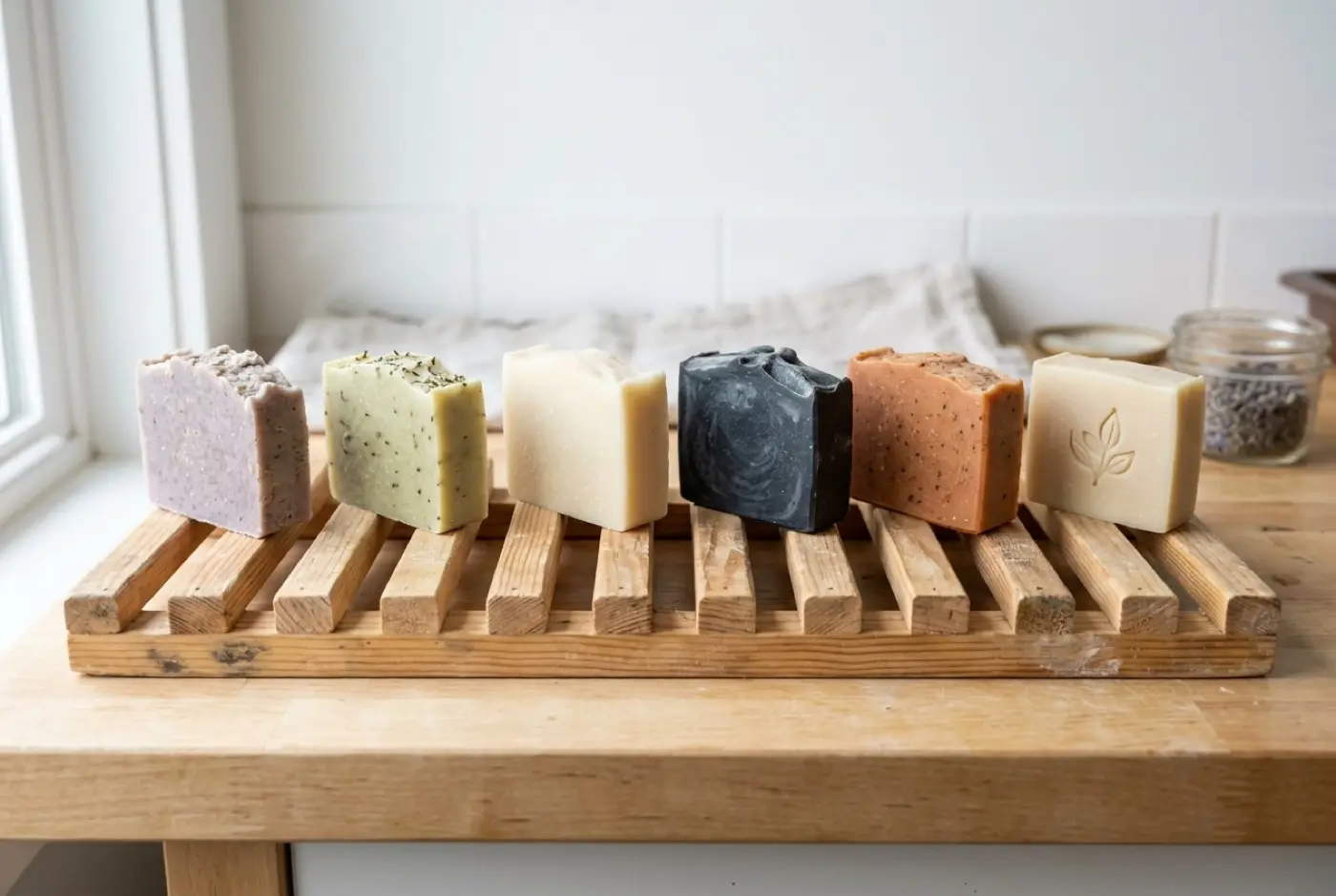
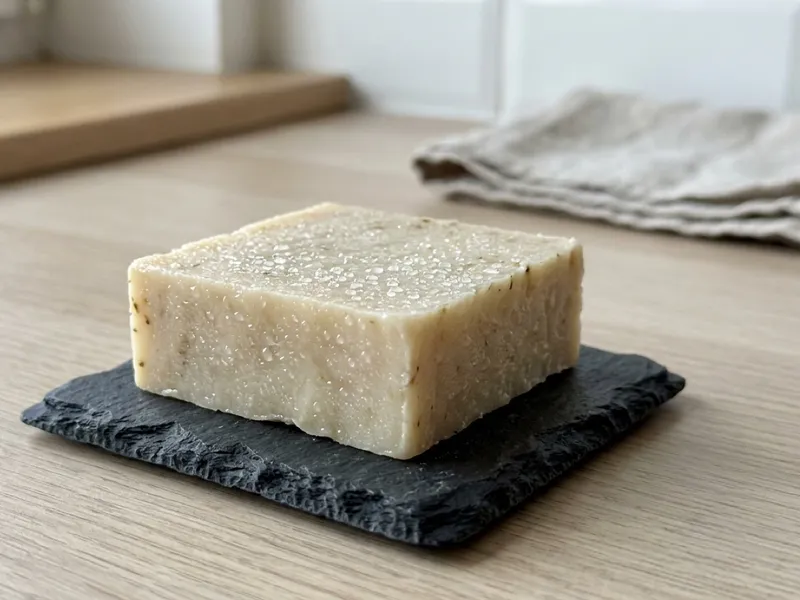
- Use a draining soap dish. A dish with slots, ridges or a rack lets water run off and air reach the bottom of the bar. A flat dish that holds water turns the bottom of the bar to mush.
- Keep it out of the spray. A bar that sits under running water between uses dissolves quickly.
- Let it dry between uses. If two people use the shower back to back, keep two bars and alternate.
- Cut big bars in half. One half stays dry in storage while the other is in use.
Bars high in soft oils, like castile soap, are more prone to softening in a wet dish than harder recipes, so a good dish matters even more for them.
A monthly storage check
For anyone keeping stock for gifts or selling, a quick monthly look catches problems early:
Monthly soap storage check
If you find orange spots, see soap shelf life and DOS for whether the bars are still usable and how to prevent it next time. For moisture on the surface, see sweating soap. For a bad smell, see soap smells bad.
Storing stock for a season of markets
Sellers often build up months of inventory before a busy season. A few habits keep it sellable:
- First in, first out. Arrange boxes so the oldest batch is always at the front. Sell or use it before newer batches.
- Store bars unwrapped until close to sale, if you can. Unwrapped bars on a rack or in open boxes breathe better. Wrap in batches a few weeks before each event. If you wrap everything at once, check wrapped stock more often.
- Keep a stock sheet. Batch name, make date, number of bars, and where they’re stored. It makes the monthly check quick and tells you what’s running low.
- Hold back a reference bar. Keep one bar from each batch for yourself. If a customer reports a problem, you can look at a bar from the same batch.
How long stored soap keeps
There’s no hard expiry date for well-made cold process soap. Bars commonly stay usable for a year or more, often longer, but:
- Scent fades first, especially citrus and other light essential oils.
- Colors can fade, particularly some plant colorants and micas exposed to light.
- Bars high in unsaturated oils (sunflower, grapeseed, hemp and similar) are more likely to develop spots or an off smell within a year.
A practical habit is to use or sell most bars within about a year of making them, and keep the ones that age well, like high-lard or high-olive bars, for longer. Track batches in your soap batch log.
Common mistakes
- Storing before cure is finished. Bars keep losing water and can sweat in a box. See how long to cure soap.
- Bathroom cupboards. Convenient, but the steam works against you.
- Sealed plastic in a humid climate.
- Mixing scents in one box.
- Forgetting the dates. Without them, you can’t use the oldest bars first.
Next steps
- Choose packaging that suits your storage with wrap and package soap.
- Understand what limits shelf life with soap shelf life and DOS.
FAQ
How long does handmade soap last in storage?
A well-made, well-stored cold process bar commonly stays usable for a year or more. Scent and color fade sooner, and bars high in unsaturated oils are more prone to orange spots within a year.
Should you store handmade soap in airtight containers?
Usually not. Airtight plastic can trap moisture and lead to sweating. Cardboard boxes or paper wraps let bars breathe. In a very dry climate, a closed box helps hold scent.
Can you store handmade soap in the fridge or freezer?
There's little benefit for cured bars, and taking them out can cause condensation on the surface. A cool, dry room is enough.
How do you keep handmade soap from getting mushy in the shower?
Use a soap dish that drains and lets air reach the bottom of the bar, keep it out of the direct spray, and let it dry between uses. Cut large bars in half so one piece stays dry while the other is in use.
Comments
No comments yet. Made this recipe? Be the first to say how it went.