How to Package Handmade Soap: Bands, Boxes, Wraps and Shrink Film
How to package handmade soap so it stays fresh, looks good and has room for a label. Compare paper bands, boxes, paper wraps, fabric bags and shrink wrap by breathability, protection and cost, and learn when bars are ready to wrap.
On this page
To package handmade soap well, wait until the bars are fully cured, then choose a wrap that balances breathability against protection. Paper bands and kraft wraps let soap breathe and cost little. Boxes protect bars in transit and give the most label space. Shrink wrap seals in scent and keeps bars clean, but traps moisture, so it suits dry climates better than humid ones. Whatever you choose, leave room for a label if you plan to sell.
Packaging is where a lot of handmade soap goes wrong after everything else went right. The bar was fine on the rack; it was the wrap that made it sweat.
Compare the options
| Packaging | Breathability | Protection | Label space | Cost | Best for |
|---|---|---|---|---|---|
| Paper band (cigar or belly band) | High; most of the bar is open | Low; bars get handled | Small to medium | Low | Markets, gifts, humid climates |
| Kraft or printed paper wrap | Medium | Medium | Good | Low | Gifts, simple retail |
| Tissue or wax paper plus band | Medium | Low to medium | Small | Low | Gift sets |
| Kraft box (with or without window) | Medium | High | Excellent | Medium | Retail shelves, shipping |
| Cotton or muslin bag | High | Low | Tag only | Medium | Gifts, guest soaps |
| Glassine bag | Low to medium | Medium | Sticker only | Low to medium | Small bars, samples |
| Shrink wrap (full) | Low | High | Label under or over film | Low per bar; needs a heat gun | Shipping, dry climates, scent retention |
| Shrink band (partial) | Medium | Medium | Medium | Low per bar | A compromise between the two |
There’s no single best option. A band that’s perfect for a dry-climate craft fair can be wrong for a seaside shop.
Breathability: why it matters
Handmade soap contains glycerin, which draws moisture from the air. In damp conditions, soap sealed in plastic can develop beads of moisture on the surface, known as sweating or glycerin dew. It’s cosmetic, but it looks bad and can make labels wrinkle or bleed. Moisture against the bar over long periods may also be one of the factors behind dreaded orange spots.
Breathable packaging lets that moisture move in and out instead of collecting.
A quick climate test. Before you commit to a packaging type, wrap three bars in it and leave them in the room where you’ll store your stock for a week or two. Check them every few days. If you see moisture under plastic, damp patches on paper or soft spots, choose something more breathable. See sweating soap for what to do with bars that have already sweated.
Each option in practice
Paper bands. A strip of paper wrapped around the middle of the bar and taped or glued at the back. Customers can smell and see the soap, and bands use the least material. The tradeoff is handling: bars get touched at markets, and edges can pick up dust. Size the band to fit snugly; loose bands slide off.
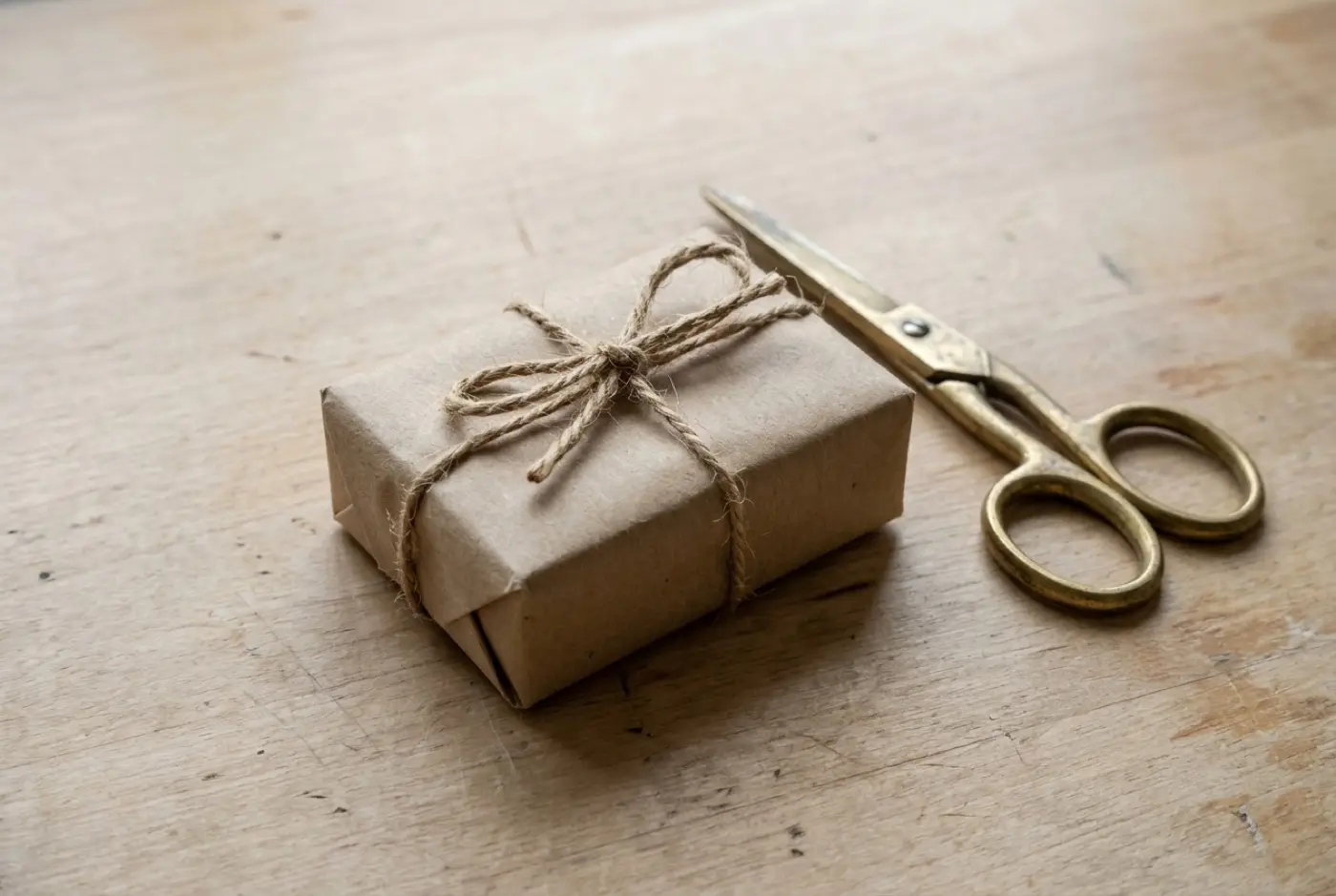
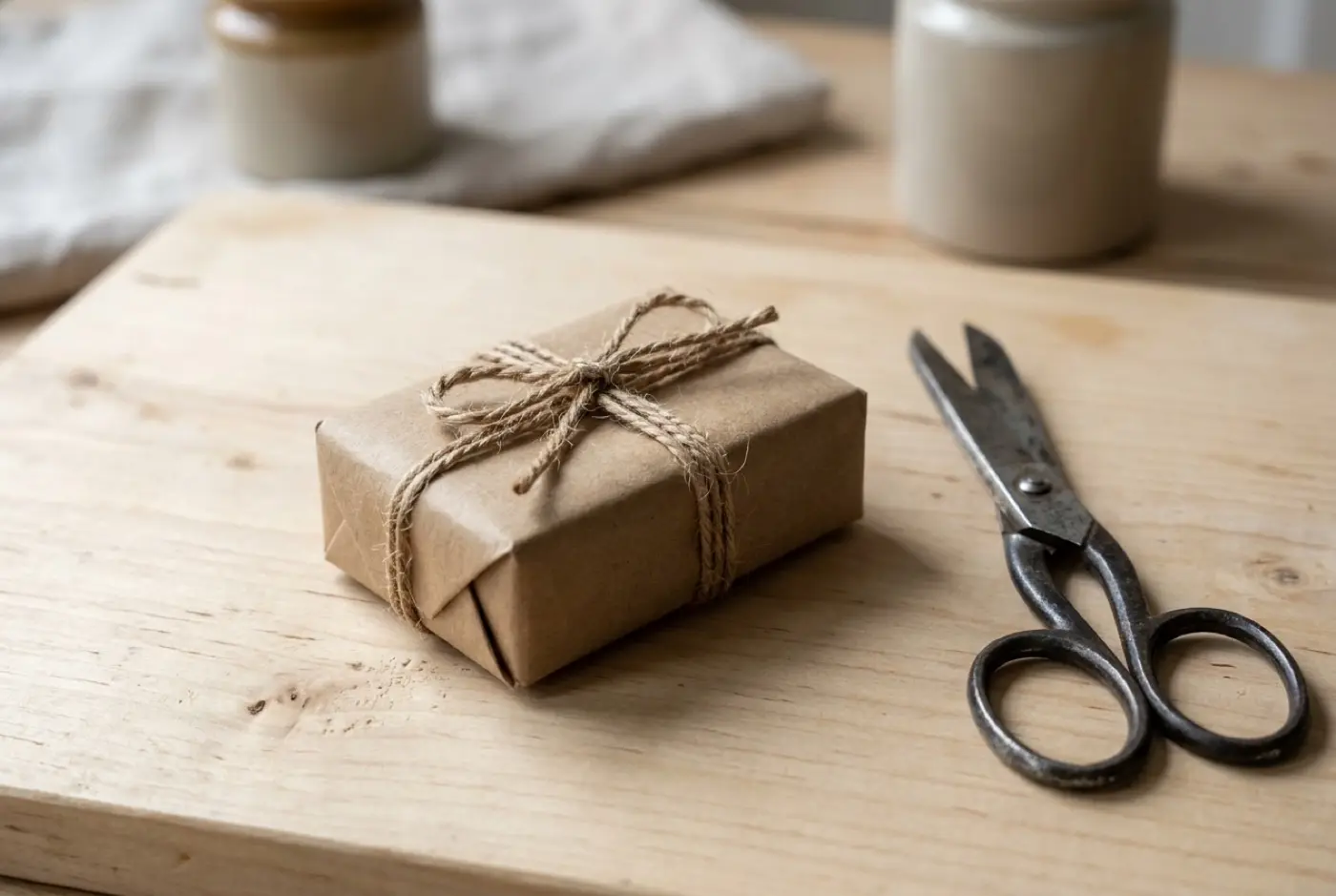
Paper wraps. A sheet of kraft or printed paper folded around the bar like a small parcel. More protection than a band and a large printable surface. Uncoated paper breathes better than glossy or laminated stock. Some essential oils and fragrances can stain paper over time, so test with your strongest-scented bars.
Boxes. Folding kraft boxes, often with a window to show the bar. The best option for shipping and retail shelves, and the easiest place to fit a full label. Choose a box sized to your bar; empty space lets bars rattle and dent corners. If your bar sizes vary, a box hides it, which can be a reason to choose one.
Fabric bags. Cotton or muslin bags look generous and breathe well. They don’t give much label space, so use a tag. They work best for gifts and guest soap sets.
Shrink wrap and shrink bands. Shrink film is placed around the bar and shrunk tight with a heat gun. A full wrap keeps out dust and hands and holds scent in, which is why some sellers prefer it for shipping. Partial shrink bands cover only the middle of the bar. Keep the heat gun moving and don’t overheat the soap underneath. In humid climates, monitor wrapped stock closely for sweating.
Labels and what goes on them
If you’re gifting soap to friends, a simple tag with the scent and the date you made it is enough. If you’re selling, labeling is more than branding. What must appear (product identity, net weight, ingredients, business name and address, among others) depends on whether your product counts as soap or as a cosmetic, and where you sell it.
Two practical points regardless of the rules:
- Weigh bars after cure, not on cut day. Bars lose weight while curing, and a net weight taken too early can end up overstated. See curing soap.
- Plan the label space first. If your ingredient list is long, a band may be too small. Choose the packaging around the label, not the other way round.
For the details, see soap labeling requirements. For design ideas, see soap branding and packaging.
Shipping packaged soap
Soap that leaves your hands in the mail needs a little more protection.
- Wrap first, then box. A band alone lets corners dent in transit. A box, or a paper wrap inside a padded mailer, protects edges.
- Fill the space. Use crinkle paper, paper fill or kraft paper so bars don’t slide. Avoid packing peanuts in contact with unwrapped soap; they can stick to soft spots.
- Think about heat. Delivery vans can get hot in summer, and warm soap can sweat or pick up marks from packaging. Avoid sending bars in heat waves where you can.
- Keep scents apart. A mixed order of peppermint and unscented baby soap will arrive smelling of peppermint. Wrap strongly scented bars separately.
Gift sets
For gifts, packaging is half the present. A few combinations that work well:
- Two or three banded bars tied together with twine and a tag.
- A small kraft box with a window and crinkle paper, holding guest-size bars.
- A cotton bag with a bar and a wooden soap dish. A dish that drains helps the bar last; see store cured soap.
Include a small card with the scent and the date the soap was made, even for gifts. It tells the recipient how fresh it is and what they’re smelling.
Common mistakes
- Wrapping before cure is finished. Bars keep losing water inside the wrap and can sweat or go soft.
- Plastic in a humid room. Test first.
- Labeling with wet-ink printers on uncoated paper in damp storage. Ink can bleed if the paper absorbs moisture.
- Packaging that’s too tight on the corners. Paper tears and corners dent. Fold, don’t stretch.
- Fresh stock next to strong-smelling stock. Scents transfer through paper. Keep batches apart in storage.
Next steps
- Add a logo or pattern before wrapping with soap stamping.
- Keep wrapped bars in good condition with store cured soap.
- Price your packaged bars with how to price soap.
FAQ
When should you wrap handmade soap?
After it has finished curing. Wrapping early slows cure and can trap moisture against the bar. Wait until the bar's weight stays steady from one week to the next.
Should handmade soap be wrapped in plastic?
It can be, but plastic keeps moisture in. Shrink wrap protects scent and keeps bars clean, which suits drier climates and shipping. In humid conditions, bars in plastic are more likely to sweat, so paper wraps or bands are safer.
What is the cheapest way to package soap?
Paper bands, sometimes called cigar or belly bands, use the least material and leave most of the bar open to the air. Plain kraft paper wraps are also inexpensive.
Does soap packaging need a label?
If you sell soap, yes, and the details depend on how the product is classified and where you sell it. See our soap labeling requirements guide, and check the rules where you live.
Comments
No comments yet. Made this recipe? Be the first to say how it went.