Why Does My Soap Smell Bad? Causes by Smell
Fresh soap that smells of ammonia or burnt sugar usually has milk or sugar that overheated, and it fades during cure. A sour, crayon-like smell in older soap means oils have gone rancid.
Is it safe to use?
Ammonia and scorched smells in fresh milk or sugar soap are harmless and fade in cure. Rancid bars aren't harmful to wash with in most cases, but they smell unpleasant and the rancidity spreads, so don't gift or sell them.
Color turning brown rather than an off smell? Fading or morphing color
On this page
Causes, ranked by likelihood
- Most likely
Milk or sugar overheated with the lye
Lye reacting with milk proteins releases an ammonia smell, and scorched milk or sugar smells burnt. Both are strongest in fresh soap.
- Common
Rancid oils
Oils near or past their best, a high superfat, oils high in linoleic acid like sunflower or grapeseed, and humid storage all raise the risk. Rancid soap smells sour, crayon-like or like old cooking oil.
- Sometimes
Fragrance faded or clashed
Citrus and other top notes fade during cure, which can leave the base scent of the oils or additives, like tallow or pine tar, to dominate.
Fix this batch
Wait, trim or replace
- For ammonia or scorched smells, cure the bars 4–6 weeks in an airy room. The smell almost always fades.
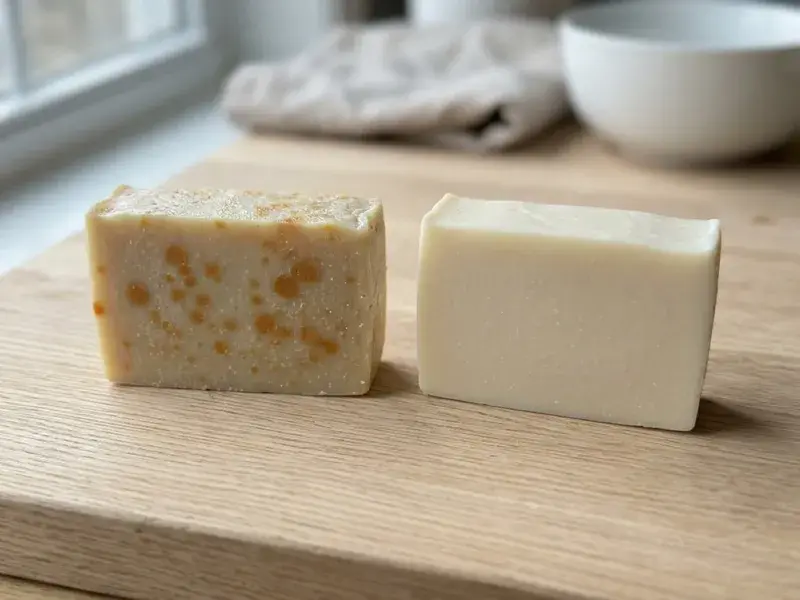
- For a few orange spots on otherwise good bars, cut the spots out and use those bars first.
- If the whole bar smells rancid or the spots keep spreading, retire the batch from gifting or selling.
- If the scent faded, you can rebatch fresh bars and add fragrance after the heat, at a lower amount than a cold process batch needs.
Prevent it next time
Fresh oils, cool milk, dry storage
- Use oils well within their date, and store them cool and dark. Smell each one before you weigh it.
- Freeze milk into cubes and add lye slowly to keep the mixture cool, ideally below about 90°F (32°C).
- Keep superfat around 5% and limit high-linoleic oils, or add an antioxidant such as rosemary oleoresin extract (ROE) to the oils.
- Cure and store soap in a dry, airy place, not sealed in plastic while still damp.
Name the smell, find the cause
| Smell | When | Likely cause | Fades? |
|---|---|---|---|
| Ammonia | First days | Lye reacting with milk | Yes, in cure |
| Burnt or caramel | First days | Scorched milk or sugar | Mostly |
| Sour, crayon-like, old oil | Weeks or months later | Rancid oils, often with DOS | No, it gets worse |
| Plain, waxy, “just soap” | After cure | Fragrance faded | No |
| Barnyard or meaty | Any time | Unrefined tallow or lard | Somewhat |
If you can’t name the smell, compare with a bar you know is fresh. Rancid soap smells distinctly worse side by side. Our shelf life and DOS guide covers storage in more detail.
The science behind it
FAQ
Why does my goat milk soap smell like ammonia?
Lye reacts with milk proteins and releases an ammonia smell. It's normal, it's harmless, and it fades over a few weeks of cure.
What are dreaded orange spots?
DOS are small orange or tan spots caused by oils going rancid in the bar. They often come with a sour, stale smell and tend to spread over time.
Is rancid soap safe to use?
It still cleans, and many makers use spotted bars at home. But it smells unpleasant, may be harsher on skin, and isn't fit for gifting or selling.
Why did my soap lose its scent?
Many essential oils, especially citrus, fade during cure. Check the usage rate, consider a fragrance oil or anchoring the blend with a heavier base note, and store bars wrapped once cured.
Comments
No comments yet. Made this recipe? Be the first to say how it went.