Soap Sweating: Why Beads of Moisture Form and How to Stop It
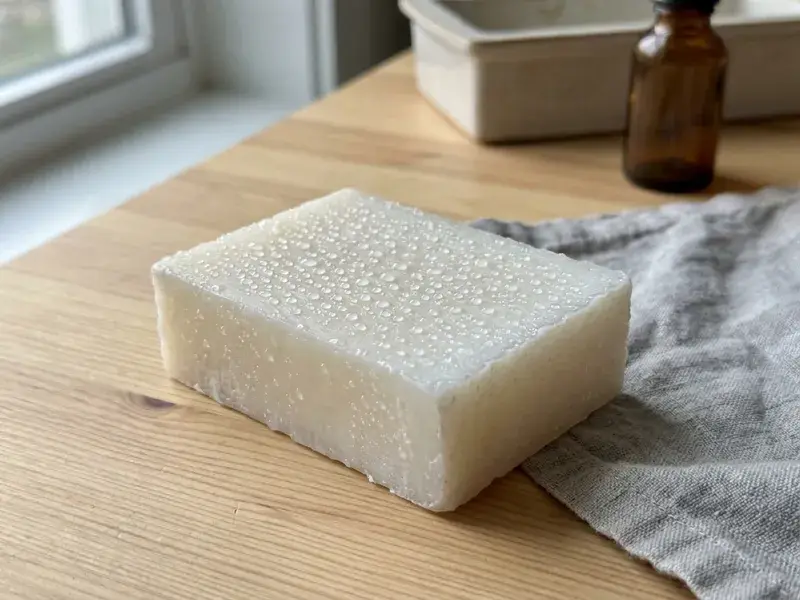
Soap sweats because glycerin pulls moisture from humid air and it beads on the surface. This is glycerin dew. It's cosmetic and common with melt and pour.
Is it safe to use?
Glycerin dew is harmless and the soap is fine to use. Wipe it off and keep the bars dry. The exception is liquid seeping from one spot in cold process soap, which can be a lye pocket.
Liquid coming from a hollow or crack instead of beading evenly? Lye pockets
Causes, ranked by likelihood
- Most likely
Humid air
Glycerin is a humectant. Melt and pour bases contain extra glycerin, so in humid rooms they pull water from the air and it collects as droplets.
- Common
A temperature change
Moving soap from a cool room, fridge or freezer into warm air causes condensation, just like a cold glass.
- Sometimes
Wrapped too early, or not at all
Cold process soap wrapped in plastic before it cured traps moisture. Melt and pour left unwrapped in a damp room has nothing to protect it.
Fix this batch
Dry and wrap
- Wipe the bars with a paper towel or lint-free cloth.
- Set them in front of a fan or in a room with a dehumidifier for a few hours.
- Wrap melt and pour bars in plastic wrap or shrink wrap as soon as they're dry.
- Cure cold process bars in an airy spot and only wrap them after the cure.
Prevent it next time
Control the air
- Make and store melt and pour soap in a dry room, and wrap it within a few hours of unmolding.
- Choose a low-sweat melt and pour base if you live somewhere humid.
- Let soap come up to room temperature slowly after the fridge or freezer, still in the mold.
- Store finished soap in breathable packaging, away from bathrooms and kitchens.
Dew or weeping?
Glycerin dew is even: small beads across every face of the bar, on every bar in the batch, and it comes back when the weather turns humid. It feels like water.
Weeping from a bad cold process batch looks different. Liquid comes out of one place, like a hollow, a crack or the bottom of the loaf. It may feel slippery, and the area around it can be crumbly or crystalline. Don’t touch that with bare hands. Glove up and read the lye pockets guide.
The science behind it
FAQ
Is sweating soap lye heavy?
No. Glycerin dew is water from the air, not lye. Melt and pour base has already been saponified, so the beads are just moisture.
Does sweating ruin soap?
No, but it can make bars look dull or spotty and cause labels to peel. Constant moisture can also encourage rancidity in cold process soap over time.
Why does my melt and pour soap sweat even when wrapped?
It was probably wrapped while already damp or cool, which seals the moisture in. Dry the bars fully at room temperature before wrapping.
Why are there droplets on my soap right after unmolding?
Often condensation from cooling or freezing, or water evaporating from a fresh cold process bar. It should dry off within a day in good airflow.
Comments
No comments yet. Made this recipe? Be the first to say how it went.