Soap Branding and Packaging: Ideas for Handmade Soap Sellers
Soap packaging ideas and branding basics for small makers, from your name and story to cigar bands, boxes and wraps, label space and cost per bar.

On this page
The best soap packaging ideas for a small maker start with two practical questions: how much label space do you need, and does the bar need to breathe? A paper cigar band or wrap is the cheapest and lets cured soap breathe; boxes look polished and protect stamped bars; shrink wrap holds scent but can trap moisture and make bars sweat. Choose packaging that fits your required label information, then build your brand look (name, colors, story) on top of it.
Brand basics: name, look, story
Branding for a soap business doesn’t need an agency. It needs three decisions you stick to.
Name. Short, easy to say and spell, and not used by another soap or cosmetics brand. Search your state’s business registry, the US trademark database and the main social platforms before you commit. The soap business names page covers how to brainstorm and check names.
Look. Pick:
- One or two typefaces (one for the name, one for small text that stays readable at 6–8 pt).
- Two or three colors, plus white or kraft.
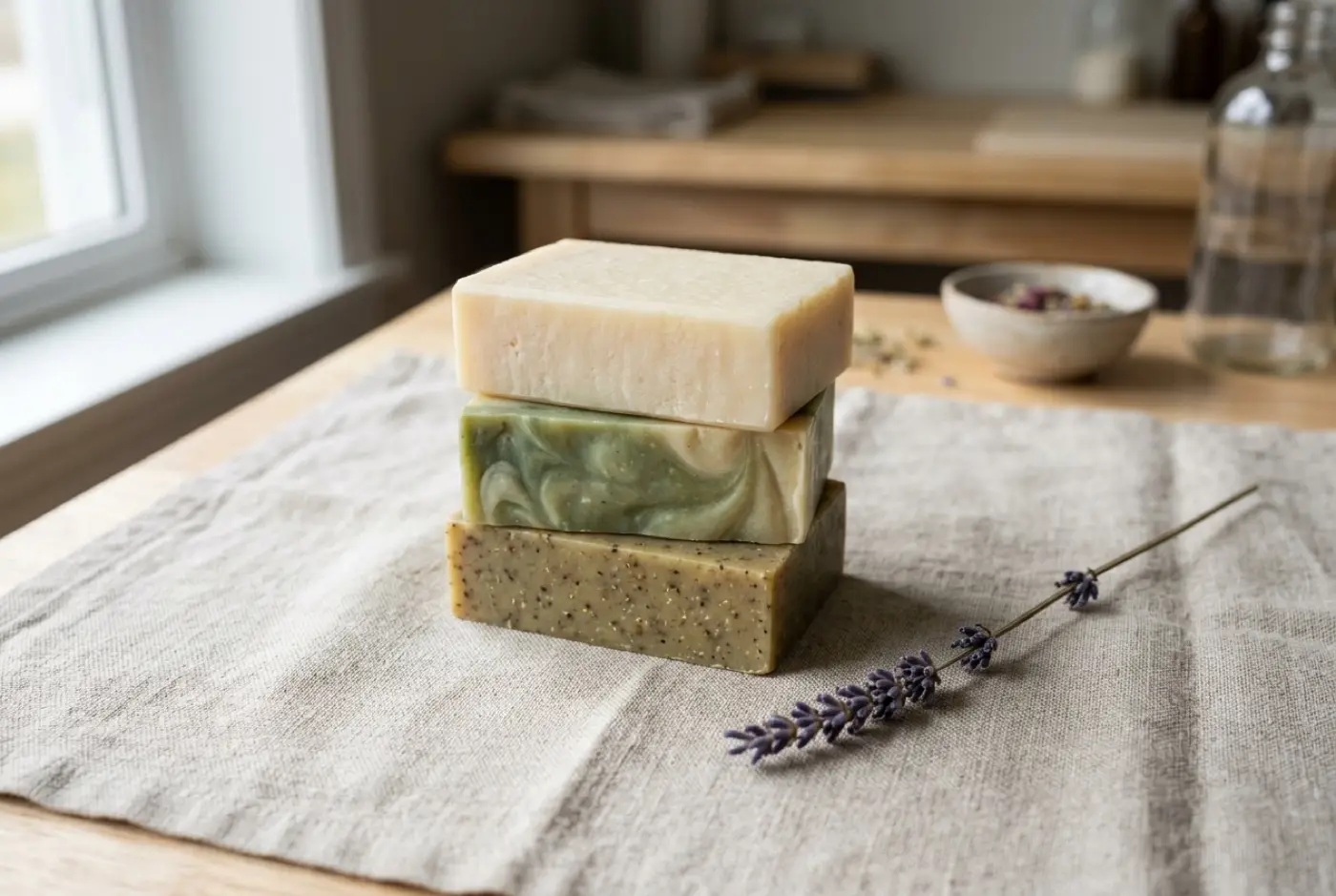
- One layout you reuse on every label so a range looks like a family.
- A logo simple enough to print in one color, stamp into soap or fit on a 1-inch band.
Story. One or two sentences that explain who makes the soap and why it’s different. “Small-batch cold process soap made on our farm with milk from our goats” is a story. “Luxurious artisanal self-care experience” isn’t. Keep the story true and checkable, and keep it out of medical territory: “gentle,” “creamy lather” and “made with oatmeal” are fine; “heals,” “cures” and “treats” are drug claims.
Packaging options compared
| Option | Looks | Protects the bar | Breathes | Label space | Notes |
|---|---|---|---|---|---|
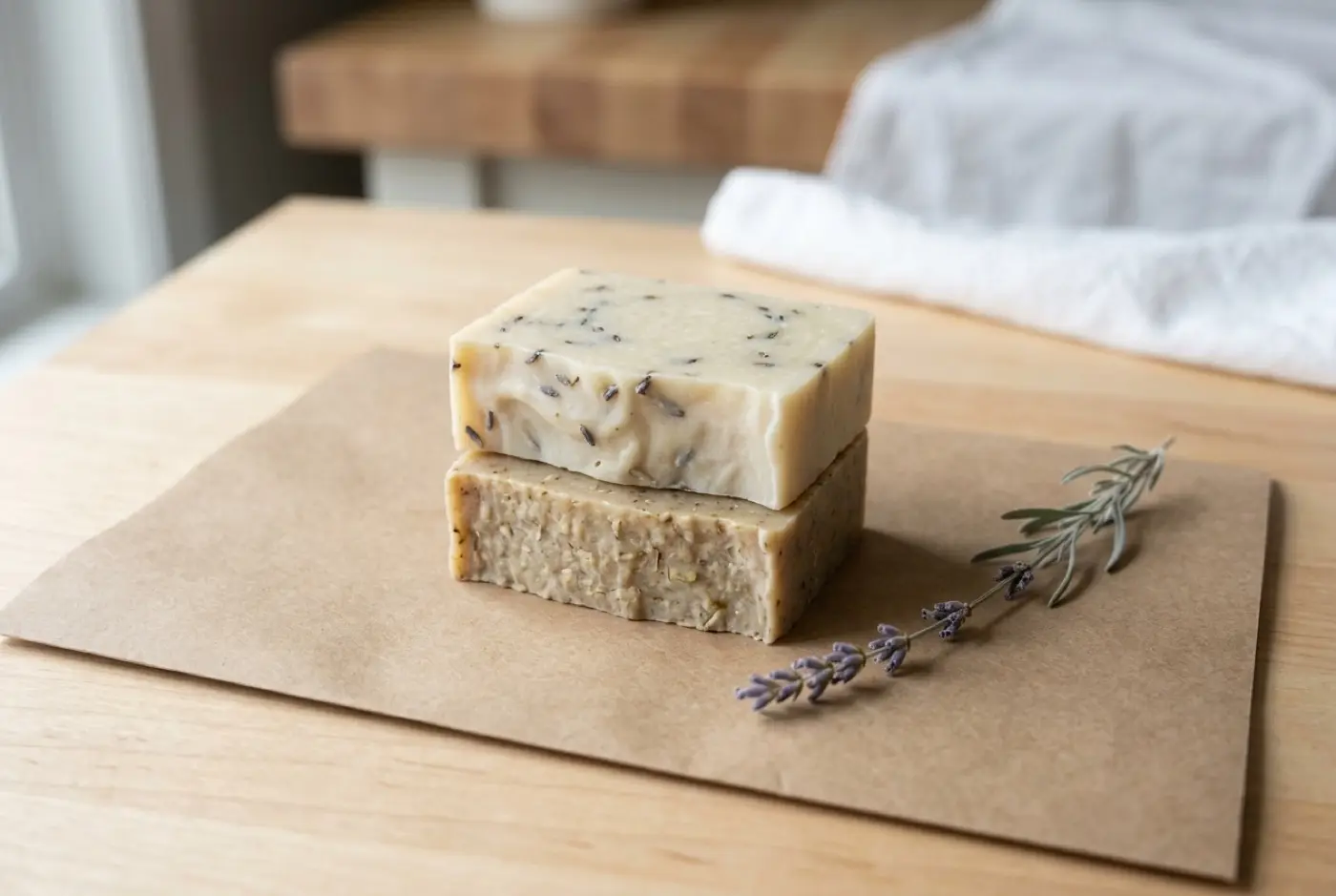
| Cigar band (paper strip around the middle) | Shows off the cut face and color | Low; edges and top exposed | Yes | Small; tight for an ingredient list | Cheapest; good for markets where people want to smell the bar |
| Full paper wrap (kraft, tissue or printed paper) | Rustic or crisp depending on paper | Medium | Yes | Generous on the back | Wrapping by hand takes time per bar |
| Folding box | Most polished | High; good for stamped or delicate bars | Partly; add a window or vent | Generous on all panels | Higher cost; good for gifts and retail shelves |
| Box with window | Shows the soap through the window | High | Partly | Good | Window film adds cost |
| Shrink wrap | Glossy and sealed | High against dust and handling | No | Needs a separate label or band | Can trap moisture; see below |
| Cello or glassine bag | Clean, clear | Medium | Glassine somewhat; cello no | Label or tag needed | Glassine resists oil marks |
| Unwrapped with a tag or sticker | Natural | Low | Yes | Very small | Some shops won’t accept unwrapped soap |
Pick by where you sell. At a market, people want to smell and see bars, so bands and open wraps work well. Retail shops and gift buyers often prefer boxes. Shipping orders need enough protection to arrive unscuffed, whatever the inner packaging.
Shrink wrap and sweating soap
Cured cold process and hot process soap contains glycerin, which draws moisture from humid air. Sealed in shrink wrap or plastic, a bar can sweat, forming droplets on the surface. Melt and pour bases, which are high in glycerin, are even more prone to it, which is why melt and pour is usually wrapped tightly right after unmolding.
If you use shrink wrap or plastic for cold process soap:
- Only wrap fully cured bars (see how long to cure soap).
- Wrap in a dry room, not on a humid day or in a steamy kitchen.
- Store wrapped stock somewhere cool and dry, away from bathrooms and basements.
- Consider breathable paper for stock you’ll hold for months.
If bars do sweat, the sweating soap page explains causes and fixes.
Plan label space before you choose packaging
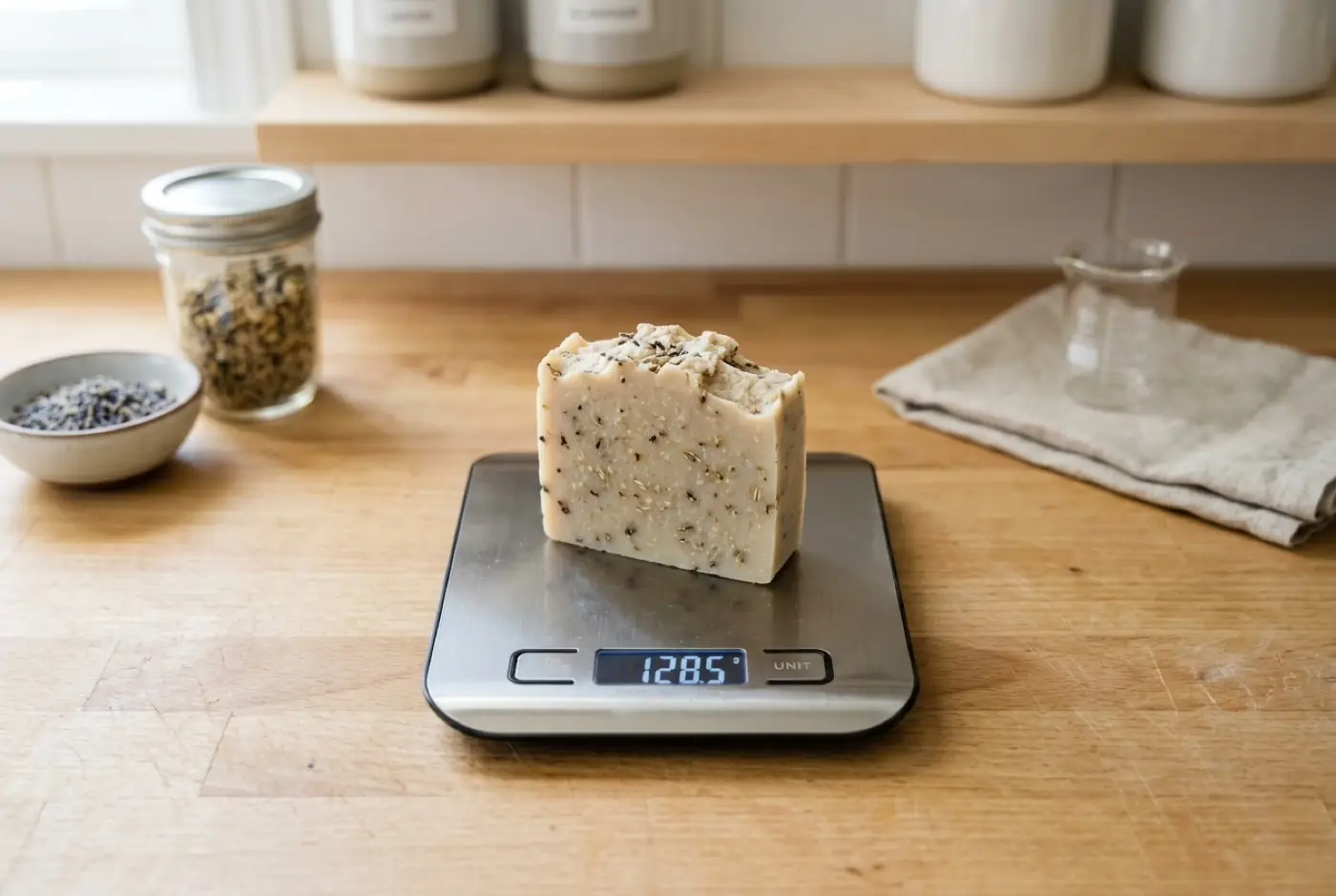
The most common packaging mistake is picking a beautiful band, then discovering the required label information won’t fit. Before ordering anything, list what has to go on the bar’s label and measure.
Label space planning
Practical tricks for small bands: put the product name and net weight on the front, the ingredients and address on the back half of the band, and use a separate sticker for the lot number so one band design covers every batch. The how to wrap and package soap guide shows folding and wrapping methods step by step.
Cost per bar
Packaging costs vary by supplier, quantity, and whether you print at home or order custom printing, so treat these as illustrative ranges only. Get quotes for the quantities you’ll actually buy.
| Packaging | Illustrative cost per bar | What drives it |
|---|---|---|
| Home-printed paper cigar band | Roughly $0.05–$0.25 | Paper, ink, your time to cut and fold |
| Kraft paper wrap with sticker | Roughly $0.10–$0.40 | Paper, sticker, wrapping time |
| Shrink band or shrink wrap plus label | Roughly $0.10–$0.40 | Film, heat gun, separate label |
| Stock folding box with sticker label | Roughly $0.30–$1.00 | Box quantity, window film |
| Custom printed box | Often $0.50+ at small runs | Minimum order quantities, setup fees |
Worked example (illustrative figures): if a bar costs $1.40 in materials and you choose a box at $0.60 plus a $0.10 label, packaging adds $0.70, so materials plus packaging are $2.10 before your time. Switch to a $0.15 band and the same bar is $1.55. Over 500 bars, that’s a difference of 500 × $0.55 = $275. Feed whichever number you choose into how to price soap.
Don’t forget time. If wrapping a box takes 1 minute and a band takes 15 seconds, 500 bars is about 8 hours versus about 2. Custom printing usually comes with minimum order quantities, so it’s often worth starting with stock packaging and custom stickers until you know which products sell.
Photograph it the way customers will see it
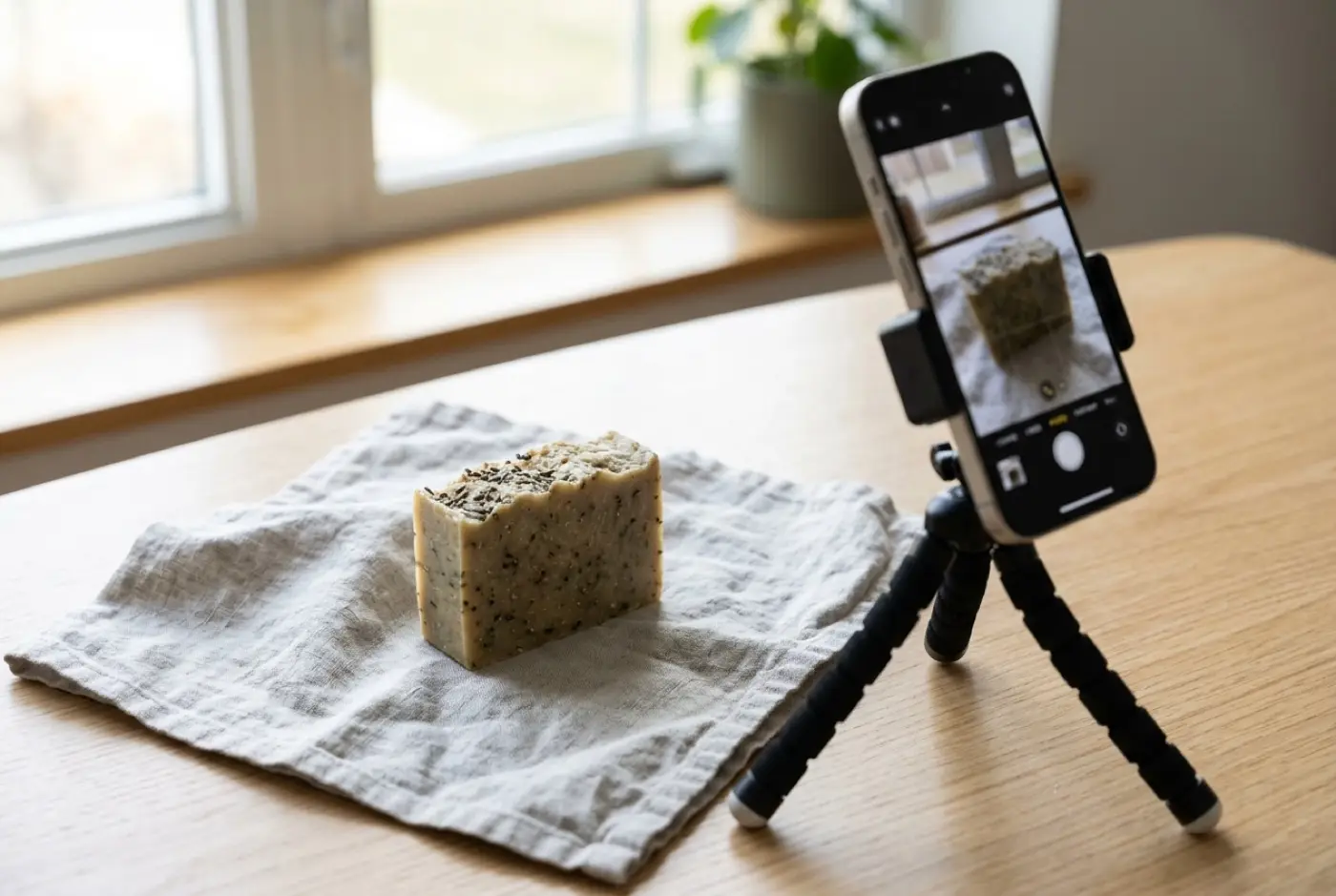
Packaging is part of your product photos. Shoot at least one image of each soap in its packaging with the label readable, alongside the unwrapped cut face. The soap photography guide covers the setup.
Sustainability without claims you can’t back up
Many soap buyers like paper packaging and minimal plastic. If you say “plastic-free,” “compostable” or “recyclable,” make sure every component qualifies, including stickers, window film and tape. “Wrapped in recycled kraft paper” is a specific, checkable statement. Vague green claims are easy to get wrong.
Related reading
- Soap labeling requirements: what must fit on the label
- How to wrap and package soap: wrapping methods
- Soap business names
- Soap photography
- How to price soap
FAQ
Should I shrink wrap handmade soap?
It protects the bar and holds scent, but cured cold process soap can sweat in shrink wrap because glycerin draws moisture from the air. Fully cured bars, a dry storage space and breathable packaging for long-stored stock all help.
What is the cheapest way to package soap?
A printed paper cigar band or a simple paper wrap is usually the lowest cost per bar, and it leaves the soap visible and able to breathe. Boxes and custom printing cost more.
Does my soap packaging need an ingredient list?
It depends on whether the product is legally true soap or a cosmetic in the US. Plan space for one either way, since many customers expect it. See the soap labeling requirements page.
How do I choose a brand name for my soap business?
Pick something short, easy to spell and not already used by another soap or cosmetics brand. Check your state's business name registry, the trademark database and social handles before printing anything.
Comments
No comments yet. Made this recipe? Be the first to say how it went.