How to Start a Soap Business: From Test Batches to First Sale
How to start a soap business in order — prove your recipe, cost it, sort the rules, then sell small before you scale.
On this page
- The order that saves money
- Step-by-step: from test batches to first sale
- Step 1: Prove the recipe before you sell it
- Step 2: Know your numbers
- Step 3: Sort out the rules
- Step 4: Insurance, records and a clean workspace
- Step 5: Brand, package and photograph
- Step 6: Make your first sale small
- Common early mistakes
- Where to go next
- FAQ
To start a soap business, work in this order: perfect one or two recipes, cost every bar, settle the rules (business registration, sales tax, labeling, insurance), then sell a small batch somewhere low-risk before you spend on branding or inventory. That sequence matters more than your starting budget. Most of the painful mistakes in a new handmade soap business come from doing these steps out of order — printing 500 labels before checking what they must say, or booking a craft fair before the soap has finished curing.
This guide is the map for the whole selling section. Each step links to a deeper page.
The order that saves money
Hobby makers usually want to jump to the fun parts: names, logos, packaging. Hold off. Every one of those decisions depends on something earlier:
- Your label depends on whether you make cosmetic claims, which depends on how you plan to describe the soap.
- Your price depends on your recipe cost, which depends on a recipe you’ve stopped changing.
- Your packaging depends on where you sell, because a market table and a shipped online order need different things.
So the plan below runs from the decisions that are hardest to undo (recipe, legal setup) to the ones that are easiest to change (where you sell this month).
Step-by-step: from test batches to first sale
Soap business launch checklist
Step 1: Prove the recipe before you sell it
A recipe is ready to sell when it is boring: same trace, same hardness, same lather, batch after batch. Weigh everything, run every formula through a lye calculator, and keep notes. If you’re still tweaking the oil blend, you’re not ready, because your costs and your label will change with it.
Give bars their full cure (see how long to cure soap) and then watch them on a shelf. Problems like sweating soap or rancid spots often show up weeks after the bar looked perfect. You’d rather find them in your test bars than in a customer’s bathroom.
Step 2: Know your numbers
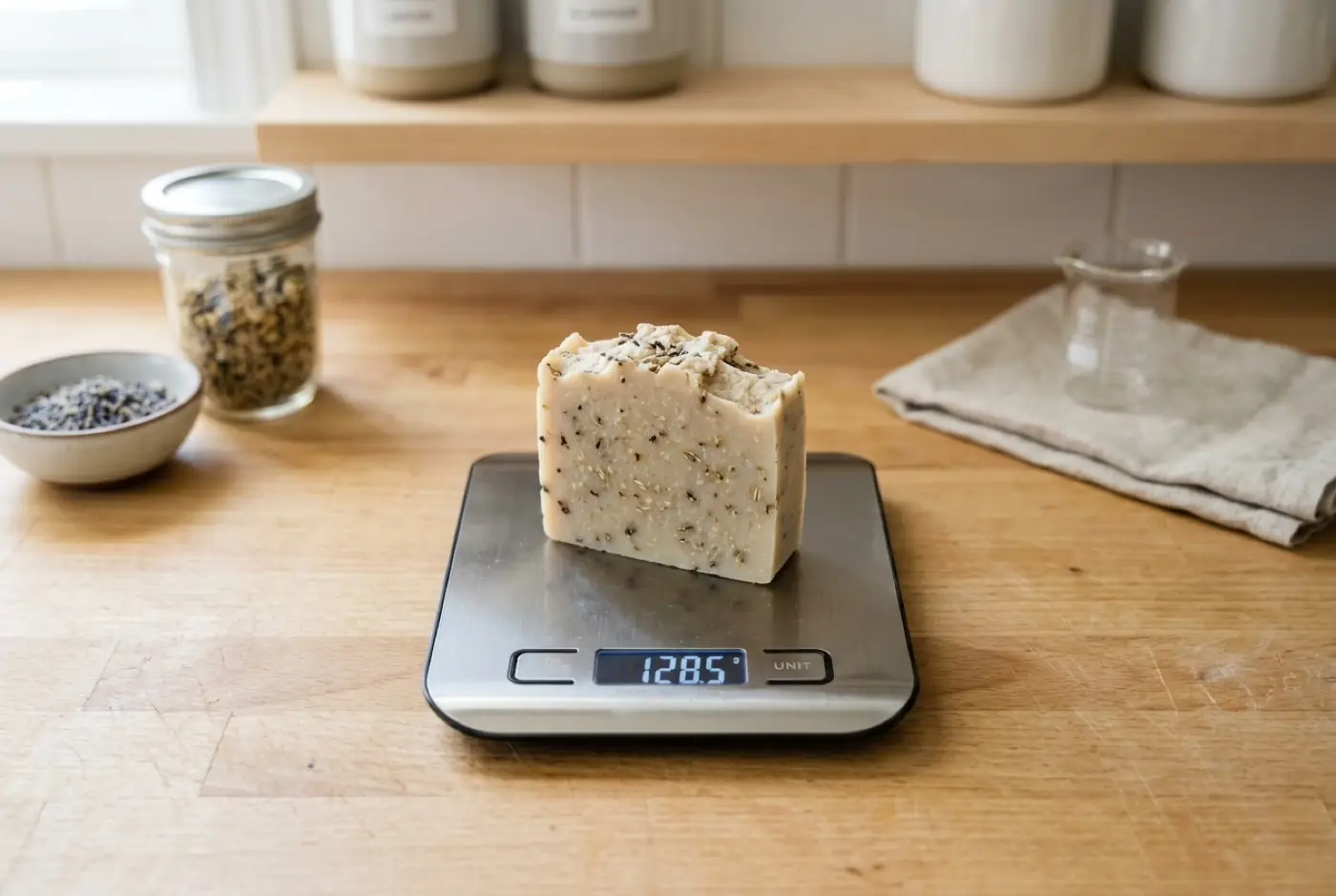
Before you pick a price, work out what one bar costs you. Divide your batch’s ingredient cost by the number of bars, then add packaging, a label and your time. The pricing guide walks through this with a worked example, and is a soap business profitable? shows the break-even math.
What it costs to get started
There’s no single number, because a maker with a stocked kitchen setup and one booking a first market have very different start-up costs. Use this as a list of what to budget for, not a quote:
| Start-up item | Notes |
|---|---|
| Ingredients for test and first-run batches | Oils, lye, fragrance, colorants. Buying larger quantities lowers the per-bar cost once recipes are final. |
| Equipment you don’t already own | Scale, stick blender, molds, cutter. See the supply list. |
| Business registration and permits | Fees vary by state and city; some are free. |
| Product liability insurance | Ask for an annual quote from a maker guild or insurer. |
| Labels and packaging | Order small quantities until your label is final. |
| First selling venue | Market booth fee, platform listing fees or website subscription. |
Write down your real figure for each line. That total is what your first sales need to earn back.
Step 3: Sort out the rules
This is the step people skip, and the one that can cost the most to fix later.
What kind of product is it? In the US, true soap — made mostly of the alkali salts of fatty acids (what lye and oils make) and marketed only for cleaning — is regulated by the Consumer Product Safety Commission, not the FDA. If you say your soap moisturizes, deodorizes or does something for skin beyond cleaning, it is likely a cosmetic and falls under FDA rules. If you say it treats or prevents a condition such as acne or eczema, it becomes a drug, which is a different and much heavier set of requirements.
MoCRA. The Modernization of Cosmetics Regulation Act of 2022 added FDA requirements for cosmetics, including facility registration, product listing and keeping records of adverse events. Some small businesses are exempt from some of those requirements. If any of your products are cosmetics, read FDA’s current MoCRA guidance to see which parts apply to you.
Local rules. Business licenses, sales tax permits and home-business zoning are set by your state, county or city. Call or check the website of your city or county clerk and your state’s revenue department.
Labels. What goes on the label depends on the soap-or-cosmetic question above. See soap labeling requirements.
Outside the US. The UK, EU and Canada are stricter for cosmetics; in the UK and EU, for example, products need a safety assessment before they can be sold. If you plan to sell or ship there, check that country’s rules first.
Step 4: Insurance, records and a clean workspace
Many farmers markets, craft fairs and shops ask vendors to show proof of product liability insurance. Makers commonly buy it through a guild such as the Handcrafted Soap & Cosmetic Guild or the Indie Business Network, or through a general insurer. Compare a few quotes and ask what is covered. More in soap business insurance.
Records matter for the same reason. Give every batch a lot number, write it on the bars or packaging, and keep the batch sheet. If a customer reports a problem, you can find exactly what went into that bar. The good manufacturing practices page covers a simple system that works in a home workshop.
Step 5: Brand, package and photograph
Once the recipe, price and label are set, the creative work can’t send you backwards. Pick a name (see soap business names for how to check one is available), design packaging that fits where you’ll sell (branding and packaging), and take clear photos (soap photography), especially if you’ll sell online.
Step 6: Make your first sale small
Your first sale is a test of everything above. Choose a venue where a slow day won’t hurt much: a local market, a holiday fair, or a small batch listed online for friends and local customers. Where to sell soap compares the options.
Make only what you need for that one venue, plus a small buffer. Remember that cold process bars need weeks to cure, so plan your production calendar backward from the event date.
After the event, write down:
- How many of each bar sold, and which ran out first
- What shoppers asked about (ingredients, scent strength, size)
- What you spent on the day: booth fee, travel, bags, card fees
- How many hours it took, including setup and teardown
Those notes tell you whether the price works and what to make next.
Common early mistakes
- Selling before the cure is done. Bars that haven’t finished curing are softer and may not last as long in the shower. That shows up in reviews.
- Pricing by looking at other tables. Their costs and goals aren’t yours. Cost your own bar first.
- Buying packaging in bulk too early. Labels change. Order small runs until the line is settled.
- Adding too many scents. Each one is more fragrance to buy, more labels and more slow sellers.
- Making skin claims. It changes which rules apply and can bring regulatory trouble.
Where to go next
The rest of the selling section follows the same order as this checklist:
- Getting started: How to price soap, Is a soap business profitable?
- Rules and compliance: Soap labeling requirements, Good manufacturing practices, Soap business insurance
- Marketing: Where to sell soap, Soap business names, Branding and packaging, Soap photography
FAQ
Do I need a license to sell soap from home?
Usually you need a general business license or registration, and often a sales tax permit, from your state, county or city. Some areas also have home-occupation zoning rules. Requirements vary, so check with your city or county clerk and your state revenue department.
Does the FDA have to approve my soap?
No. The FDA doesn't approve soap or cosmetics before sale. True soap sold only for cleaning is regulated by the Consumer Product Safety Commission. If you make cosmetic claims, FDA cosmetic rules apply, including newer requirements under MoCRA; check FDA's current guidance for what applies to you.
How many batches should I make before selling?
Enough to know the recipe behaves the same every time and that bars hold up after several months on a shelf. Many makers test a recipe over several batches and keep a bar from each to watch for rancidity or soda ash before selling it.
Do I need insurance to sell soap?
It isn't legally required everywhere, but many farmers markets, craft fairs and shops ask vendors for product liability insurance. Makers commonly buy it through a maker guild or a general insurer.
Should I form an LLC?
Some sellers start as a sole proprietor and form an LLC later; others form one from day one to separate business and personal liability. It's a legal and tax decision, so ask an accountant or attorney in your state.
Comments
No comments yet. Made this recipe? Be the first to say how it went.