Foaming Hand Soap Recipe (Castile and Water)
Liquid castile soap diluted with distilled water in a foaming pump. No lye, five minutes, one bottle.
- Yield
- about 250 mL
- Method
- No lye
- Difficulty
- Beginner
- Cure
- Ready in 5 minutes
On this page
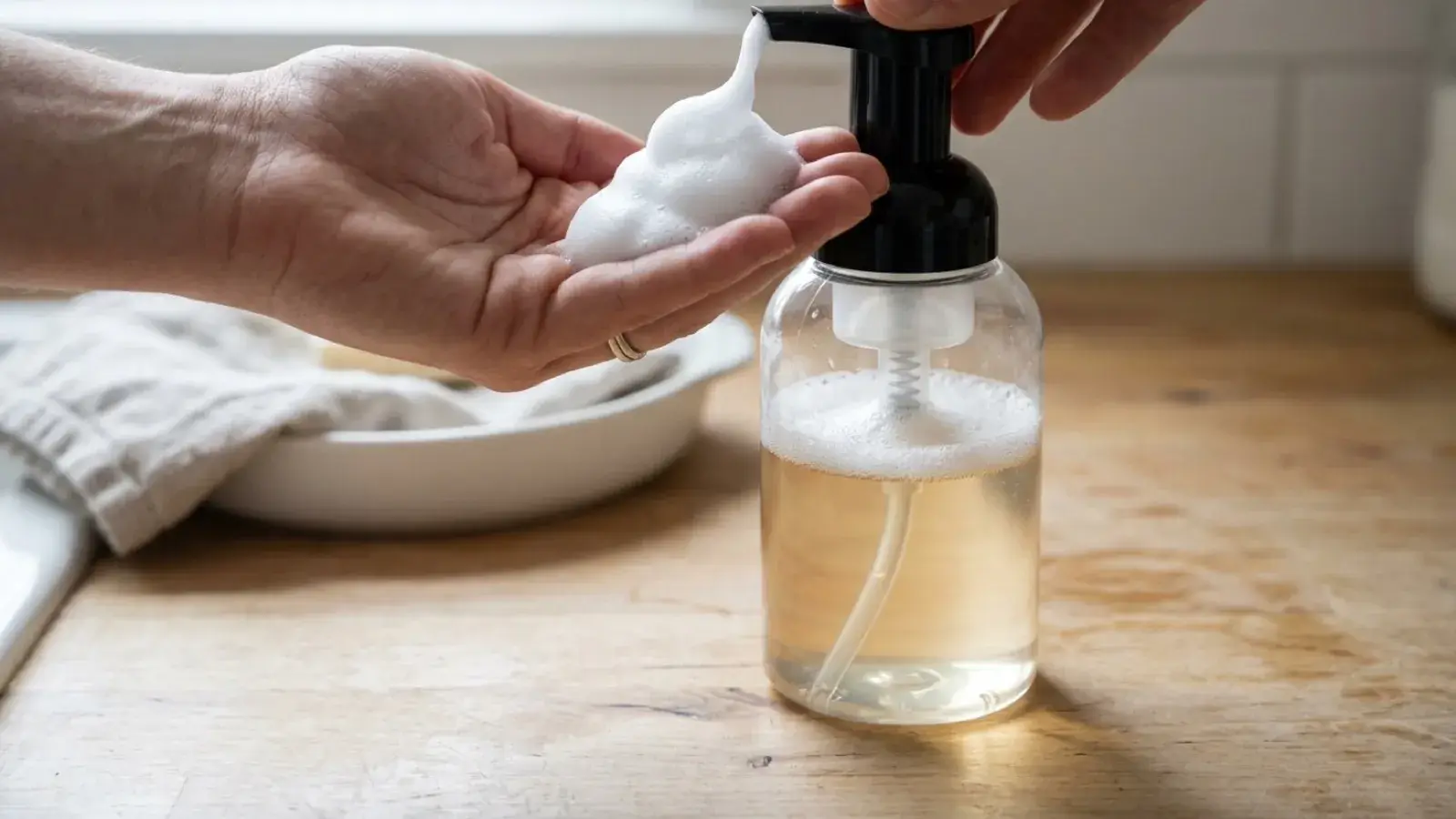
This foaming hand soap recipe takes five minutes: about 1 part liquid castile soap to 5 parts distilled water, swirled together in a foaming pump bottle. No lye is involved, because the soap itself was made earlier, by you or by whoever made the bottle of castile.
The whole recipe is the ratio. A foaming pump forces a thin liquid and air through a fine mesh to make foam, so the liquid has to be watery. Too much soap and the pump drips or clogs; too little and the foam disappears before you’ve rubbed your hands together.
Make it in small batches. Diluting soap with water also dilutes whatever kept it shelf-stable, so a bottle is best used within a few weeks.
Making the castile yourself
If you’d rather make the soap from scratch, our liquid hand soap is a potassium hydroxide soap cooked to a paste and diluted. It is already thinner than store-bought concentrated castile, so use more of it per bottle: start around 1 part soap to 3 parts water and adjust from there.
Why this recipe works
- About 1 part soap to 5 parts water. Foaming pumps whip air into a thin liquid through a fine mesh. Too much soap and the pump drips instead of foaming or clogs; too little and the foam collapses in your hand.
- Distilled or boiled water. Diluted soap has no preservative. Starting with clean water and a clean bottle keeps a batch fresh for longer.
- True liquid soap. Castile and other true liquid soaps foam well at this dilution. Some thick store-bought hand soaps contain thickeners that gum up the pump mesh.
Ingredients
- 200 mL (about 3/4 cup + 1 tbsp)
- Distilled or boiled-and-cooled water · Goes in first
- 40 mL (about 2 1/2 tbsp)
- Liquid castile soap · Store-bought or our homemade liquid hand soap, diluted
- 1/2 tsp
- Vegetable glycerin (optional) · A softer feel; more can clog the pump
- 5–10 drops
- Essential oil (optional) · Lavender works well; skip for unscented
Instructions
Step 1: Clean the pump bottle
Rinse the bottle and pump with hot water, then pump hot water through the mechanism until it runs clear. If you are switching from a commercial refill, this clears out thickened soap that can block the mesh. Let it drain upside down.
Step 2: Add the water first
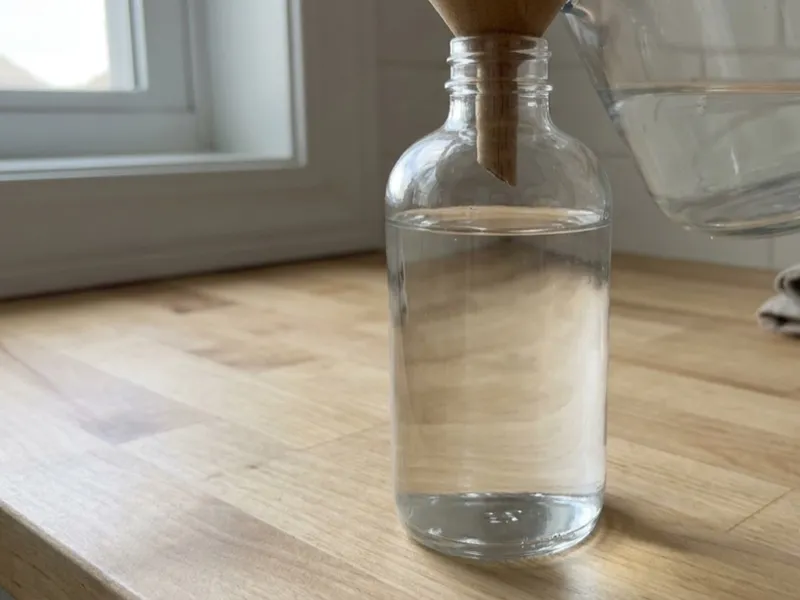
Pour the water into the bottle first, filling to about 4/5 of the way to the fill line or to the point where the pump tube will sit just below the surface. Adding water first keeps the soap from foaming up in the bottle as you pour.
Step 3: Add the soap and swirl gently
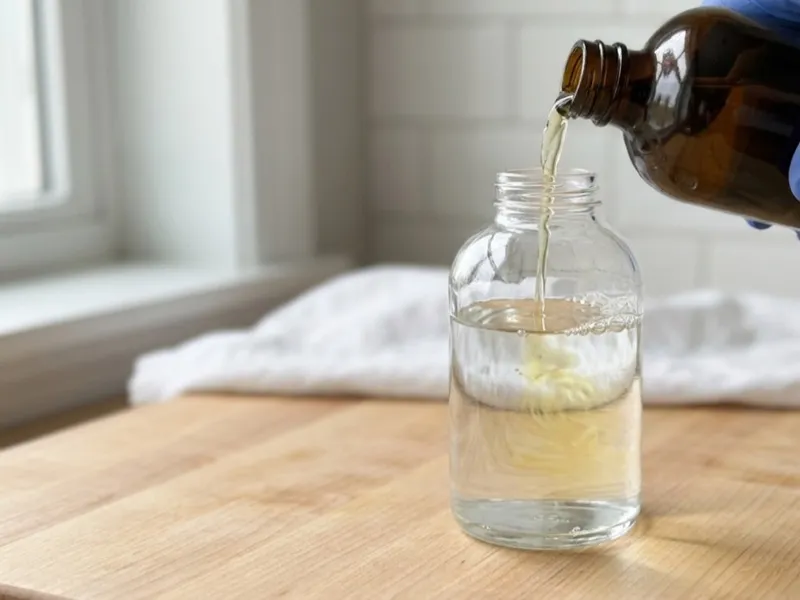
Pour in the liquid castile. If using glycerin or essential oil, add them now. Screw the pump on and tip the bottle gently back and forth a few times. Don't shake it hard, or you'll fill the bottle with foam that takes an hour to settle.
Step 4: Test the pump
Pump four or five times to draw the mix up. You should get a dense, shaving-cream-like foam. If it's runny, add a teaspoon more soap. If it sputters or clogs, add a tablespoon more water.
Step 5: Label and use within a few weeks
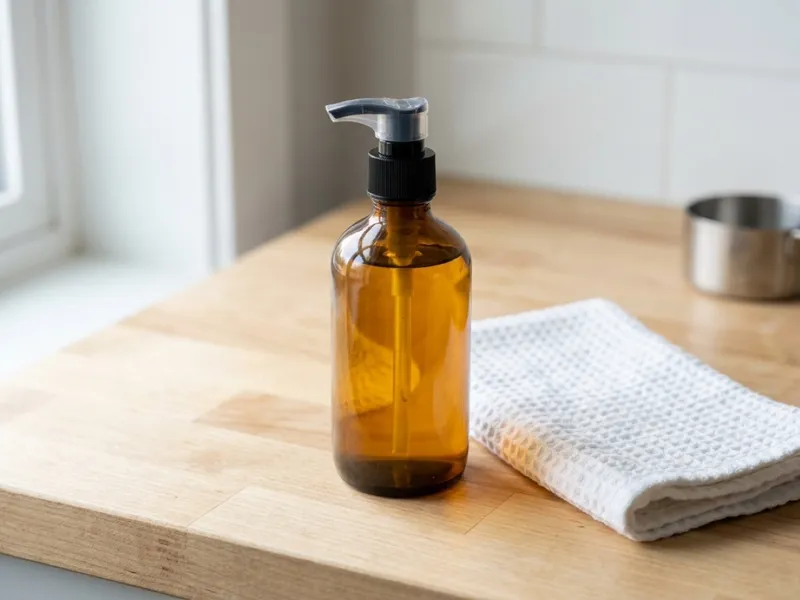
Write the date on a piece of tape on the bottle. Use it within 2–4 weeks and make small batches rather than a big jug, since the diluted soap has nothing to stop microbes growing over time. Throw it out if it smells off, changes color or turns cloudy.
Variations
Homemade liquid soap
Use our from-scratch liquid hand soap in place of store castile. It is already diluted, so start at 1 part soap to 3 parts water and adjust.
Lavender
10 drops of lavender essential oil per bottle for a light scent.
Kids' bottle
Leave it unscented and use a squat, stable pump bottle that won't tip over on a step stool.
If something goes wrong
- Pump makes liquid not foam
- Too much soap or a thickened soap. Dilute with more water, or switch to a true liquid castile.
- Mix turned cloudy or stringy
- Hard tap water or an acid like lemon juice or vinegar was added. True soap curdles with acids; start over with distilled water and no acid.
- Smells sour after a few weeks
- Microbial growth. Discard it, wash the bottle in hot soapy water, and make smaller batches.
FAQ
What's the ratio for foaming hand soap?
Start with about 1 part liquid castile to 4–5 parts water. Adjust a teaspoon at a time until the foam holds its shape for a few seconds.
Can I use regular hand soap in a foaming dispenser?
Sometimes, if it's thin. Thick gel soaps often clog foaming pumps even when diluted. True liquid soap like castile works most reliably.
Why add the water before the soap?
Pouring soap first and then water creates a bottle full of foam you can't fit the pump into. Water first, soap second.
How long does homemade foaming hand soap last?
Plan on 2–4 weeks. Diluted soap without a preservative can grow microbes, so make it in small batches with distilled or boiled water.
Can I add vinegar or lemon to make it cleaner?
No. Acids react with true soap and turn it into a cloudy, greasy mess. Keep it to soap and water.
Comments
No comments yet. Made this recipe? Be the first to say how it went.