Laundry Soap Recipe (100% Coconut Oil Bar for Grating)
A hard, low-superfat coconut oil bar made to be grated for the wash. It's for cleaning clothes, not skin.
This page has affiliate links. We earn a small commission at no cost to you. Disclosure
Formula not yet verified. These numbers haven't been re-run by a second maker. Don't make this batch until this notice is gone.
- Yield
- 10 bars
- Method
- Cold process
- Difficulty
- Intermediate
- Cure
- 4 weeks
- Superfat
- 1%
- Lye conc.
- 33%
On this page
This laundry soap recipe makes a hard, white bar from 100% coconut oil at a 1% superfat, meant to be grated into the wash or rubbed straight onto stains. It cleans fabric well because it is built to strip oil, and that is also why it’s a laundry bar only. Label it and keep it away from the hand-soap shelf.
The one thing that matters more here than in any skin recipe is the scale. Most bars carry a 5% superfat, which quietly absorbs small weighing slips. At 1% there is almost no cushion, so a few grams of extra lye can turn the bar harsh. Check your scale with a known weight, weigh the lye twice, and log the numbers.
The second thing is timing. Pure coconut soap goes from soft to brittle in a matter of hours, so plan to be home to cut it the same afternoon.
Grating and using it
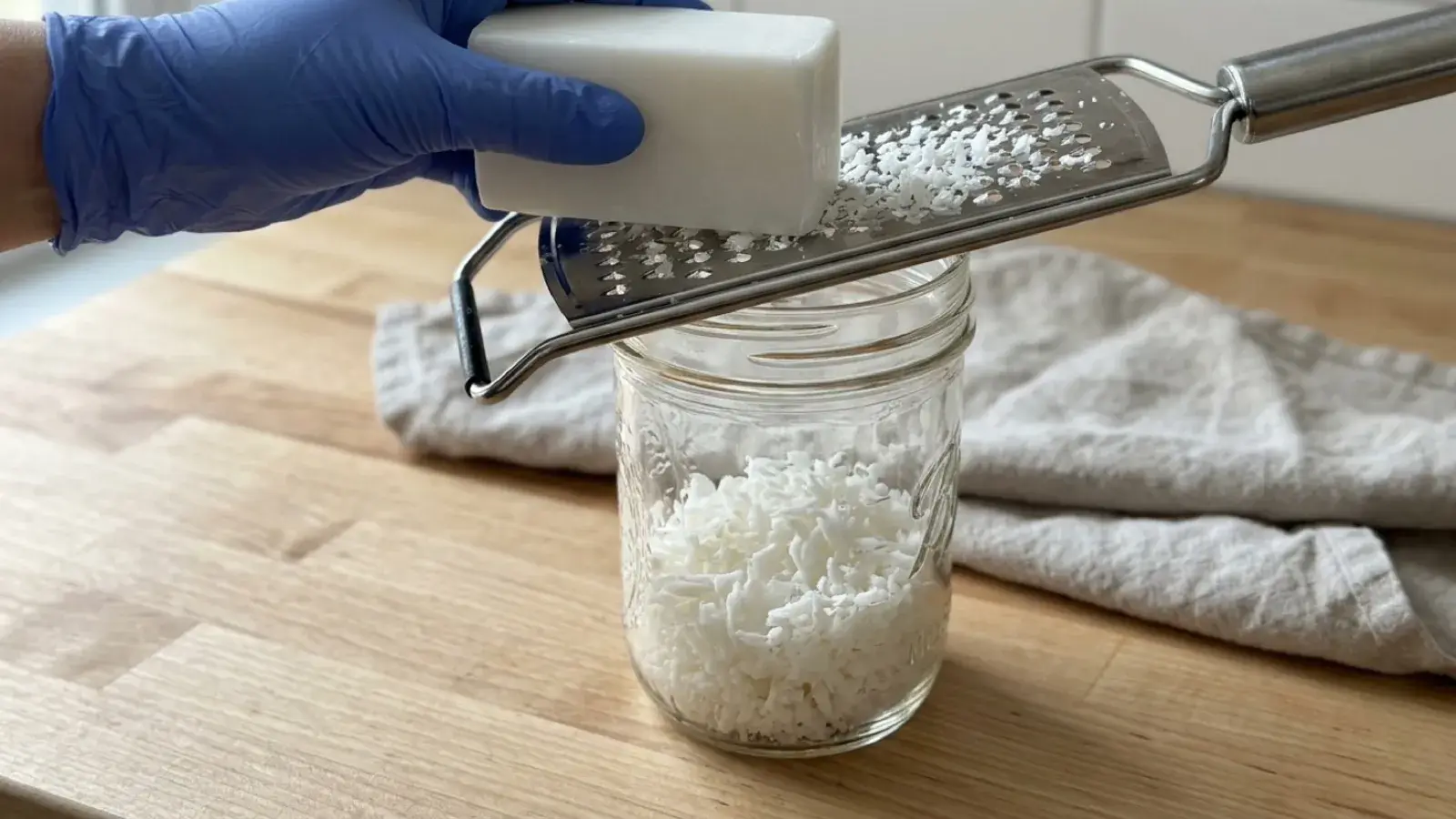
Grate cured bars on the fine side of a box grater or pulse chunks in an old food processor kept for non-food use. For a load, a tablespoon or two of fine gratings dissolved in a cup of hot water and added to the drum is a common starting point. Adjust by how clean the clothes come out, not by foam. Washing powder mixes are optional; the soap works on its own for most everyday loads.
Why this recipe works
- Coconut, 100%. Coconut soap dissolves readily, even in cool water, and lathers in conditions where other soaps go flat. Its quality numbers sit far outside the usual bar ranges on purpose: very high cleansing, almost no conditioning. That is what you want on a shirt collar and exactly why this bar is not for skin.
- 1% superfat. Almost all the oil turns into soap, so there is very little free oil left to sit in fabric. A true 0% leaves no margin at all for a scale that reads a gram light, which is why we stop at 1%.
- 33% lye concentration. A little less water than a skin bar. Coconut soap already sets fast; less water means less shrinkage and a block that grates cleanly instead of gumming the grater.
- No fragrance. Scent in laundry soap mostly washes away. If you want a smell on your clothes, it is cheaper and gentler to add it at the line or in the dryer than to burn essential oil in a bar.
Ingredients
| Oil | % | Grams | Ounces |
|---|---|---|---|
| Coconut oil (76°) | 100% | 1,000 g | 35.27 oz |
| Lye solution | |||
| Sodium hydroxide (NaOH) 1% superfat | 181 g | 6.39 oz | |
| Distilled water 33% lye concentration | 368 g | 12.97 oz | |
Equipment
Instructions
Step 1: Check the scale and label the bowls
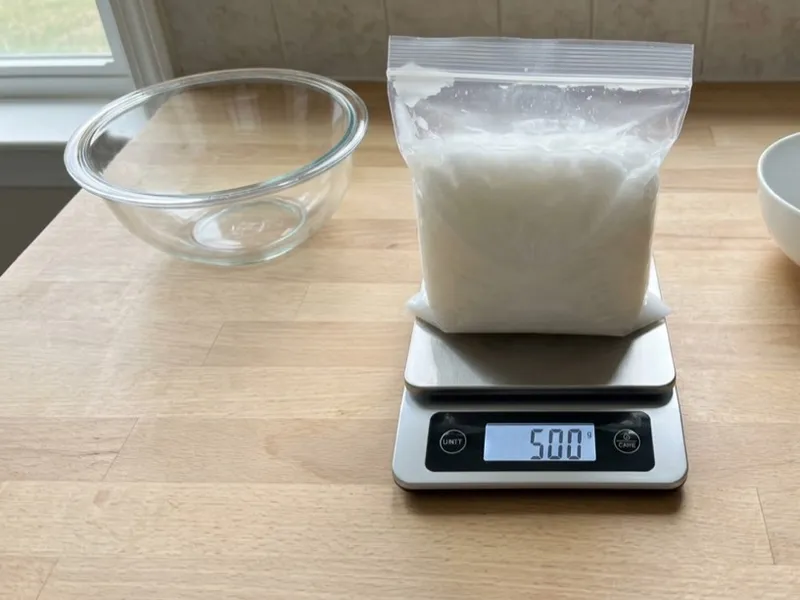
Before anything else, put a known weight on your scale (a full 500 g bag of something sealed works) and confirm it reads correctly. Tare each container separately. Write "LYE" on the lye container and keep it off the counter where the oil sits. With only 1% superfat, a lye amount that is even 5 g high can leave a harsh bar, so weigh twice and read the number out loud if that helps you.
Step 2: Make the lye solution
Put on goggles and gloves and work near an open window. Add the lye to the distilled water, never the reverse, and stir until clear. It will climb past 180°F (82°C). Let it cool to about 90–100°F (32–38°C), which takes 30–60 minutes.
Step 3: Melt the coconut oil and keep it cool
Melt the coconut oil just until it turns clear, then let it fall to 90–100°F (32–38°C). Coconut oil solidifies around 76°F (24°C), so don't let it drop much below 90°F (32°C) or it will cloud and start to set before you blend. Soaping cool is the main way to keep this bar from overheating.
Step 4: Blend to light trace only
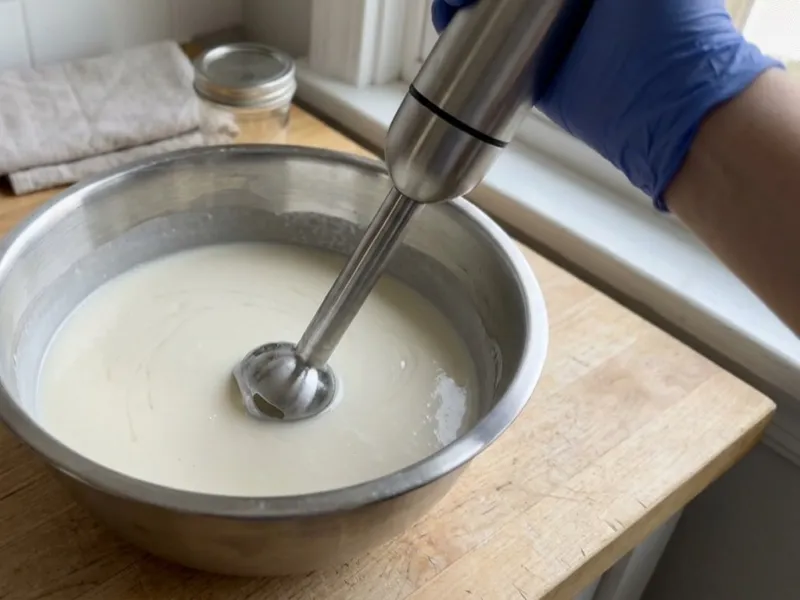
Pour the lye solution into the oil and stick blend in 5–10 second bursts with hand stirring between. 100% coconut reaches trace quickly, often in under two minutes. Stop at light trace, when a drizzle leaves a faint trail on the surface. Thicker than that and it will glop into the mold.
Step 5: Pour and leave it uncovered
Pour into the mold, tap it on the counter to release air, and leave it uncovered at room temperature. Do not insulate. Coconut soap heats itself through gel quickly, and a blanket on top is how you get a cracked, volcano-topped loaf.
Step 6: Cut within a few hours
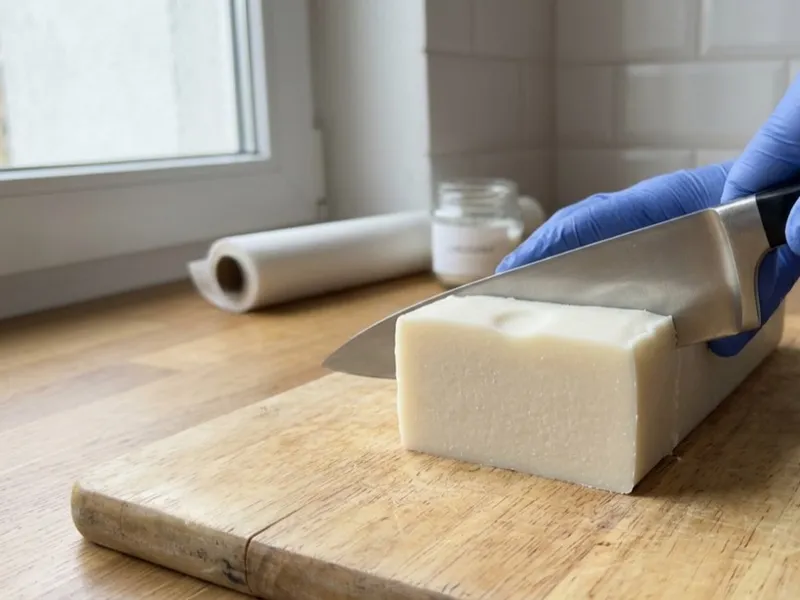
Check the loaf after 4–6 hours. When it is firm enough to hold a fingerprint without sticking, unmold and cut it into bars right away. 100% coconut soap becomes hard and brittle within a day, and if you wait overnight it can shatter or crumble under the knife.
Step 7: Cure, then grate
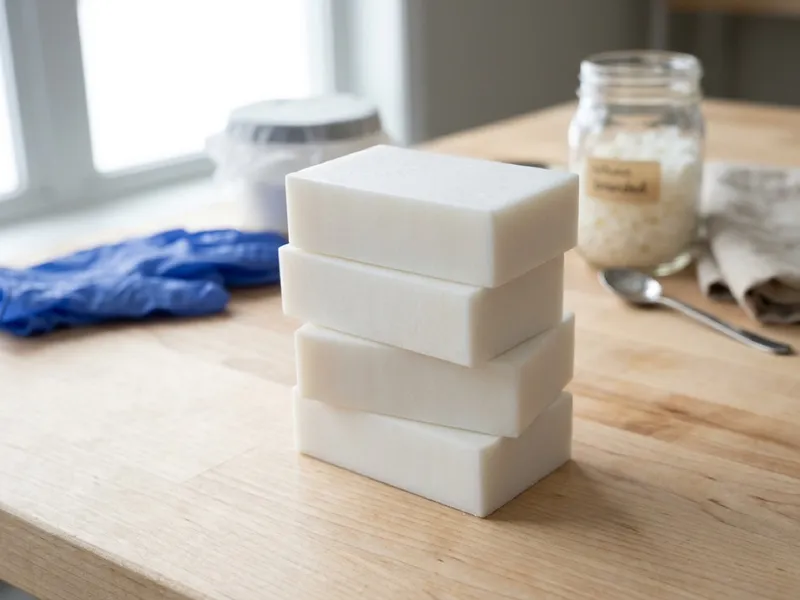
Cure the bars on a rack with airflow for 4 weeks. The soap is chemically finished in a few days, but cured bars are drier and grate into fine, fluffy shreds instead of soft clumps. Store grated soap in a closed jar labeled as laundry soap, out of reach of children.
Variations
Washing powder mix
Optional. Some people mix one part finely grated soap with one part washing soda (sodium carbonate) and use 1–2 tablespoons per load. Washing soda is itself an irritant, so wear gloves when mixing and store it labeled.
Stain bar
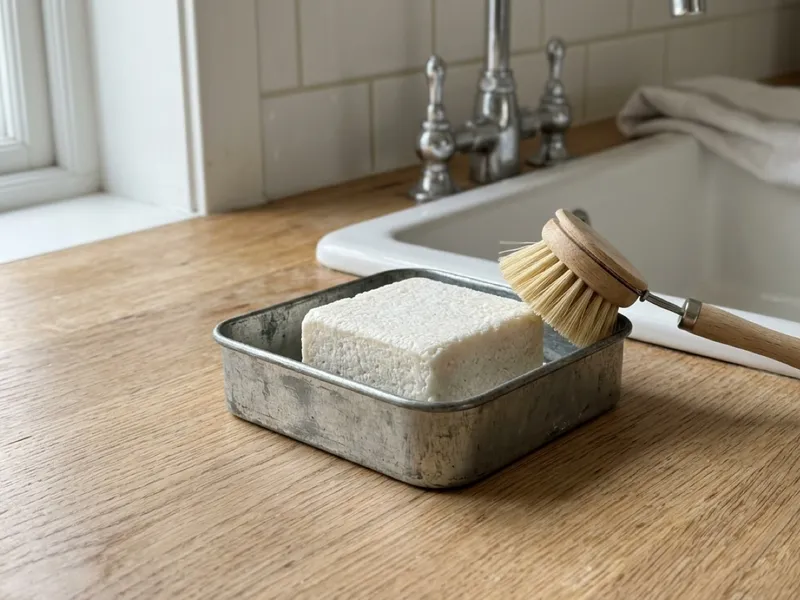
Keep one bar whole by the sink. Wet the stain, rub the bar in, and let it sit a few minutes before washing.
Babassu swap
Babassu oil behaves like coconut. Swap it in at 100% if you have it; run the numbers through the lye calculator, since its SAP value differs.
If something goes wrong
- Bar crumbles or shatters when cut
- It was cut too late. 100% coconut sets fast; cut within 4–8 hours next time. Crumbled soap is still usable for grating. Crumbly soap
- Loaf cracked or rose in the middle
- It overheated. Soap cooler, leave the mold uncovered, and move it to a cool room. Overheating soap
- Bar feels harsh or zaps after cure
- Suspect a weighing error. Do not use it on skin; check the lye and oil weights you logged before deciding whether to rebatch. Lye-heavy soap
FAQ
Can I use laundry soap to wash my hands?
Not as an everyday soap. At 1% superfat and 100% coconut, this bar is designed to strip oil, and it will feel drying on skin. Make a separate bar for hands and label the laundry bars clearly.
Is homemade laundry soap safe for HE washing machines?
Grated soap makes less foam than you might expect, but check your machine's manual. Many HE manufacturers recommend detergents labeled HE, and true soap can leave residue in hard water.
Why 1% superfat and not 0%?
A 0% superfat has no buffer for small weighing errors or slight variation in the coconut oil. One percent leaves a tiny margin of oil so a slightly heavy lye reading doesn't leave free lye in the bar.
Can I use this soap right after cutting?
Chemically it's finished in a few days, but it grates far better after the full 4-week cure. Fresh bars are soft enough to smear on the grater.
Does laundry soap work in hard water?
True soap reacts with minerals in hard water and can leave a dull film on fabric. Many people add washing soda for this reason, or use a vinegar rinse in the softener compartment.
Comments
No comments yet. Made this recipe? Be the first to say how it went.