Liquid Hand Soap Recipe (From Scratch with KOH)
An olive-led potassium hydroxide soap, cooked to a paste and diluted into a mild hand soap for the pump.
This page has affiliate links. We earn a small commission at no cost to you. Disclosure
Formula not yet verified. These numbers haven't been re-run by a second maker. Don't make this batch until this notice is gone.
- Yield
- about 2–2.5 L diluted
- Method
- Liquid
- Difficulty
- Intermediate
- Cure
- Ready in 2 weeks
- Superfat
- 1%
- Lye conc.
- 27%
On this page
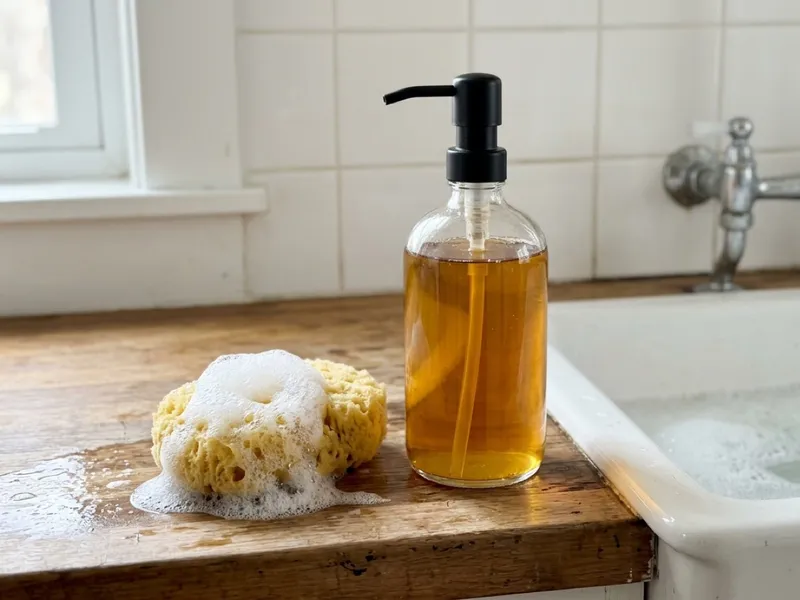
This liquid hand soap recipe makes true liquid soap from scratch: olive, coconut and castor oils cooked with potassium hydroxide into a paste, then diluted into a soap that pours from a pump. It’s milder and more olive-forward than our dish soap, and it stores well, because you dilute the paste only as you need it.
The technique that decides the result is dilution. Liquid soap paste dissolves into a lot of water, and every maker’s paste takes a slightly different amount. Weigh the paste, add water in stages by weight, and wait overnight between additions. Rushing it with too much water at once is the most common way to end up with soap that runs off your hand like water.
Keeping the paste
You don’t have to dilute the whole batch. The cooked paste keeps in a sealed jar for a long time. Dilute a few hundred grams at a time and refill bottles from that, which keeps each bottle fresh and lets you adjust thickness for different rooms.
Why this recipe works
- Olive, 60%. The mild, conditioning backbone. Olive liquid soap is softer on hands than a coconut-heavy dish soap and gives a slightly thicker diluted soap.
- Coconut, 30%. Bubbles and quick lather, plus a clearer finished soap than olive alone.
- Castor, 10%. A steadier, more lasting lather once diluted.
- 1% superfat, glycerin later. Free oil clouds liquid soap and can separate in the bottle, so the superfat stays low. If you want a softer after-feel, stir in a little glycerin after dilution instead.
Ingredients
| Oil | % | Grams | Ounces |
|---|---|---|---|
| Olive oil | 60% | 300 g | 10.58 oz |
| Coconut oil (76°) | 30% | 150 g | 5.29 oz |
| Castor oil | 10% | 50.0 g | 1.76 oz |
| Lye solution | |||
| Potassium hydroxide (KOH, 90%) 1% superfat | 115 g | 4.05 oz | |
| Distilled water For the paste only; dilution water is added later | 310 g | 10.94 oz | |
| Additives | |||
| Vegetable glycerin Stirred in after dilution, optional | 6% | 30.0 g | 1.06 oz |
Equipment
Instructions
Step 1: Warm the oils in a slow cooker
Weigh the oils into a slow cooker used only for soap and set it to low. Bring them to about 150–160°F (65–71°C). The default batch is 500 g of oils, which leaves room in a standard cooker for the paste to foam.
Step 2: Make the KOH solution
Goggles and gloves on, ventilation on. Add the potassium hydroxide to the distilled water, never the reverse, in two or three portions. KOH fizzes and heats more than sodium hydroxide. Stir until clear and use it hot.
Step 3: Blend to a stiff paste
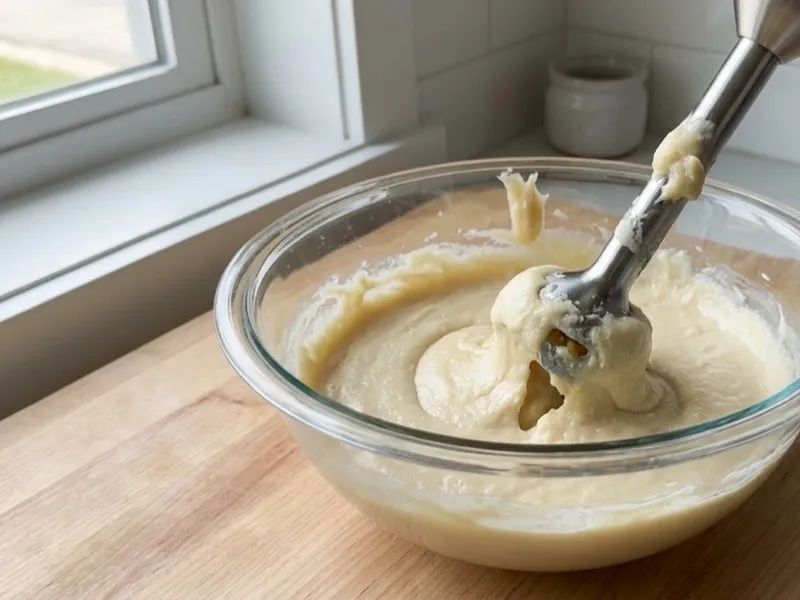
Pour the KOH solution into the oils and stick blend in bursts. The mix passes through trace, then a pudding stage, then tightens into a thick paste that is hard to push the blender through. Olive-heavy pastes can take 15–30 minutes. Keep going until no oil separates on the surface.
Step 4: Cook until translucent
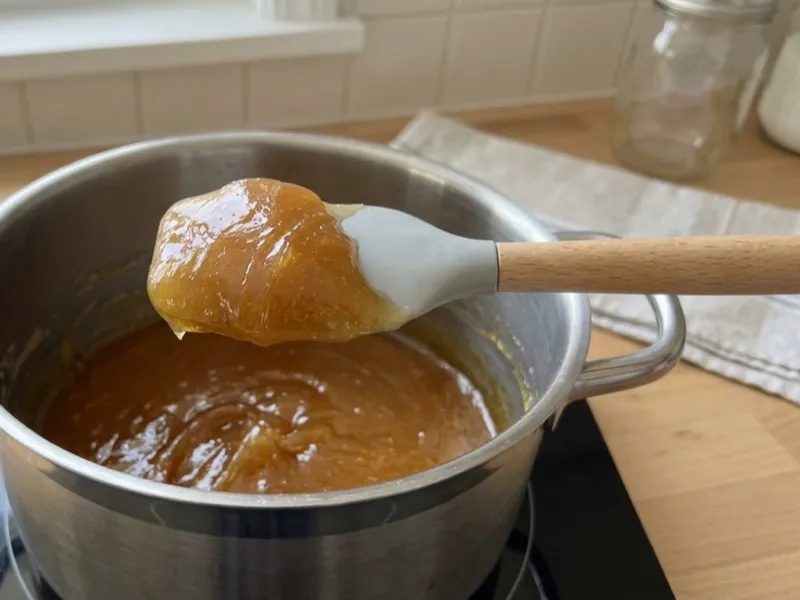
Cover and cook on low for 3–4 hours, folding every 30 minutes. The paste turns from opaque to translucent and glossy, like honey-colored petroleum jelly. Olive pastes are a little cloudier than coconut ones even when done.
Step 5: Run the clarity test
Dissolve about 10 g of paste in 20 g of very hot water. If it's clear to lightly hazy with no oil floating on top, it's done. If milky with oil droplets, cook another 30–60 minutes and test again.
Step 6: Dilute by weight, in stages
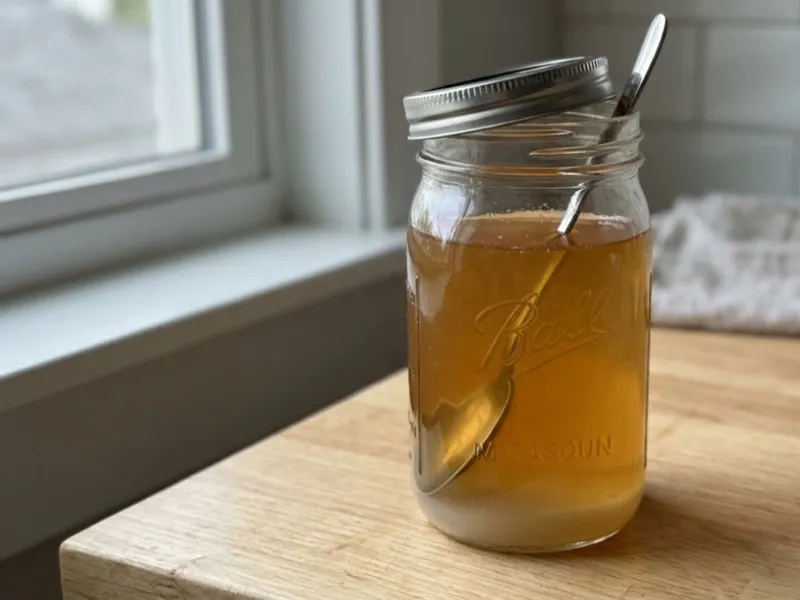
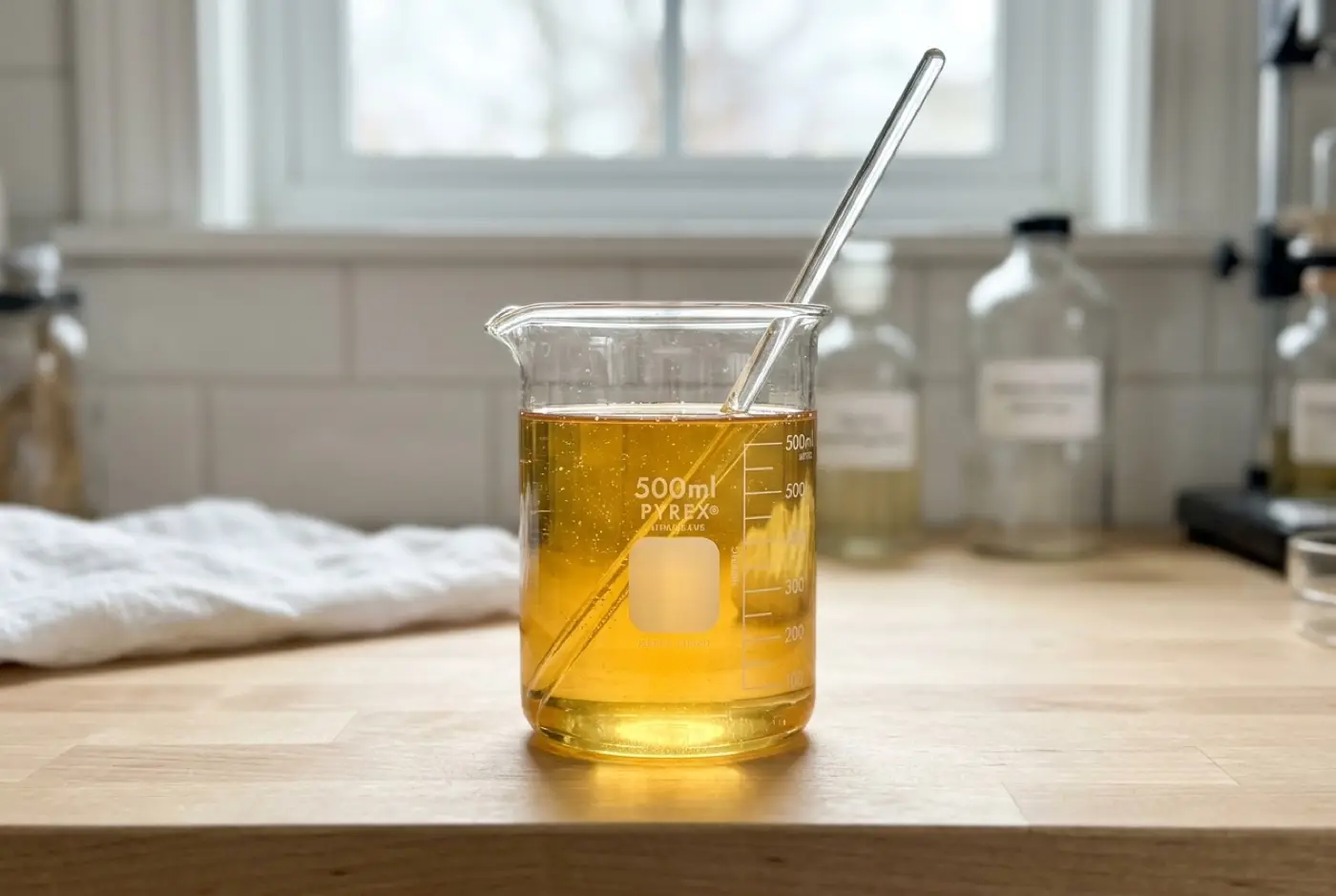
Weigh the paste. Add boiling distilled water at about 1.5 parts water to 1 part paste by weight, cover, and leave overnight. Don't stir much; the paste dissolves on its own. The next day add more hot water a little at a time until it's as thick as you want. Stop early: you can always add water, never take it out.
Step 7: Add glycerin and let it settle
If using glycerin, stir it in now. Leave the soap covered for 1–2 weeks so haze settles, then pour or ladle the clear soap into pump bottles. Label with the date.
Variations
Lavender
Stir in lavender essential oil after dilution at 3% of the original oil weight. Essential oils can cloud liquid soap slightly.
Foaming pump version
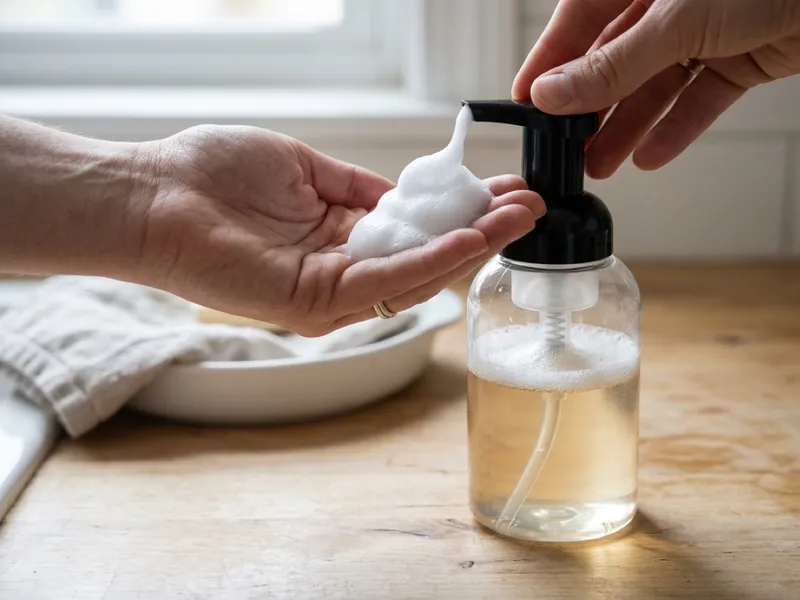
Dilute the finished soap 1 part to 3 parts water for a foaming pump. See our foaming hand soap recipe for the method.
Sunflower swap
Replace 20% of the olive with high-oleic sunflower oil for a lighter-colored, slightly clearer soap.
If something goes wrong
- Soap separates in the bottle
- Too much free oil, or undercooked paste. Let it settle and pour off the clear layer; next time cook until the clarity test passes. False trace and separation
- Too thin
- It was diluted too far. Homemade soap is naturally thin; next batch, add dilution water in smaller steps.
- Paste never thickened
- Blend longer before cooking. Olive-heavy pastes are slow; 30 minutes of intermittent blending is normal.
FAQ
Can I make liquid hand soap with regular lye?
Not this recipe. Sodium hydroxide (regular lye) makes bar soap. Liquid soap needs potassium hydroxide, which forms soap that dissolves in water.
Why is homemade liquid soap thin?
Commercial hand soaps use thickeners. True soap diluted with water stays fairly runny. Diluting less, or adding a small amount of salt solution, thickens it somewhat.
Can I just grate a bar of soap into water?
You can, but it often turns gloopy or separates over time. A KOH liquid soap stays pourable.
How long does homemade liquid hand soap last?
The undiluted paste keeps for a long time in a sealed jar. Diluted soap is best used within a few months; dilute only what you need and use distilled water.
Comments
No comments yet. Made this recipe? Be the first to say how it went.