How to Make Soap Without Lye (and Why Every Real Soap Starts With It)
How to make soap without lye at home. Why true soap always involves lye somewhere, and three honest ways to skip handling it yourself, including a rebatch walkthrough.
On this page
If you’re searching for how to make soap without lye, here’s the honest answer: you can’t make true soap from scratch without it, but you can make soap at home without ever handling it. Every real soap, including every bar labeled “lye-free,” was made with lye at some point; the lye is used up in the reaction and none is left in the finished bar. So the practical options are to start from soap that has already been made, with melt and pour base or by rebatching grated soap, or to use a non-soap cleanser.
Why soap needs lye
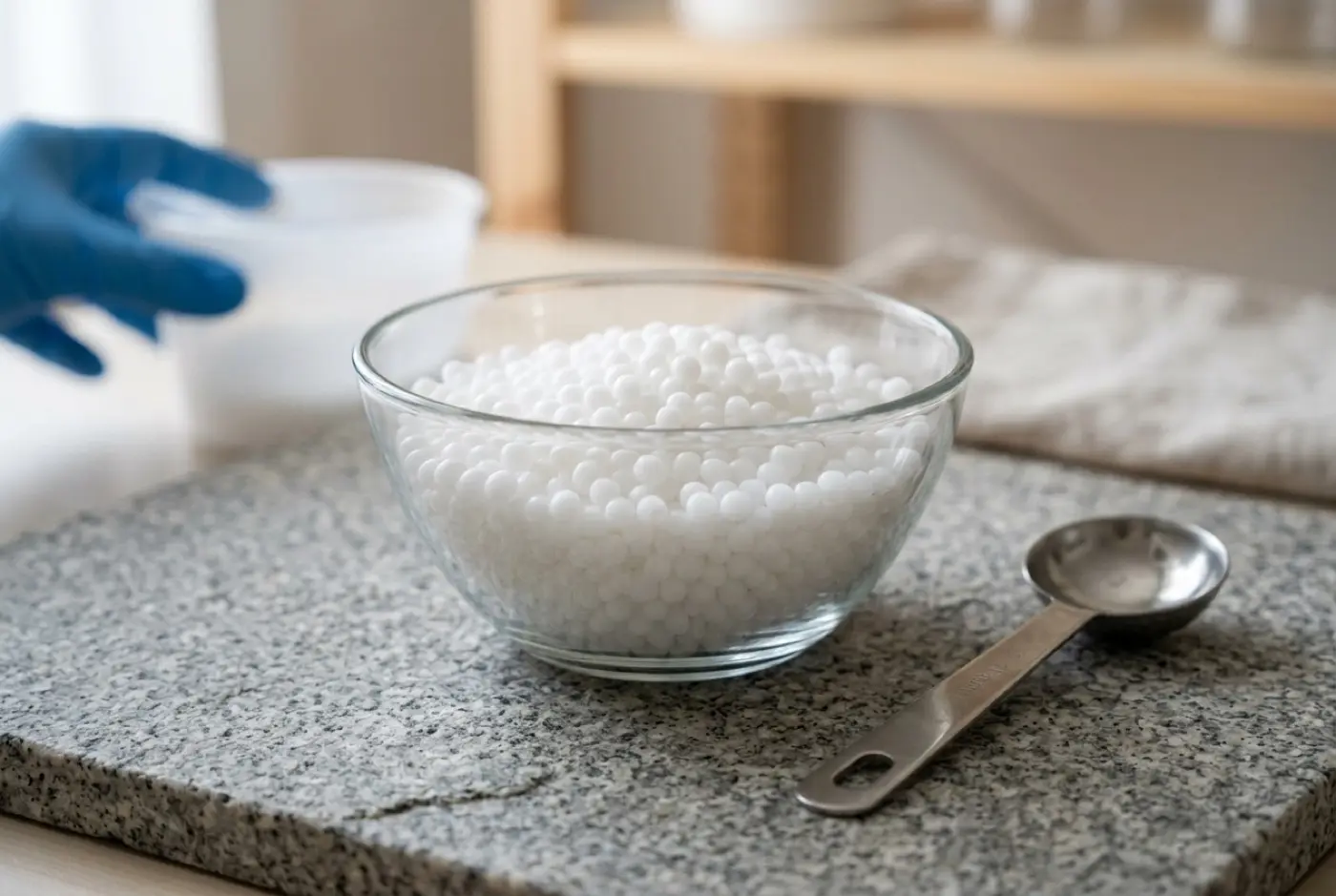
Soap is what you get when fats and oils react with a strong alkali. The alkali splits the oils apart, and the fatty acids pair up with sodium or potassium to become soap. That reaction is saponification, and the alkali is lye: sodium hydroxide for bars, potassium hydroxide for soft and liquid soap.
There’s no plant, kitchen ingredient or clever trick that turns oil into soap without an alkali. Baking soda isn’t strong enough. Washing soda isn’t either. Older recipes made lye from wood ash, by trickling water through it, which gave a potassium-based lye. That’s still lye: just a homemade, less predictable one.
Reading a “lye-free” label
Soap makers aren’t hiding anything when they say lye-free; they usually mean there’s no lye left in the bar. You can still tell lye was used from the ingredient list:
| On the label | What it means |
|---|---|
| Sodium hydroxide, potassium hydroxide | Lye, listed by its chemical name |
| Saponified oils of olive, coconut… | Oils that have been reacted with lye |
| Sodium olivate, sodium cocoate, sodium tallowate | The soap that formed from olive, coconut and tallow with sodium hydroxide |
| Potassium cocoate, potassium oleate | Soap made with potassium hydroxide |
| Sodium lauryl sulfate and similar | Synthetic detergents, not soap; made by different chemistry |
A bar with only detergents and no soap is a syndet (synthetic detergent bar), sometimes sold as a “beauty bar.” It’s a different product, made industrially, and not something you can make at home from scratch either.
Three ways to skip handling lye
Best for Anyone who wants homemade soap without lye in the house, including families with young children.
Pros
- + No lye to buy, store or handle
- + Little equipment needed
- + Fast results: same day for melt and pour
- + Good for kids with adult supervision
Cons
- − You cannot choose the oils from scratch
- − Rebatched bars look rustic
- − Non-soap cleansers are weaker and short-lived
- − Melt and pour costs more per bar
1. Melt and pour
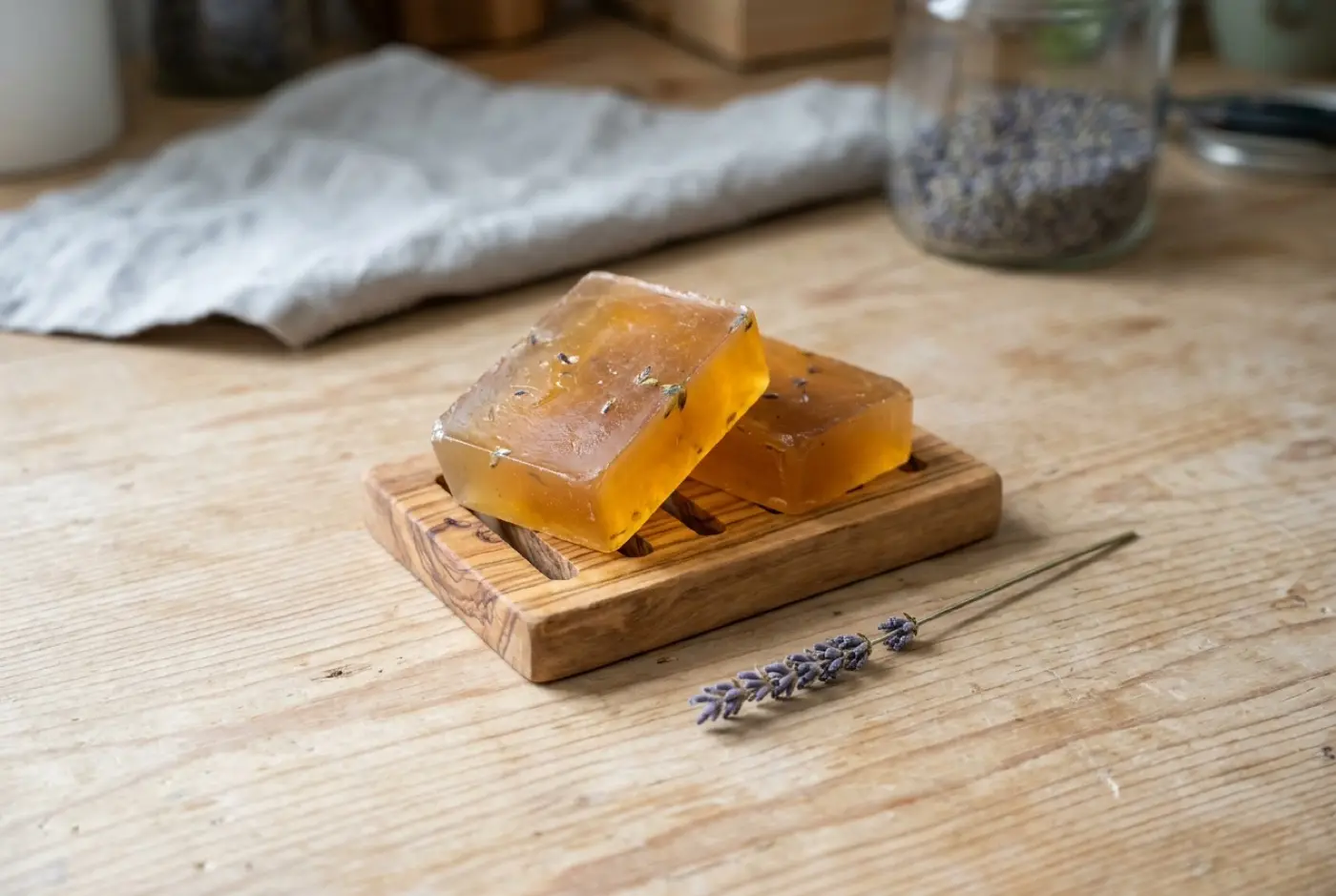
Buy a ready-made soap base, melt it, add fragrance and color, and pour it into molds. It’s the fastest and easiest route, and you get crisp, professional-looking bars the same day. You choose the type of base but not the oils in it. The melt and pour guide covers it in full, with a starter recipe.
2. Rebatching (hand milling)
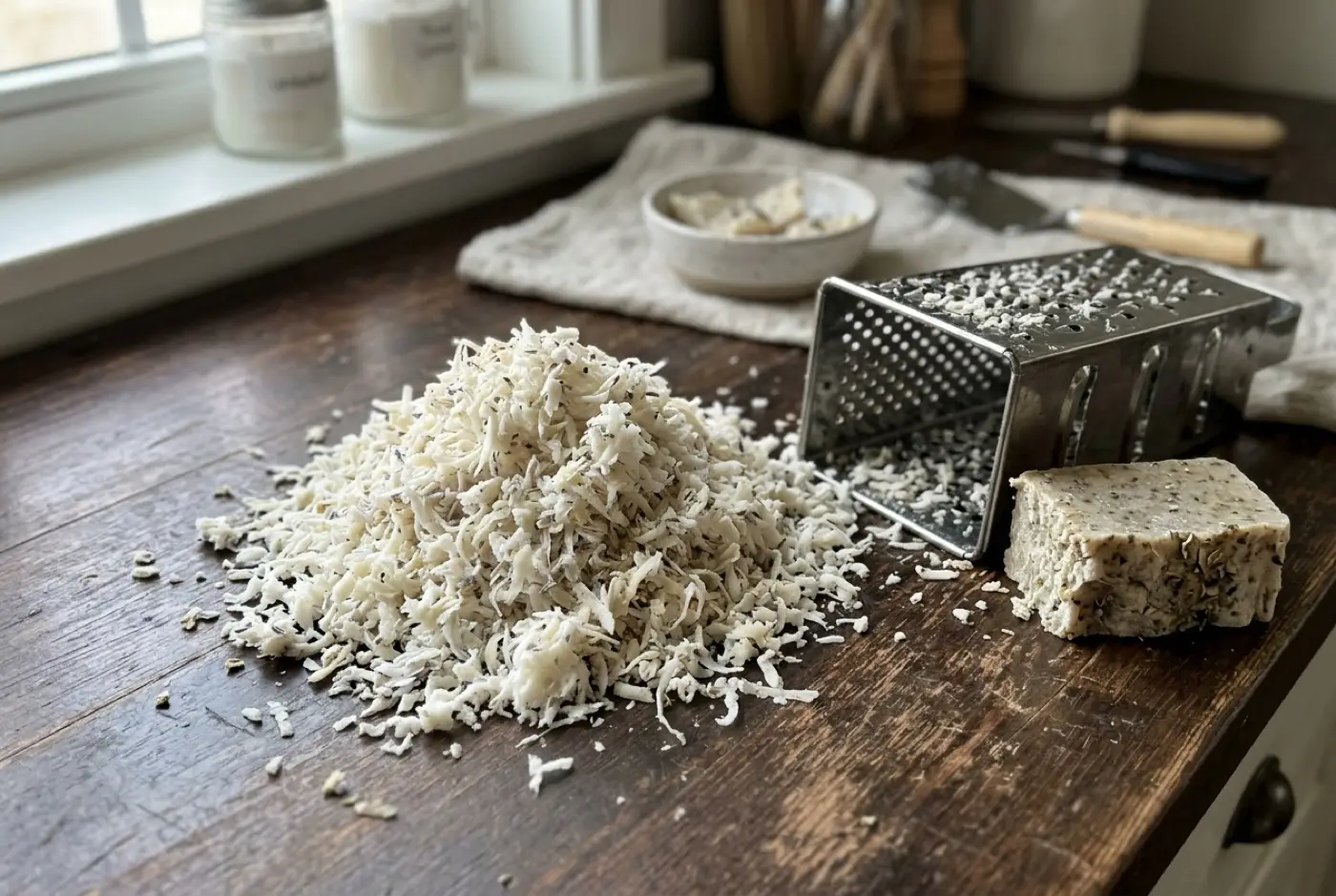
Grate soap that has already been made, melt it with a little liquid, add your own extras, and press it into a mold. You get a rustic, homemade bar with your choice of scent and additives, and you never touch lye. The walkthrough below covers this, and rebatching and hand-milled soap goes deeper.
3. Non-soap cleansers from plants
Soapwort root and soap nuts (the dried fruit of Sapindus trees) contain saponins, natural compounds that foam in water. They clean gently, and people have used them for delicate fabrics for a long time. They aren’t soap, they don’t make a bar, and a homemade soapwort liquid spoils within days unless refrigerated. Treat them as a different product, not a substitute for soap.
How to rebatch soap without lye: walkthrough
This turns plain, finished soap into your own scented, customized bars.
What you need
- Soap to grate: about 450 g (1 lb) of plain, unscented true soap. Pure castile bars or simple unscented handmade bars work well. Check the label for saponified oils or sodium salts such as sodium olivate. Detergent “beauty bars” don’t melt properly.
- Distilled water or milk: a small amount, enough to moisten the gratings. Start with roughly 2–3 tablespoons per 450 g and add more only if it won’t come together.
- Slow cooker on low, or a double boiler.
- Cheese grater, a sturdy spatula, a mold and a knife.
- Optional extras: skin-safe fragrance or essential oil, powdered colorants, finely ground oatmeal, clays.
Steps
- Grate the soap. The finer the gratings, the smoother the result. Older, drier soap needs a little more liquid than fresh soap.
- Add a little liquid. Put the gratings in the slow cooker or double boiler and sprinkle the liquid over them. Stir so it’s evenly distributed.
- Melt slowly. Cover and heat on low, stirring every 10–15 minutes. Rebatched soap never becomes pourable like melt and pour; it softens into a thick, gluey, translucent mass. This can take an hour or more.
- Stir in extras. Take it off the heat and stir in fragrance and additives. Adding fragrance off the heat keeps more of the scent.
- Pack the mold. Spoon the soap into the mold and press it down firmly with the spatula. Tap the mold hard on the counter to collapse air pockets.
- Unmold and dry. Leave it until firm, which can take a day or more. Unmold, cut, and let the bars dry on a rack until hard. The water you added needs to evaporate, which often takes a few weeks.
If it won’t melt
Very old, hard soap and some commercial bars resist melting. Add liquid a spoonful at a time, keep the lid on to hold in steam, and be patient. If it still stays crumbly after a long time on low, it may be a detergent bar, or not enough liquid. Rebatching failed soap covers rescuing difficult batches.
Five myths about lye-free soap
“Glycerin soap is made without lye.” Clear glycerin soap, usually sold as melt and pour base, is soap made with lye, with extra glycerin and other ingredients added to make it clear and meltable.
“Natural soap doesn’t use lye.” Natural, handmade, artisan and organic soaps are made with lye too. “Natural” describes the oils and additives, not the absence of an alkali.
“Baking soda can replace lye.” Baking soda (sodium bicarbonate) is far too weak a base to turn oil into soap. Mixing it with oil gives you a greasy paste, not soap.
“Soap made with lye is harsh.” Harshness comes from a bad recipe or an uncured bar, not from lye having been used. A well-made, cured bar has no lye left in it.
“Old-fashioned lye soap was different.” Traditional lye soap, made with wood ash lye and animal fat, was often harsh because the lye strength couldn’t be measured accurately. Modern soap makers use pure sodium hydroxide and a lye calculator, which removes the guesswork.
Making soap with children
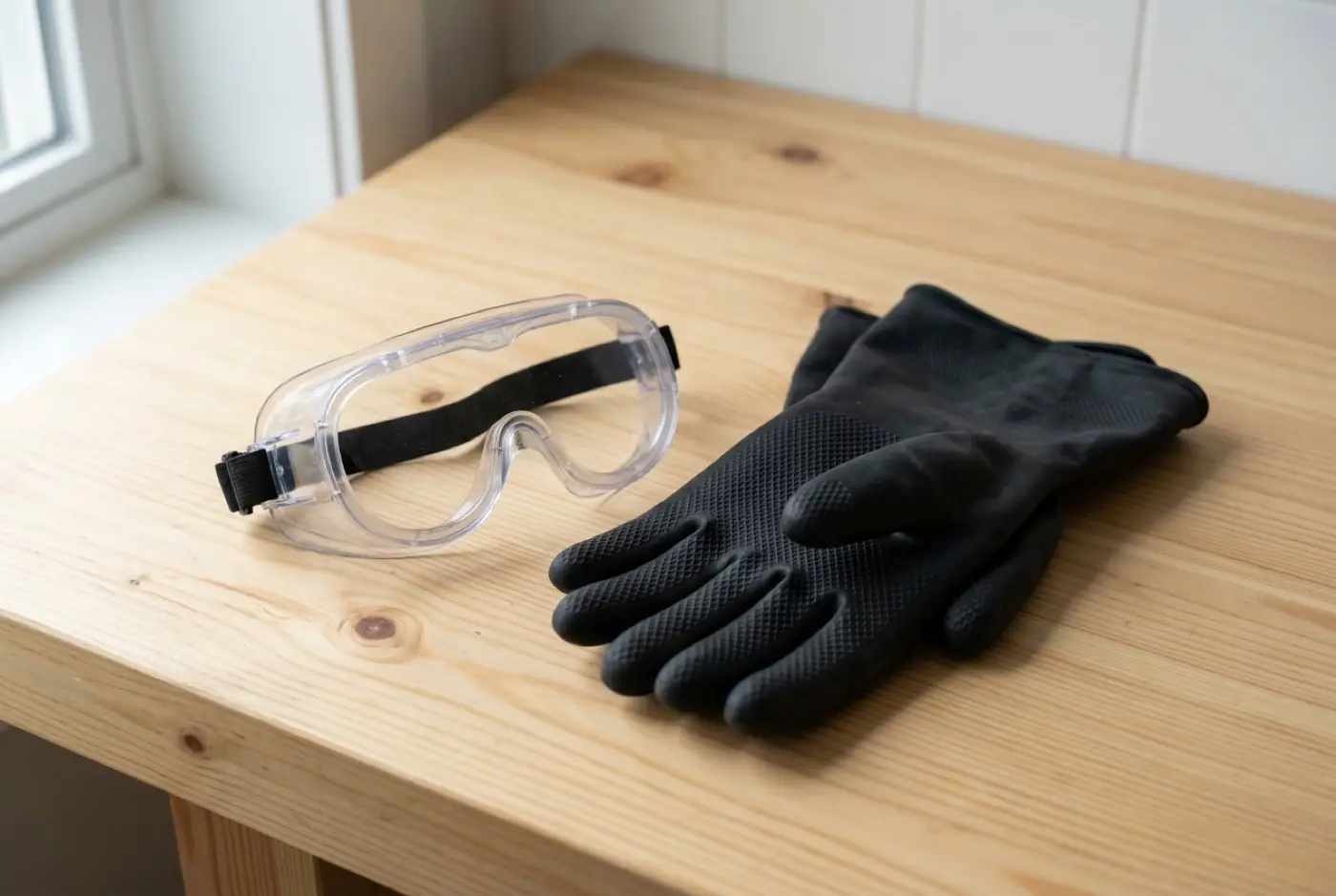
The no-lye routes are the best way to make soap with kids, but they aren’t hazard-free. Melted base and rebatch soap are hot enough to burn. A workable split is that an adult melts and pours, and children choose the colors and scents, stir in extras once the soap has cooled a little, decorate the tops and unmold the finished bars. Use fragrances and colorants sold for soap, not food coloring or perfume, and keep rubbing alcohol out of reach.
Common mistakes
- Expecting a “no lye soap recipe” to work from scratch. Recipes that skip the alkali don’t make soap. Recipes with “lye-free” in the title usually mean melt and pour or rebatch.
- Rebatching detergent bars. Synthetic bars don’t melt into a workable mass. Use true soap.
- Adding too much liquid. The bars stay soft for weeks and can shrink and warp as they dry.
- Using fresh fruit, vegetables or fresh milk in melt and pour. They can spoil inside the bar. Use dried or powdered forms.
- Making large batches of soapwort or soap nut liquid. They don’t keep. Make small amounts and refrigerate.
A starter recipe: oatmeal rebatch bars
| Ingredient | Amount |
|---|---|
| Plain, unscented true soap, finely grated | 450 g (about 1 lb) |
| Distilled water or milk | 2–3 tablespoons, plus more only if needed |
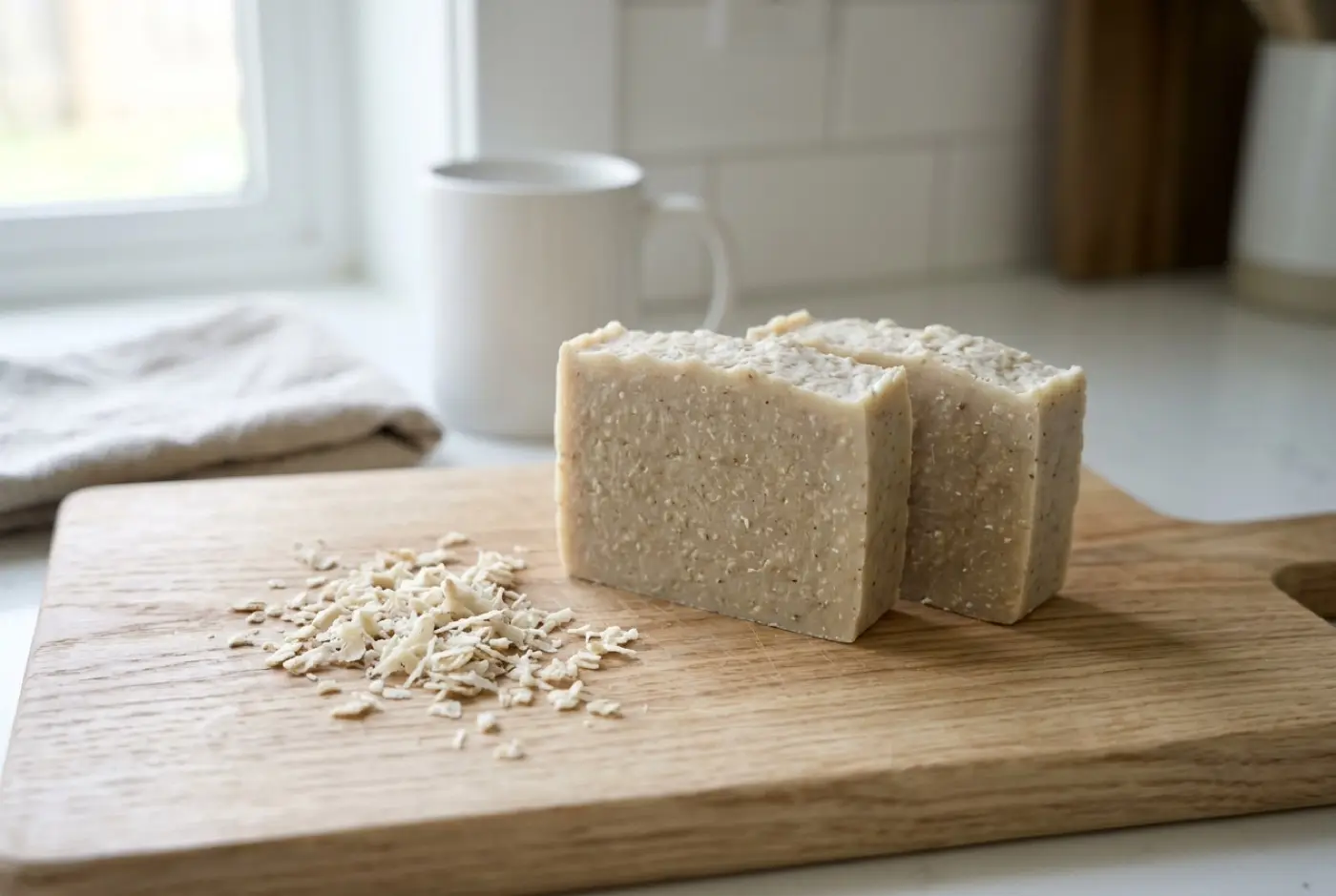
| Finely ground oats (colloidal or blitzed rolled oats) | 1–2 tablespoons |
| Skin-safe fragrance or essential oil (optional) | At your supplier’s rate for soap |
Follow the walkthrough above, adding the oats with the fragrance off the heat. For a lye-free option with no cooking, see the lavender bar recipe on the melt and pour guide. If you’d like to try oats in a from-scratch soap later, see our oatmeal soap.
When you’re ready for lye
If you’ve made a few batches of rebatch or melt and pour and want to choose your own oils, making soap with lye is very manageable with the right habits. Start with soap making safety, then read lye for soap making, and follow your first batch with a forgiving recipe like our three-oil beginner soap.
FAQ
Can you make soap without lye?
Not from scratch. Soap is what forms when oils react with an alkali, and that alkali is lye. What you can do is make soap without handling lye yourself, by starting with melt and pour base or by rebatching soap that has already been made.
Is lye-free soap really lye-free?
The finished bar contains no lye, but lye was used to make it. That's true of every real soap. Labels such as "saponified olive oil" or "sodium olivate" tell you lye was used.
Is there lye in finished handmade soap?
Not in a correctly made, cured soap. The lye reacts completely with the oils, and recipes leave a little extra oil so none is left over.
Are soap nuts and soapwort soap?
No. They contain natural foaming compounds called saponins, which clean mildly, but they aren't soap in the chemical sense. They work best for delicate fabrics and gentle washing, not as a replacement for a bar.
Comments
No comments yet. Made this recipe? Be the first to say how it went.