Three-Oil Beginner Soap Recipe (Olive, Coconut, Shea)
Our recommended first cold process recipe; three easy-to-find oils, round numbers and a slow, forgiving trace.
This page has affiliate links. We earn a small commission at no cost to you. Disclosure
Formula not yet verified. These numbers haven't been re-run by a second maker. Don't make this batch until this notice is gone.
- Yield
- 10 bars
- Method
- Cold process
- Difficulty
- Beginner
- Cure
- 6 weeks
- Superfat
- 5%
- Lye conc.
- 33%
On this page
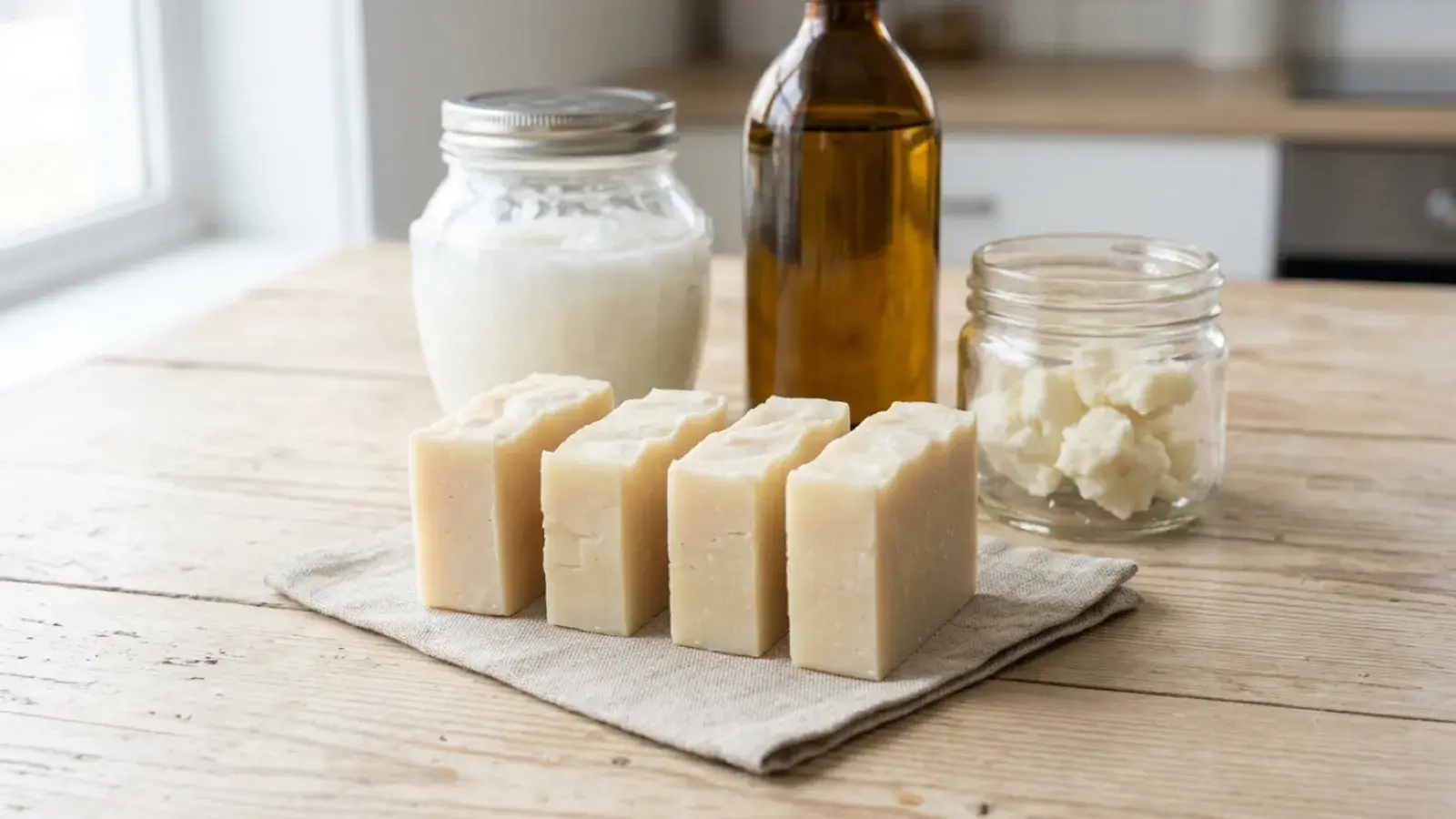
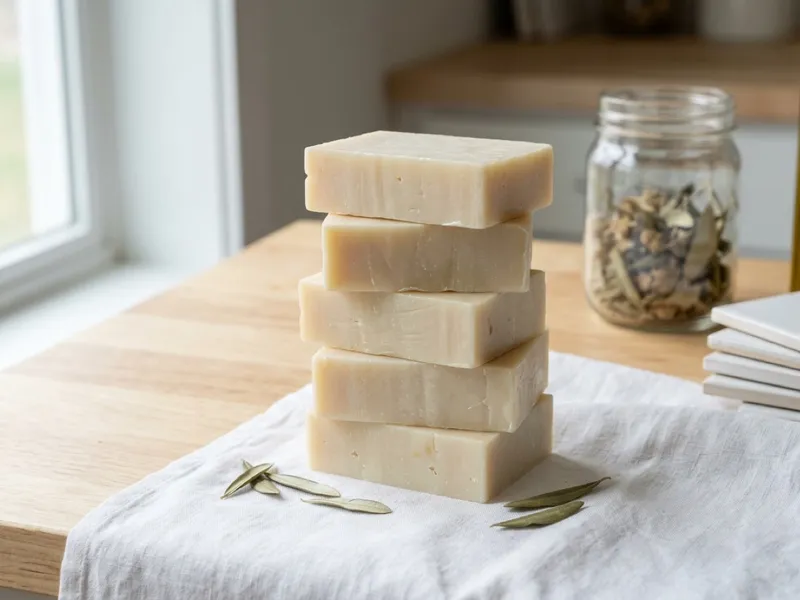
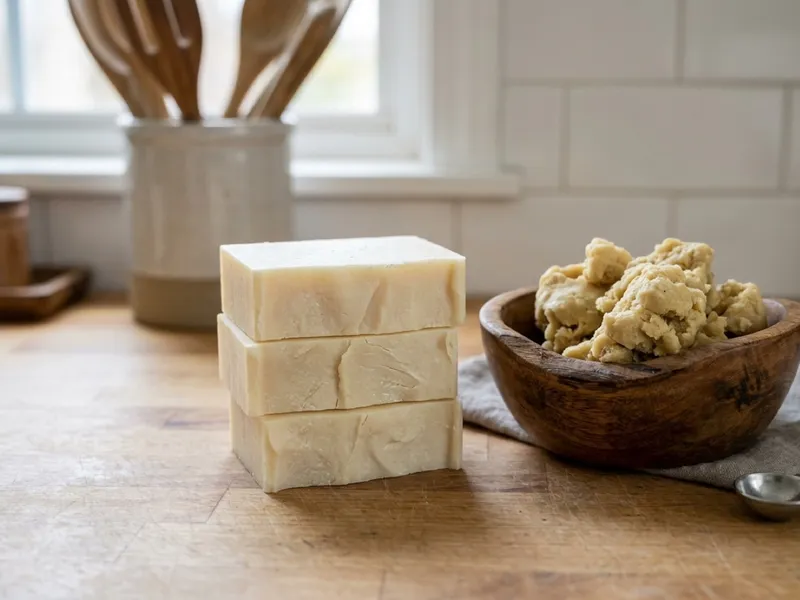
This beginner soap recipe is the one we recommend for your first batch of cold process soap: 60% olive oil, 25% coconut oil and 15% shea butter, unscented, with a standard 5% superfat. All three are easy to find, the numbers are round, and the batter traces slowly enough that you’ll never feel rushed.
Nothing about this recipe is clever, and that’s the point. Every choice is there to buy you time and margin. Olive oil at 60% means the batter stays fluid for minutes, not seconds. Leaving out fragrance removes the most common cause of a batch seizing in the pot. Moderate temperatures mean you don’t have to watch a thermometer like a hawk. You get a mild, hard, creamy bar that will happily serve as your everyday soap.
Before your first batch
Read through the whole recipe once before you open the lye, and run through the soap making safety guide if you haven’t yet. Make sure you can reach running water; if lye or raw batter touches your skin, rinse it under running water for several minutes (not vinegar). Keep the batch to the 1000 g size the first time; it fits a standard loaf mold and is easy to handle.
For a full walkthrough with photos of each stage, follow your first batch, step by step, written with this recipe in mind. When you’re ready for something with a little more character, the shea butter soap pushes the butter higher, and castile soap shows what olive oil does on its own.
Why this recipe works
- Olive, 60%. Mild and conditioning, and above all slow to trace. That slowness is what gives a first-timer room to stop, check and breathe.
- Coconut, 25%. Brings the hardness and bubbles olive oil lacks, at a level that won’t feel harsh.
- Shea, 15%. Firms the bar and adds a creamy edge to the lather, so it doesn’t go soft in the dish.
- Unscented. Fragrance is the most common reason a beginner batch seizes or thickens too fast. Leaving it out removes that risk from your first batch.
Ingredients
| Oil | % | Grams | Ounces |
|---|---|---|---|
| Olive oil | 60% | 600 g | 21.16 oz |
| Coconut oil (76°) | 25% | 250 g | 8.82 oz |
| Shea butter | 15% | 150 g | 5.29 oz |
| Lye solution | |||
| Sodium hydroxide (NaOH) 5% superfat | 139 g | 4.89 oz | |
| Distilled water 33% lye concentration | 282 g | 9.93 oz | |
Equipment
Instructions
Step 1: Set up before anything is opened
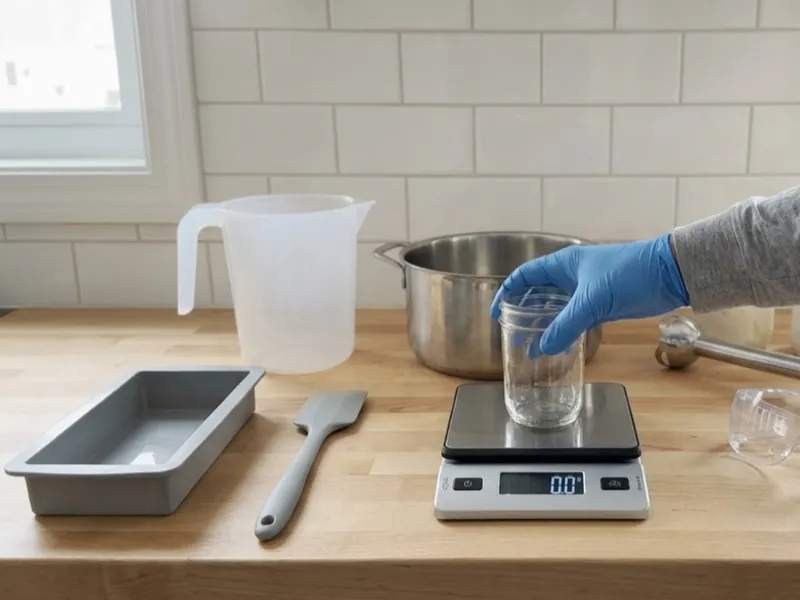
Clear the counter, keep kids and pets out, and open a window. Put on goggles, gloves and long sleeves. Lay out everything: scale, a heat-safe pitcher for the lye, a pot for the oils, the stick blender, a spatula and the mold. Weigh every ingredient before you start mixing.
Step 2: Make the lye solution
Weigh the distilled water into the pitcher. Weigh the lye separately, then add the lye to the water, never the water to the lye. Stir gently until it turns clear. It will get hot, around 180°F (82°C), and give off fumes for a minute; don't lean over it. Set it somewhere safe to cool to 90–100°F (32–38°C).
Step 3: Melt and combine the oils
Melt the coconut oil and shea butter in the pot over low heat until clear. Take it off the heat and pour in the olive oil, which cools the blend. Aim for the oils at 90–100°F (32–38°C), close to the lye temperature. Within 10°F (5°C) of each other is plenty close enough.
Step 4: Blend to light trace
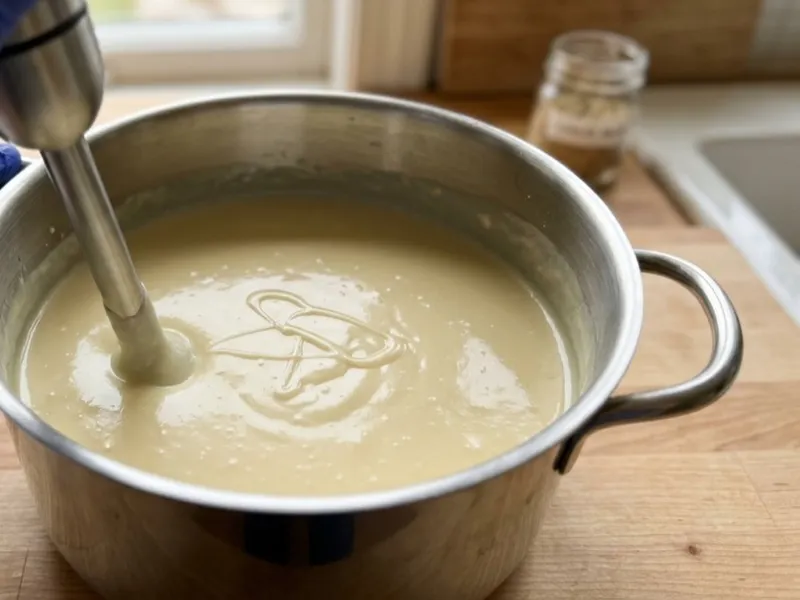
Pour the lye solution slowly into the oils down the shaft of the stick blender. Blend for 5 seconds, then stir with the blender off for 10–15 seconds, and repeat. With 60% olive oil this takes a while, often 5–8 minutes. You're done when a drizzle from the spatula leaves a faint line on the surface before it sinks: light trace.
Step 5: Pour into the mold
Pour the batter into the mold and tap it on the counter a few times to settle air bubbles. Smooth the top with the spatula. Wipe drips immediately; fresh batter is still caustic.
Step 6: Cover and wait two days
Lay a piece of cardboard over the mold and leave it somewhere undisturbed at room temperature. Don't add towels or heat; this recipe doesn't need them. Leave it for 48 hours.
Step 7: Unmold and cut
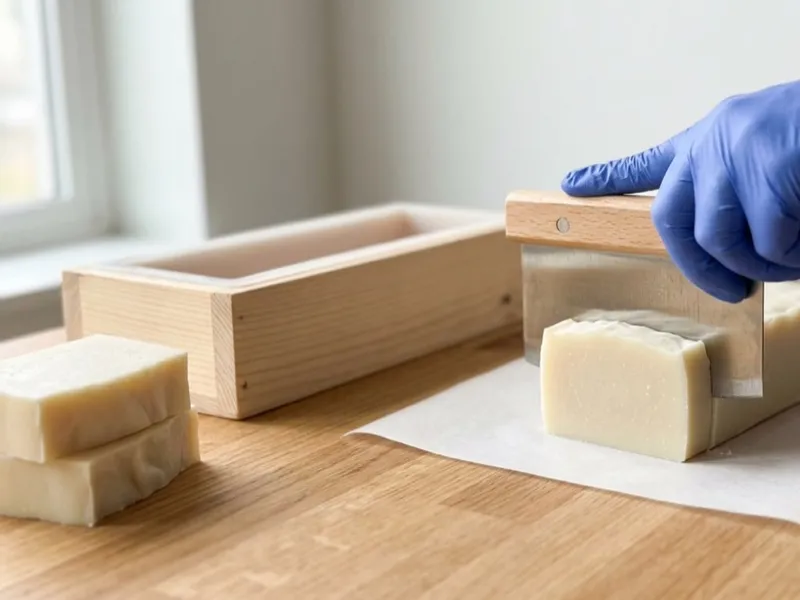
Gently peel the mold away from the loaf. If it still feels soft or sticky, wait another day; olive-heavy soap takes its time. Cut into bars about 1 inch (2.5 cm) thick with a sharp knife.
Step 8: Cure for six weeks
Stand the bars on a rack or a sheet of parchment, spaced apart, somewhere with airflow and out of direct sun. Turn them once a week. After 6 weeks they're ready to use and give away.
Variations
First scent
For your second batch, add lavender essential oil at 3% of oil weight (30 g per 1000 g oils) at light trace. It behaves well and won’t speed things up.
Olive
No shea on hand? Use 70% olive, 25% coconut and 5% castor. The bar is softer at first and takes longer to unmold; re-run the lye.
Add a little color
Stir 1 tsp of kaolin or pink clay per 500 g oils, dispersed in a splash of the water, into the batter at light trace.
If something goes wrong
- Nothing seems to be happening while blending
- Normal with this much olive oil. Keep pulsing and stirring; trace can take up to 10 minutes. Understanding trace
- Thin oily layer on top after pouring
- The batter separated, usually because it wasn’t fully at trace. Blend a little longer next time. False trace and separation
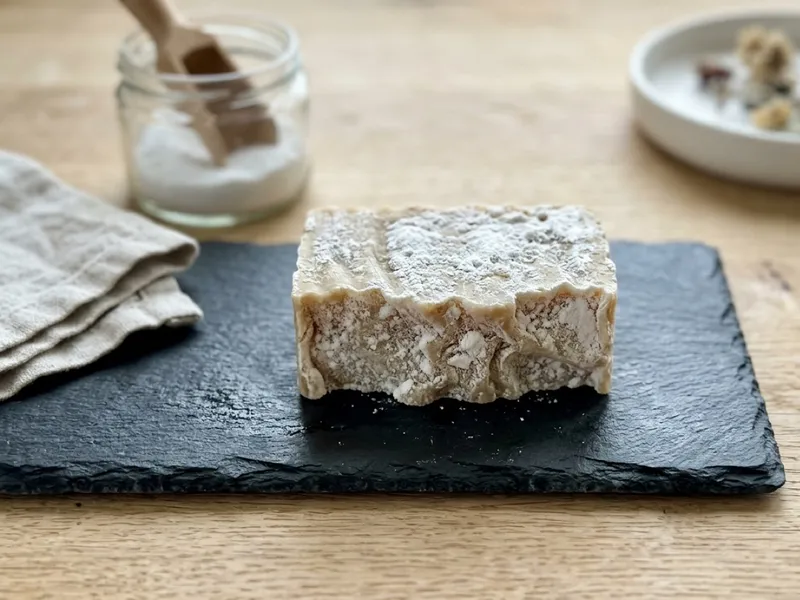
- White powder on top
- Soda ash, very common on a first batch. It’s harmless; wipe or plane it off. Soda ash on soap
FAQ
What is the easiest soap recipe for beginners?
A simple three-oil cold process recipe like this one. Olive, coconut and shea are easy to buy, the percentages are round numbers, and the slow trace leaves time to fix small mistakes.
Can I use extra virgin olive oil?
Yes. Any grade of olive oil works with the same lye amount. Extra virgin traces slowest and may tint the bar slightly green; pure or light olive oil makes a paler bar.
Do I need to add fragrance?
No, and we suggest you don't for your first batch. Fragrance can speed up trace or cause seizing. Make this one plain, then add a scent next time.
Can I use the soap before six weeks?
It will be safe once saponification finishes in the first days, but it will be soft and wear away fast. The cure lets water evaporate and the bar harden, which makes it last much longer.
What if my lye solution is still hot?
Wait. There is no rush with this recipe. Oils and lye anywhere between about 90 and 110°F (32–43°C) work.
Comments
No comments yet. Made this recipe? Be the first to say how it went.