Curing Soap: What Happens in Those Four to Six Weeks
Curing soap means letting fresh bars sit in open air for weeks so water leaves and the bar turns harder, milder and longer lasting. Here's what changes and how long each type needs.
On this page
Curing soap is the waiting period after you cut a batch: the bars sit in open air, usually for four to six weeks, while excess water evaporates and the soap settles into a harder, milder, longer-lasting bar. Lye does most of its work in the first day or two. Cure is about what happens after that.
A bar you cut today and a bar you use in six weeks are made of the same soap, but they don’t behave the same. The fresh one feels slightly tacky, slumps in a wet dish and can disappear in a week of showers. The cured one is firm, rinses cleanly and lasts.
What actually happens during cure
Three things change while bars sit on the rack. None of them is dramatic to watch, which is why cure feels like “doing nothing.” It isn’t.
Water leaves. Cold process recipes use more water than the finished bar needs, so the lye can dissolve and the batter stays fluid long enough to pour. That water doesn’t vanish when the soap sets. It moves out slowly through the surface of each bar. Most of it goes in the first two to three weeks; after that the loss tapers off.
The bar firms up. Soap is not a uniform solid. As water leaves, the soap molecules pack into a more ordered, crystalline structure. Soapmakers describe the result as a “harder” bar, and you can feel it: a cured bar resists a thumbnail, holds sharp edges and dissolves more slowly in water. This is the main reason cured soap lasts longer in the shower.
The feel gets milder. Freshly made soap often feels slightly harsher on the skin than the same bar a month later, even when the formula is correct and the superfat is in place. The exact reasons are still debated among makers and soap chemists, so it’s honest to say the effect is widely observed rather than fully explained. What matters practically: let bars cure before you judge how they feel.
Cure times by soap type
These are the ranges most experienced makers work with. Treat the low end as “usable” and the high end as “at its best.” Humid climates push every number up.
| Soap type | Minimum cure | Better with |
|---|---|---|
| Typical cold process (mixed oils) | 4 weeks | 6 weeks |
| High-lard or high-tallow bars | 4 weeks | 6–8 weeks |
| Milk soaps (goat, coconut, buttermilk) | 4 weeks | 6 weeks |
| Salt bars | 4 weeks | 6–8 weeks or more |
| High-olive bars (70%+ olive) | 6–8 weeks | 3–6 months |
| 100% olive castile | 3 months | 6–12 months |
| Hot process | A few days, once firm | 2–4 weeks |
| Melt and pour | No cure needed | Wrap once set |
| Liquid soap (KOH paste, diluted) | No cure needed | 1–2 weeks rest for clarity |
Castile is the outlier. Fresh castile lathers in a thin, slippery way that many people dislike; with months of cure the lather and hardness improve noticeably. If you’re making our castile soap, plan around a long wait from the start.
Hot process gets cooked until saponification is complete, so the bars can be used much sooner. They still hold extra water, though, and a couple of weeks on the rack makes them harder and longer lasting. “Ready” and “at its best” are different things for hot process too.
How to tell when cure is done: weigh your bars
The calendar is a guide. The scale is evidence. This is the simplest way to see cure happening:
- On cut day, pick three bars from different parts of the loaf (an end, the middle, the other end).
- Mark them with a pencil dot on the bottom and write their starting weights in your batch log.
- Weigh the same three bars once a week, at roughly the same time of day.
- Watch the curve. Weight drops fastest in the first week or two, then slows.
- When a bar loses only a gram or two between weekly weighings, most of the free water is gone and the bar is effectively cured.
An example of what your log might look like for one 120 g bar (your numbers will vary with recipe, water amount and room):
| Week | Weight | Change |
|---|---|---|
| Cut day | 120 g | — |
| 1 | 113 g | −7 g |
| 2 | 109 g | −4 g |
| 3 | 107 g | −2 g |
| 4 | 106 g | −1 g |
| 5 | 106 g | 0 g |
This also tells you something useful for selling or gifting: label weights should be taken after cure, not on cut day. A bar that weighs 120 g fresh can easily come in under that a month later.
Setting up a good cure space
You don’t need special equipment. You need air, a stable room and patience.
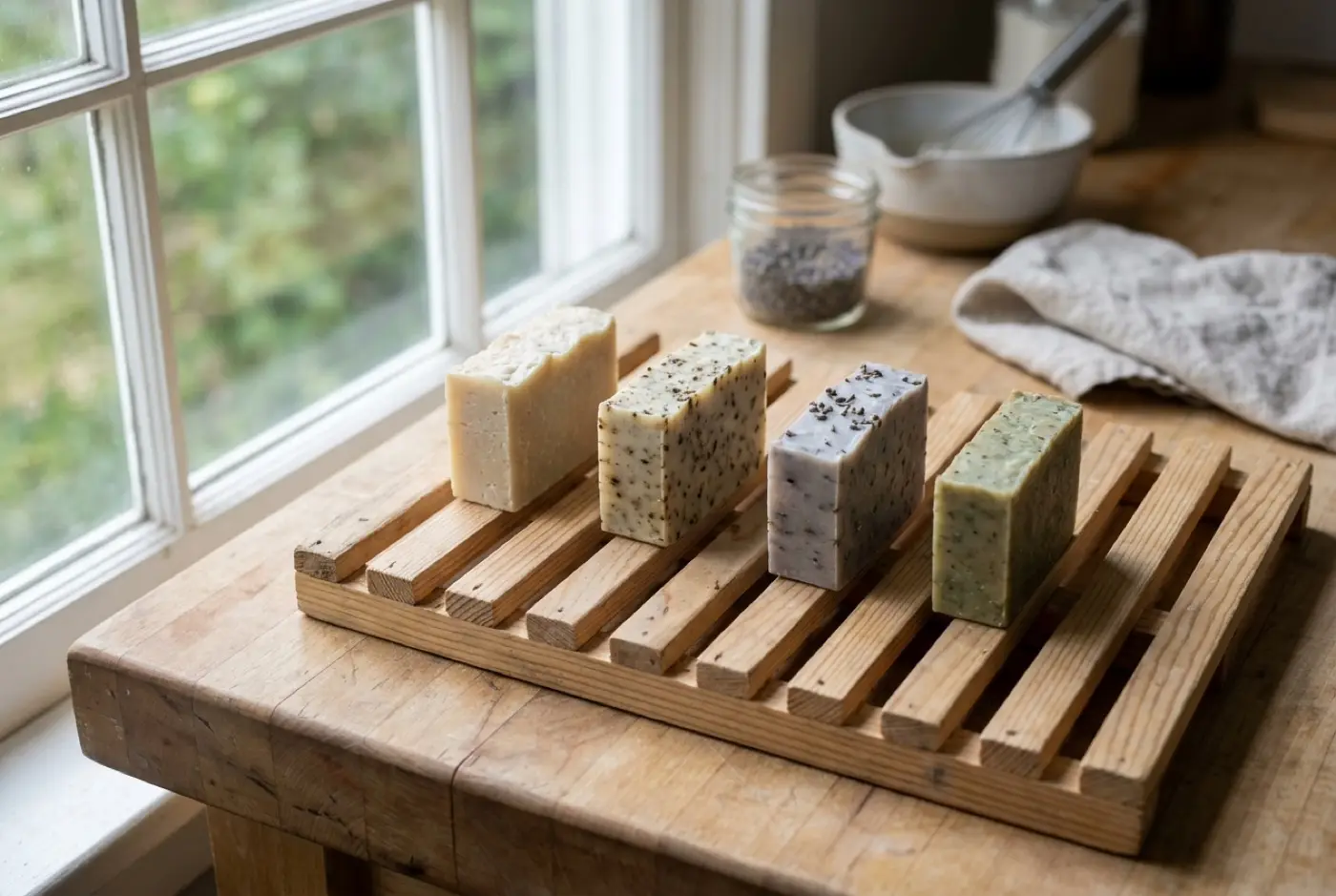
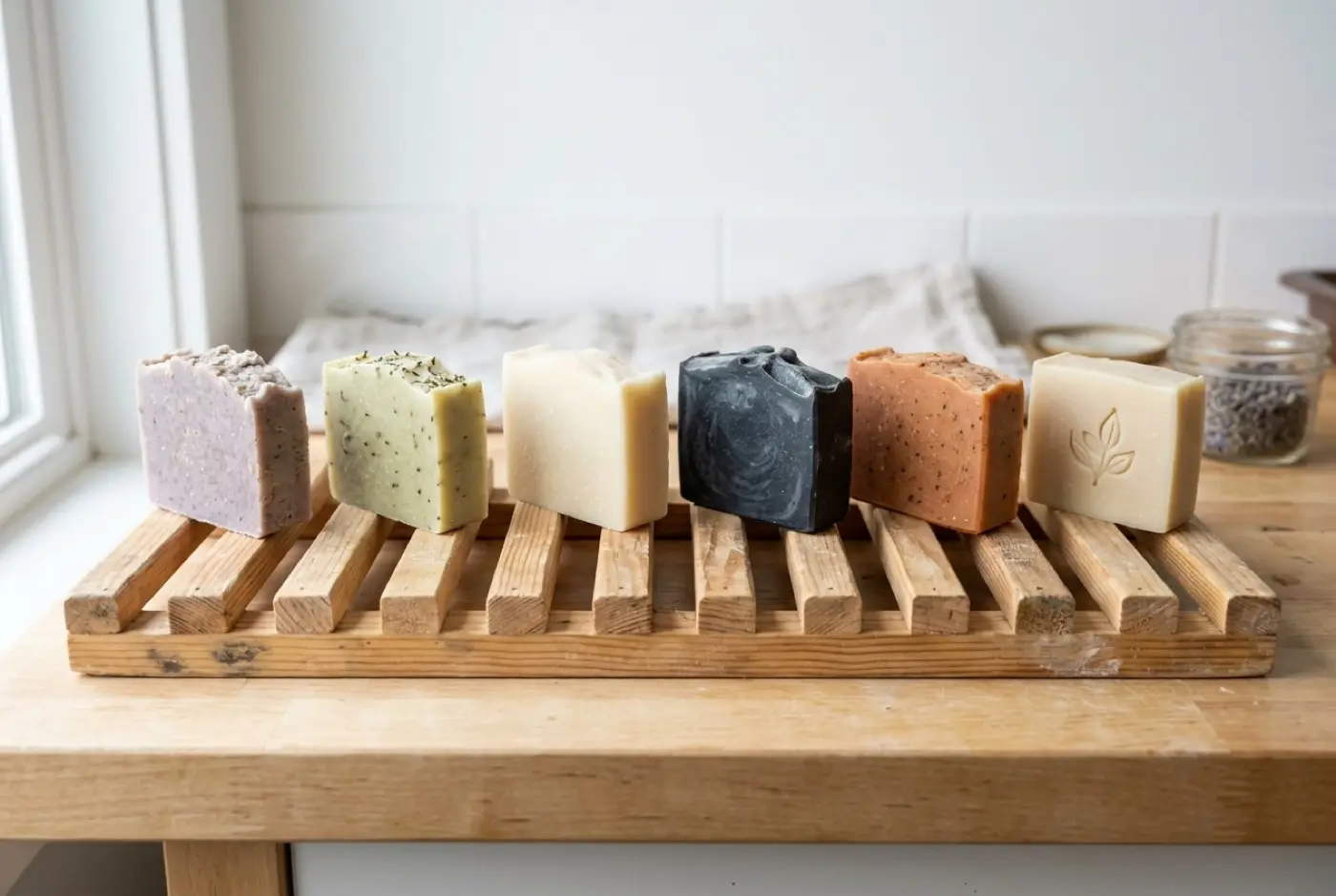
- Airflow on all sides. Stand bars on edge on a wire rack, a slatted shelf or a sheet of parchment, with a finger’s width between bars. Turn bars that lie flat every few days so the bottoms dry too.
- Room temperature. Somewhere around 65–75°F (18–24°C) is comfortable. Avoid the space above a radiator or next to a heater.
- Out of direct sun. Light fades many colors and some essential oils, and sun-warmed bars can sweat.
- Low humidity if you can manage it. Damp air slows water loss and can leave beads of moisture on bars (see sweating soap). A fan on low or a dehumidifier in the room helps in humid seasons.
- Breathable cover, not a sealed box. A cardboard box with the lid ajar or a cotton cloth keeps dust off. Airtight plastic tubs trap moisture.
- Away from raw food and kids. Fresh soap looks edible to small children and pets.
Label each tray with the batch name and cut date. Six weeks is long enough to forget which lavender batch was the one with extra coconut oil.
What speeds cure, and what doesn’t
Things that genuinely help:
- A water discount. Using less water in the recipe means less to evaporate. A modest discount can trim a week or so off a typical cure, though it also makes the batter move faster. See water discount for the tradeoffs.
- Harder oils. Recipes with more coconut, palm, lard, tallow or butters firm up faster than high-olive or high-sunflower recipes. See oils for soap making.
- Sodium lactate helps bars release from the mold and cut cleanly, which can make the first days easier. It doesn’t replace cure. See soap additives.
- Smaller or thinner bars lose water faster than thick slabs.
Things that don’t help:
- Ovens and dehydrators after cutting. Heat can draw oils and fragrance to the surface and leave bars sweaty or misshapen.
- Leaving the loaf uncut. Cut within a day or two of unmolding so each bar has its own surfaces to breathe through. See unmold and cut soap.
- Wrapping early. Shrink wrap and sealed bags stop cure in its tracks and can trap moisture against the bar.
Common curing mistakes
- Judging the recipe too soon. A bar that feels soft or lathers oddly at week one is not a finished bar. Write notes, but save your verdict for week four to six.
- Stacking bars face to face. The touching faces stay damp and can develop soft or discolored patches.
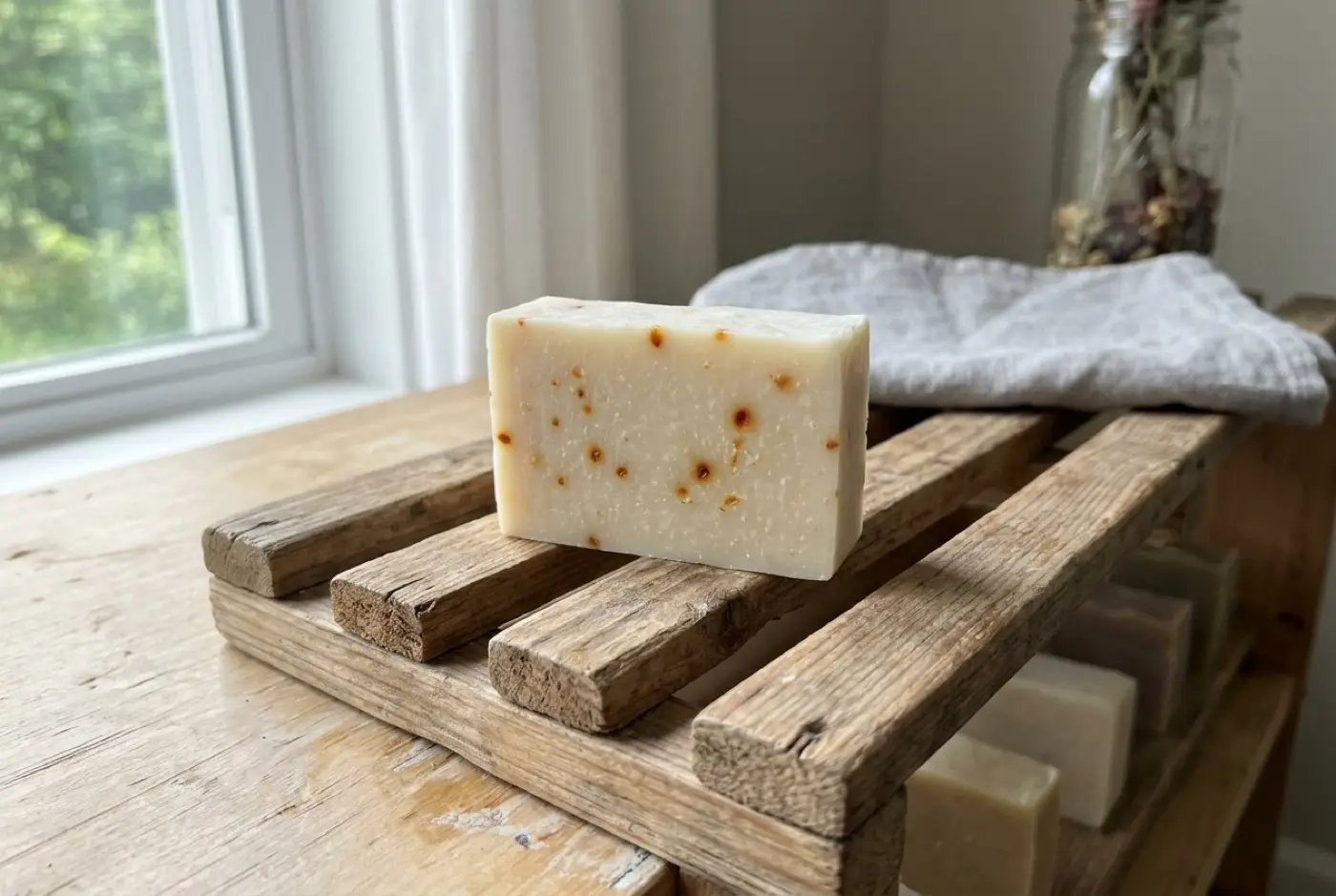
- Curing in a damp basement or bathroom. Humidity both slows cure and is one of the risk factors for dreaded orange spots.
- Treating soda ash as a cure problem. That white powdery film forms on cut day or in the mold and is cosmetic. See soda ash.
- Using metal shelves that rust. Bare steel in a humid room can mark bars where they touch. Use coated racks, wood or parchment.
- Forgetting the scent fades. Some essential oils, especially single-fold citrus, fade noticeably over a long cure. If a castile needs six months, choose a scent that lasts. See essential oils for soap.
After cure: storage
Once bars stop losing weight, they can be wrapped and stored. Keep them somewhere cool, dry and dark, with some airflow, and use or sell high-unsaturated-oil bars within a year or so for the best scent and color. Our guide to storing cured soap covers boxes, wraps and how long bars keep, and soap shelf life and DOS explains why some bars develop orange spots in storage.
Recipes to practise on
- Castile soap shows the long-cure effect most clearly: compare a bar at six weeks with one at six months.
- Goat milk soap is a standard four-to-six-week bar and a good one to weigh weekly.
- For logistics like calendars and planning batches around holidays, see how long to cure soap.
FAQ
How long does homemade soap need to cure?
Most cold process bars need four to six weeks. High-olive bars like castile improve for several months, and hot process bars are usable within days but still get harder with a few weeks of cure.
Can I use soap before it is cured?
A properly formulated cold process bar is generally not caustic after the first couple of days, but it will be soft, wear away quickly and can feel harsher than it will after cure. Waiting gives you a much better bar.
How do I know when soap is fully cured?
Weigh a few bars once a week. When the weight stops dropping by more than a gram or two between weighings, most of the free water is gone.
Can you speed up curing soap?
A little. A water discount, good airflow and a dry room all shorten the wait. Ovens and dehydrators are not a substitute; heat can sweat out oils and fragrance.
Does soap need to cure in the dark?
It does not need darkness, but keep it out of direct sun. Light fades many colorants and essential oils and warms the bars.
Comments
No comments yet. Made this recipe? Be the first to say how it went.