Soap Making 101: What Soap Is, How It Forms and How to Start
Soap making 101 in plain words. What soap is, the lye-and-oil reaction behind every bar, the main methods, and the short list of gear you need to begin.
On this page
Soap making 101 fits in one sentence: mix oils with lye and water, and a chemical reaction turns them into soap and glycerin. Everything else in the craft, from swirls to shampoo bars, is a variation on that reaction. This page gives you the whole map: what soap actually is, what happens in the pot, the main ways to make it, what you need to buy, and which page to read next. It deliberately stays short on detail, because each topic has its own full guide.
What soap actually is
Soap is a salt. Not table salt, but the same idea: an acid and a base reacting to make something new. In soap, the acids are the fatty acids locked inside fats and oils, and the base is lye.
What makes a soap molecule useful is its shape. One end is attracted to water; the other end is attracted to oil and grease. When you wash, the oil-loving ends grab onto grease and dirt, and the water-loving ends face outward into the water, so the whole package rinses away. That’s all cleaning is.
Two kinds of lye make two kinds of soap:
- Sodium hydroxide (NaOH) makes hard bars.
- Potassium hydroxide (KOH) makes soft and liquid soap.
The difference is covered properly in sodium vs potassium hydroxide. For a first batch, you’ll use sodium hydroxide.
The reaction in plain words
Every fat or oil is built from three fatty acids hooked onto a backbone of glycerin. Lye unhooks them. The freed fatty acids pair up with the sodium (or potassium) from the lye and become soap. The glycerin backbone is left behind and stays in handmade bars, which is one reason they feel different from many commercial ones.
Soap makers call this reaction saponification. Three things about it matter in practice:
- It gives off heat. A loaf of fresh soap warms up in the mold on its own. Sometimes it gets hot enough to turn translucent, a stage called gel phase.
- It takes time to finish. Most of the reaction happens in the first day or two. The rest, plus water evaporating, happens during the cure.
- The amounts must be right. Each oil needs a specific amount of lye to turn completely into soap. That number is its SAP value. Too much lye and the bar is harsh; too little and it’s soft and greasy.
Because of point three, nobody guesses. Soap makers run every recipe through a lye calculator, and deliberately use slightly less lye than the oils could absorb. The leftover oil is the superfat, usually around 5% for bar soap. It’s the safety margin that makes sure no lye is left in the finished bar.
So is there lye in the soap?
There’s lye in the recipe, not in the finished bar. In a correctly calculated, fully cured soap, the lye has all been used up turning oil into soap. That’s true of every real soap on any shop shelf, including the ones labeled “lye-free.” Our page on making soap without lye explains what those labels really mean.
The main ways to make soap
All of these make real soap. They differ in how much heat you add, how much control you get, and how long you wait.
| Method | What you do | Handle lye? | Ready to use |
|---|---|---|---|
| Melt and pour | Melt a pre-made soap base, add scent and color, pour | No | Same day |
| Cold process | Mix lye solution and oils, pour, let the reaction finish in the mold | Yes | After a 4–6 week cure |
| Hot process | Cook the batter until saponification is complete, then mold | Yes | Within days; better after a short cure |
| Rebatch | Grate finished soap, melt it with a little liquid, remold | No (already done) | Once firm and dry |
| Liquid soap | Cook oils with KOH to a paste, then dilute | Yes | After the paste dissolves |
If you’re torn between the two most common starting points, cold process vs melt and pour walks you through the choice. For every method side by side, see soap making methods compared.
What you need to start
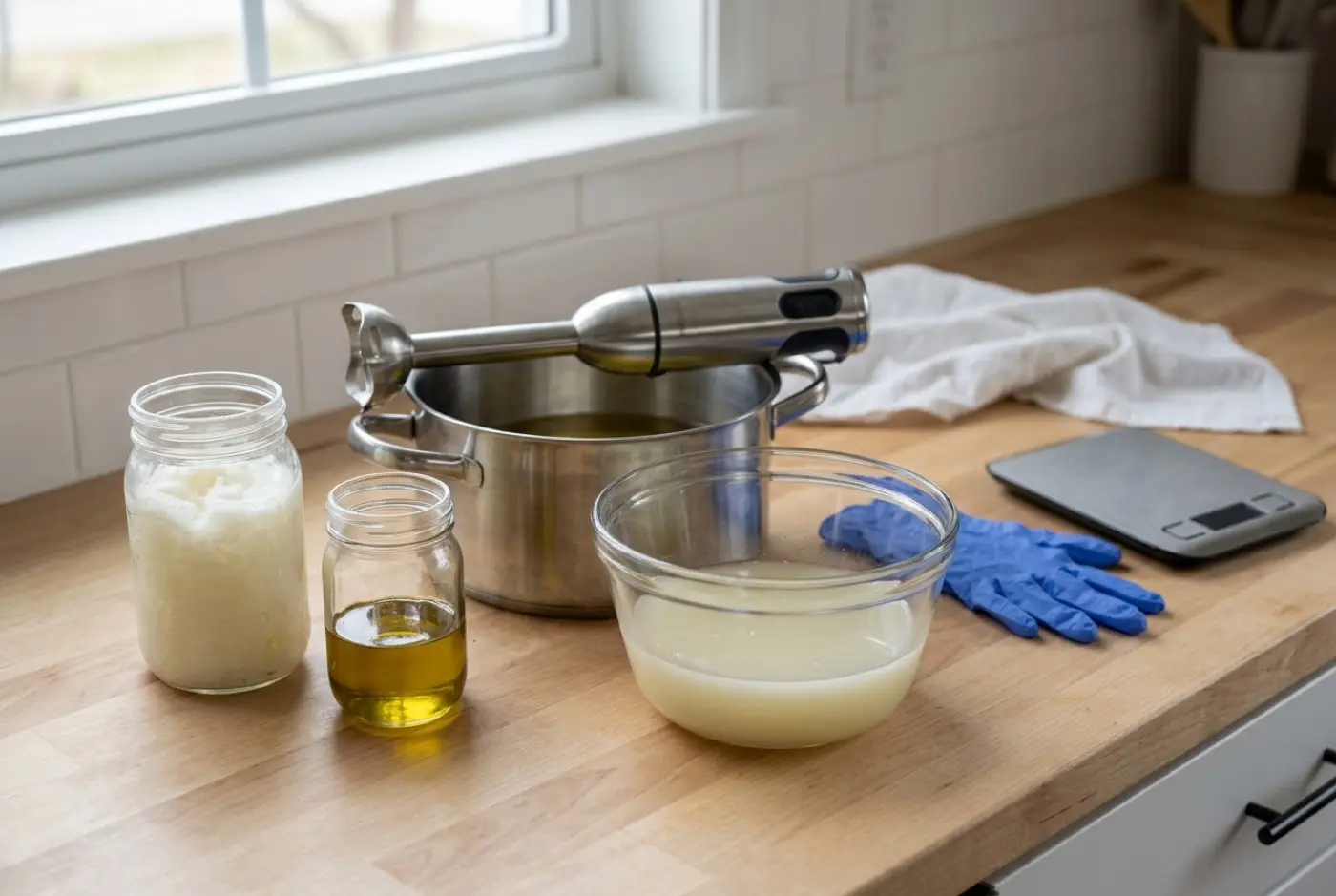
For cold process soap, the short list is:
The essentials
Melt and pour needs much less: a microwave-safe jug, a mold, the base, and a spray bottle of rubbing alcohol. The printable beginner checklist has the full list, and the soap making supply list covers what to buy and what to skip.
The ingredients, briefly
Oils and fats. Each one brings something different. Coconut oil gives big bubbles and hardness; olive oil gives mildness; butters like shea add firmness and creaminess; castor oil steadies the lather. Most bar recipes blend three to six. Oils for soap making covers them one by one.
Lye. Sodium hydroxide for bars, bought as beads or flakes from a soap supplier, labeled 100% sodium hydroxide with nothing else added. See lye for soap making.
Water. Distilled, so minerals don’t interfere. It’s only there to dissolve the lye and evaporates during cure. How much you use is the water discount question, which can wait until your third or fourth batch.
Extras. Essential oils or fragrance oils, natural colorants, and additives like oatmeal or clay. Leave them out of your first batch so you can learn what the plain batter does.
How a batch goes, start to finish
Here’s the shape of a cold process batch, so the vocabulary on the rest of the site makes sense. The first batch guide has the full instructions.
- Gear up and weigh. Everything goes on the scale in grams before anything gets mixed.
- Make the lye solution. Lye goes into water, never the reverse. It gets hot and gives off fumes for a minute.
- Prepare the oils. Melt the solid ones and combine with the liquid ones.
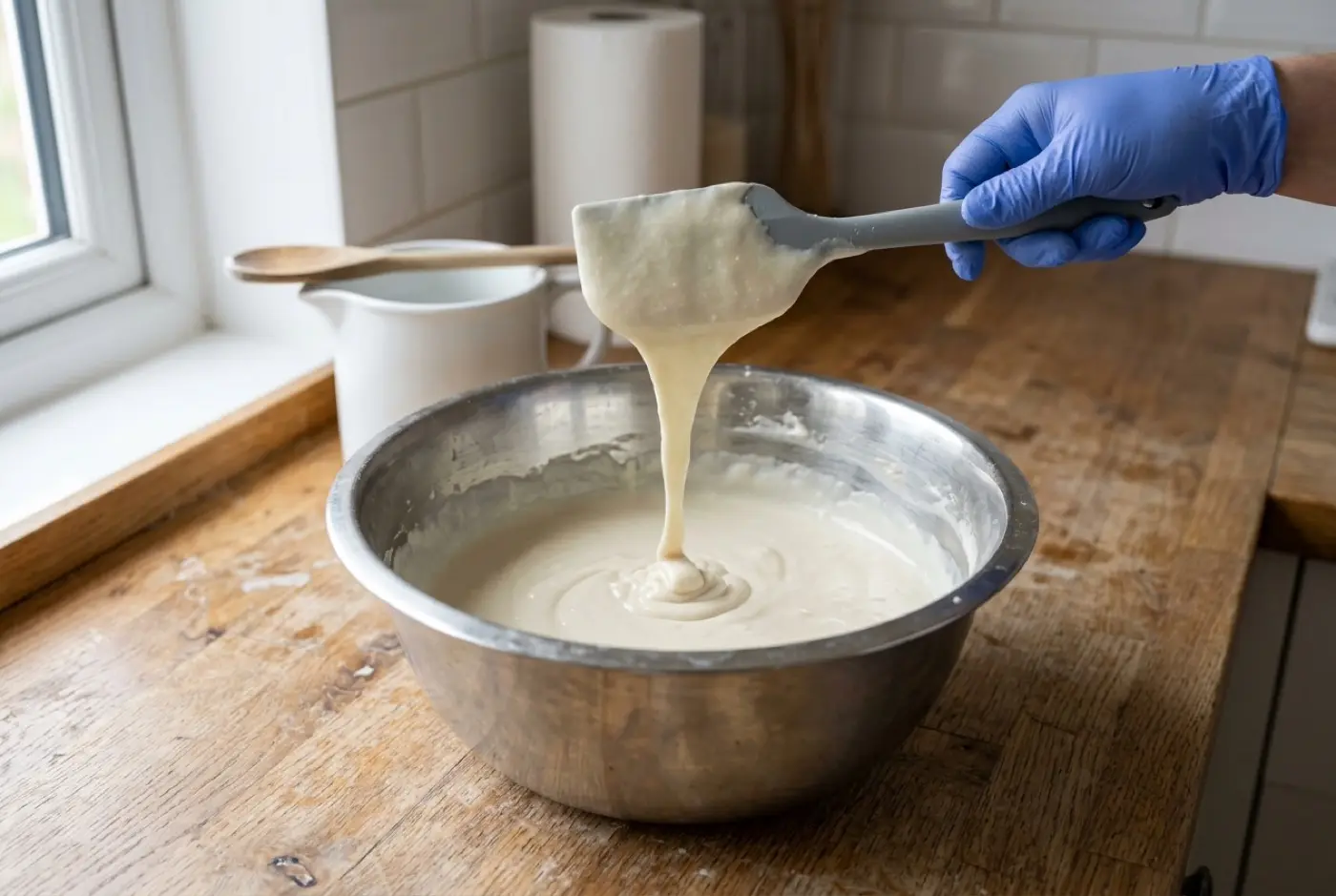
- Blend to trace. Pour the cooled lye solution into the oils and stick blend until the mixture thickens enough that a drizzle leaves a faint trail on the surface. That’s trace.
- Pour and wait. Into the mold, covered, for a day or two.
- Cut and cure. Slice into bars and let them dry on a rack for four to six weeks.
The words you’ll keep seeing
A few terms come up on almost every page here. The glossary has the rest.
- Trace: the point where the batter has emulsified and thickened.
- Superfat: the percentage of oil left deliberately unreacted.
- Lye concentration: how strong your lye solution is; it sets how much water you use.
- Gel phase: the hot, translucent stage some soap passes through in the mold.
- Cure: the weeks of drying that make a bar harder, milder and longer lasting.
- Soda ash: a harmless white film that sometimes forms on top. See soda ash.
Where to go from here
Read these in order and you’ll be ready to make soap:
- Soap making safety: the five habits that make lye routine.
- Cold process vs melt and pour: pick your starting method.
- 10 mistakes beginners make: learn them here instead of at the counter.
- Your first batch: the whole process with one forgiving recipe, such as our three-oil beginner soap.
Meet a word you don’t know along the way? The soap making glossary explains every term in plain English.
FAQ
What is soap made of?
Fats or oils, an alkali (lye), and water. The lye reacts with the oils to form soap and glycerin. Fragrance, color and additives are optional extras.
Is there lye in handmade soap?
Lye is used to make it, but in a correctly calculated and cured bar it has all reacted with the oils. Recipes leave a little extra oil, called superfat, so no free lye remains.
Can I make soap without lye?
Not from scratch. Every true soap was made with lye at some stage. Melt and pour soap lets you skip handling it because the base was already made with lye in a factory.
How long does it take to make soap?
An hour or two of work for a cold process batch, then four to six weeks of curing before the bars are at their best. Melt and pour bars are ready the same day.
Comments
No comments yet. Made this recipe? Be the first to say how it went.