Aloe Vera Soap Recipe (Aloe Juice as the Liquid)
A pale, creamy cold process bar made with frozen aloe vera juice in place of water, plus how to use fresh gel and what to check on the bottle's label.
This page has affiliate links. We earn a small commission at no cost to you. Disclosure
Formula not yet verified. These numbers haven't been re-run by a second maker. Don't make this batch until this notice is gone.
- Yield
- 10 bars
- Method
- Cold process
- Difficulty
- Intermediate
- Cure
- 6 weeks
- Superfat
- 5%
- Lye conc.
- 33%
On this page
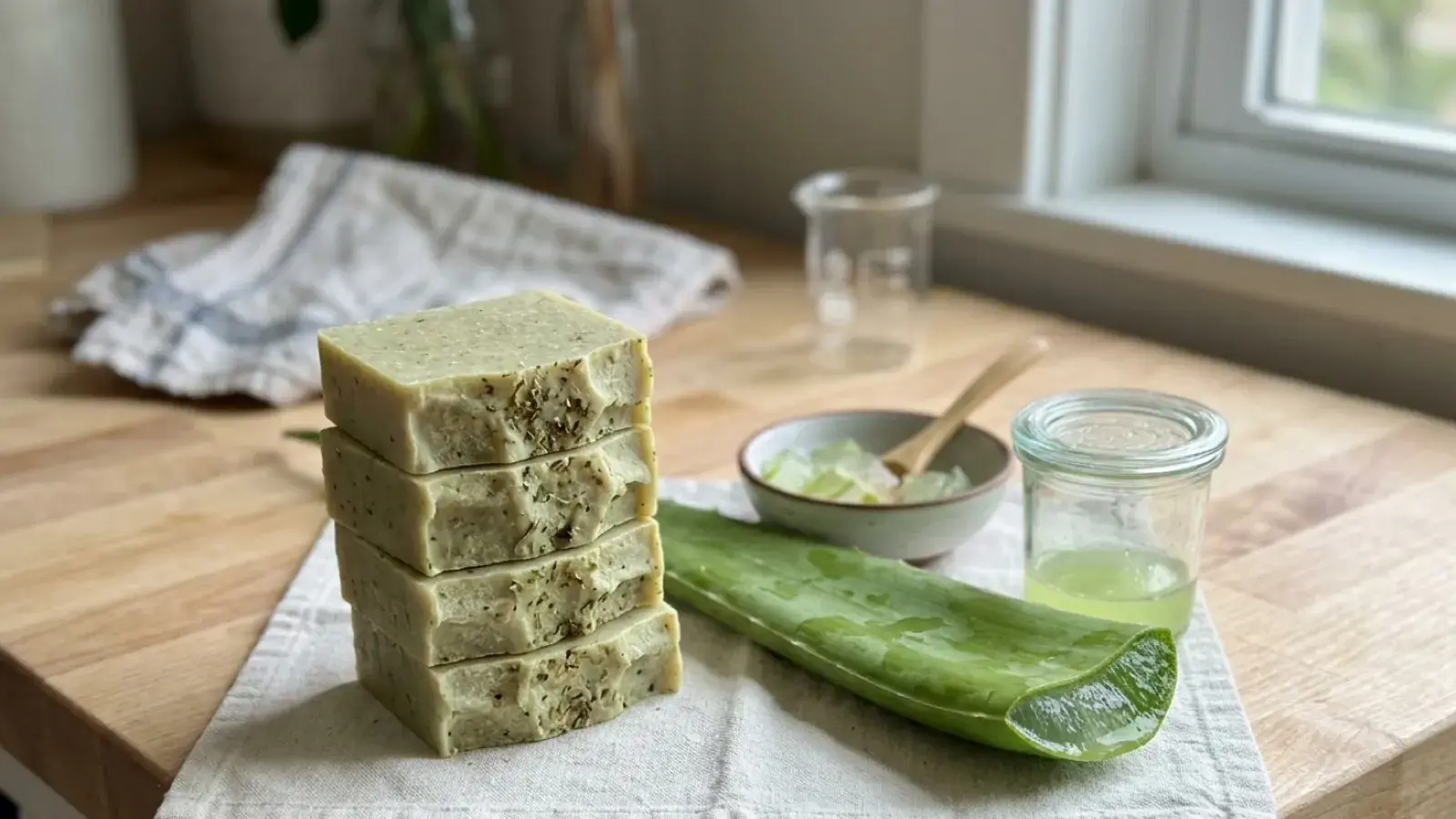
This aloe vera soap recipe uses frozen aloe vera juice as the entire lye liquid in a mild olive, shea and avocado bar. Aloe gives a smooth, slightly richer lather and a soft cream color. Treat it the way you would treat milk: it carries natural sugars that heat up and darken in hot lye, so freeze it into cubes and add the lye slowly over ice.
The other thing that matters happens at the store. Many aloe juices are sold as drinks and contain citric acid, ascorbic acid, sugar or flavoring. Acids neutralize some of the lye, so the bar ends up with more free oil than planned and can feel soft or greasy. Read the label and pick a plain inner-leaf juice.
Juice or fresh gel
Aloe juice is the simple choice: pour it, weigh it, freeze it, and use it exactly like water. Fresh gel from a leaf is thicker and more variable. It works better added at trace than dissolved with the lye. Make the lye solution with three-quarters of the liquid as distilled water (about 40% lye concentration, still well within a safe range), then blend the remaining quarter as smooth, strained gel into the batter at light trace. Going below that much water risks lye that will not fully dissolve. Rinse the cut leaf first, as the yellow sap just under the skin can discolor the soap.
Why this recipe works
- Olive + avocado, 55%. Gentle, conditioning oils that trace slowly, leaving time to work with a cool batter.
- Coconut, 25%. Lather and firmness. Aloe soaps can set a bit softer, so coconut stays at a full 25%.
- Shea, 15%. A creamy, dense bar.
- Aloe juice, 100% of the liquid. Gives a smooth, slightly richer-feeling lather and a pale cream color. It also contains natural sugars, so it is handled like milk.
Ingredients
| Oil | % | Grams | Ounces |
|---|---|---|---|
| Olive oil | 40% | 400 g | 14.11 oz |
| Coconut oil (76°) | 25% | 250 g | 8.82 oz |
| Shea butter | 15% | 150 g | 5.29 oz |
| Avocado oil | 15% | 150 g | 5.29 oz |
| Castor oil | 5% | 50.0 g | 1.76 oz |
| Lye solution | |||
| Sodium hydroxide (NaOH) 5% superfat | 138 g | 4.87 oz | |
| Aloe vera juice, frozen Inner-leaf juice with no added sugar or citric acid. Freeze in cubes. | 280 g | 9.89 oz | |
Equipment
Instructions
Step 1: Check the label and freeze the aloe
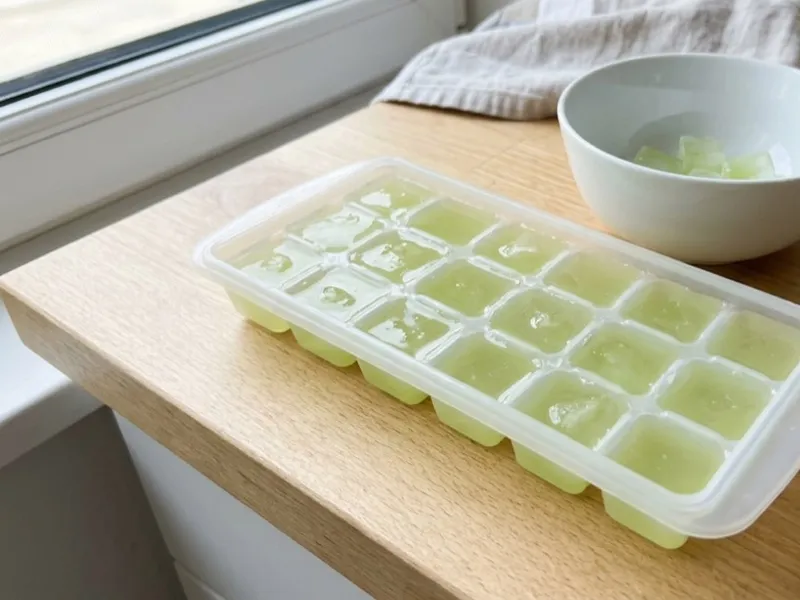
Use inner-leaf aloe vera juice with no added sugar, flavor or citric acid. Weigh out the liquid amount and freeze it in ice cube trays overnight. Frozen aloe keeps the lye solution cool so the natural sugars do not scorch.
Step 2: Make the lye solution over ice
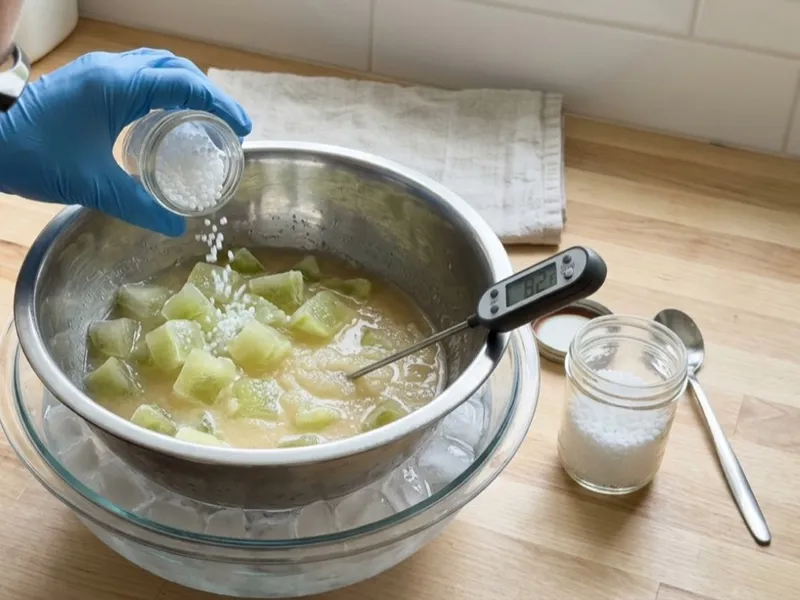
Put on goggles and gloves. Set the bowl of aloe cubes in an ice-water bath. Sprinkle the lye over the cubes a little at a time, stirring as they melt. Keep it under 85°F (29°C). Pale yellow to light tan is normal; bright orange means it got too warm.
Step 3: Melt and cool the oils
Melt the coconut oil and shea butter, add the olive, avocado and castor oils, and cool to 85–95°F (29–35°C).
Step 4: Blend to light trace
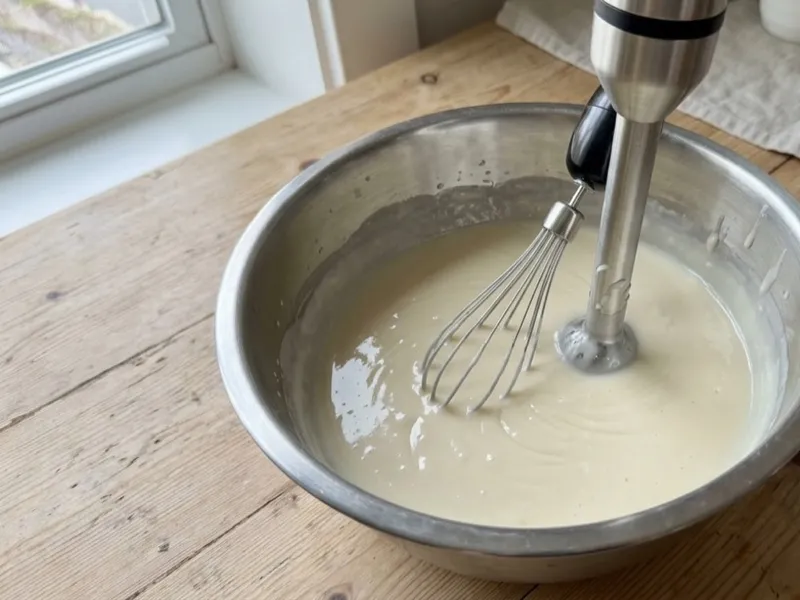
Strain the aloe lye solution into the oils to catch any undissolved bits. Stick blend in short bursts to light trace. Aloe batters can thicken a little faster than water batters.
Step 5: Pour and keep it cool
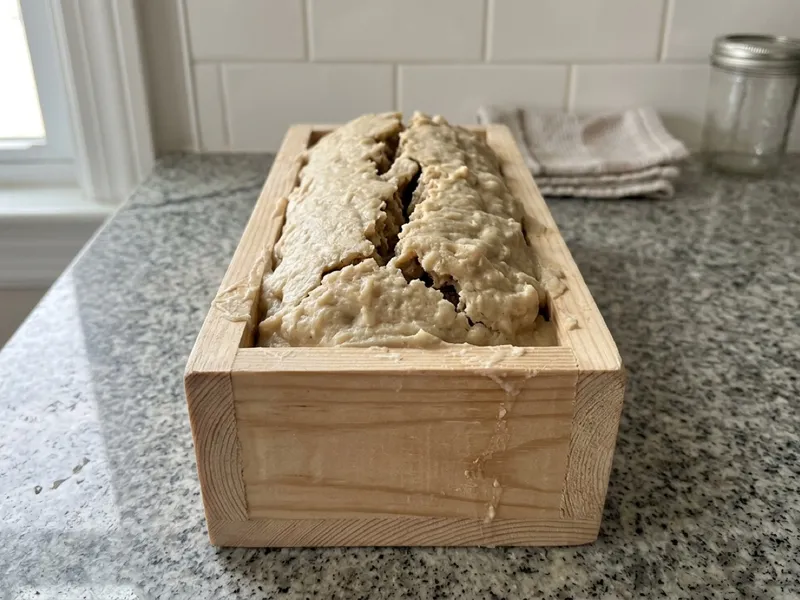
Pour into the mold and leave it uncovered. If the room is warm, or the top feels warm after an hour, move the mold to the fridge for 12–24 hours. Skipping gel keeps the bar pale and prevents cracking.
Step 6: Unmold, cut and cure
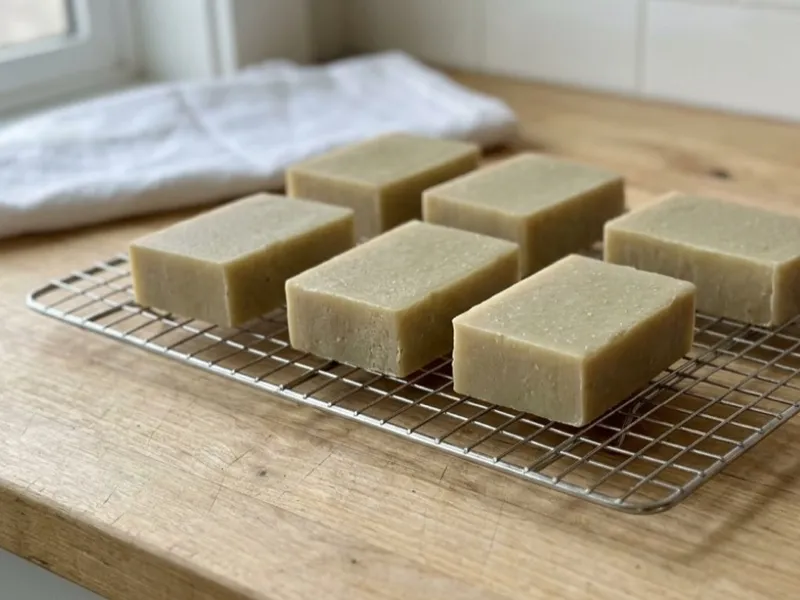
Unmold after 48 hours, once firm. Cut into bars and cure 6 weeks on a rack with airflow, turning weekly.
Variations
Fresh aloe gel
Blend fresh inner-leaf gel smooth and strain it. Make the lye with distilled water at three-quarters of the liquid amount, then add the remaining quarter as gel at light trace. Rinse the yellow sap off the leaf before scooping.
Half and half
Use 50% frozen aloe juice and 50% distilled water for the lye. A gentler first attempt that runs cooler.
Cucumber and aloe
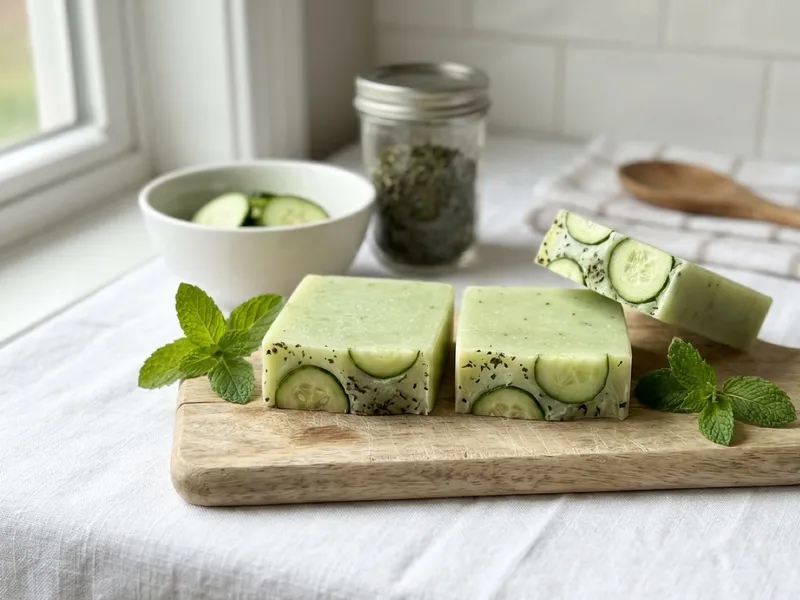
Pair with a cucumber purée. See the cucumber soap recipe for handling it.
If something goes wrong
- Lye solution turned orange
- Sugars in the aloe scorched. The soap is still usable but will be darker. Freeze the aloe fully and add lye more slowly.
- Crack across the top
- The loaf overheated. Pour cooler and refrigerate instead of insulating. Overheating soap
- Bars feel greasy or soft
- The juice probably contained citric or ascorbic acid, which uses up some lye and raises the effective superfat. Check the label and switch brands.
FAQ
Can I use aloe juice instead of water in soap?
Yes. Replace all or part of the water with aloe juice by weight. Freeze it first and add the lye slowly, as you would with milk.
Can I use store-bought aloe gel?
Most aloe gels sold for skin contain thickeners, alcohol, preservatives or colors that do not belong in soap. Use plain aloe juice, or fresh gel from a leaf.
Why does it matter if the aloe juice has citric acid?
Acids react with lye. Citric acid uses up some of it, which leaves more unsaponified oil than the recipe planned. Small amounts make the bar softer and greasier; larger amounts change the formula.
Does aloe survive saponification?
Some of what makes aloe aloe is changed by the lye. In soap, it is mainly valued for the smooth lather and pale, creamy color. We do not make skin-benefit claims.
Comments
No comments yet. Made this recipe? Be the first to say how it went.