Brine Soap Recipe (Salt Water Soap for a Harder Bar)
An everyday cold process bar made with lye dissolved in salt water, which gives a harder, smoother bar with a fraction of the salt a salt bar uses.
This page has affiliate links. We earn a small commission at no cost to you. Disclosure
Formula not yet verified. These numbers haven't been re-run by a second maker. Don't make this batch until this notice is gone.
- Yield
- 10 bars
- Method
- Cold process
- Difficulty
- Beginner
- Cure
- 6 weeks
- Superfat
- 5%
- Lye conc.
- 33%
On this page
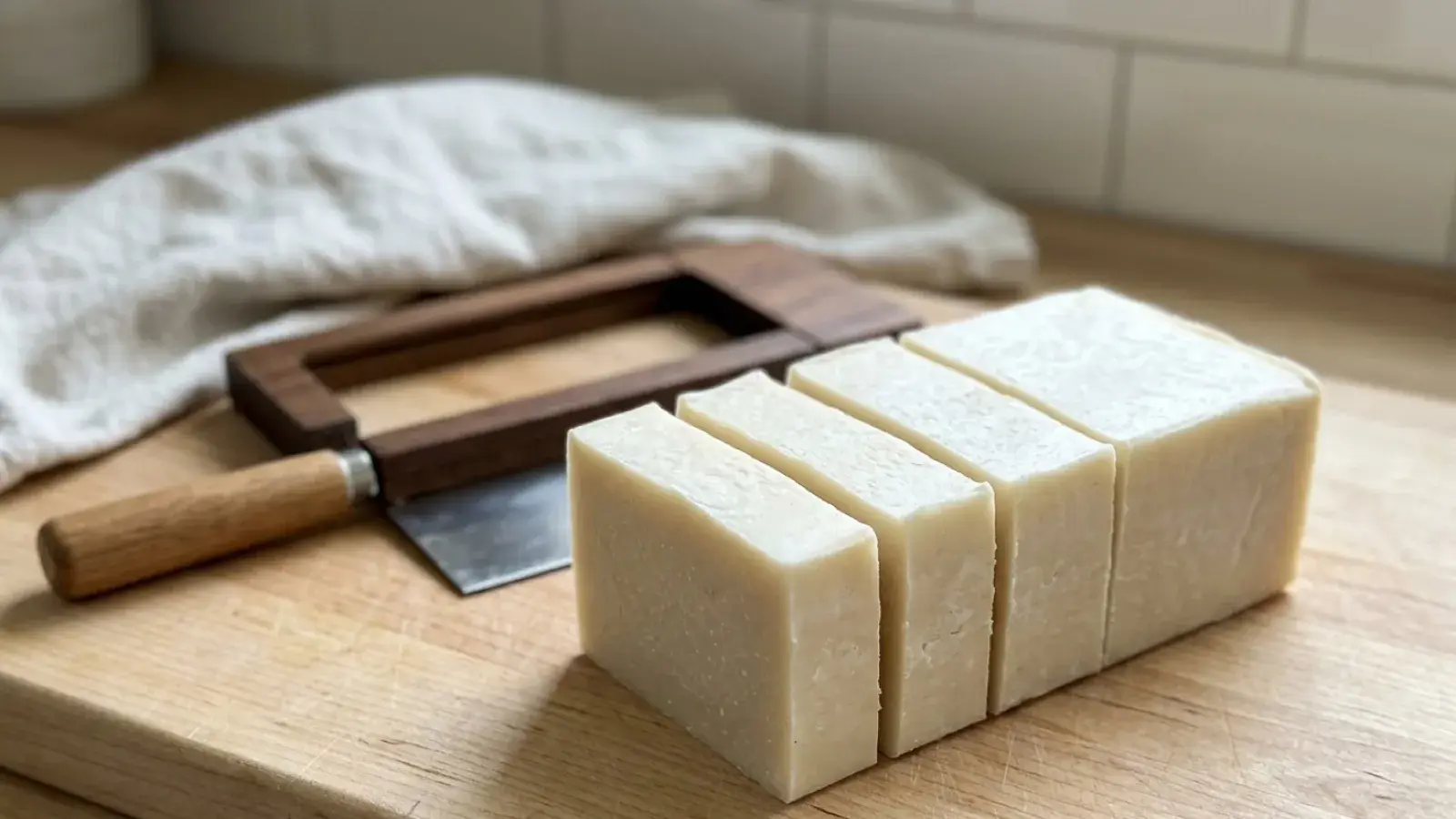
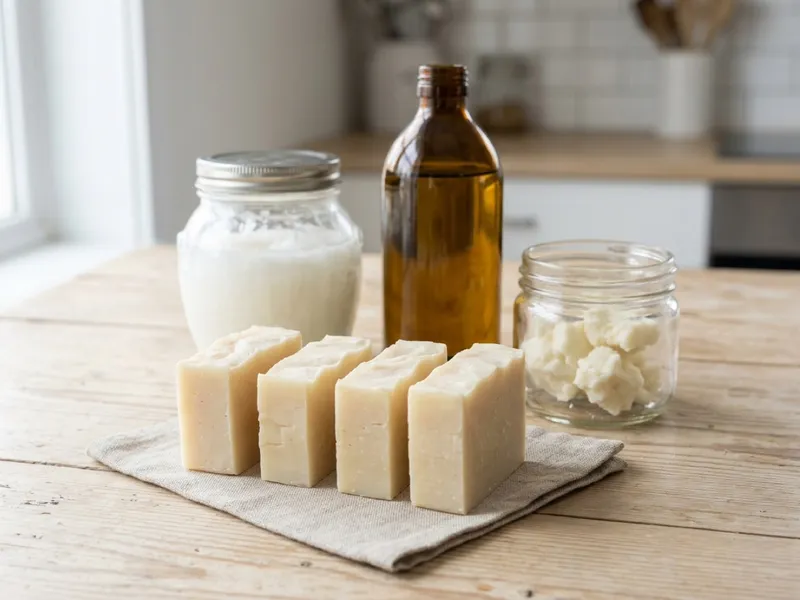
This brine soap recipe dissolves 30 g of salt per 1000 g of oils in the water before the lye goes in, then makes an ordinary olive, shea and coconut bar with it. The salt never shows. What changes is the bar: it sets harder, unmolds sooner, cuts with crisp edges and often has a smoother, slightly glassy surface. It is one of the cheapest upgrades you can give a soft, olive-heavy recipe.
Brine soap vs salt bar
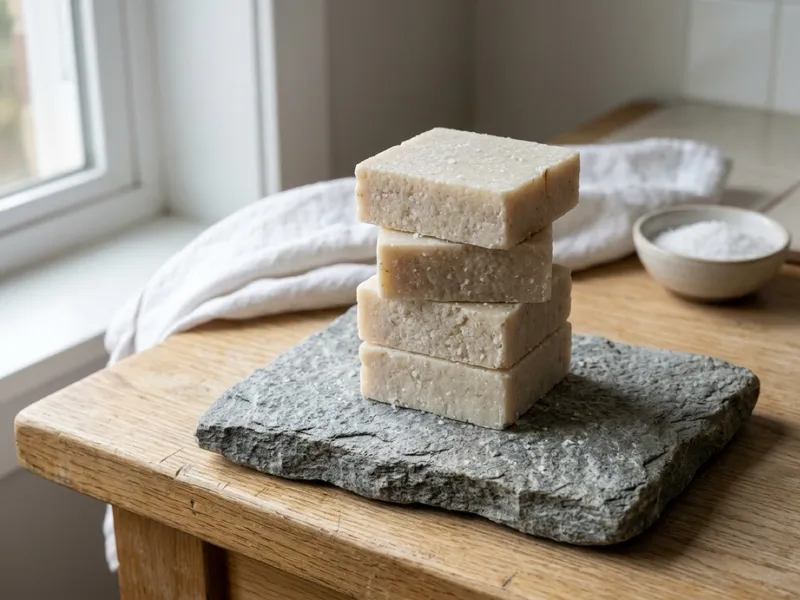
The names are close, but the two are different soaps. A salt bar stirs solid salt into the batter at 50–100% of the oil weight. To lather through that much salt it needs 70–100% coconut oil and a 15–20% superfat, and it has to be cut within hours. A brine soap uses a few percent salt, fully dissolved in the lye water, in an everyday formula with a normal 5% superfat. It looks, lathers and cures like a regular bar; it just firms up faster and lasts a little longer in the dish.
The order matters. Dissolve the salt in the water first, until it is clear, and only then add the lye. Lye dissolves more slowly in salt water, and a nearly saturated brine can push some salt back out as fine crystals once the lye is in, which is why this recipe stays well below saturation. If the solution looks cloudy, pour it through a strainer.
Why this recipe works
- Olive + avocado, 50%. Mild, conditioning oils that usually make a softer young bar. The brine firms them up.
- Coconut, 25%. Normal everyday lather. Unlike a salt bar, brine soap does not need extra coconut.
- Shea, 20%. A creamy, dense bar.
- Salt in the water, 3%. Makes the bar harder and quicker to unmold, with a slightly smoother, glassier surface. Too much quiets the lather.
Ingredients
| Oil | % | Grams | Ounces |
|---|---|---|---|
| Olive oil | 35% | 350 g | 12.35 oz |
| Coconut oil (76°) | 25% | 250 g | 8.82 oz |
| Shea butter | 20% | 200 g | 7.05 oz |
| Avocado oil | 15% | 150 g | 5.29 oz |
| Castor oil | 5% | 50.0 g | 1.76 oz |
| Lye solution | |||
| Sodium hydroxide (NaOH) 5% superfat | 138 g | 4.86 oz | |
| Brine (distilled water with salt dissolved in it) Dissolve the salt completely in the water before adding lye. | 280 g | 9.86 oz | |
| Additives | |||
| Fine sea salt or non-iodized table salt Dissolved in the water before the lye. About 10% of the water weight. | 3% | 30.0 g | 1.06 oz |
Equipment
Instructions
Step 1: Make the brine
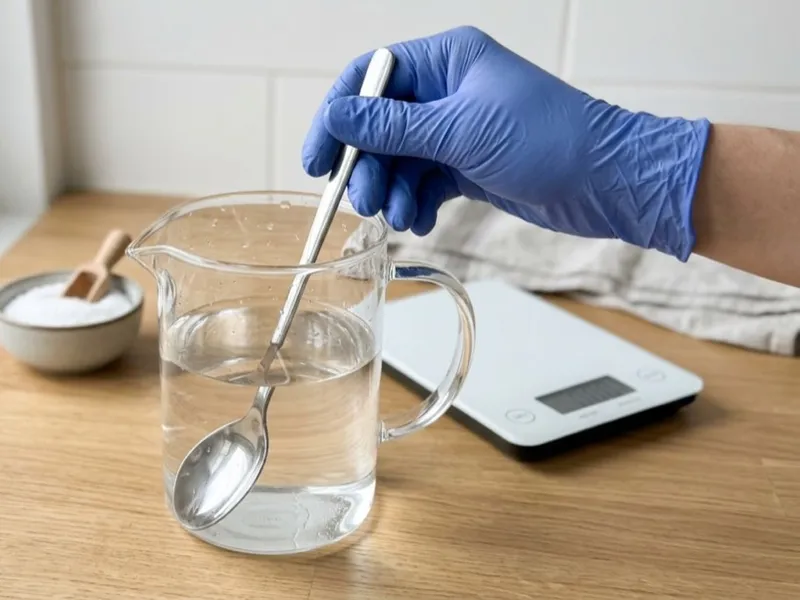
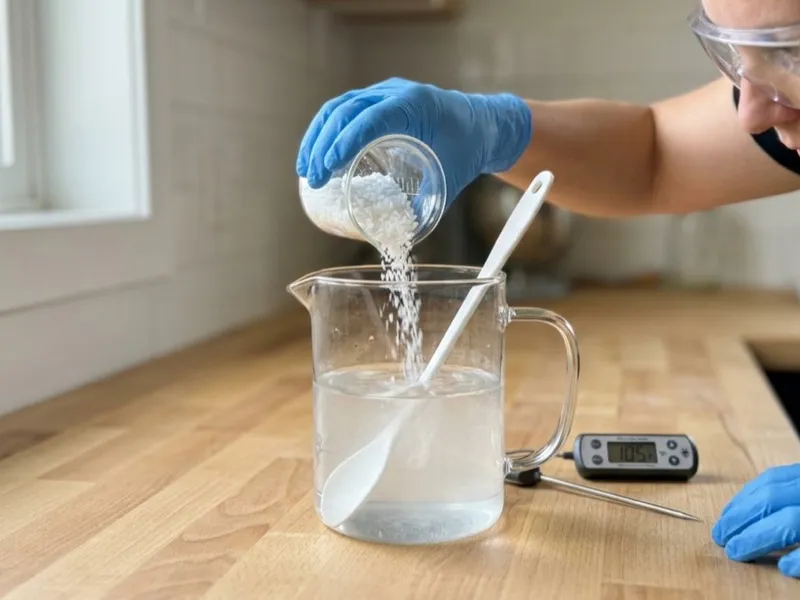
Weigh the distilled water into your lye container. Add the salt and stir until it is completely dissolved and the water is clear, a minute or two. Warm water dissolves it faster, but let it return to room temperature before adding lye.
Step 2: Add the lye to the brine
Put on goggles and gloves. Add the lye to the brine, never the reverse, and stir until clear. It may take a little longer to dissolve than in plain water. A slight cloudiness can appear as some salt comes out of solution; that is fine. Cool to about 100°F (38°C).
Step 3: Melt the oils
Melt the coconut oil and shea butter, then add the olive, avocado and castor oils. Bring to 95–105°F (35–40°C).
Step 4: Blend to trace
Pour the lye solution into the oils, through a strainer if it looks cloudy, and stick blend in short bursts to light or medium trace. Brine batter behaves much like a normal batter, perhaps tracing a little faster.
Step 5: Pour and gel
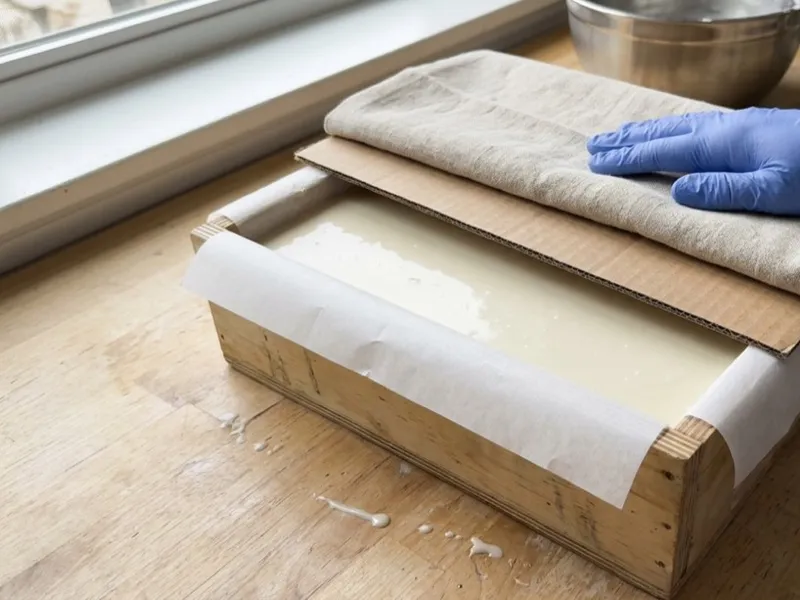
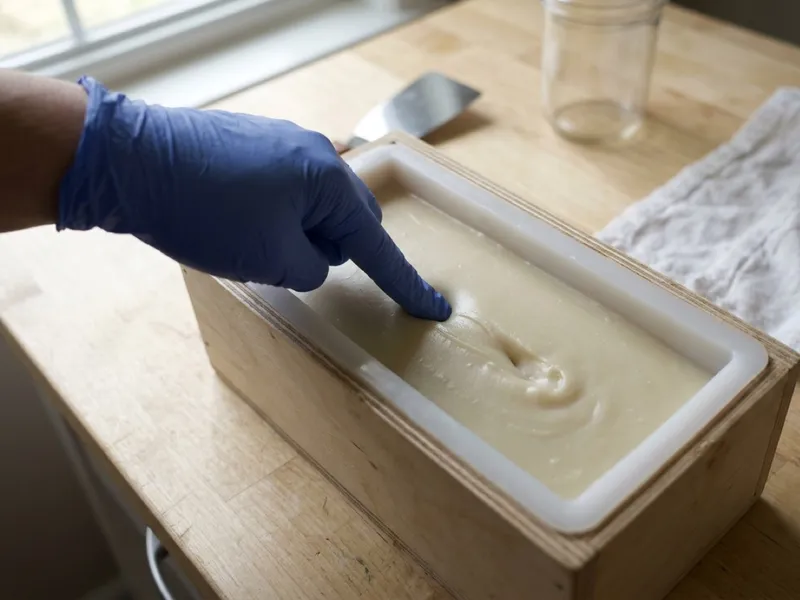
Pour into the mold, tap to settle, and cover with cardboard and a towel for an even gel.
Step 6: Unmold, cut and cure
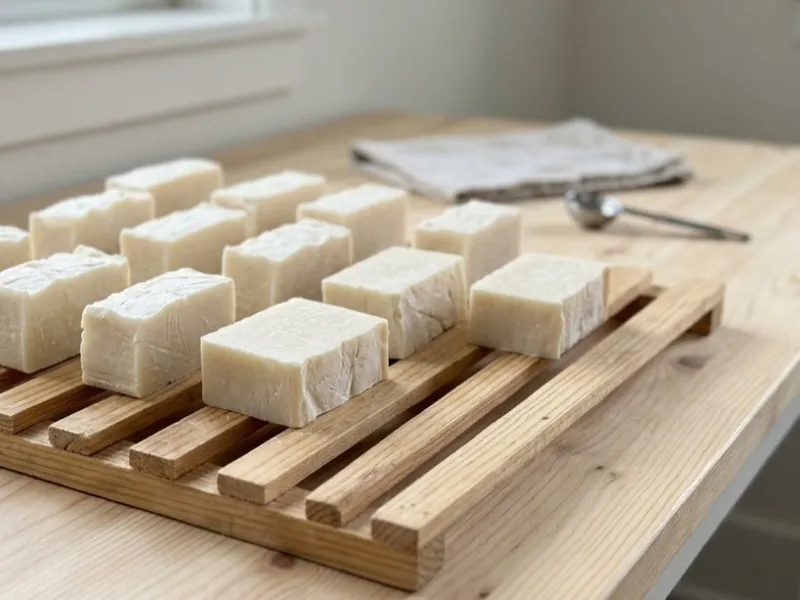
Brine soap is often ready to unmold sooner than the same recipe made with plain water, typically within 24 hours. Cut, then cure 6 weeks on a rack with airflow, turning weekly.
Variations
Stronger brine
Raise the salt toward 50 g per 1000 g oils for a harder bar. Do not try to saturate the water; salt that will not dissolve ends up as gritty crystals.
Seawater-style
Pair the brine with 1% kaolin clay and a eucalyptus and peppermint blend for an ocean-themed bar.
Lavender
Lavender essential oil at 3% of oil weight (30 g per 1000 g) at light trace.
If something goes wrong
- Gritty crystals in the bar
- Salt was not fully dissolved, or too much was used for the water. Dissolve it completely before adding lye.
- Lather feels thin
- Too much salt. Bring it back to about 3% of the oil weight.
- Bars still soft
- Brine helps, but a soft-oil-heavy recipe still needs time. Give it another day before cutting. Soft soap that won’t harden
FAQ
What is the difference between brine soap and a salt bar?
A brine soap dissolves a small amount of salt, about 3% of the oil weight here, in the lye water to harden an ordinary bar. A salt bar stirs in 50–100% of the oil weight as solid salt and needs a special high-coconut, high-superfat formula.
How much salt do I add to the water for brine soap?
About 2–5% of the oil weight, which is roughly 7–18% of the water weight in this recipe. This recipe uses 30 g per 1000 g of oils.
Can I use table salt?
Yes, plain non-iodized salt works. Avoid salts with anti-caking agents or added iodine if you can, and dissolve it fully.
Does brine soap need a different lye amount?
No. Salt does not react with the lye or the oils, so the lye calculation stays the same as for plain water.
Comments
No comments yet. Made this recipe? Be the first to say how it went.