Breast Milk Soap Recipe (Small-Batch Keepsake Bars)
A small, unscented 500 g batch for turning a freezer stash of breast milk into a handful of keepsake bars, with the hygiene steps that matter.
This page has affiliate links. We earn a small commission at no cost to you. Disclosure
Formula not yet verified. These numbers haven't been re-run by a second maker. Don't make this batch until this notice is gone.
- Yield
- 5 bars
- Method
- Cold process
- Difficulty
- Intermediate
- Cure
- 6 weeks
- Superfat
- 5%
- Lye conc.
- 33%
On this page
This breast milk soap recipe is built for the way most people arrive at it: a freezer stash that’s too precious to throw away and too small for a big batch. It uses 500 g of oils, keeps the milk frozen right up to the moment the lye goes in, and makes about five unscented bars to use, keep or give.
The technique that matters most is hygiene before heat control. Milk that was frozen promptly and stays frozen gives a clean-smelling bar; milk that sat in the fridge too long carries that smell all the way through the cure. After that, it’s the familiar milk-soap routine: lye over frozen milk in an ice bath, cool oils, and a chilled mold.
When you don’t have enough milk
You don’t need the full liquid weight in milk to make these bars. Weigh what you have, then make the lye solution with distilled water equal to the lye’s weight (a strong 50/50 solution) and let it cool to room temperature. Bring the oils to light trace with that solution, then stir in the chilled milk to make up the rest of the liquid. The bar will be slightly lighter in color because the milk never meets the hot lye directly, and the lye amount doesn’t change at all, since it depends only on the oils.
Why this recipe works
- Olive + sweet almond, 50%. A mild, conditioning base that traces slowly, which gives you time when you’re handling a small, precious batch.
- Shea + cocoa butter, 25%. Firmness, so small bars hold crisp edges and stamped details without needing palm.
- Coconut, 20%. Enough lather and hardness for an everyday bar while keeping it gentle-feeling.
- 500 g batch, unscented. Most people have a limited stash. 500 g of oils makes about five 100 g bars, and leaving out fragrance keeps the milk’s own pale color and soft scent.
Ingredients
| Oil | % | Grams | Ounces |
|---|---|---|---|
| Olive oil | 40% | 200 g | 7.05 oz |
| Coconut oil (76°) | 20% | 100 g | 3.53 oz |
| Shea butter | 15% | 75.0 g | 2.65 oz |
| Cocoa butter | 10% | 50.0 g | 1.76 oz |
| Sweet almond oil | 10% | 50.0 g | 1.76 oz |
| Castor oil | 5% | 25.0 g | 0.88 oz |
| Lye solution | |||
| Sodium hydroxide (NaOH) 5% superfat | 68.2 g | 2.40 oz | |
| Breast milk, frozen Kept frozen from expressing until soap day. If you have less milk than the liquid weight, see step 1. | 138 g | 4.88 oz | |
Equipment
Instructions
Step 1: Check how much milk you have
At 500 g of oils this recipe needs about 140 g of liquid. If your frozen milk weighs at least that much, use it as the whole liquid. If it doesn’t, dissolve the lye in distilled water equal to the lye’s weight, let it cool, and add the thawed, chilled milk at light trace to make up the rest of the liquid, topping up with cold distilled water if the milk falls short. Either way, the total liquid stays the same.
Step 2: Prepare a clean workspace
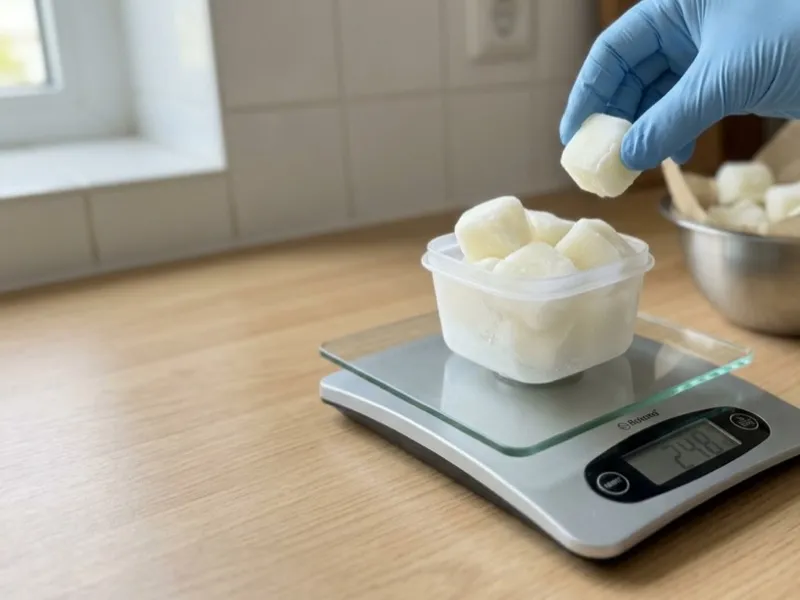
Wash your containers, spatulas and mold in hot soapy water and dry them. Keep the milk in the freezer until the moment you weigh it, and don’t thaw and refreeze it. If any bag smells sour or rancid once opened, leave it out; it can make the bars smell off.
Step 3: Melt and cool the oils
Put on goggles and gloves. Melt the shea butter, cocoa butter and coconut oil, add the olive, almond and castor oils, and let the blend cool to 85–95°F (29–35°C). With such a small batch, the oils cool fast, so melt them first.
Step 4: Add lye to the frozen milk over ice
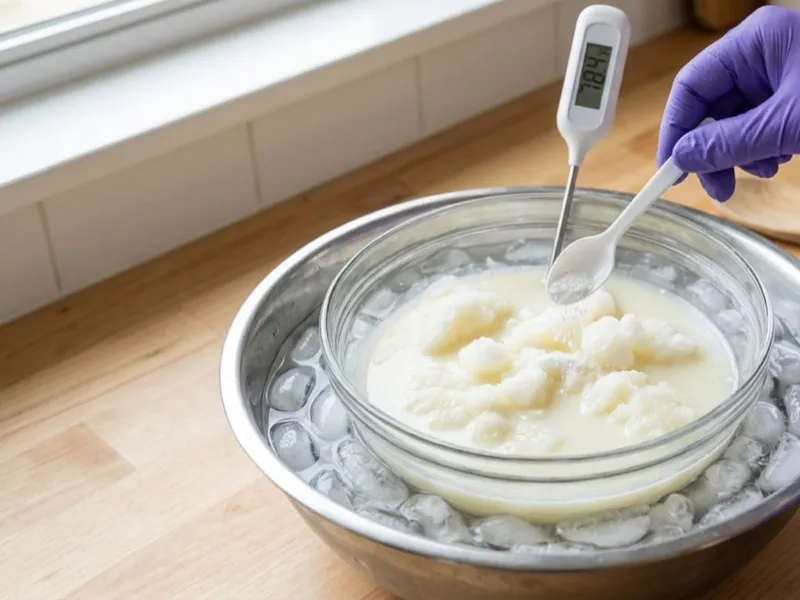
Set the container of frozen milk in a bowl of ice water. Sprinkle in the lye a little at a time, stirring and letting each addition dissolve before the next. Keep it under 85°F (29°C). Pale yellow to light tan is normal. Bright orange means it ran too warm; slow down and add more ice to the bath.
Step 5: Blend to light trace
Strain the milk solution into the oils and blend in short bursts until a light trace, usually 1–2 minutes. If you used the water-and-milk method, add the chilled milk now and pulse briefly until evenly mixed.
Step 6: Pour into small molds and chill
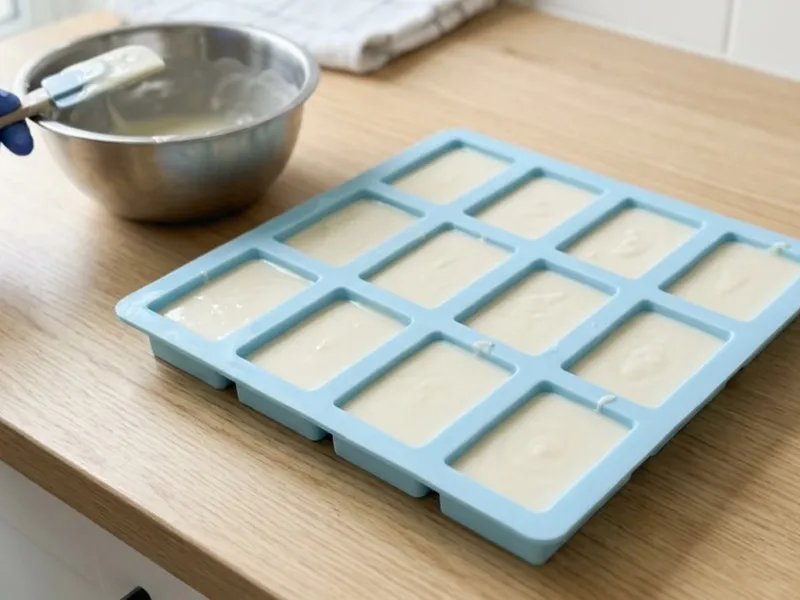
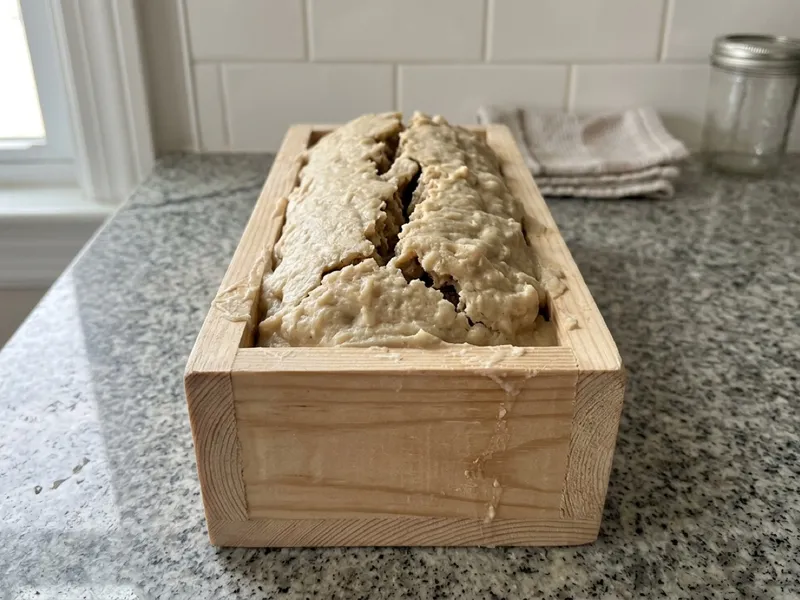
Pour into individual cavity molds or a small loaf mold. Move them straight to the fridge for 24 hours. Small cavities lose heat quickly, which helps keep the bars pale.
Step 7: Unmold, cure and label
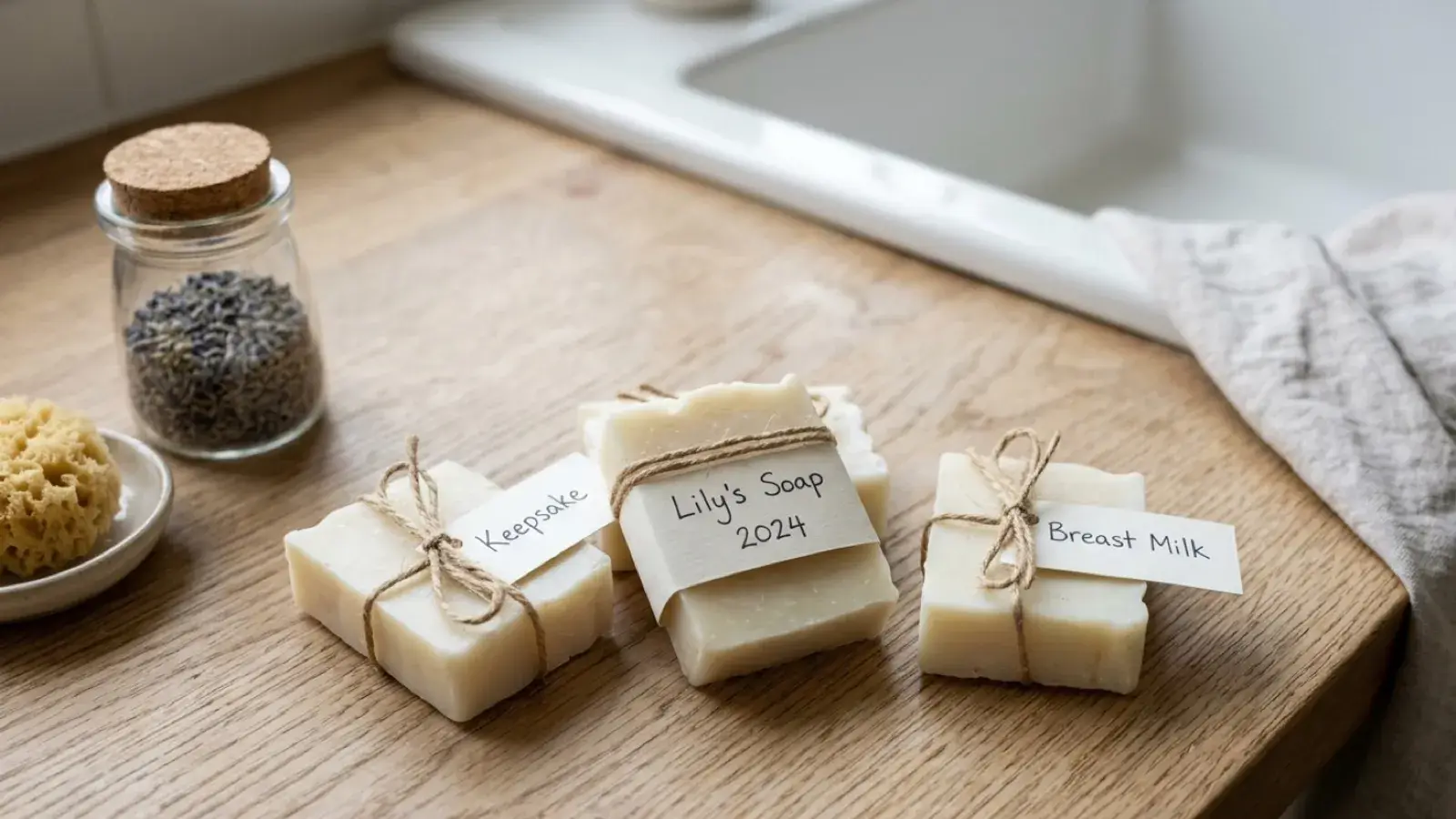
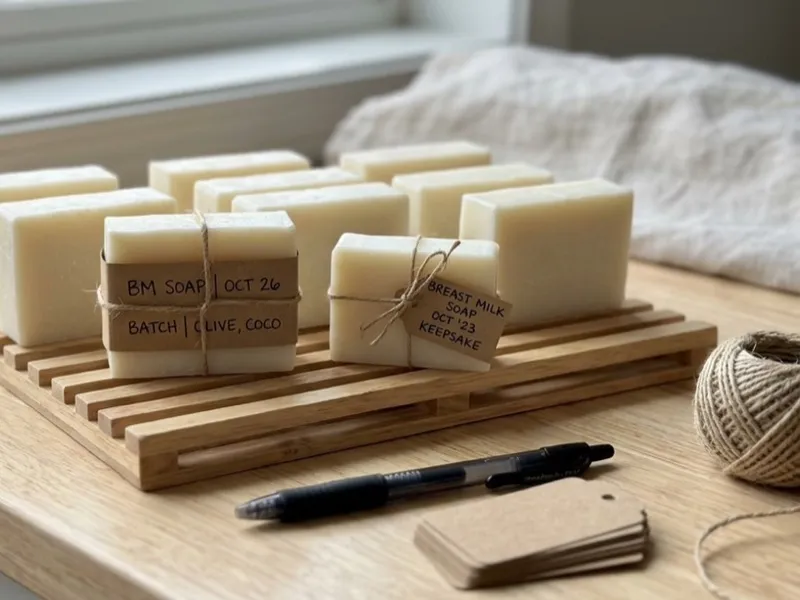
Unmold after 48 hours, or a day later if the bars still feel soft. Cure on a rack for 6 weeks, turning weekly. Once cured, label each bar with the date and contents, especially if you’re giving them to family.
Variations
Colloidal oatmeal
Stir 5 g of finely ground colloidal oats per 500 g oils into the oils before adding the lye solution for a slightly creamier feel.
Lightly scented
If you want scent, lavender essential oil at 3% of oil weight (15 g per 500 g) is a mild, well-behaved choice. Many keep these bars unscented.
Keepsake molds
Use stamped or shaped cavity molds, or press a name stamp into the top 24–48 hours after pouring, while the bar is firm but not hard.
If something goes wrong
- Lye solution turned orange
- The milk sugars scorched from too much heat at once. The bars are still usable but will be tan. Next time add lye in smaller amounts with more ice. Overheating soap
- Bars smell sour after cure
- Usually the milk had started to turn before it was frozen, or it was thawed for too long. Freeze milk promptly and keep it frozen until soap day. When soap smells bad
- Bars too soft to unmold from small cavities
- Milk soaps firm slowly, and chilled cavities slow it further. Leave them another day or two, or freeze for an hour to release cleanly.
FAQ
Is breast milk soap safe?
Saponified properly, the milk becomes part of the bar like any other milk. Follow the lye safety steps, use milk that was frozen promptly, and cure the full 6 weeks. As with any handmade soap, patch test before regular use.
How much breast milk do I need?
About 140 g for a 500 g batch of oils, or 280 g for 1000 g. If you have less, use water for the lye and add the milk at trace, keeping the total liquid the same.
Can I use milk that has been in the freezer for months?
Frozen milk that still smells fresh when thawed works. Milk that smells sour, soapy or rancid will carry that smell into the bars, so set it aside.
How long does breast milk soap last?
Treat it like any milk soap. Bars are at their best for about a year. Store them cool, dry and out of sunlight; a keepsake bar kept in a box will slowly change color and scent over time.
Comments
No comments yet. Made this recipe? Be the first to say how it went.