Beer Soap Recipe (Tallow Cold Process)
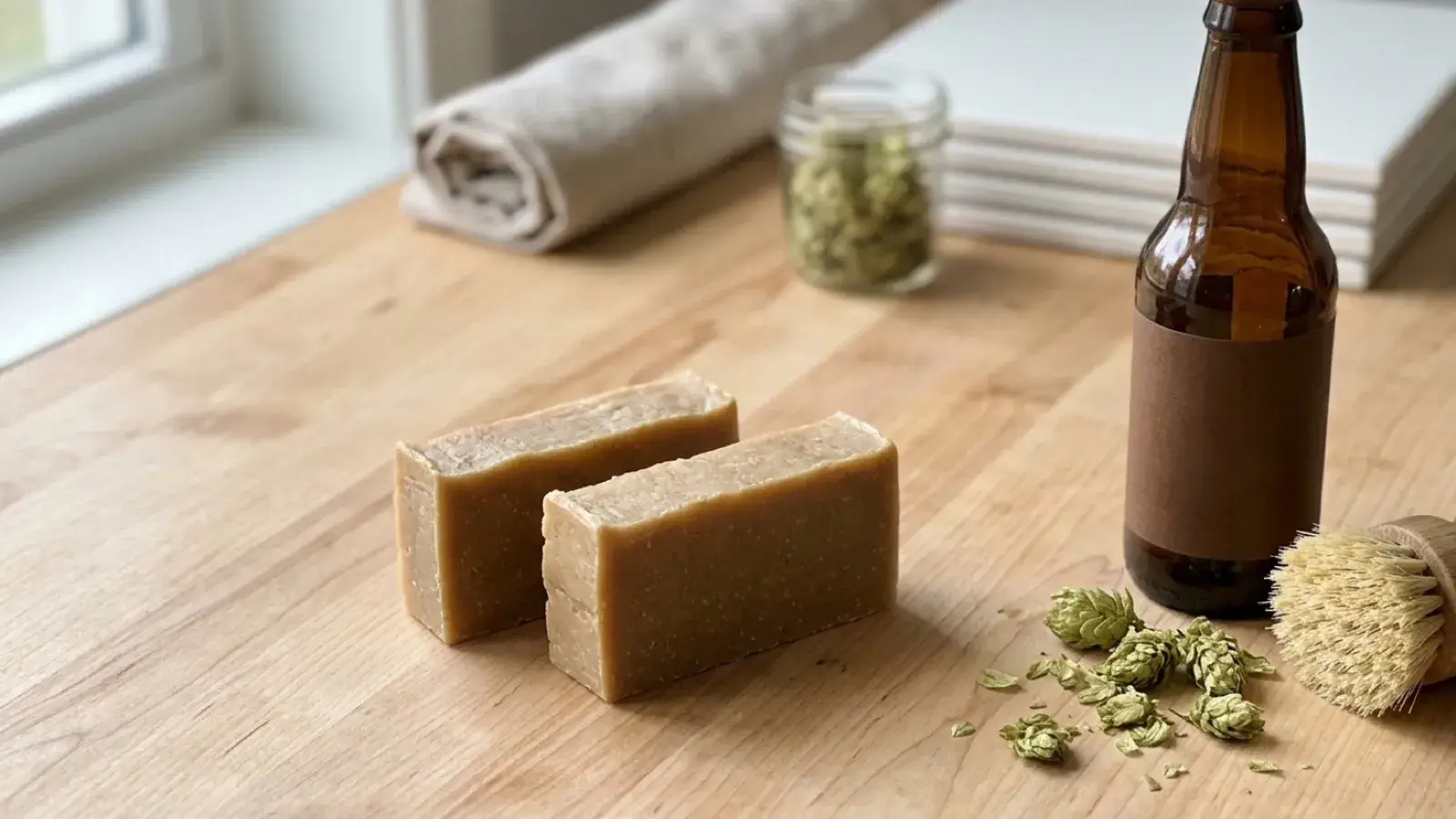
A hard, creamy tallow bar made with beer that's been boiled flat and chilled, scented with cedarwood and patchouli.
This page has affiliate links. We earn a small commission at no cost to you. Disclosure
Formula not yet verified. These numbers haven't been re-run by a second maker. Don't make this batch until this notice is gone.
- Yield
- 10 bars
- Method
- Cold process
- Difficulty
- Intermediate
- Cure
- 6 weeks
- Superfat
- 5%
- Lye conc.
- 33%
On this page
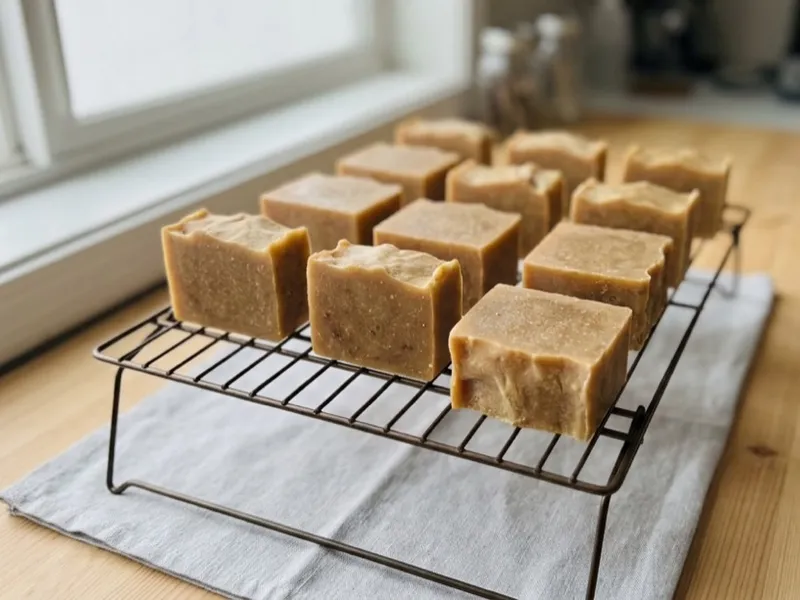
This beer soap recipe makes a hard, tan tallow bar with a thick, creamy lather and a woody cedarwood scent. The beer replaces all of the water, but not straight from the bottle: it’s simmered flat, cooled, weighed and chilled before any lye goes near it.
That prep is the whole technique. Fresh beer brings three problems to a lye solution: carbonation, alcohol and sugar. The first two can make it foam up out of the container, and the third adds heat. Boiling deals with the first two, and chilling deals with the third.
Why weigh the beer after boiling
Beer loses water as well as alcohol while it simmers, so a measured 290 g before boiling won’t be 290 g afterwards. Always boil extra, let it cool, and then weigh out what the recipe calls for. If you reduced it too far, top up with distilled water to the full weight. The lye amount never changes, because it depends only on the oils; what the liquid weight controls is how fluid the batter stays and how the bar cures. Getting it right keeps this tallow formula from racing to trace before you’ve added the scent.
Why this recipe works
- Tallow, 40%. A hard, long-lasting bar with a dense, creamy lather. Tallow pairs well with beer’s slightly browned color.
- Olive, 30%. Mildness and conditioning, and it slows trace a little to offset tallow’s quicker pace.
- Coconut + castor, 30%. Big bubbles from coconut, held steady by castor. The sugars left in beer help the lather too.
- Boiled, chilled beer. Alcohol and carbonation are what make beer foam up when lye hits it. Simmering removes most of both, and chilling takes care of the heat from its sugars.
Ingredients
| Oil | % | Grams | Ounces |
|---|---|---|---|
| Tallow (beef) | 40% | 400 g | 14.11 oz |
| Olive oil | 30% | 300 g | 10.58 oz |
| Coconut oil (76°) | 25% | 250 g | 8.82 oz |
| Castor oil | 5% | 50.0 g | 1.76 oz |
| Lye solution | |||
| Sodium hydroxide (NaOH) 5% superfat | 142 g | 5.02 oz | |
| Beer, boiled flat and chilled Simmered to drive off alcohol and carbonation, cooled, weighed and topped up with water if needed. Freezing in cubes is optional. | 289 g | 10.20 oz | |
| Additives | |||
| Cedarwood (Atlas) essential oil 3% of oil weight. | 3% | 30.0 g | 1.06 oz |
| Patchouli essential oil 1% of oil weight. Anchors the cedarwood. | 1% | 10.0 g | 0.35 oz |
Equipment
Instructions
Step 1: Boil the beer flat
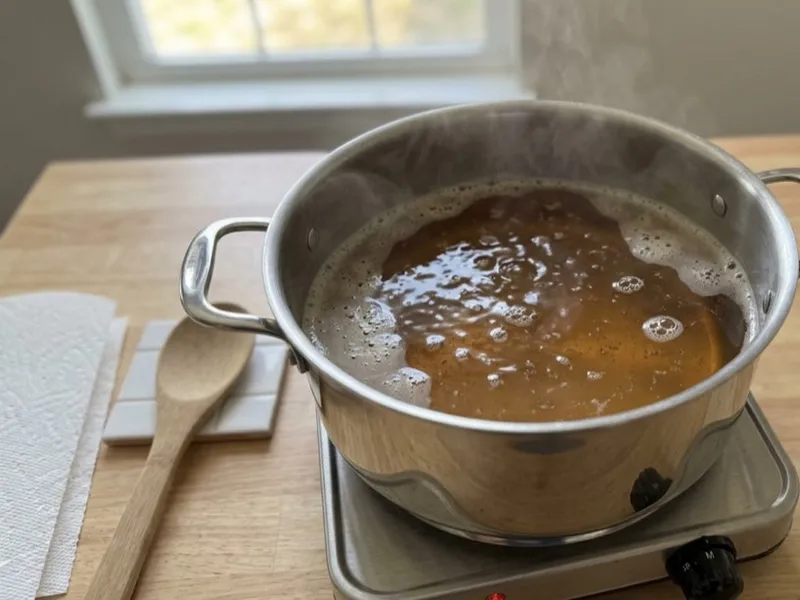
Pour about 1.5 times the liquid you need into a wide stainless steel pot, since some will evaporate. Bring it to a gentle boil and simmer for 10–15 minutes, stirring now and then, until it stops foaming and smells less of alcohol. Do this the day before so it has time to cool.
Step 2: Cool, weigh and chill
Let the beer cool, then weigh out the exact liquid amount for your batch. If it reduced too far, top it up with distilled water to the full weight. Refrigerate overnight, or freeze it in ice cube trays if you’re using a dark, sweet beer such as a stout.
Step 3: Melt the tallow and cool the oils
Put on goggles and gloves. Melt the tallow and coconut oil, add the olive and castor oils, and let them cool to 90–100°F (32–38°C).
Step 4: Add the lye to the cold beer, slowly
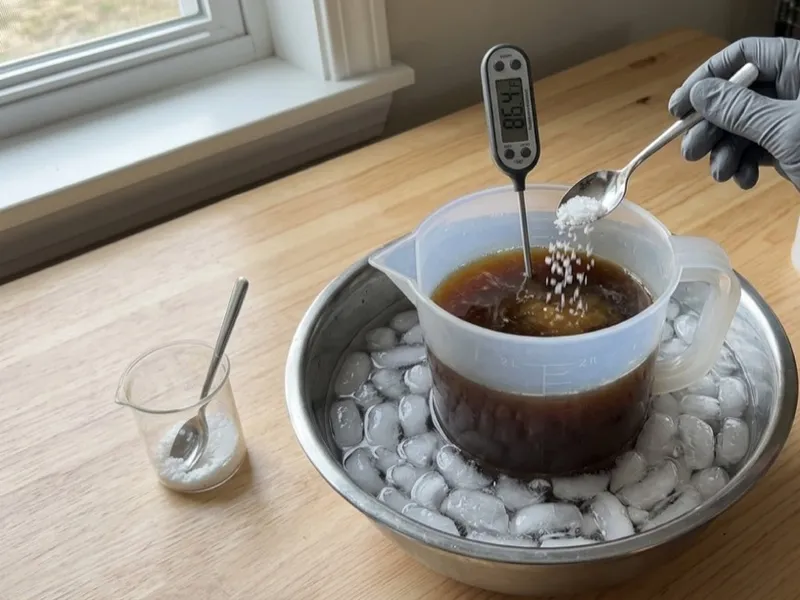
Set the container of cold beer in an ice bath outside or under a range hood. Sprinkle the lye in a spoonful at a time and stir. The solution will darken and smell yeasty and sharp; that’s normal. Watch for foaming and pause if it rises. Keep it under 90°F (32°C).
Step 5: Blend to light trace and scent
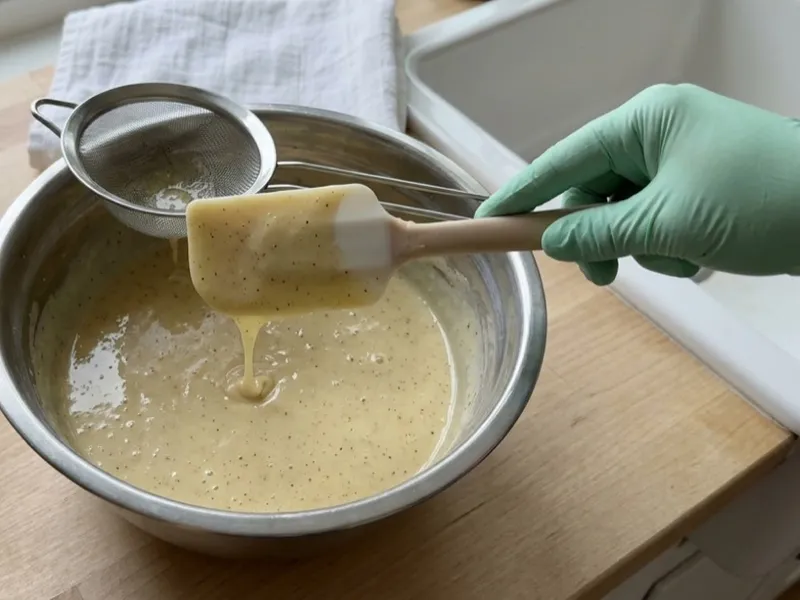
Strain the beer solution into the oils and stick blend in short bursts. Tallow and beer sugars both speed things up, so check after every few bursts and stop at light trace. Add the cedarwood and patchouli and hand stir them in.
Step 6: Pour without insulating
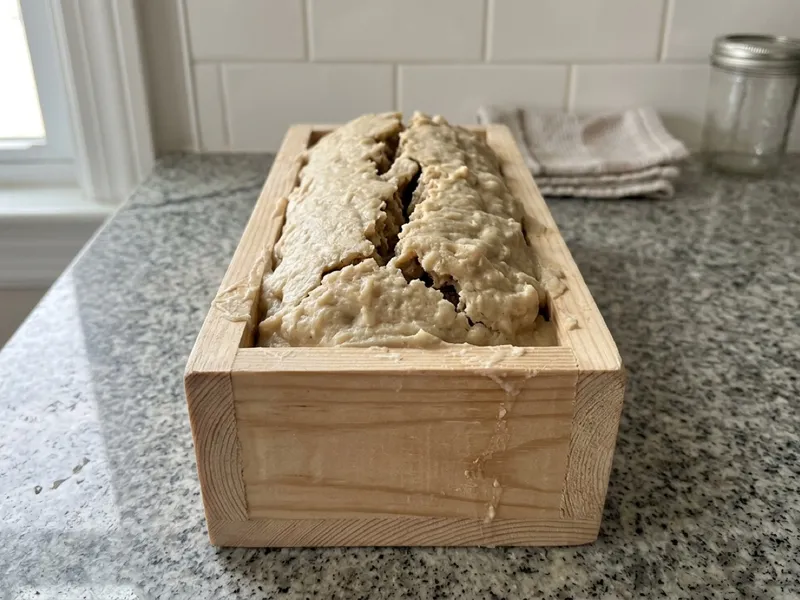
Pour into the mold and leave it uncovered at room temperature. Beer sugars make the loaf heat up more than a water batch would. If the top starts to look glossy or crack after an hour or two, move the mold to the fridge.
Step 7: Unmold, cut and cure
Unmold after 24–48 hours, cut into bars and cure on a rack for 6 weeks, turning weekly. The beer smell fades during the cure; the bar keeps its warm tan color and its scent comes from the essential oils.
Variations
Stout and oatmeal
Use a dark stout for a deeper brown bar, freeze it before adding lye, and stir 10 g of fine ground oats per 1000 g oils in at trace.
Hop-scented IPA
Hop aroma rarely survives the lye and the cure. Pair a pale ale with 3% lemongrass or 10x sweet orange instead of cedarwood for a brighter scent.
Palm-free
Swap the tallow for 25% shea butter and 15% more olive oil. The bar will be a little softer and slower to trace.
If something goes wrong
- Lye solution foamed over
- The beer still had alcohol or carbonation in it, or it was warm. Simmer longer next time, chill it fully and add lye more slowly.
- Batter thickened suddenly
- Tallow and sugar both speed trace. Soap a little cooler and stop blending at the first sign of trace. When soap seizes
- Cracks across the top of the loaf
- The sugars overheated the loaf. Leave it uncovered and move it to the fridge sooner. Why soap cracks
FAQ
Do I have to boil beer before making soap?
It’s strongly recommended. Alcohol and carbonation can make the lye solution foam up suddenly. Simmering removes most of both. Letting an opened beer sit out overnight removes carbonation but not alcohol.
Does beer soap smell like beer?
Not much once cured. The lye solution smells strongly of beer and yeast, but that fades during the cure, which is why this recipe adds essential oils.
What kind of beer works best?
Any beer works. Pale lagers and ales give a light tan bar; stouts and porters give a deeper brown and carry more sugar, so freeze them before adding lye.
Can I use beer for only part of the liquid?
Yes. Dissolve the lye in water at half the liquid weight and add the boiled, cooled beer at light trace. That avoids the lye-and-beer step entirely, though the color will be a little lighter.
Comments
No comments yet. Made this recipe? Be the first to say how it went.