Cucumber Soap Recipe (Cucumber Purée Cold Process)
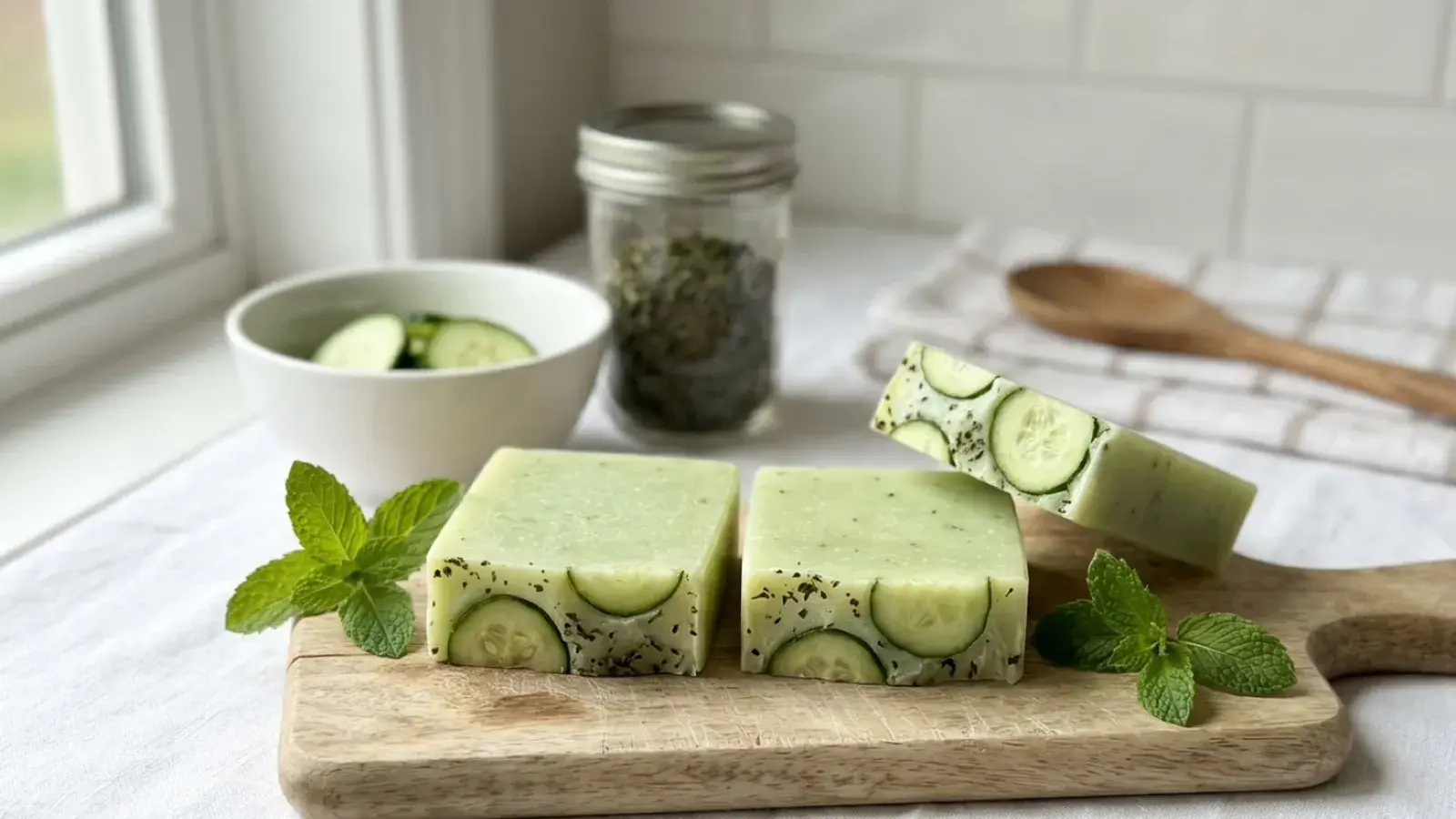
A pale, fresh-scented olive and mango butter bar with sieved cucumber purée blended into the oils, and the lye water cut back to match.
This page has affiliate links. We earn a small commission at no cost to you. Disclosure
Formula not yet verified. These numbers haven't been re-run by a second maker. Don't make this batch until this notice is gone.
- Yield
- 10 bars
- Method
- Cold process
- Difficulty
- Intermediate
- Cure
- 6 weeks
- Superfat
- 5%
- Lye conc.
- 40%
On this page
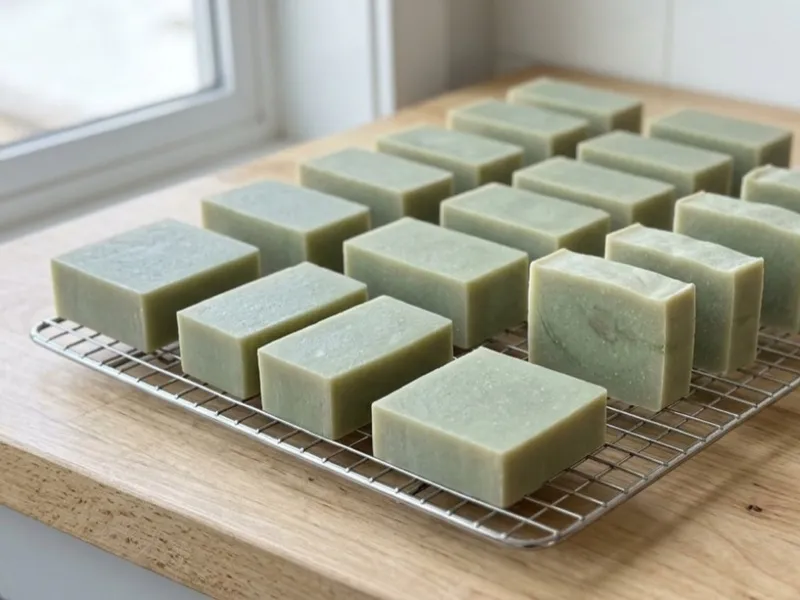
This cucumber soap recipe blends a sieved, peeled cucumber purée into an olive, mango butter and apricot kernel oil blend before the lye solution goes in. It cures to a pale sage-cream bar with a cool lavender-and-peppermint scent and a light, clean lather.
The thing to get right is water. Cucumber is around 95% water, so a generous amount of purée on top of a normal lye solution would leave you with a soggy loaf. This recipe makes the lye solution stronger, at 40%, and lets the purée bring the total liquid back to a normal level.
Where the cucumber goes, and why
Many purée recipes add the vegetable at trace. Cucumber is thin and watery enough to go in earlier: blended straight into the cooled oils, it forms a loose, cloudy emulsion that the lye solution then turns into soap evenly. Because the purée never meets the hot lye on its own, its color has a better chance of surviving, though it will still fade.
At 1000 g of oils, the lye water comes to about 210 g. The 80 g of purée adds roughly 75 g more, for about 285 g in total, which is close to a 33% concentration. If you change the purée amount, change the water by almost the same weight, and keep the purée modest. Plant matter that isn’t dissolved is what browns and, in large amounts, spoils.
Why this recipe works
- Olive + apricot kernel, 55%. A light, conditioning base with a slow trace. Apricot kernel feels lighter than heavier butters, which suits a summer bar.
- Coconut, 25%. Clean, fluffy lather and enough hardness to hold the extra moisture from the purée.
- Mango butter, 15%. Firmness and a smooth, creamy feel with almost no scent of its own to compete with the cucumber freshness.
- 40% lye solution + purée. Cucumber is almost all water. Making the lye solution stronger and letting the purée supply the rest keeps the bar from ending up wet and slow to unmold.
Ingredients
| Oil | % | Grams | Ounces |
|---|---|---|---|
| Olive oil | 45% | 450 g | 15.87 oz |
| Coconut oil (76°) | 25% | 250 g | 8.82 oz |
| Mango butter | 15% | 150 g | 5.29 oz |
| Apricot kernel oil | 10% | 100 g | 3.53 oz |
| Castor oil | 5% | 50.0 g | 1.76 oz |
| Lye solution | |||
| Sodium hydroxide (NaOH) 5% superfat | 140 g | 4.92 oz | |
| Distilled water, reduced Less water than usual because the cucumber purée (about 95% water) is blended into the oils. Together they come to roughly a 33% lye concentration. | 209 g | 7.39 oz | |
| Additives | |||
| Cucumber purée, peeled and sieved Fresh, cold and very smooth. Blended into the oils before the lye solution. | 8% | 80.0 g | 2.82 oz |
| Lavender essential oil 2% of oil weight. | 2% | 20.0 g | 0.71 oz |
| Peppermint essential oil 1% of oil weight. Adds a cool top note. | 1% | 10.0 g | 0.35 oz |
Equipment
Instructions
Step 1: Make a smooth, cold purée
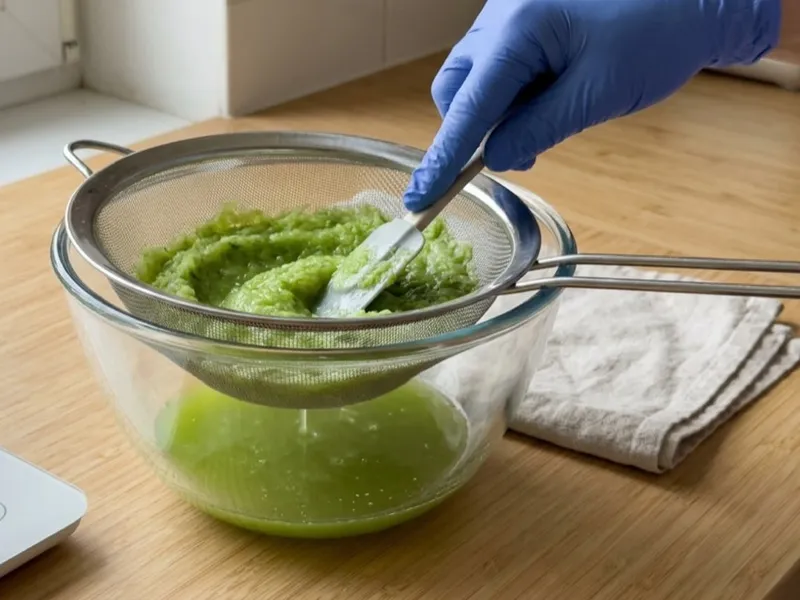
Peel a cucumber, cut out the seeds, and blend the flesh until completely liquid. Push it through a fine sieve to remove fibers. Weigh out the purée (80 g per 1000 g of oils) and keep it in the fridge. Make it the same day; cucumber purée browns and separates if it sits.
Step 2: Make the reduced lye solution
Put on goggles and gloves. Weigh the water as listed, which is less than usual on purpose. Add the lye to the water, never the reverse, stir until clear and let it cool to 85–95°F (29–35°C).
Step 3: Blend the purée into the oils
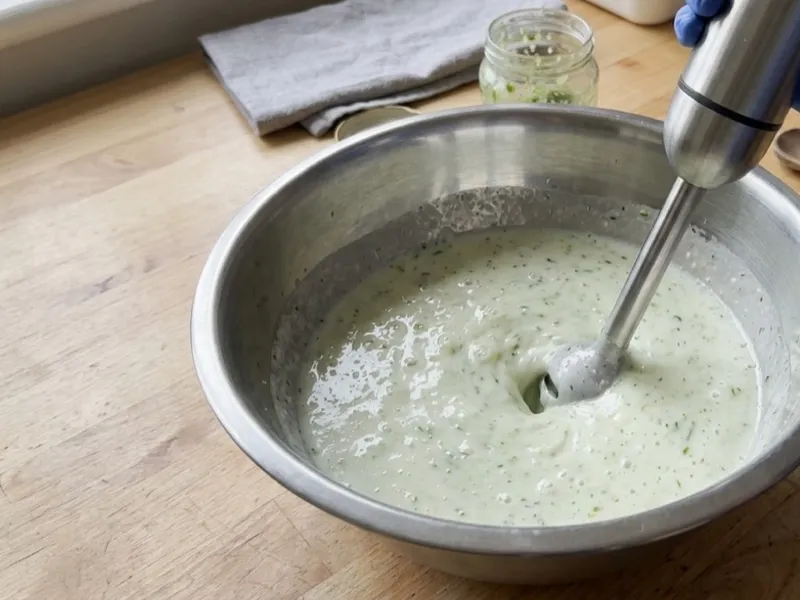
Melt the mango butter and coconut oil, add the olive, apricot and castor oils, and cool to about 90°F (32°C). Pour the cold purée into the oils and stick blend for 20–30 seconds until the mixture looks uniform and slightly cloudy.
Step 4: Add the lye solution and bring to trace
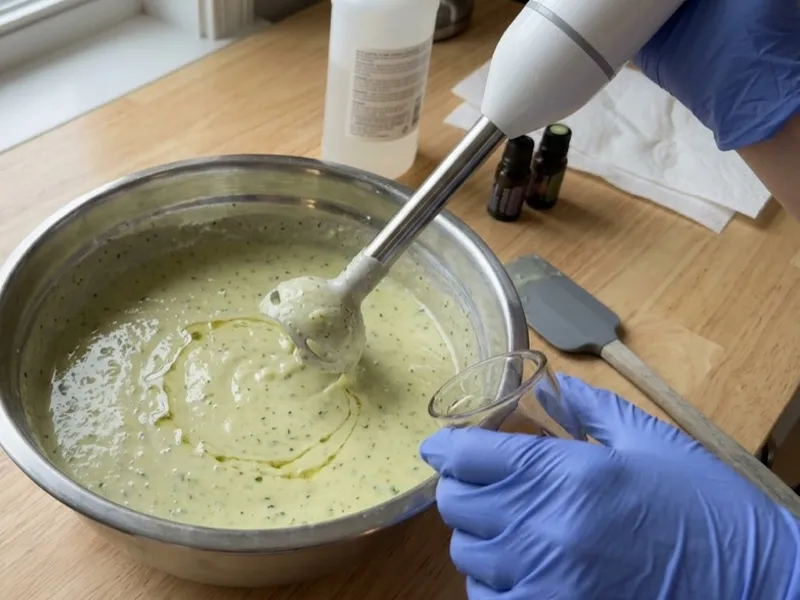
Pour the lye solution into the oil-and-purée mixture and stick blend in short bursts to light trace. The batter may look slightly speckled or greenish at first. Add the lavender and peppermint and stir.
Step 5: Pour and keep it cool
Pour into the mold and leave it uncovered at cool room temperature, or refrigerate for 24 hours for the palest color. Cucumber carries very little sugar, so overheating is less of a risk than with milk or carrot; the main reason to keep it cool is color.
Step 6: Unmold later than usual
The extra moisture from the purée means the loaf may need 48–72 hours to firm up. Unmold when the edges pull away cleanly and a fingertip doesn’t leave a dent, then cut into bars.
Step 7: Cure for 6 weeks
Cure on a rack with airflow, turning weekly. Expect the faint green to fade toward sage or cream as the bar cures. That’s natural for cucumber and doesn’t affect use.
Variations
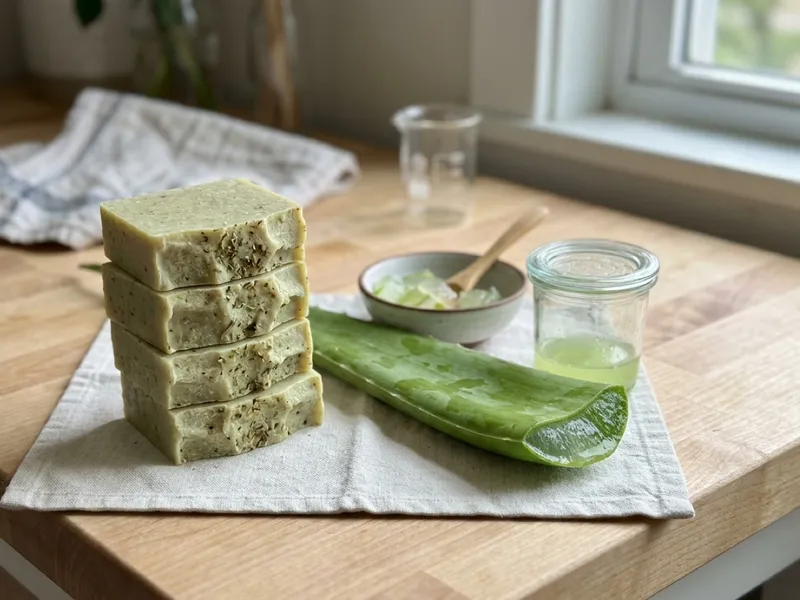
Cucumber and aloe
Replace half the purée with plain aloe vera juice or gel at the same weight, sieved smooth, and handle it the same way.
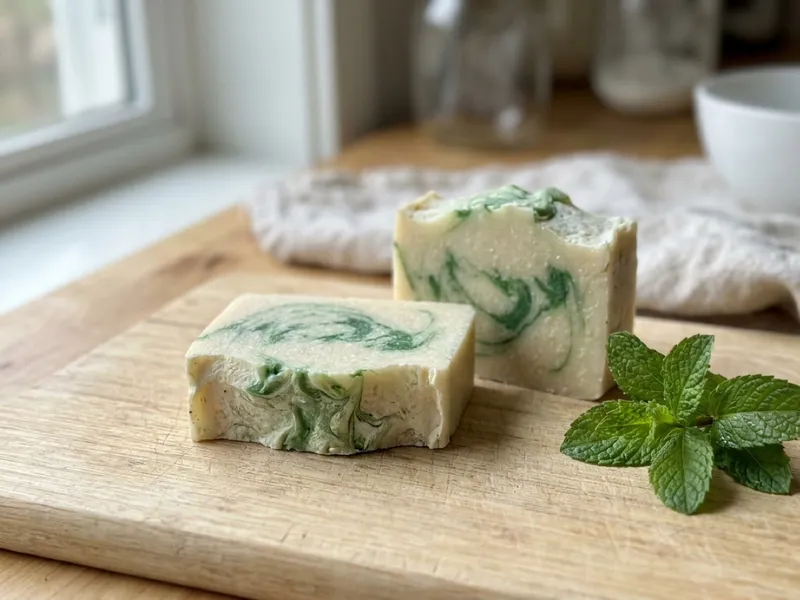
Green swirl
Natural cucumber color fades. For a lasting green, mix a pinch of green clay or chromium oxide green into a third of the batter and swirl.
Unscented
Leave out the essential oils for a plain bar. The cured soap has a very faint, clean smell.
If something goes wrong
- Loaf still soft after 3 days
- Too much water overall, often from using the full water amount plus purée. Use the reduced water shown and give it another day or two. Soft soap that won’t harden
- Brown flecks in the bar
- Unsieved fibers, peel or seeds. They can brown and, in large amounts, spoil. Peel, seed and sieve the purée. Fading and morphing color
- Oily layer on the surface
- The purée and oils weren’t fully blended before the lye went in, or the batter was poured before true trace. Blend longer at both stages. False trace and separation
FAQ
Does cucumber soap stay green?
Not for long. Cucumber’s green is delicate and usually fades to sage or cream during the cure. Use a clay or a stable green colorant if you want it to stay green.
Can I use cucumber juice instead of purée?
Yes. Use sieved juice in place of the purée at the same weight, or freeze cucumber juice and use it as the whole lye liquid at a 33% concentration. Cucumber has little sugar, so it’s less temperamental than milk.
Why add the purée to the oils and not the lye?
It keeps the fresh cucumber away from hot lye, which can cook it and darken the color. Blending it into the oils first also helps it disperse evenly before trace.
How much cucumber can I put in soap?
Keep it modest. This recipe uses 80 g per 1000 g of oils with the lye water reduced to match. Larger amounts make a soft, slow-curing bar and add plant matter that can spoil.
Comments
No comments yet. Made this recipe? Be the first to say how it went.