Overheating Soap: How to Stop a Soap Volcano
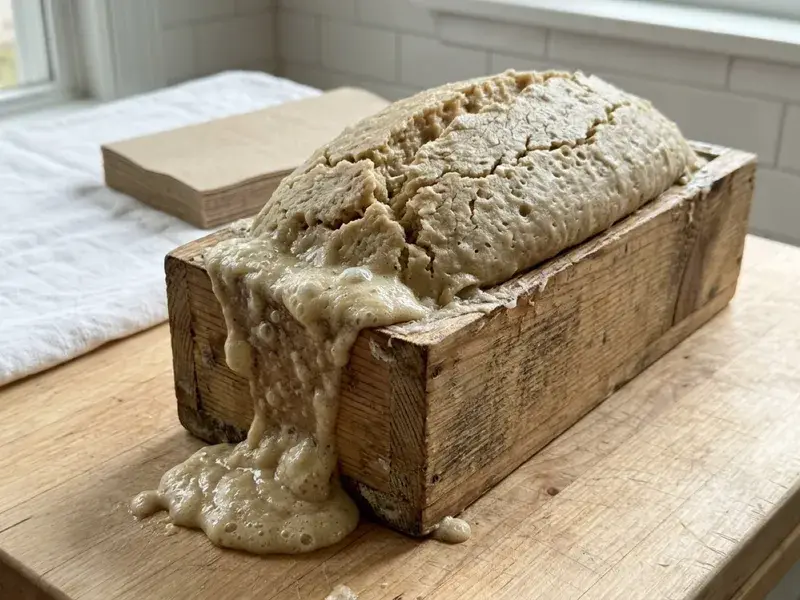
Soap overheats when saponification runs hotter than the mold can shed, usually because of sugars like honey or milk, warm ingredients, or too much insulation. Uncover it and cool it right away.
Is it safe to use?
Soap that overheated but stayed in the mold usually cures into usable bars. Batter that erupted may have mixed unevenly, so check cut bars for pockets of liquid or crystals and test with pH strips after cure.
Wet pockets or white crystals in the cut bars? Lye pockets
Causes, ranked by likelihood
- Most likely
Sugars in the recipe
Honey, milk, beer, wine, fruit and vegetable purees all add sugars that raise the temperature during saponification. More sugar, more heat.
- Common
Too much heat going in or staying in
Soaping above about 120°F (49°C), insulating the mold, a hot kitchen or putting a sugary batch in a warm oven all trap heat.
- Sometimes
A deep mold or accelerating fragrance
Tall loaf and block molds hold heat in the center. Some fragrance oils speed up saponification and the heat that comes with it.
Fix this batch
Cool it and contain it
- Put on gloves and goggles. Rising batter is hot and caustic.
- Remove any lid, towels or box, and move the mold to a cool spot. A fridge or freezer will stop a rising loaf if it fits.
- If batter has overflowed, scrape it back into the mold or onto parchment with a silicone spatula. Wipe spills with paper towels and bag them.
- When it's cool and set, plane off any dome, cut, and inspect the bars before curing.
Prevent it next time
Plan for a hot recipe
- Soap sugary recipes cool, around 80–100°F (27–38°C), and don't insulate them.
- Freeze milk into cubes before adding lye, and add honey diluted in a little warm water at trace.
- Use individual cavity molds or a shallow slab for recipes known to run hot.
- Read fragrance supplier notes for acceleration, and test new ones in a small batch.
Ten-minute rescue
Overheating moves fast. The order matters more than the details.
- Gloves and goggles on before you touch the mold
- Uncover: lid, towels, box all off
- Move to the coolest place available, ideally the fridge
- Catch overflow on parchment or a tray, not your bare counter
- Leave it alone until it stops moving
Don’t try to stir an erupting loaf back down. Moving it while it’s rising only spreads the batter around.
The science behind it
FAQ
What is a soap volcano?
It's an extreme overheat where the batter expands so much it pushes up and out of the mold. It's most common with sugary additives and insulated molds.
What are the glassy streaks in my overheated soap?
Those are glycerin rivers: translucent veins that form when soap gets very hot, especially with titanium dioxide in the batter. They're cosmetic.
Should I put my soap in the freezer to stop it overheating?
Yes, if it fits safely. It's the fastest way to pull heat out. Expect a slightly different color and some condensation as it comes back to room temperature.
Is overheated soap lye heavy?
No. Heat doesn't add lye. Problems come from uneven mixing if batter erupted, so check cut bars rather than assuming the batch is bad.
Comments
No comments yet. Made this recipe? Be the first to say how it went.