Soap Additives: What to Add to Homemade Soap, When and How Much
Soap additives like sodium lactate, sugar, honey, milk, oats, clay and salt change hardness, lather and texture. Usage rates, when to add each one, and what to watch for.
On this page
Soap additives are anything beyond oils, lye and water that you put into a batch to change how the bar feels, lathers, looks or holds up. The useful ones fall into three groups: performance additives (sodium lactate, sugar, salt, silk), texture and feel additives (milk, honey, oats, clay, exfoliants) and fixes (chelators and antioxidants). Each has a usage rate and a right moment to go in.
The most common mistake with additives isn’t choosing the wrong one. It’s adding too much, or at the wrong stage. Sugar and honey heat the batch, clay thickens it, and fresh purees bring water you didn’t plan for.
Additives by when they go in
This is the section to bookmark. Amounts are per 500 g of total soaping oils, with the rough percentage of oil weight where that’s how makers usually think of it. Start at the low end of any range.
| Additive | Add to | Amount per 500 g oils | What it does |
|---|---|---|---|
| Sodium lactate (60% liquid) | Cooled lye water | 5–15 g (about 1–3%) | Harder bar sooner; easier unmolding and cleaner cuts |
| Sugar (table sugar) | Warm water, before lye | 3–5 g (about 1 tsp) | More, bigger bubbles |
| Salt (fine, in a regular bar) | Cooled lye water | About 1 tsp | Slightly harder bar |
| Tussah silk fibers | Hot lye water | A small pinch | Silky feel to the lather |
| Sodium citrate or other chelator | Water, before lye | Follow supplier rate | Helps in hard water; may help with DOS |
| Rosemary oleoresin extract (ROE) | Oils, when opened | Follow supplier rate | Slows oxidation of fresh oils |
| Milk (goat, cow, coconut) | Replaces water, frozen | Up to 100% of water | Creamy feel; color from tan to brown |
| Honey | Light trace, or warm water | 1 tsp to 1 tbsp (about 7–21 g) | Lather and a warm color; heats the batch |
| Colloidal oatmeal | Light trace | 1–2 tbsp | Soft, creamy feel |
| Clay (kaolin, rose, French green) | Light trace, hydrated | 1–2 tsp | Slip, color, scent anchoring for some |
| Ground oats, poppy seeds, coffee grounds | Light to medium trace | 1–3 tsp | Gentle to medium scrub |
| Pumice or ground walnut shell | Medium trace | 1–2 tsp | Strong scrub, for hand soaps |
| Fresh purees (pumpkin, carrot, cucumber) | Oils or trace, small amount | 15–30 g | Color, a story for the label |
| Salt (salt bar) | Trace | 250–500 g (50–100%) | Hard, dense bar; needs a special recipe |
These amounts are commonly used starting points, not fixed rules. Additives interact with each other: honey plus milk plus sugar in one batch is a lot of extra heat.
Performance additives
Sodium lactate. A salt of lactic acid, usually sold as a 60% liquid. Stirred into lye water once it has cooled below about 130°F (54°C), it gives a firmer loaf that releases from silicone molds sooner and cuts more cleanly. It doesn’t replace cure. Above about 3% some bars get crumbly. It’s especially handy for high-olive recipes and intricate molds.
Sugar. Dissolve plain sugar in the warm water before adding lye (lye added to sugar water gets hotter than usual, so go slowly). It boosts the size and amount of bubbles. A teaspoon per 500 g is plenty; more heats the batch and can cause overheating cracks. See overheating soap.
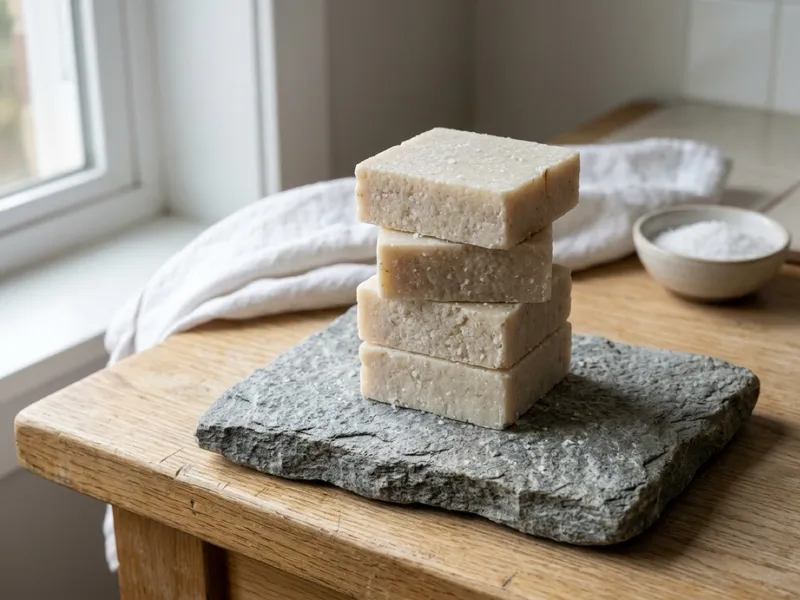
Salt in small amounts. A teaspoon of fine salt dissolved in the lye water makes a slightly harder bar. Much more than that and lather drops. Full salt bars are a different recipe entirely: high coconut, high superfat, salt equal to 50–100% of oil weight. See salt bar soap.
Silk. A small tuft of tussah silk dissolves in hot lye water. Makers describe the lather as silkier. Use a pinch; it’s light and goes a long way.
Chelators. In hard water, minerals can react with soap to form scum and may contribute to dreaded orange spots by speeding up oxidation. Sodium citrate and tetrasodium EDTA bind those minerals. Note: citric acid works too but consumes some lye, so the lye amount has to be increased. If you use it, your calculator needs to account for it.
Feel and texture additives
Milk. Goat milk, cow milk, buttermilk and coconut milk can replace some or all of the water. Freeze the milk first and add lye slowly in an ice bath, or it scorches orange and smells. Milk sugars heat the batch, so many makers skip gel by chilling the mold. See goat milk soap and the milk notes in lye for soap making.
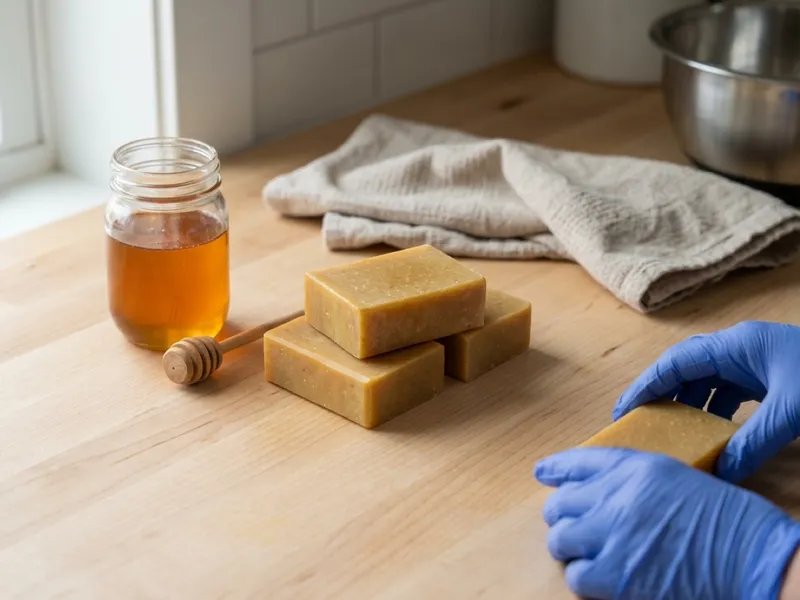
Honey. Honey adds a warm color and is used for lather. It’s also a common cause of overheating, cracks and a honey “volcano” in the middle of a loaf. Dilute it in a little warm water so it disperses, keep it under a tablespoon per 500 g and put the mold somewhere cool. See honey soap.
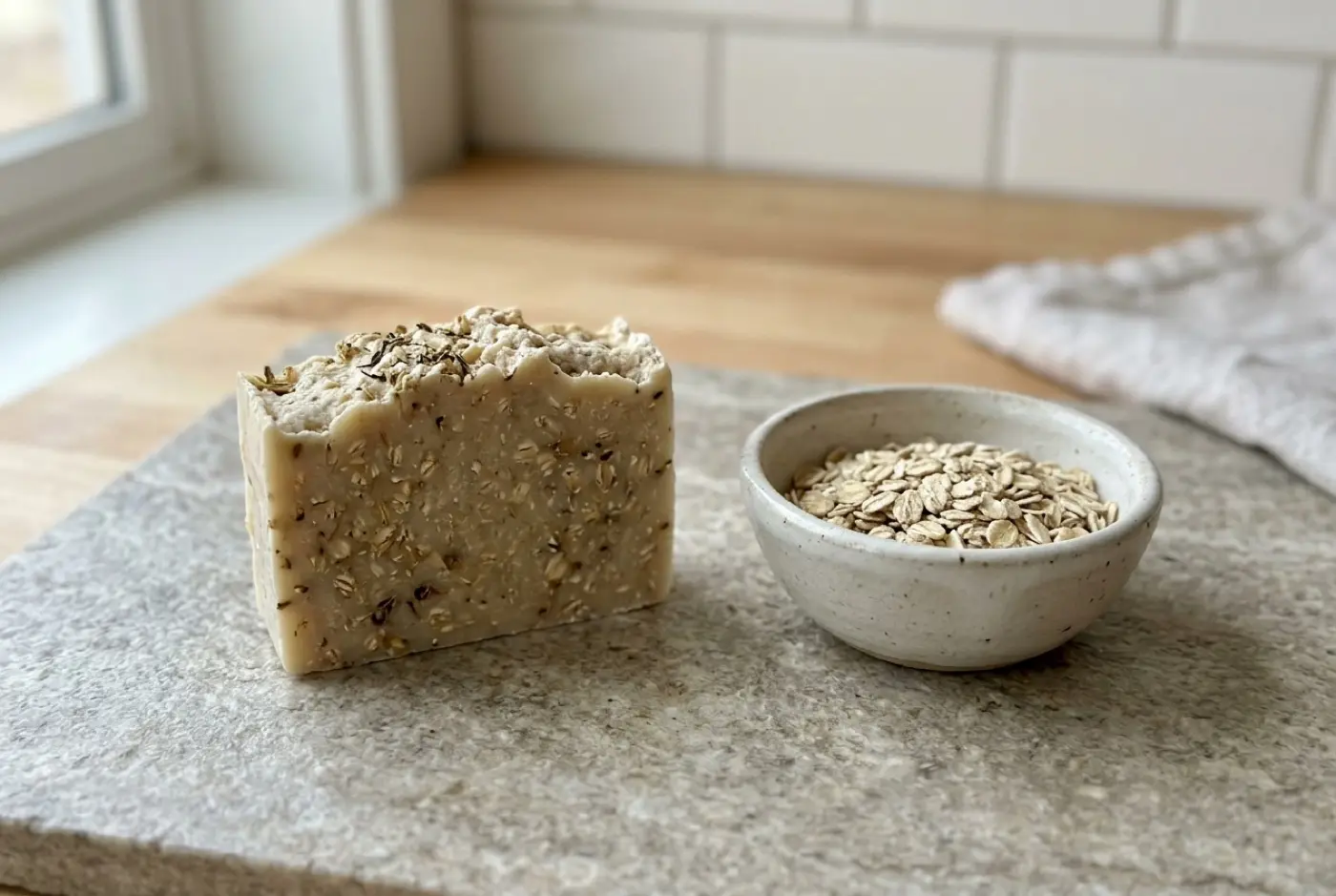
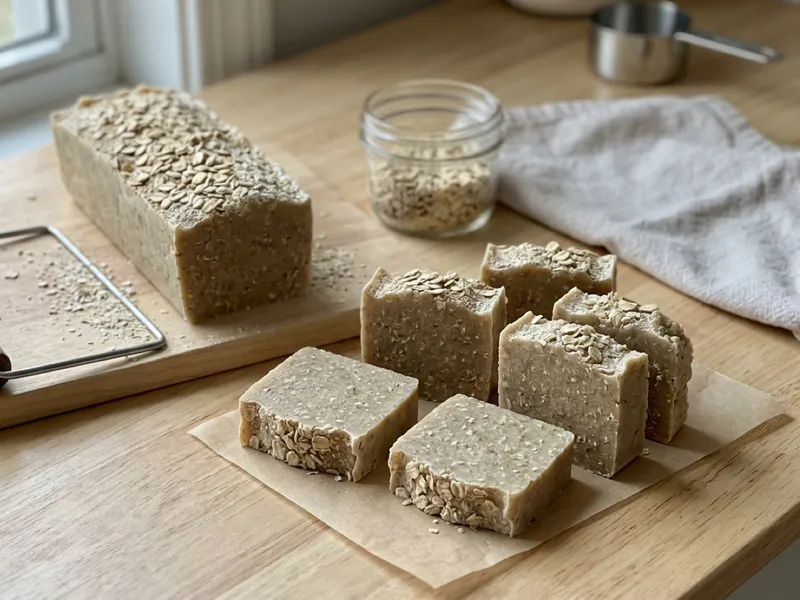
Colloidal oatmeal. Finely ground oats that disperse smoothly in batter and give a creamy feel. Regular ground oats add mild texture instead. Whole rolled oats get soggy and look like bits; grind them first. See oatmeal soap.
Clay. Kaolin gives a silky slip, which is why it’s popular in shaving soap; colored clays tint. Clay absorbs water, so mix it with a little distilled water first, and expect slightly faster trace. See natural soap colorants for color effects.
Exfoliants. Poppy seeds, ground coffee, finely ground oats, loofah slices and pumice give scrub from gentle to strong. Add at a thicker trace so they stay suspended rather than sinking. Keep sharp or very coarse exfoliants for hand or kitchen soaps. See exfoliating soap.
Fresh fruit and vegetable purees. Pumpkin, carrot and cucumber are popular. Keep amounts small, count their water in your recipe (a puree is mostly water) and expect color to change. Large amounts of fresh plant material can shorten shelf life or spot. See pumpkin soap and cucumber soap.
Adding additives at trace
- Prepare everything before you mix lye and oils. Disperse powders in a little oil or water, dilute honey, and weigh exfoliants.
- Lye-water additives first. Sodium lactate, salt and silk go into the lye solution at the stages listed above; sugar goes into the water before lye.
- Bring the batter to light trace.
- Stir in trace additives by hand, then pulse briefly only if needed. Over-blending after additives often speeds trace.
- Pour and watch the mold. If you used sugar, honey or milk, check for cracking or a dark center in the first few hours and move the mold somewhere cooler if it’s heating up.
Keep goggles and gloves on through every step. An additive doesn’t make raw batter less caustic.
Common mistakes
- Doubling up on heat-raisers. Sugar, honey, milk and beer all add heat. Pick one or two and plan to keep the mold cool.
- Adding dry powders straight to batter. Clumps of clay, oats or charcoal leave pockets. Disperse first.
- Using too much exfoliant. It sinks, scratches and makes the bar fall apart. A few teaspoons is enough.
- Forgetting the water in purees. Too much fresh puree gives a soft, slow-curing bar.
- Expecting skin benefits to survive lye. Choose additives for what they do to the bar.
- Using citric acid without extra lye. It consumes lye, so recalculate.
Recipes that showcase additives
- Oatmeal milk and honey soap: three additives handled together.
- Salt bar soap: an additive that changes the whole recipe.
- Coffee soap: scrub and color in one.
- Honey soap and oatmeal soap: single-additive bars to learn on.
FAQ
What can you add to homemade soap?
Common soap additives include sodium lactate for hardness, sugar for bubbles, honey, milk, colloidal oatmeal, clays, salt, silk, exfoliants like poppy seeds or coffee grounds, and colorants. Each has its own rate and timing.
How much honey do you put in soap?
Start with about 1 teaspoon (roughly 7 g) per 500 g of oils, and stay under about 1 tablespoon. Honey heats the batch and can scorch or crack it if overused.
When do you add additives to cold process soap?
It depends on the additive. Sodium lactate, sugar, salt and silk go in the cooled lye water; some go into the oils; most dry additives, honey and exfoliants go in at light trace.
Do soap additives stay active after saponification?
Lye changes many ingredients. Additives in soap are best understood for what they do to the bar's feel, lather, hardness, color and texture, not as active treatments.
Comments
No comments yet. Made this recipe? Be the first to say how it went.