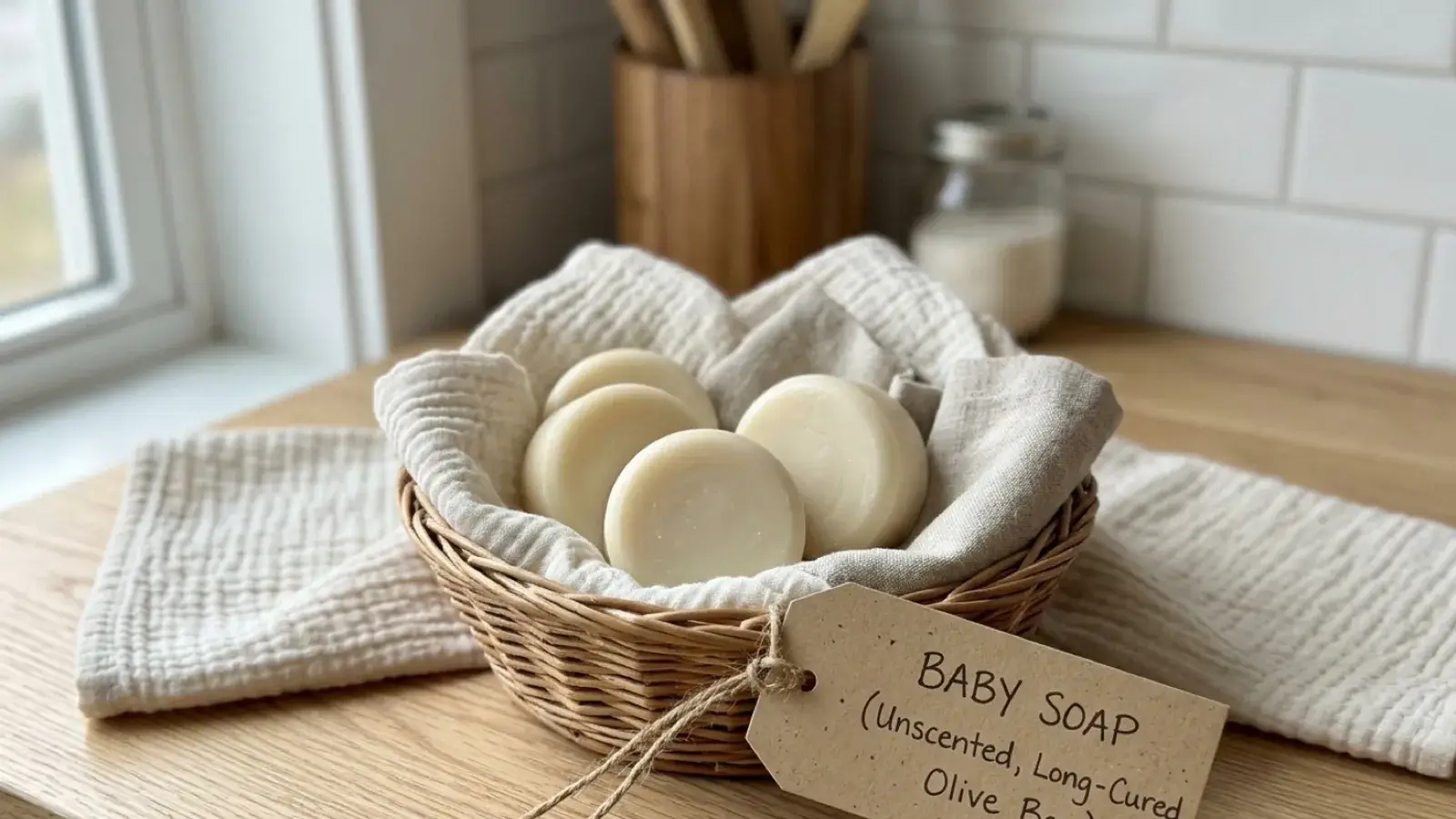
Baby Soap Recipe (Unscented, Long-Cured Olive Bar)
A small, rounded, unscented olive oil bar with an 8% superfat and a three-month cure, made as a simple gift for new families.
This page has affiliate links. We earn a small commission at no cost to you. Disclosure
Formula not yet verified. These numbers haven't been re-run by a second maker. Don't make this batch until this notice is gone.
- Yield
- 10 bars
- Method
- Cold process
- Difficulty
- Beginner
- Cure
- 3 months
- Superfat
- 8%
- Lye conc.
- 33%
On this page
This baby soap recipe makes small, rounded, unscented olive oil bars with an 8% superfat, cured for a full three months. It’s the plainest bar we make: four oils, lye and water, with nothing added for scent or color, and it’s shaped to fit in one hand while the other is busy holding a slippery baby.
Its unique ingredient is time. A bar that is 70% olive oil works at six weeks but is soft and its lather a little slimy. At three months it is harder, lasts longer in the dish and feels noticeably milder. So plan ahead: if this is a baby shower gift, make it a season before the due date.
Before using any soap on a baby, check with your pediatrician, especially for a newborn or if there’s any skin concern. That’s why the label lists every ingredient, so parents can show it to them.
Making it as a gift
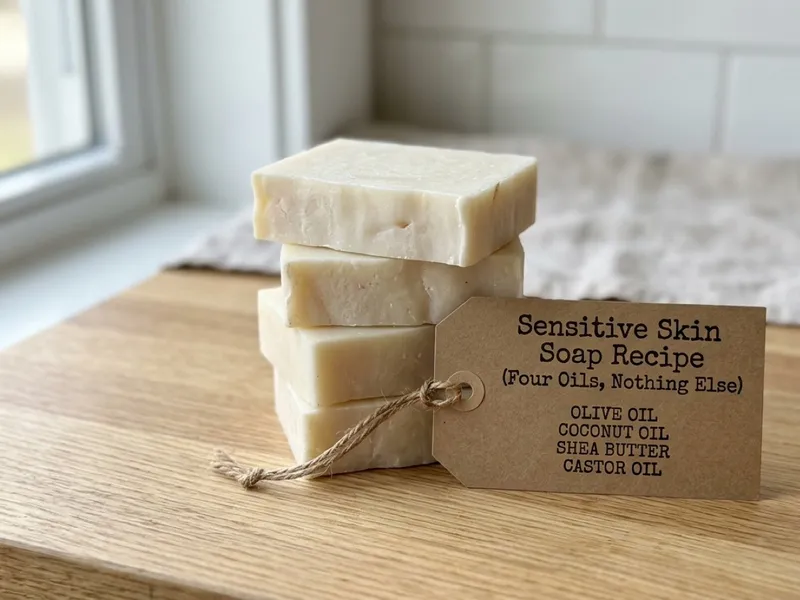
Wrap each cured bar in plain paper or muslin with a tag listing the ingredients and the date it was made. A note to store the bar dry between uses, and to keep it out of reach of crawling babies and toddlers, is a kind addition. Soap isn’t food, and little ones put everything in their mouths.
Why this recipe works
- Olive, 70%. Most of the bar is olive oil, which makes a soft, low-bubble lather and the mildest feel of the common soap oils. It also needs a long cure, which this recipe builds in.
- Cocoa butter, 10%. Firmness so a high-olive bar doesn't stay soft and slimy in the dish. Use deodorized cocoa butter so the bar has no chocolate scent.
- Coconut, 15%, and castor, 5%. Enough lather to be useful, kept low so the bar doesn't feel stripping. That puts the cleansing number just under the usual range on purpose.
- 8% superfat, no additives. The top of the usual range. More oil left unsaponified for a softer feel, and no fragrance, essential oils or colorants at all.
Ingredients
| Oil | % | Grams | Ounces |
|---|---|---|---|
| Olive oil | 70% | 700 g | 24.69 oz |
| Coconut oil (76°) | 15% | 150 g | 5.29 oz |
| Cocoa butter | 10% | 100 g | 3.53 oz |
| Castor oil | 5% | 50.0 g | 1.76 oz |
| Lye solution | |||
| Sodium hydroxide (NaOH) 8% superfat | 131 g | 4.61 oz | |
| Distilled water 33% lye concentration | 265 g | 9.36 oz | |
Equipment
Instructions
Step 1: Choose small, rounded molds
Small round or oval silicone cavity molds, around 2.5–3 oz (70–85 g) each, make bars that fit easily in one adult hand while the other holds the baby. No sharp corners to dig in. A loaf mold works too; bevel the edges with a peeler after cutting.
Step 2: Make the lye solution
Goggles and gloves on, and make sure children are out of the room. Add the lye to the distilled water, never the reverse, and stir until clear. Cool to about 100°F (38°C).
Step 3: Melt the cocoa butter and coconut
Melt the deodorized cocoa butter and coconut oil, then add the olive and castor. Bring the oils to 100–110°F (38–43°C). Cocoa butter sets quickly as it cools, so blend while the oils are still clear.
Step 4: Blend to light trace
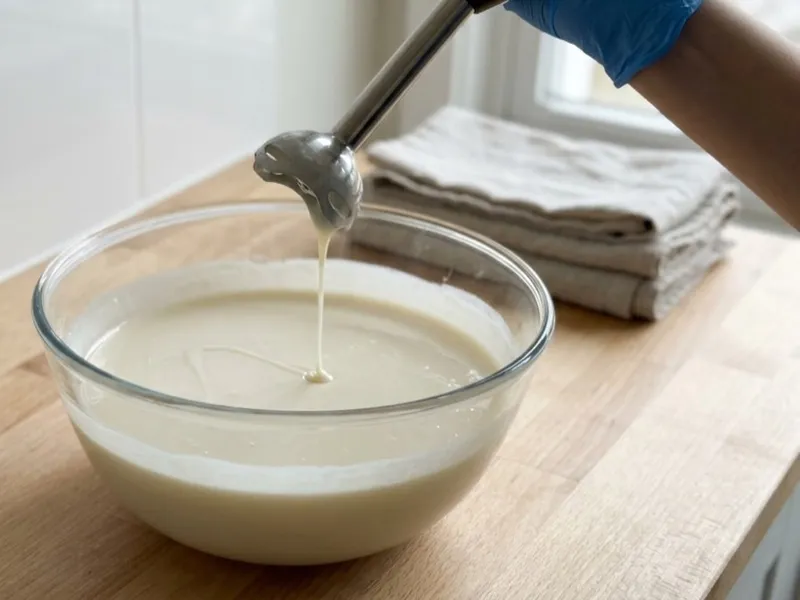
Pour the lye solution into the oils and stick blend in bursts. A high-olive batter can take 4–8 minutes to reach light trace. Stop when a drizzle leaves a faint trail.
Step 5: Pour and keep warm
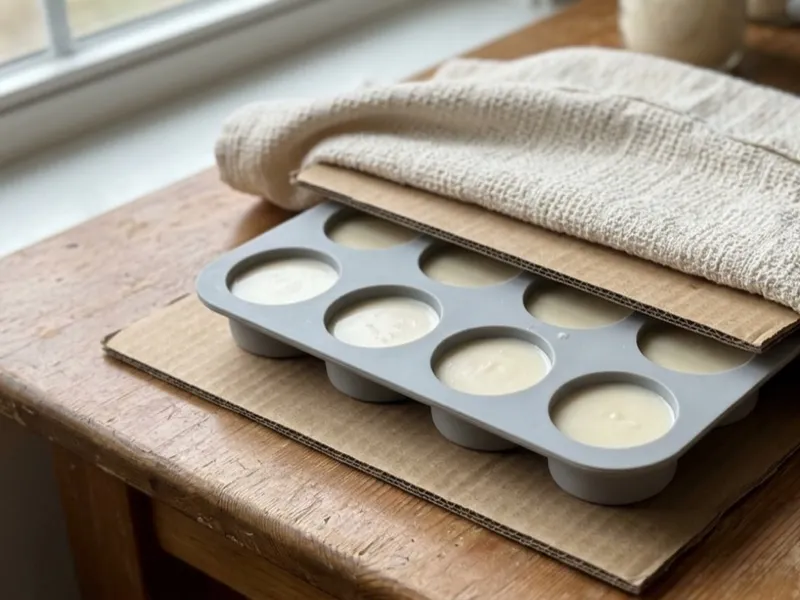
Pour into the cavity molds or loaf. Cover loosely with cardboard and a towel. Small cavities lose heat quickly; a warm room helps them set evenly.
Step 6: Unmold after 3–4 days
High-olive soap is slow to firm. Wait until the bars release from the cavities without denting, often 3–4 days. If they still feel soft, wait another day.
Step 7: Cure for 3 months
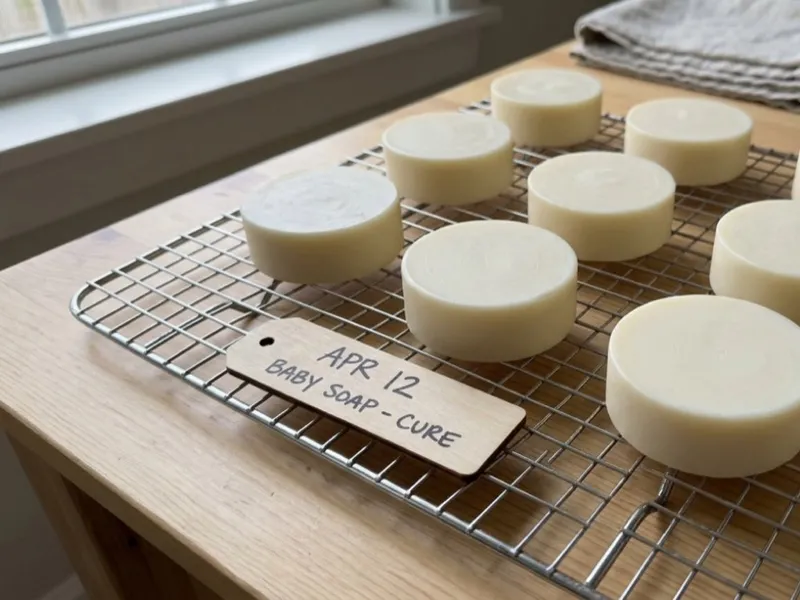
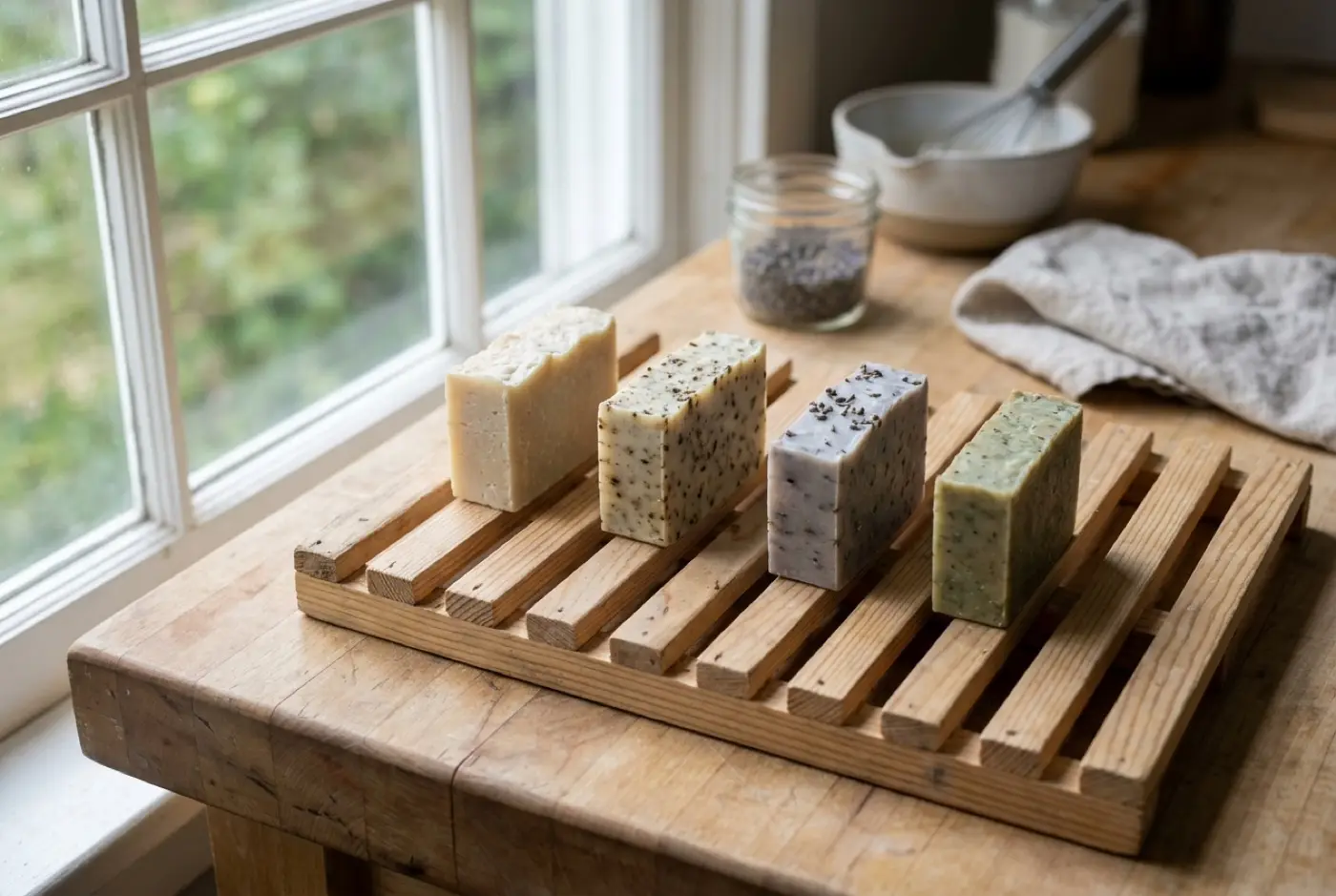
Cure on a rack with good airflow for at least 3 months, turning every week or two. The long cure is what makes this bar hard, long-lasting and mild-feeling. Bars used at 6 weeks will work but feel softer and slimier.
Step 8: Wrap with a full ingredient label
Wrap each bar and list olive oil, coconut oil, cocoa butter, castor oil, sodium hydroxide and water, plus the date. Parents can then check it against anything their pediatrician has advised.
Variations
Goat milk
Make the liquid frozen goat milk, following our goat milk soap method. It adds a creamy feel and a pale ivory color.
Grown-up bar
The same formula cut into standard bars makes a plain, mild everyday soap for the rest of the family.
Shea in place of cocoa
Use shea butter at 10% if you prefer, re-running the lye in the calculator. Note that shea comes from a nut.
If something goes wrong
- Bars stick in the molds
- They need more time. Leave them another day or two, or put the tray in the freezer for 30 minutes before unmolding.
- Slimy lather
- The bars are too young. High-olive soap needs the full cure; the lather improves noticeably with time.
- Orange spots appear months later
- Rancid oils, usually from old olive oil or bars stored damp. Use fresh oils and store cured bars dry and cool. Dreaded orange spots
FAQ
Is homemade soap safe for babies?
Ask your pediatrician before using any new soap on a baby, especially a newborn or a baby with any skin concern. This bar is plain and unscented, but every baby is different.
Why does baby soap need a 3-month cure?
High-olive soap hardens slowly. A long cure gives a harder bar that lasts longer and has a less slimy lather.
Can I add lavender or chamomile to baby soap?
We leave essential oils out of this bar. Fragrance is a common source of reactions, and little skin is a good reason to keep it simple. If you want scent, ask a pediatrician first.
What's the difference between this and your sensitive skin soap?
This bar is higher in olive, uses cocoa butter instead of shea, has a higher 8% superfat and cures twice as long. The sensitive skin bar is a firmer, faster-curing everyday bar.
Comments
No comments yet. Made this recipe? Be the first to say how it went.