Exfoliating Soap Recipe (Oat and Poppy Seed Scrub Bar)
A firm lard bar with ground oats and poppy seeds held evenly through the loaf, plus a grit guide for coffee, pumice and loofah.
This page has affiliate links. We earn a small commission at no cost to you. Disclosure
Formula not yet verified. These numbers haven't been re-run by a second maker. Don't make this batch until this notice is gone.
- Yield
- 10 bars
- Method
- Cold process
- Difficulty
- Intermediate
- Cure
- 6 weeks
- Superfat
- 5%
- Lye conc.
- 33%
On this page
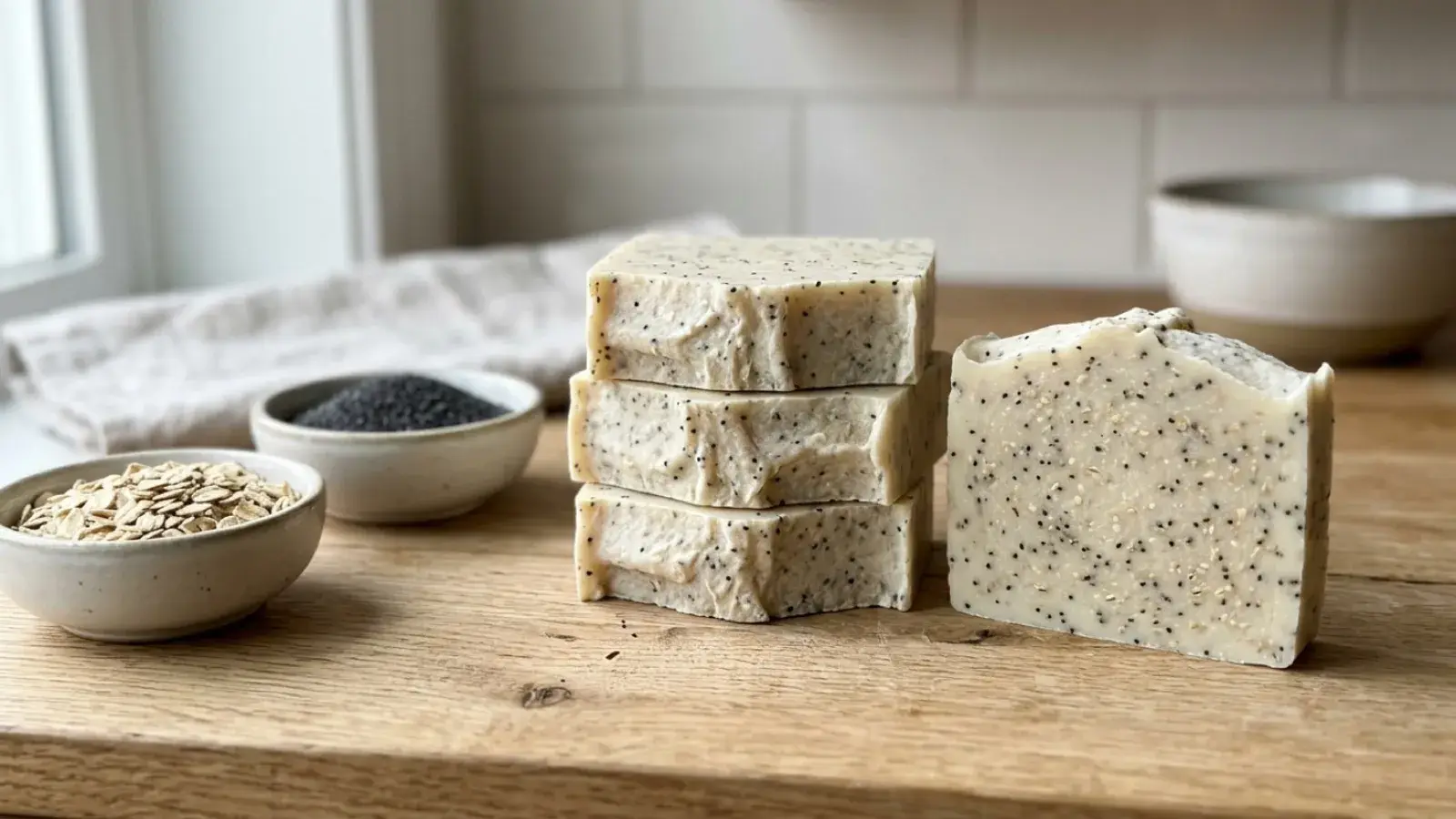
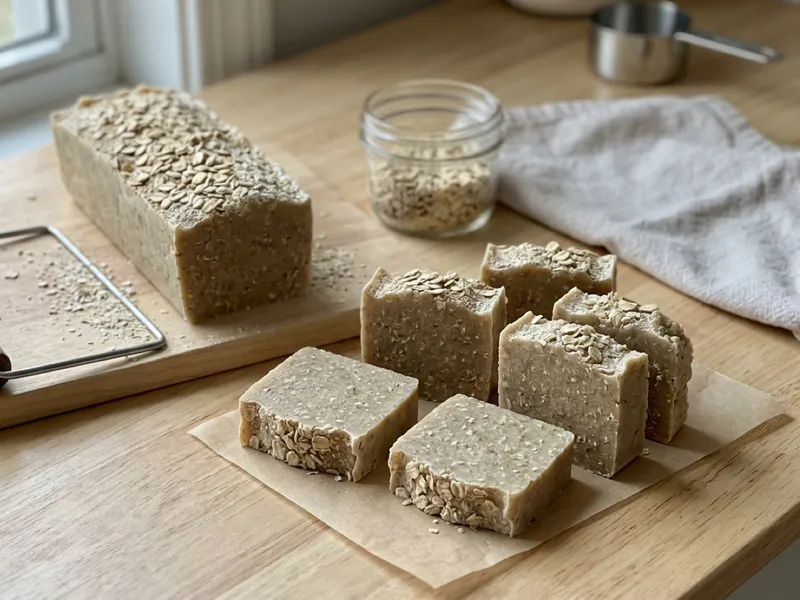
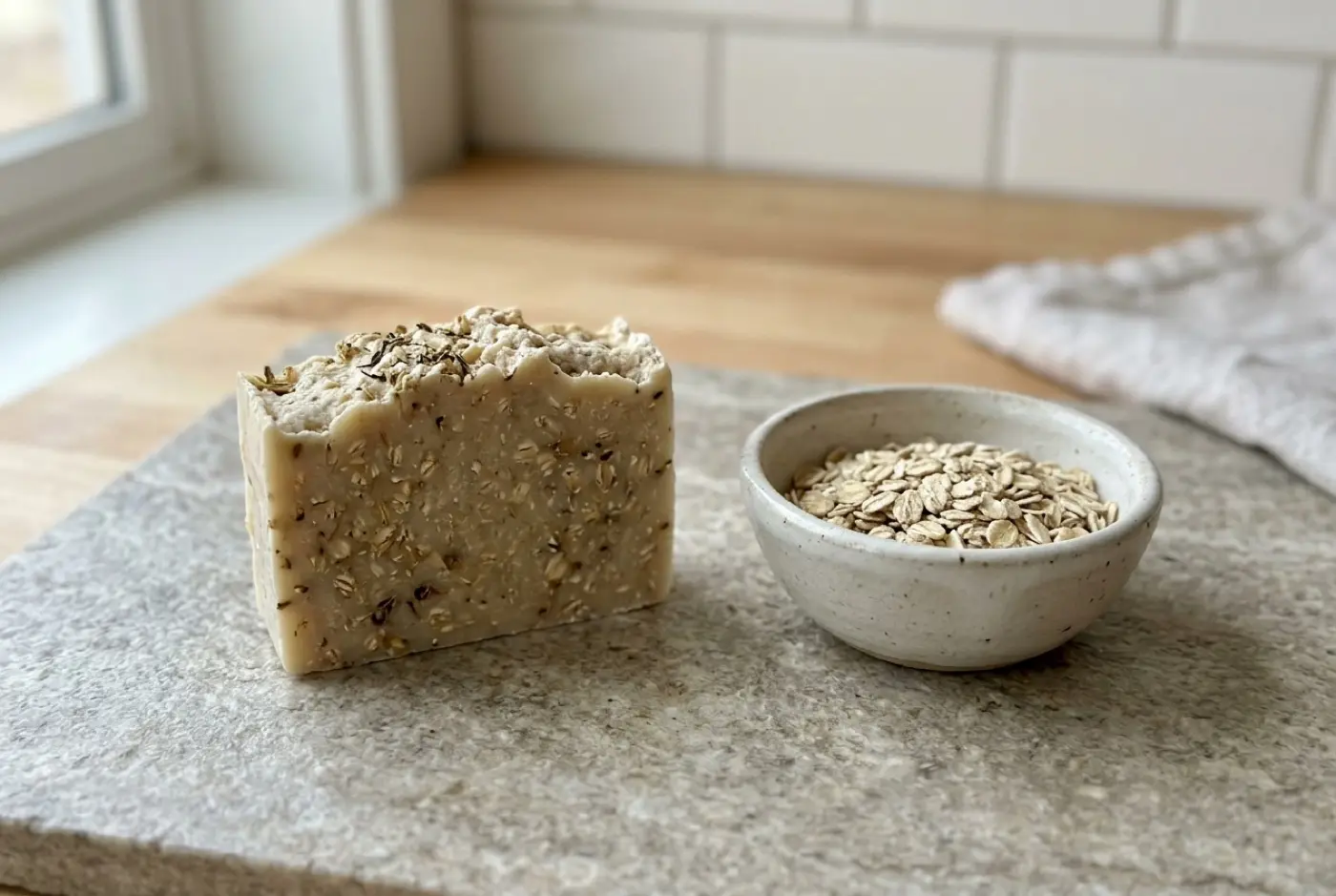
This exfoliating soap recipe makes a firm lard-based bar speckled with ground oats and poppy seeds, a medium scrub that most people find comfortable for hands and body. The exfoliants are held evenly from top to bottom of the loaf because they go in at a medium trace and are folded in by hand, not blended.
Exfoliating soaps go wrong in two ways: the grit sinks to the bottom of the mold, or there’s so much of it the bar feels like sandpaper. Both come down to amounts and timing. Use a modest amount, around 25 g of exfoliant per 1000 g of oils here, and wait until the batter is thick enough to hold it.
The bar is scented with sweet orange anchored with a little patchouli, a bright, warm smell that suits a kitchen or utility sink. Leave it out for an unscented scrub bar.
Choosing the grit
Different exfoliants feel very different in soap. These are starting amounts per 1000 g of oils; adjust to taste in later batches.
| Exfoliant | Feel | Per 1000 g oils | Best for |
|---|---|---|---|
| Ground oats | Soft, mealy | 10–25 g | Body, gentle hand bar |
| Poppy seeds | Small, round, firm | 5–15 g | Body and hands |
| Used coffee grounds, dried | Fine to medium, gritty | 15–20 g | Hands, kitchen bar |
| Fine pumice | Rough, sandy | 10–20 g | Hands and feet only |
| Loofah slices | Fibrous, scrubby | Embedded, not stirred in | Feet, body |
Why this recipe works
- Lard, 40%. A hard, creamy, white bar. Its firmness helps the bar hold exfoliants in place as it wears, rather than letting them wash loose in the first week.
- Coconut, 25%. Quick, bubbly lather that carries the grit across the skin.
- Olive, 25%, plus castor and shea. Mildness, a stable lather and a slower trace so there is time to stir in additives.
- Two textures. Ground oats give a soft, mealy feel; poppy seeds add small, round, firmer speckles. Together they make a medium scrub that most people find comfortable for hands and body.
Ingredients
| Oil | % | Grams | Ounces |
|---|---|---|---|
| Lard | 40% | 400 g | 14.11 oz |
| Olive oil | 25% | 250 g | 8.82 oz |
| Coconut oil (76°) | 25% | 250 g | 8.82 oz |
| Castor oil | 5% | 50.0 g | 1.76 oz |
| Shea butter | 5% | 50.0 g | 1.76 oz |
| Lye solution | |||
| Sodium hydroxide (NaOH) 5% superfat | 140 g | 4.94 oz | |
| Distilled water 33% lye concentration | 284 g | 10.04 oz | |
| Additives | |||
| Ground rolled oats Pulsed to a coarse meal | 1.5% | 15.0 g | 0.53 oz |
| Poppy seeds | 1% | 10.0 g | 0.35 oz |
| Sweet orange essential oil (10-fold) 3% of oil weight | 3% | 30.0 g | 1.06 oz |
| Patchouli essential oil 1% of oil weight; anchors the orange | 1% | 10.0 g | 0.35 oz |
Equipment
Instructions
Step 1: Prepare the exfoliants
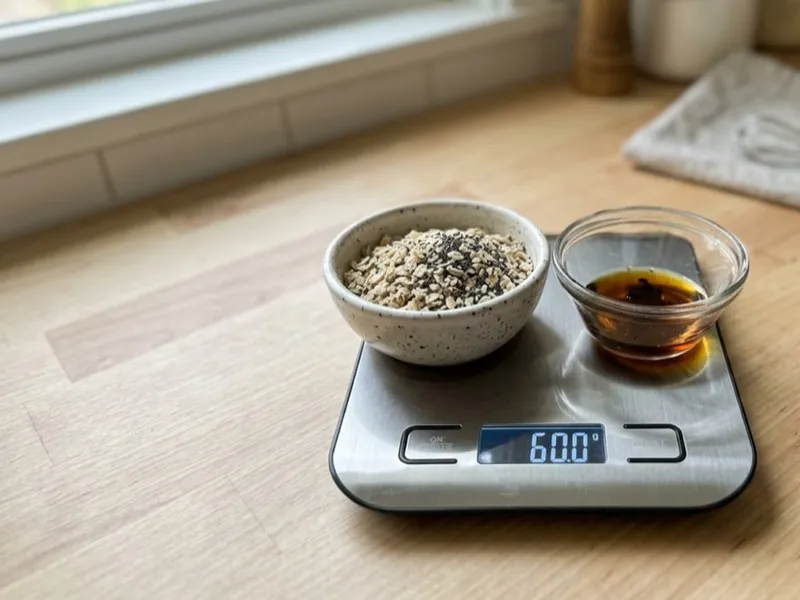
Pulse rolled oats in a dry blender or food processor until they look like coarse meal, then sift out the fine flour if you want a more distinct texture. Weigh the oats and poppy seeds into a small bowl. Weigh the essential oils into a separate glass container.
Step 2: Make the lye solution
Goggles and gloves on. Add the lye to the distilled water, never the reverse, and stir until clear. Let it cool to about 100°F (38°C).
Step 3: Melt the fats
Melt the lard, coconut oil and shea, then add the olive and castor. Bring to 95–105°F (35–41°C).
Step 4: Blend to medium trace
Pour in the lye solution and stick blend to a medium trace, like thin pudding, where a drizzle sits on top for a few seconds. This is thicker than many recipes ask for, and that's the point. Thin batter lets heavy seeds sink to the bottom of the mold.
Step 5: Stir in scent and grit by hand
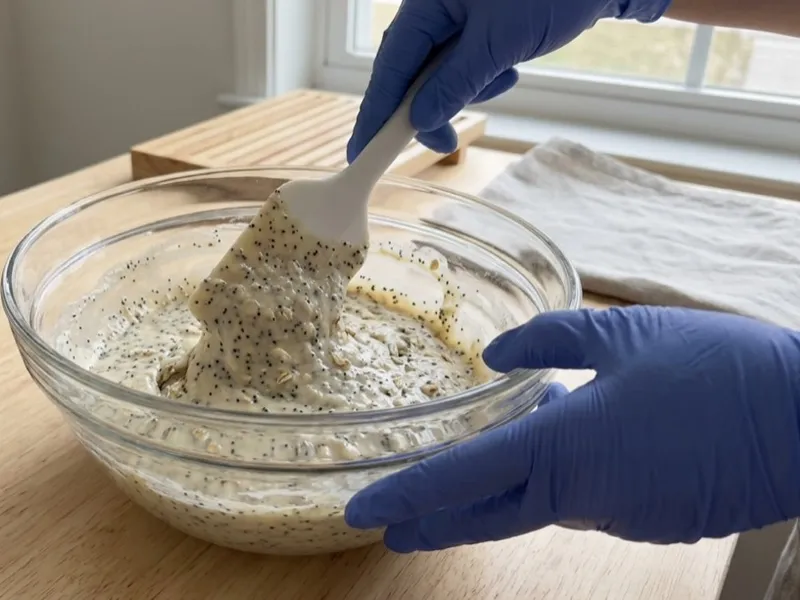
Stir in the essential oils with a spatula, then the oats and poppy seeds. Do not stick blend after adding them; the blender can grind the seeds and thin the batter. Fold until the speckles are even.
Step 6: Pour and keep it warm
Pour into the mold and smooth the top. Cover loosely and leave at room temperature. If the room is cool, a towel over the top helps it gel evenly.
Step 7: Cut and cure
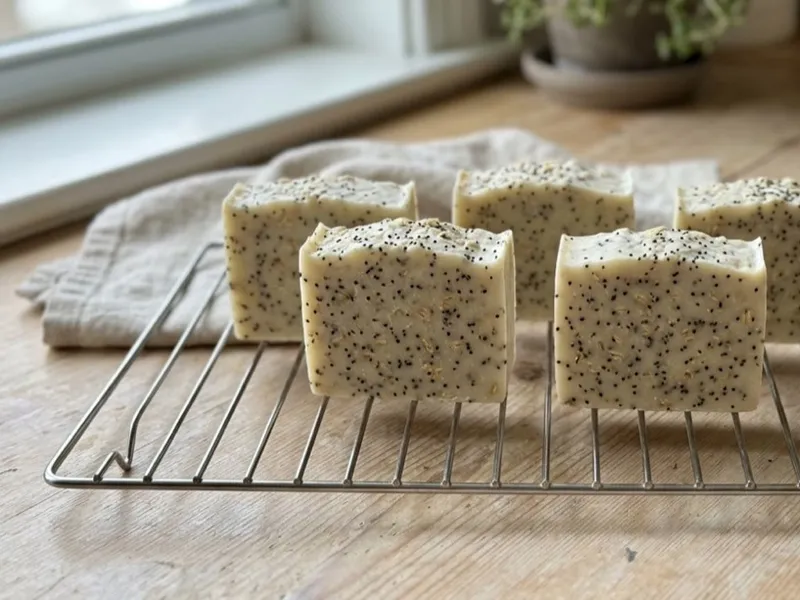
Unmold after 24–48 hours and cut. Look at the cut faces; the speckle should run top to bottom. Cure with airflow for 6 weeks, turning weekly.
Variations
Coffee grounds
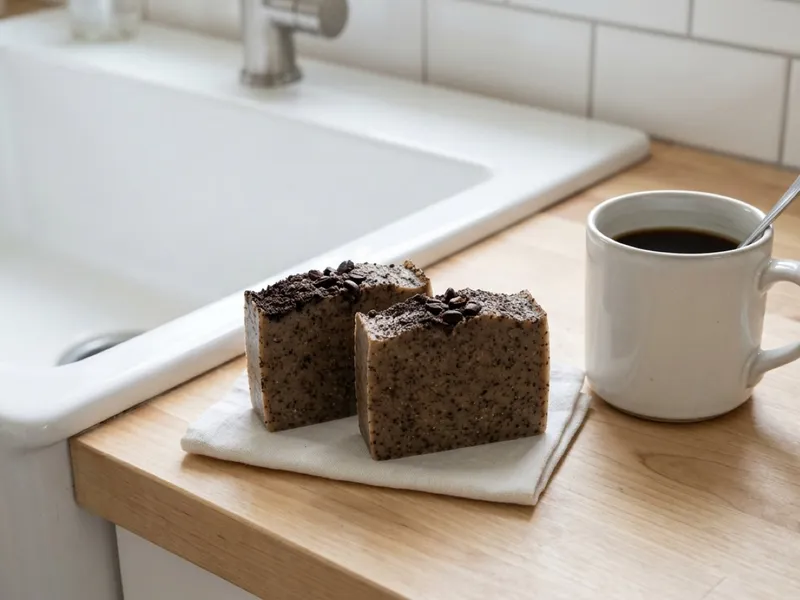
Swap the oats and poppy seeds for 15–20 g of used, fully dried coffee grounds per 1000 g oils. A fine-to-medium grit that tints the bar brown; pairs with our coffee soap.
Pumice
For a heavy-duty hand bar, use 10–20 g of fine pumice per 1000 g oils. Rough enough that it's for hands and feet, not face or body.
Loofah slices
Lay 1 in (2.5 cm) slices of dried loofah in round molds and pour thin-trace soap over and through them. Leave out the loose exfoliants.
If something goes wrong
- Grit sank to the bottom
- The batter was too thin when the exfoliants went in. Wait for a medium trace and fold by hand. False trace and separation
- Brown spots around oats
- Coarse oats can hold moisture and discolor a little. Grind them finer and keep amounts modest. Fading color and morphing
- Bar feels too rough
- Use less exfoliant or a finer grind. Pumice in particular is easy to overdo.
FAQ
How much exfoliant should I add to soap?
As a starting point, 10–25 g per 1000 g of oils for most dry exfoliants, less for pumice. Start low; you can always make the next batch scrubbier.
Why did my poppy seeds sink?
They went into thin batter. Add exfoliants at a medium trace and stir them in by hand so the batter is thick enough to hold them.
Can I use an exfoliating soap on my face?
Facial skin is more delicate. Fine oats are the gentlest choice; leave pumice, coffee and loofah to hands, feet and body. Patch test any new bar.
Can I use fresh coffee grounds?
Use used grounds, dried completely. Wet grounds add water and can spoil; unused grounds are sharper and more strongly scented.
Comments
No comments yet. Made this recipe? Be the first to say how it went.