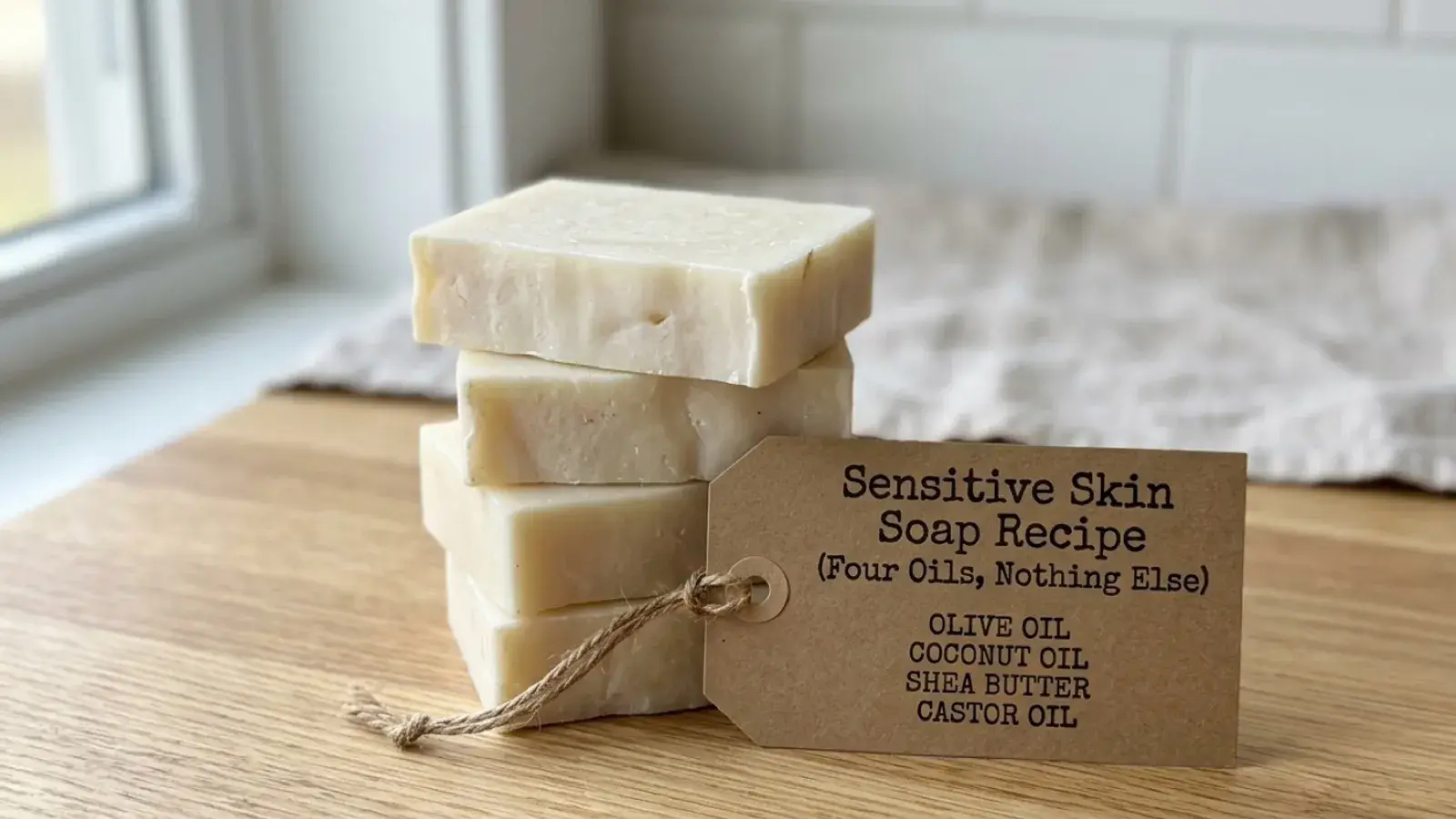
Sensitive Skin Soap Recipe (Four Oils, Nothing Else)
An unscented, uncolored olive and shea bar with a 6% superfat and a four-line ingredient list you can check at a glance.
This page has affiliate links. We earn a small commission at no cost to you. Disclosure
Formula not yet verified. These numbers haven't been re-run by a second maker. Don't make this batch until this notice is gone.
- Yield
- 10 bars
- Method
- Cold process
- Difficulty
- Beginner
- Cure
- 6 weeks
- Superfat
- 6%
- Lye conc.
- 33%
On this page
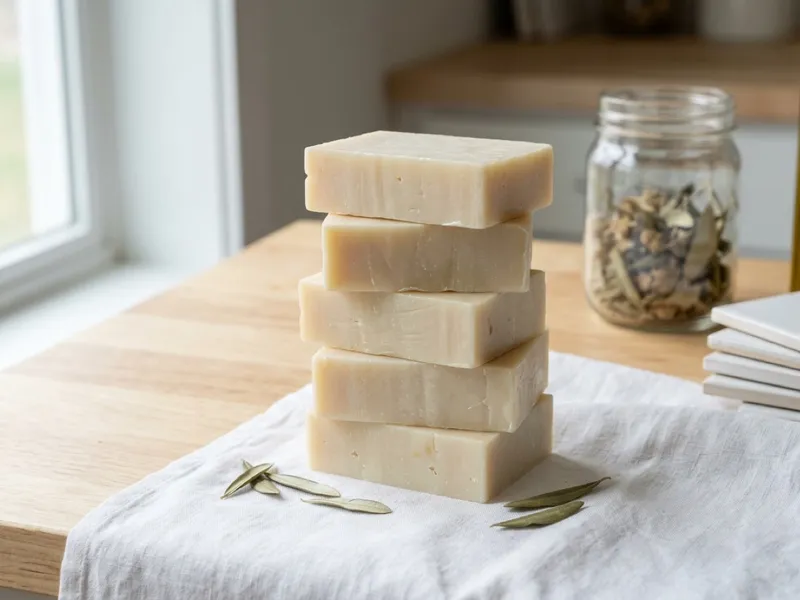
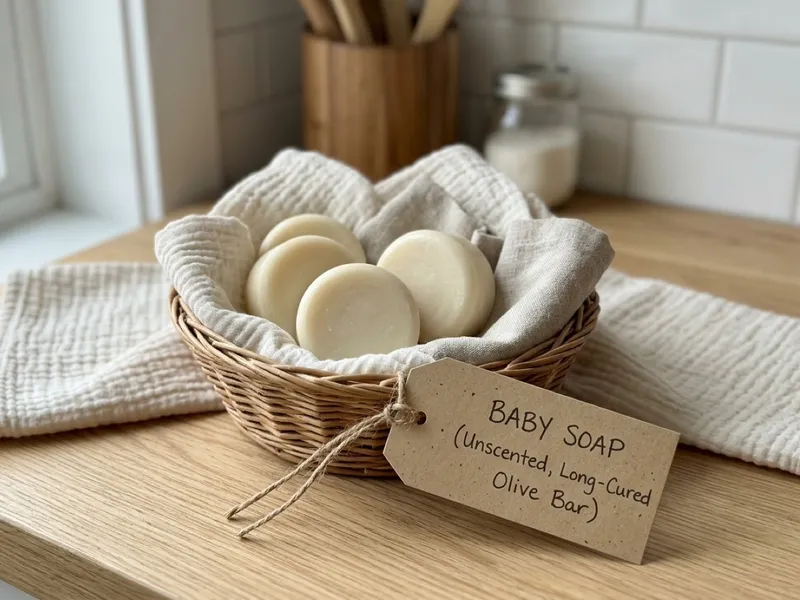
This sensitive skin soap recipe makes a plain, unscented bar from four oils: olive, shea butter, coconut and castor, at a 6% superfat. No fragrance, no essential oils, no color, no clay, no botanicals. The finished label fits on one line, which is the whole idea.
People with sensitive skin react to different things, so no soap can promise to suit everyone. What a homemade bar can do is keep the ingredient list short and known. If you’re making soap for someone who reacts to many products, this recipe gives you a clean baseline. Once you know the plain bar suits them, you can change one thing at a time in later batches and see what happens.
The most useful step happens after the cure: patch testing.
Patch testing a new bar
Before using a new soap all over, lather a little on the inside of the forearm, leave it a minute, and rinse. Watch the spot for 24–48 hours. If there’s redness, itching or any reaction, stop. Patch test again whenever you change an ingredient. For any ongoing skin problem, see a doctor or dermatologist; soap is a cleanser, not a treatment.
Why this recipe works
- Olive, 60%. The mildest-feeling common soap oil, and the backbone of the bar. It gives a soft, low-bubble lather.
- Shea butter, 20%. Hardness and a creamy, cushioned feel without adding a second hard fat. Use refined shea if you want the bar truly scent-free; raw shea has a nutty smell.
- Coconut, 15%. Just enough for a usable lather. Kept low because high coconut bars feel more stripping, which puts the cleansing number just under the usual range on purpose.
- 6% superfat, no additives. A little more unsaponified oil than our usual 5%, and no fragrance, colorant, clay or botanicals. Fewer ingredients means fewer things to react to and an easy label to read.
Ingredients
| Oil | % | Grams | Ounces |
|---|---|---|---|
| Olive oil | 60% | 600 g | 21.16 oz |
| Shea butter | 20% | 200 g | 7.05 oz |
| Coconut oil (76°) | 15% | 150 g | 5.29 oz |
| Castor oil | 5% | 50.0 g | 1.76 oz |
| Lye solution | |||
| Sodium hydroxide (NaOH) 6% superfat | 132 g | 4.66 oz | |
| Distilled water 33% lye concentration | 268 g | 9.46 oz | |
Equipment
Instructions
Step 1: Clean everything well
Wash all your tools and the mold in hot soapy water and rinse thoroughly. If your last batch was scented, residual fragrance in a silicone mold or on a stick blender can carry over into a bar meant to be unscented.
Step 2: Make the lye solution
Goggles and gloves on. Add the lye to the distilled water, never the reverse, and stir until clear. Cool to about 100°F (38°C).
Step 3: Melt the shea and coconut gently
Melt the shea butter and coconut oil over low heat, then add the olive and castor. Bring the oils to 100–110°F (38–43°C). Melt shea fully and don't leave it cooling slowly for hours, or it can form small grainy bits in the bar.
Step 4: Blend to light-medium trace
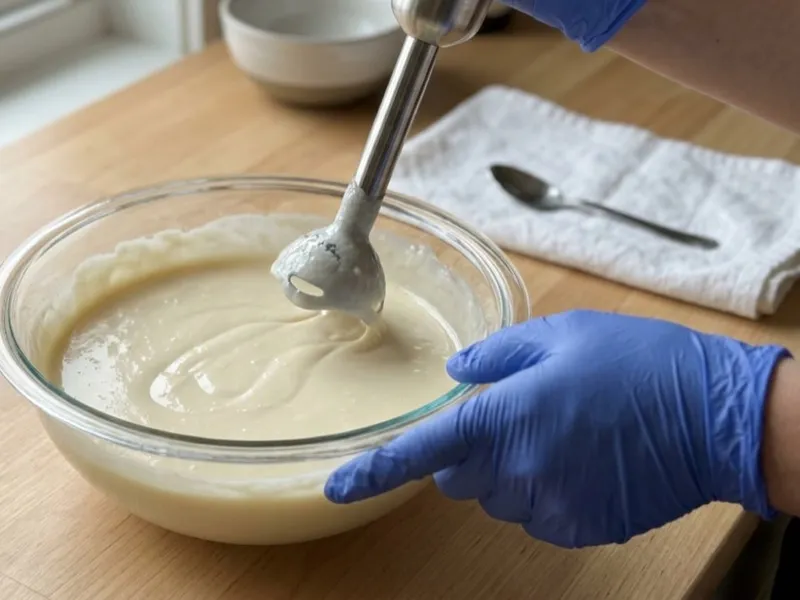
Pour the lye solution into the oils and stick blend in bursts with hand stirring between. With 60% olive, trace may take 3–6 minutes. Stop when the batter looks like thin custard and holds a faint trail.
Step 5: Pour and cover
Pour into the mold. Cover with cardboard and a towel for 24 hours. This bar is soft at first, which is normal for a high-olive recipe.
Step 6: Unmold and cut after 2–3 days
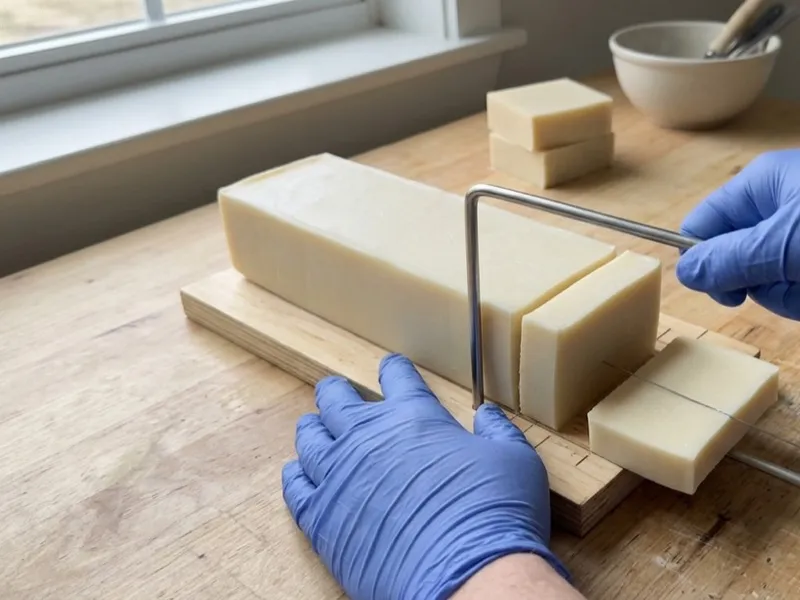
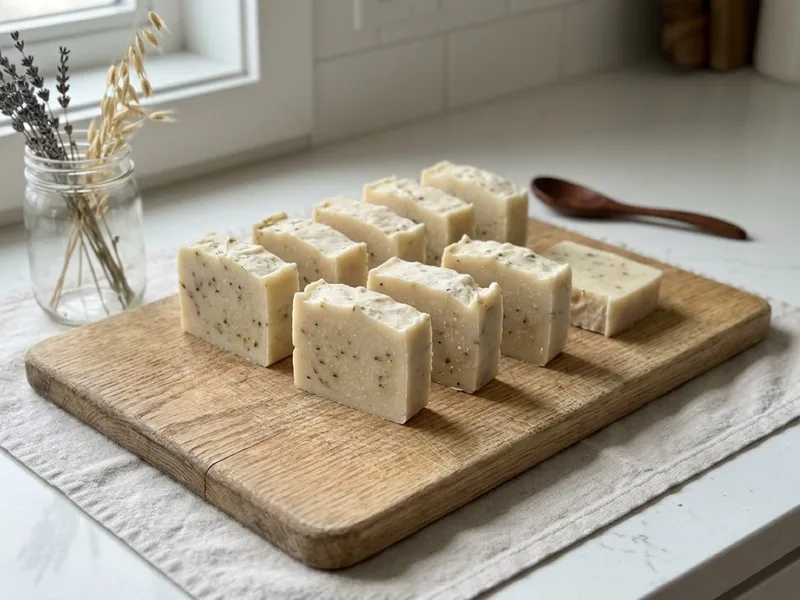
Wait until the loaf is firm enough to cut cleanly without dragging, usually 48–72 hours. Cut evenly sized bars so they cure at the same rate.
Step 7: Cure 6 weeks, longer is better
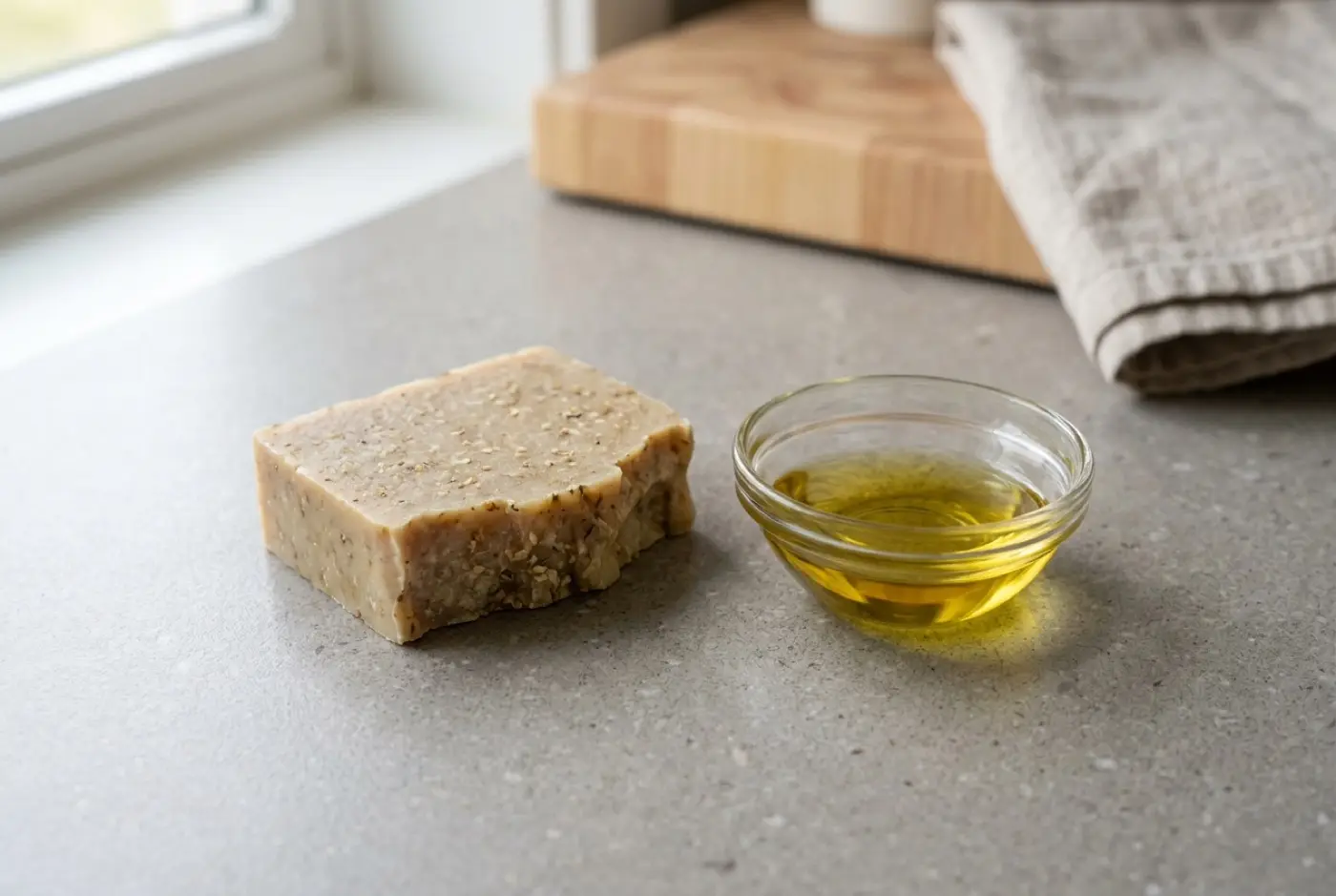
Cure with airflow for at least 6 weeks, turning weekly. High-olive bars keep getting harder and milder-feeling for several months, so keep a few bars back and compare one at 6 weeks with one at 3 months.
Step 8: Label and patch test
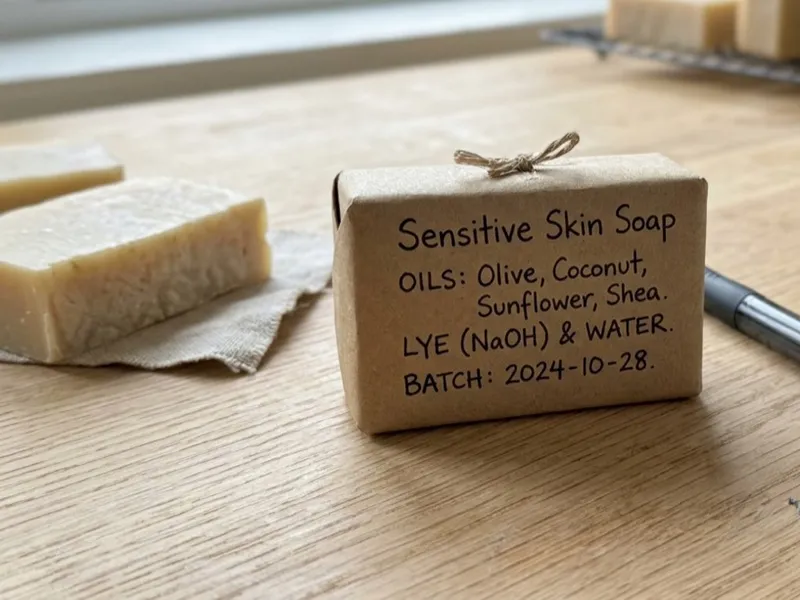
Label each bar with the four oils, lye and water, and the batch date. Before regular use, patch test as described above.
Variations
Nut-free version
Shea butter comes from a nut. If that is a concern, replace it with cocoa butter at 15% and add the other 5% to the olive. Re-run the lye in the calculator.
Goat milk
Replace the water with frozen goat milk and follow the method on our goat milk soap page. It adds an ingredient, so patch test again.
Firmer bar
Increase lye concentration to 35%. The bar unmolds sooner and hardens faster during cure.
If something goes wrong
- Still soft after 2 days
- Normal for high-olive soap. Give it another day or two before cutting. Soft soap that won't harden
- Small white specks in the bar
- Usually grainy shea from slow cooling, not lye. Melt shea fully and soap promptly next time. Lye pockets or something else?
- Faint scent in an unscented bar
- Carry-over from a scented mold or raw shea. Use a dedicated mold and refined shea.
FAQ
What is the best soap for sensitive skin?
There is no single answer; people react to different things. A plain, unscented bar with a short ingredient list, like this one, makes it easier to see what you're using. Patch test any new soap.
Why no essential oils or fragrance?
Fragrance, including essential oils, is one of the most common things people react to in soap. Leaving it out keeps the bar as simple as possible.
How do I patch test a new soap?
Lather a little on the inside of your forearm, leave it a minute, rinse, and watch the spot for 24–48 hours. Stop using any soap that causes redness or itching, and see a doctor for ongoing skin problems.
Is castile soap better for sensitive skin?
Some people prefer it. Castile is 100% olive and takes months to cure. This bar adds shea and a little coconut for a firmer bar and better lather in a shorter cure.
Comments
No comments yet. Made this recipe? Be the first to say how it went.