Beef Tallow Soap Recipe (Render Your Own, 75% Tallow)
Render beef suet into clean white tallow, then soap it at 75% for a very hard, slow-wearing bar.
This page has affiliate links. We earn a small commission at no cost to you. Disclosure
Formula not yet verified. These numbers haven't been re-run by a second maker. Don't make this batch until this notice is gone.
- Yield
- 10 bars
- Method
- Cold process
- Difficulty
- Intermediate
- Cure
- 6 weeks
- Superfat
- 5%
- Lye conc.
- 33%
On this page
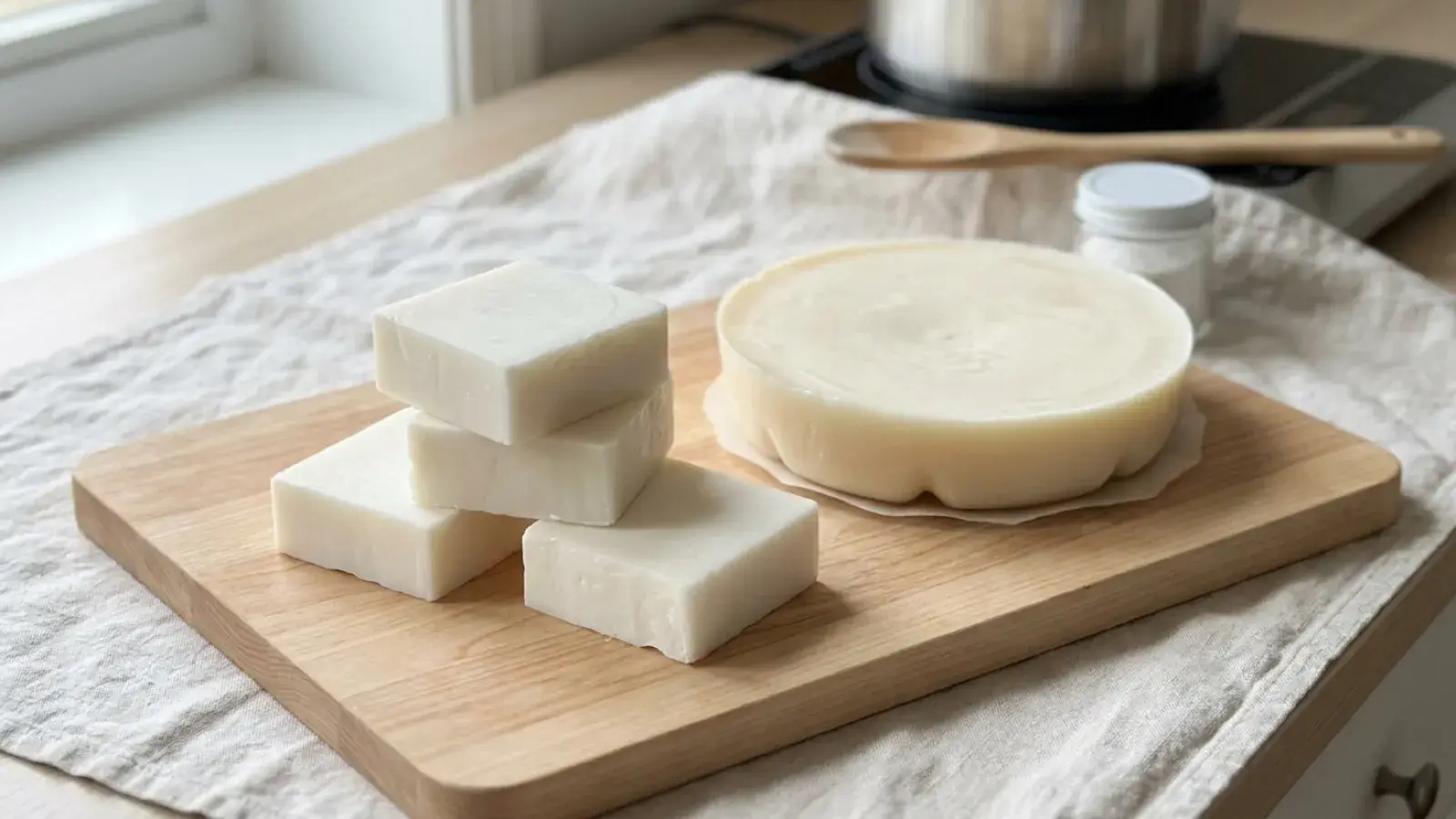
This beef tallow soap recipe starts at the butcher’s counter: you render beef suet into clean, white tallow, then soap it at 75% of the oils. The result is one of the hardest, slowest-wearing bars you can make at home, with a dense, creamy lather and almost no smell.
Most of the work, and most of what decides whether the bar is any good, happens before the lye comes out. Tallow that’s rendered once from trim fat can carry a beefy smell that survives saponification. Suet rendered in salted water, with the dirty layer scraped off the bottom, comes out nearly odorless. That’s the method below.
Wet rendering, briefly
There are two ways to render fat: dry (melting it alone in a slow cooker or low oven) and wet (simmering it in water). Dry rendering is quicker but browns the fat more easily. Wet rendering with salt takes longer, but the water keeps the temperature low and draws impurities out of the fat. As the pot cools in the fridge, the tallow sets into a clean disk on top while the water and meat solids stay underneath.
One round of wet rendering gives usable tallow. A second round, with fresh salted water, gives tallow white enough for a pale bar. Grass-fed suet renders more yellow, which shows as a warm cream color in the soap. That’s normal, not a fault.
Because the formula is so tallow-heavy, it traces fast and runs warm. Soap it at 110–120°F (43–49°C) so the fat stays liquid, blend in short bursts, and don’t insulate the mold. If you want a slower, softer tallow bar with more olive oil, the general tallow soap recipe is the gentler starting point.
Why this recipe works
- Tallow, 75%. Most of the bar is tallow, so hardness and creamy lather come almost entirely from it. Expect a bar that outlasts nearly anything else in the dish.
- Coconut, 10%. Just enough to open up the lather. Tallow already brings some cleansing, so coconut stays low.
- Olive + castor, 15%. A small liquid-oil share slows trace a little and softens the feel; castor keeps the lather stable.
Ingredients
| Oil | % | Grams | Ounces |
|---|---|---|---|
| Tallow (beef) | 75% | 750 g | 26.46 oz |
| Coconut oil (76°) | 10% | 100 g | 3.53 oz |
| Olive oil | 10% | 100 g | 3.53 oz |
| Castor oil | 5% | 50.0 g | 1.76 oz |
| Lye solution | |||
| Sodium hydroxide (NaOH) 5% superfat | 138 g | 4.87 oz | |
| Distilled water 33% lye concentration | 281 g | 9.90 oz | |
| Additives | |||
| Cedarwood (Atlas) essential oil Optional; 2.5% of oils. Leave out for an unscented bar. | 2.5% | 25.0 g | 0.88 oz |
| Patchouli essential oil Optional; 0.5% of oils, anchors the cedarwood. | 0.5% | 5.0 g | 0.18 oz |
Equipment
Instructions
Step 1: Render the tallow (a day or more ahead)
Chop or grind about 1.5 kg (3.3 lb) of beef suet, the fat from around the kidneys, into small pieces. Put it in a large pot with roughly 1 L (4 cups) of water and 1–2 tablespoons of salt. Simmer gently, uncovered, for 3–4 hours, stirring now and then, until the solid bits are shrunken and brown. Strain through a cloth-lined sieve into a bowl and refrigerate overnight.
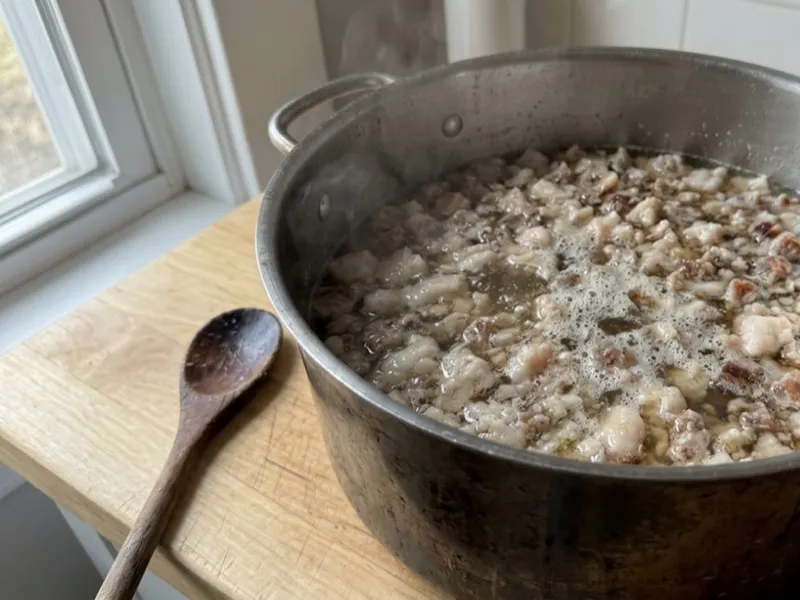
Step 2: Lift, scrape and weigh
Lift the solid disk of tallow off the cloudy water and discard the water. Scrape the brownish layer from the underside of the disk; that's where meat solids and odor collect. For whiter, cleaner-smelling tallow, repeat the simmer with fresh salted water once more. Pat the disk dry and weigh out 750 g for a 1000 g batch.
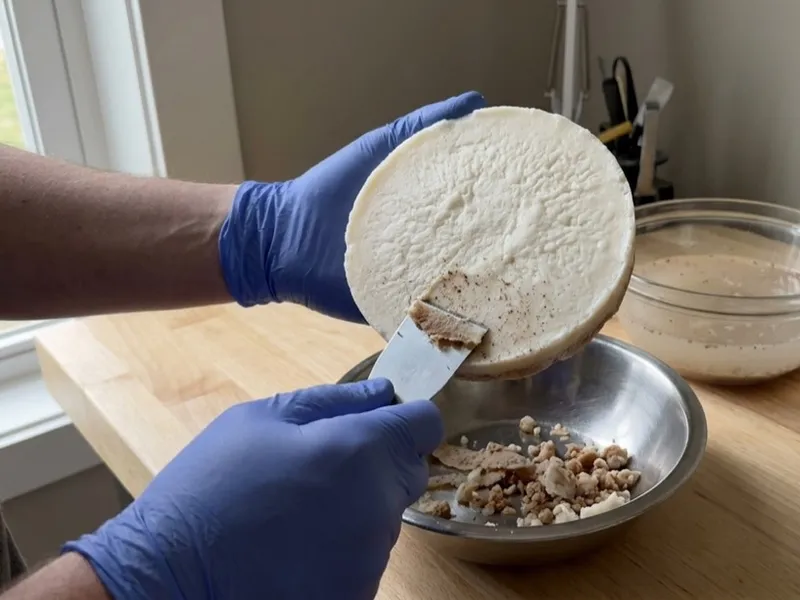
Step 3: Make the lye solution
Put on goggles and gloves. Add the lye to the distilled water, never the reverse, and stir until clear. Let it cool to 110–120°F (43–49°C). Tallow-heavy batches are soaped warmer than most, so you don't need to wait for it to cool all the way down.
Step 4: Melt the fats and match temperatures
Melt the tallow and coconut over low heat until fully clear, with no white specks. Stir in the olive and castor oils. Bring the oils to 110–120°F (43–49°C), within about 10°F (5°C) of the lye. Below about 105°F (41°C) a 75% tallow blend starts to cloud and can false-trace.
Step 5: Blend quickly to light trace
Add your essential oils to the warm oils if using them. Pour in the lye solution and stick blend in 3–5 second bursts, stirring between. This batter can reach light trace in 1–2 minutes and keeps thickening, so stop as soon as drips leave a faint trail.
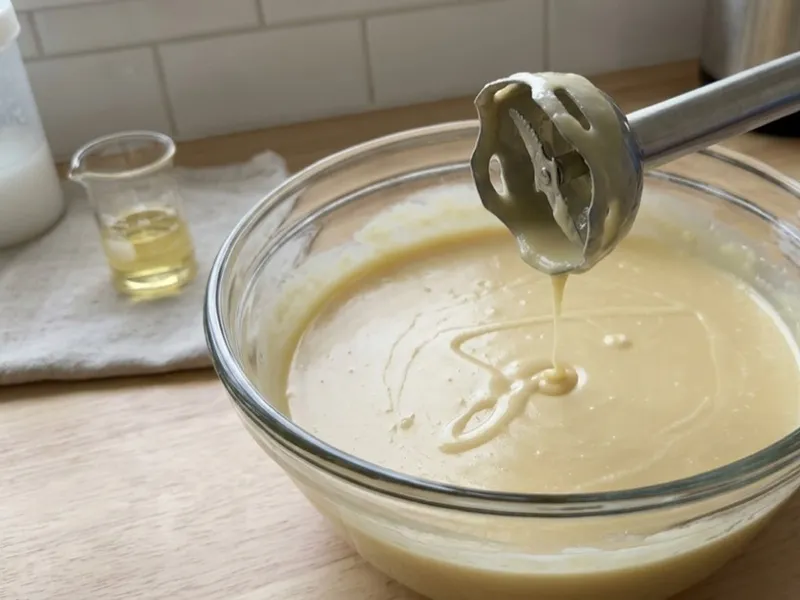
Step 6: Pour, then keep it cool-ish
Pour straight into the mold and tap out air. High-tallow soap heats up on its own; cover with cardboard only, no towel, unless your room is below about 65°F (18°C). Check after an hour: if a crack or a dome starts forming, uncover and move it somewhere cooler.
Step 7: Cut early and cure
Unmold after 18–24 hours and cut right away. A 75% tallow loaf hardens fast and can chip or crumble at the edges if left for days before cutting. Cure the bars on a rack with airflow for 6 weeks, turning weekly.
Variations
Unscented
Leave out both essential oils. Well-rendered tallow soap smells clean and faintly waxy on its own.
Softer blend
If 75% feels too hard, the tallow soap recipe runs tallow at 50% with more olive oil and slower trace.
Activated charcoal
Stir 1 tsp per 500 g oils into a little of the olive oil and add at light trace for a slate-gray bar.
If something goes wrong
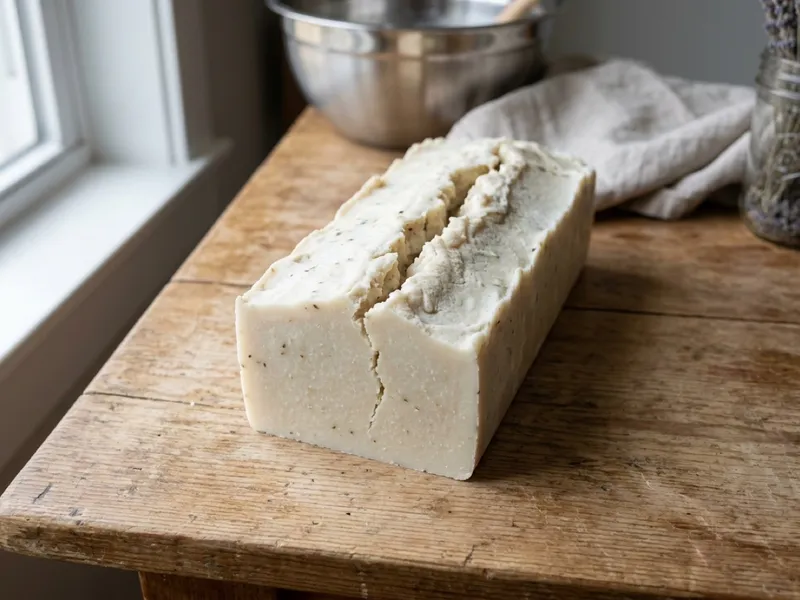
- Loaf cracked on top
- Tallow-heavy soap overheated in the mold. Skip insulation next time and soap closer to 110°F (43°C). Why soap cracks
- Bars have a meaty smell
- The tallow carried meat solids. Render it twice with salted water and scrape the underside well. Why soap smells bad
- Edges crumble when cutting
- The loaf got too hard before cutting. Cut within 24 hours next time.
FAQ
What part of the cow is best for tallow soap?
Suet, the hard fat from around the kidneys, renders into the whitest, least-smelling tallow. Trim fat from other cuts also works but usually needs a second rendering to lose the meaty smell.
Why add salt and water when rendering?
The water keeps the fat from browning while it melts, and the salt helps pull meat proteins and impurities out of the fat into the water layer. You throw the water away and keep the clean fat that sets on top.
How much tallow do I get from suet?
It varies with how clean the suet is. Expect roughly two-thirds to three-quarters of the starting weight as rendered tallow, which is why this recipe starts with about 1.5 kg of suet for a 750 g batch.
Can I make soap from 100% tallow?
You can, and people do. It makes a very hard bar with a small, creamy lather. This recipe adds coconut, olive and castor so the lather is fuller and the bar is a little less brittle to cut.
How should I store rendered tallow?
In a covered container in the fridge for a few months, or the freezer for longer. Let it come to room temperature and weigh it before melting for soap.
Comments
No comments yet. Made this recipe? Be the first to say how it went.