Tallow Soap Recipe (Half Tallow, Half Olive and Coconut)
A hard, creamy everyday bar built on 50% tallow, softened with olive oil and brightened with a little coconut.
This page has affiliate links. We earn a small commission at no cost to you. Disclosure
Formula not yet verified. These numbers haven't been re-run by a second maker. Don't make this batch until this notice is gone.
- Yield
- 10 bars
- Method
- Cold process
- Difficulty
- Beginner
- Cure
- 6 weeks
- Superfat
- 5%
- Lye conc.
- 33%
On this page
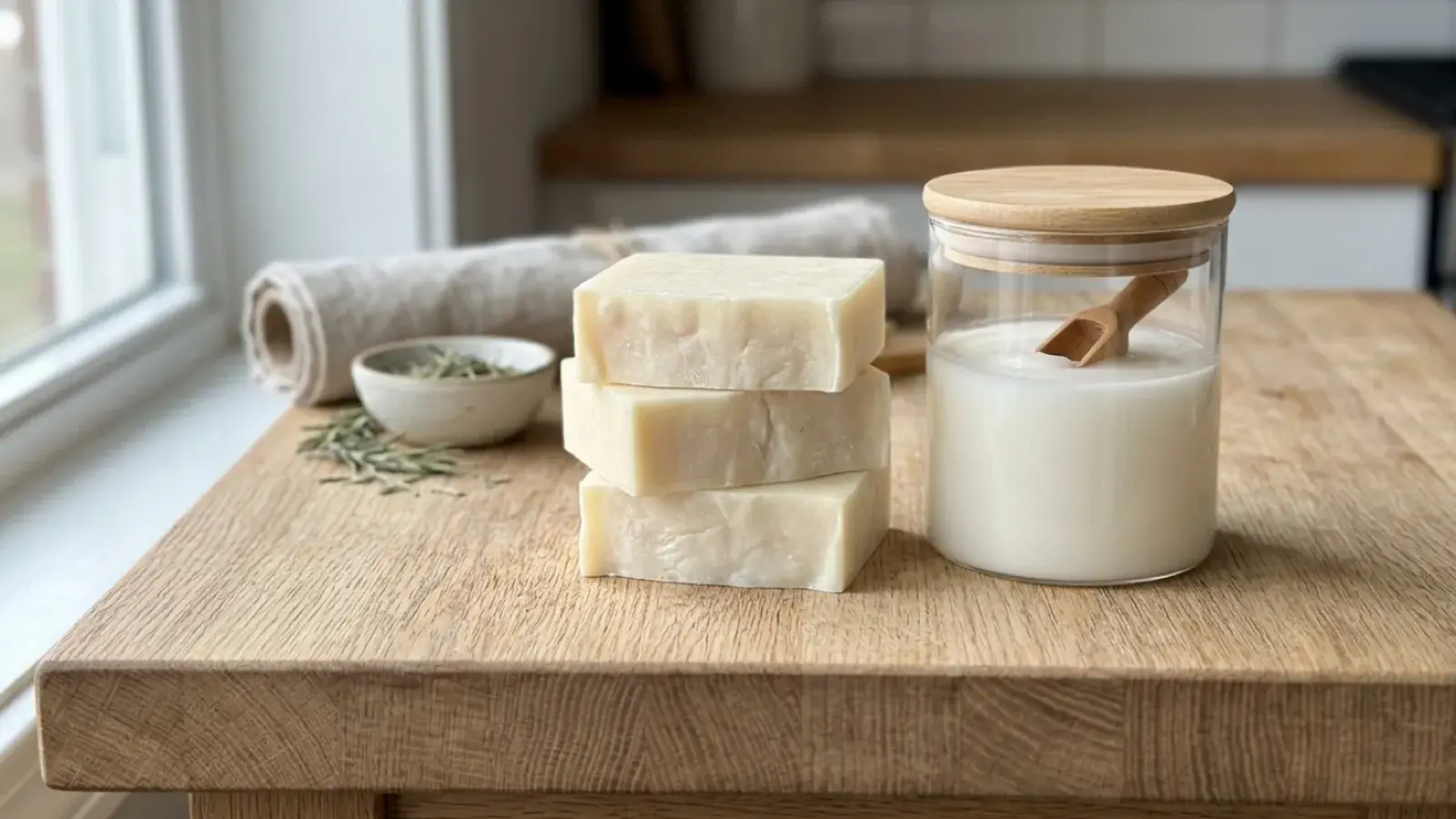
This tallow soap recipe makes a hard, creamy, long-lasting bar with tallow as half of the oils, olive oil for mildness and working time, and a small share of coconut for lather. It’s the general-purpose tallow bar: if you’ve never soaped with animal fat, start here.
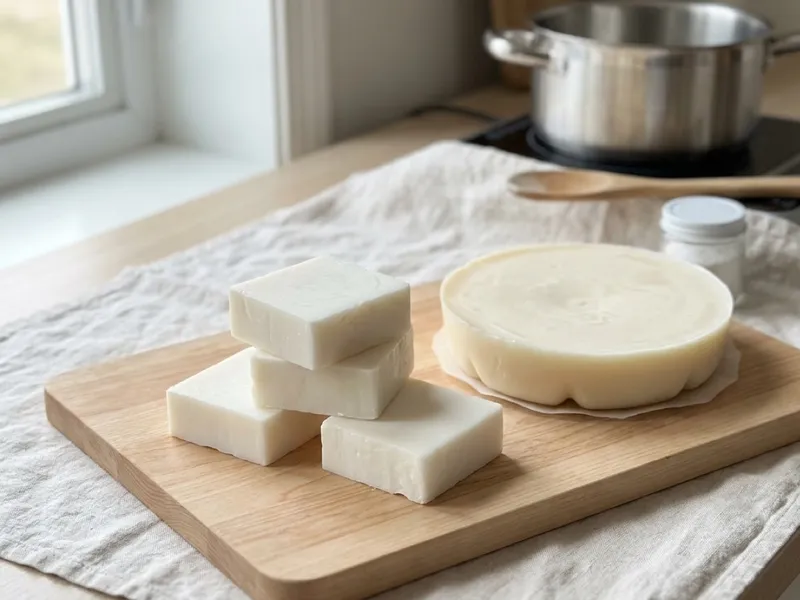
Tallow is rendered beef or mutton fat, and it’s one of the oldest soap fats there is. What it brings is structure: lots of palmitic and stearic acid, which make a bar that resists going soft in the dish and gives a dense, lotion-like lather instead of big airy bubbles. The trick with tallow isn’t the lye; it’s temperature. Tallow is solid at room temperature, so the whole batch has to stay warm enough that the fat doesn’t start setting in the pot and fool you into thinking you’ve reached trace.
Buying and blending tallow
You don’t have to render tallow to make this recipe. Plain rendered beef tallow from a butcher, a farm, or the cooking-fat shelf works, as long as the ingredient list says only tallow. Good tallow is white to creamy yellow (grass-fed tallow is more yellow) and smells faintly of nothing. If a jar smells strongly of roast beef, that smell can come through in the soap. If you’d rather render your own from suet, the beef tallow soap recipe walks through it and uses a higher-tallow formula that shows the fat off.
Tallow blends easily. At 50% it carries the bar; the olive oil and coconut are there to fill gaps tallow leaves (conditioning feel and fluffy bubbles). If you change the split, run the new numbers through the lye calculator, because tallow, olive, and coconut each need a different amount of lye.
Why this recipe works
- Tallow, 50%. Palmitic and stearic acids make a hard, slow-melting bar with a dense, lotion-like lather. Half the oils is enough to get that feel without the bar turning brittle.
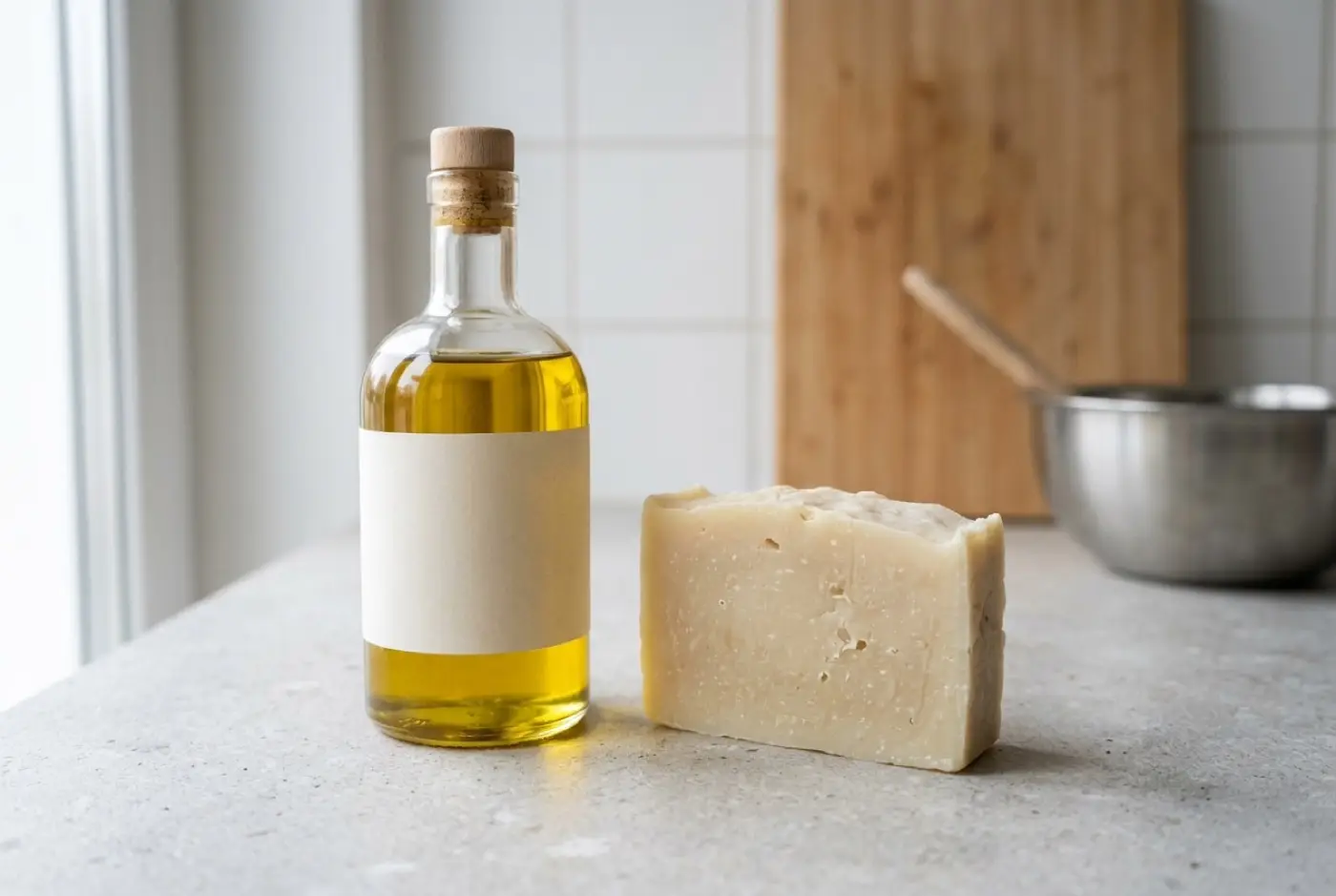
- Olive, 30%. Adds conditioning oleic acid and slows trace, which gives you more working time than an all-tallow batch.
- Coconut, 15%. Tallow lathers in small, creamy bubbles. A modest share of coconut adds the bigger bubbles people expect without making the bar feel stripping.
- Castor, 5%. Steadies the lather so it holds up under hard water and keeps foaming as the bar wears down.
Ingredients
| Oil | % | Grams | Ounces |
|---|---|---|---|
| Tallow (beef) | 50% | 500 g | 17.64 oz |
| Olive oil | 30% | 300 g | 10.58 oz |
| Coconut oil (76°) | 15% | 150 g | 5.29 oz |
| Castor oil | 5% | 50.0 g | 1.76 oz |
| Lye solution | |||
| Sodium hydroxide (NaOH) 5% superfat | 139 g | 4.89 oz | |
| Distilled water 33% lye concentration | 281 g | 9.92 oz | |
Equipment
Instructions
Step 1: Gear up and make the lye solution
Put on goggles and gloves and work near an open window. Weigh the distilled water into a heat-safe pitcher, then add the lye to the water, never the reverse, stirring until it dissolves and the solution turns clear. It will heat to around 180°F (82°C). Set it aside to cool to 100–110°F (38–43°C).
Step 2: Melt the tallow and coconut
Weigh the tallow and coconut oil into a stainless or heat-safe plastic pot and melt them over low heat. Tallow is fully liquid around 110–120°F (43–49°C); make sure no white flecks remain, because unmelted fat can look like trace when it isn't. Take the pot off the heat and stir in the olive and castor oils, which will cool the blend.
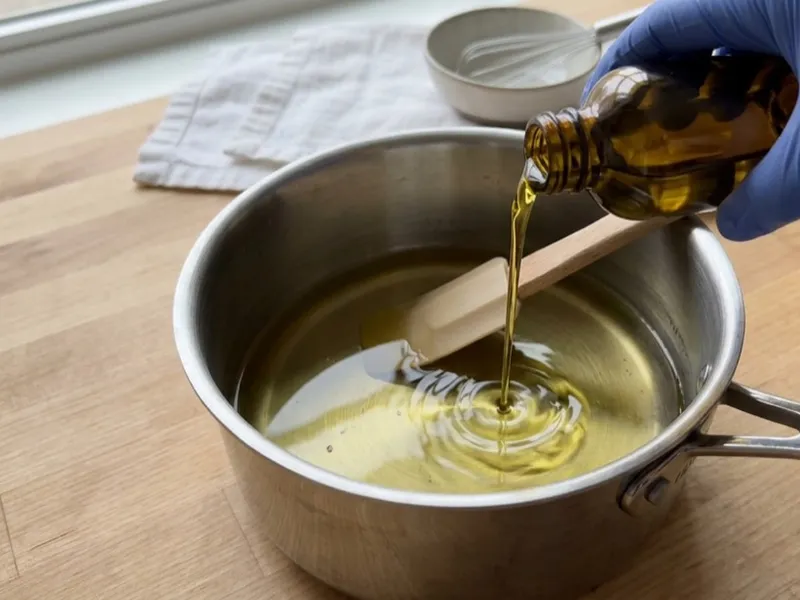
Step 3: Match the temperatures
Aim for both the oils and the lye solution at 100–110°F (38–43°C), within about 10°F (5°C) of each other. If the oils drop below 100°F the tallow starts to cloud and set, so warm them gently rather than waiting on the lye.
Step 4: Blend to a light trace
Pour the lye solution into the oils down the shaft of the stick blender. Pulse for 5–10 seconds, stir with the motor off, and repeat. Tallow batters thicken steadily: expect a light trace, where drips leave a faint trail on the surface, in about 2–4 minutes.
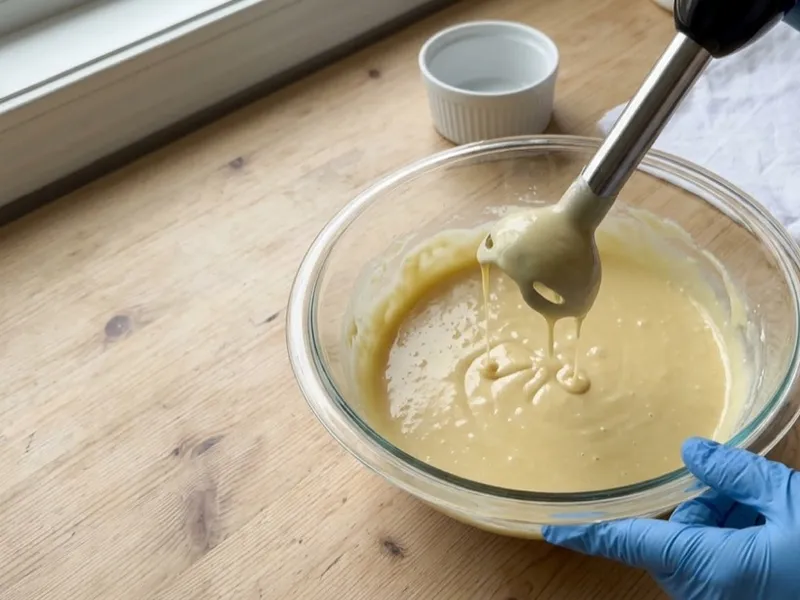
Step 5: Pour and insulate lightly
Pour into the loaf mold and tap it on the counter to release air. Cover it with a piece of cardboard and a towel. Tallow soap gels readily, which gives a slightly translucent, smooth-cut bar; if your kitchen is warm, skip the towel to avoid overheating.
Step 6: Unmold and cut
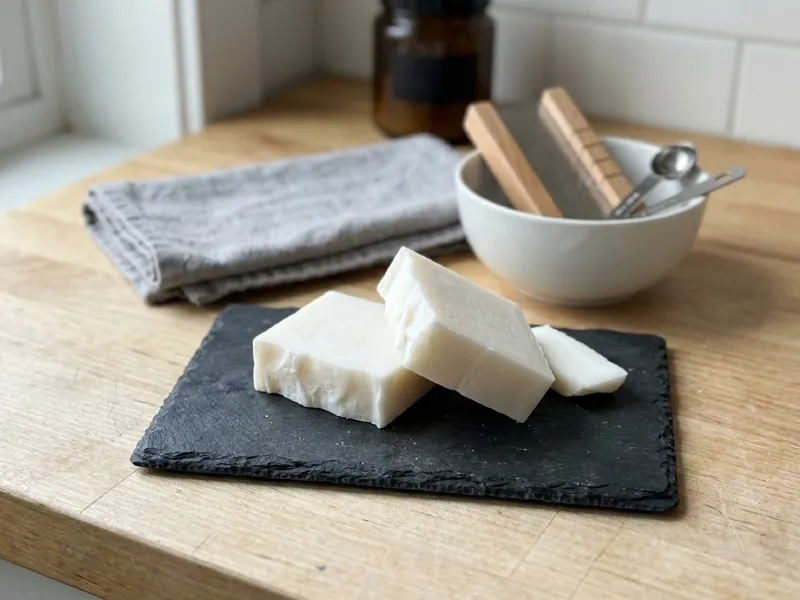
Unmold after 24–48 hours, once the loaf is firm and no longer tacky. Cut into bars about 1 inch (2.5 cm) thick. Tallow soap cuts cleanly at this stage; leave it much longer and it can get hard enough to chip at the edges.
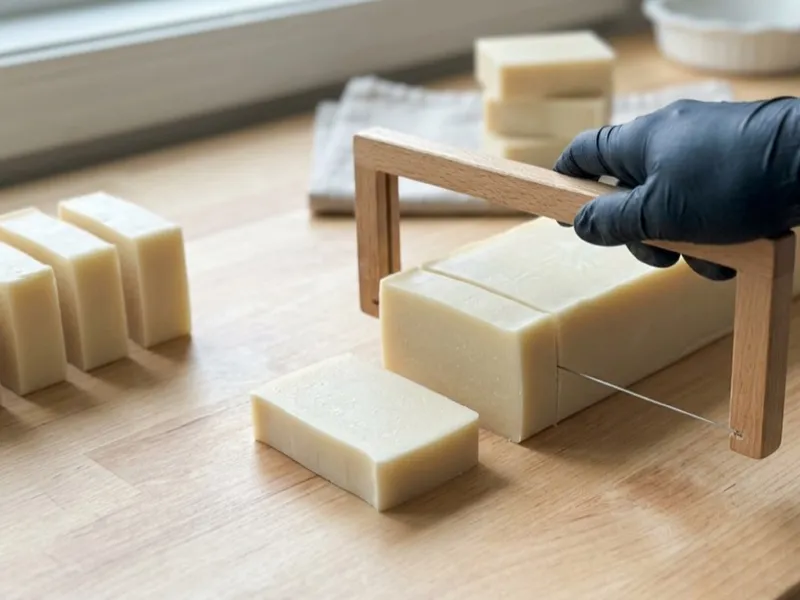
Step 7: Cure for six weeks
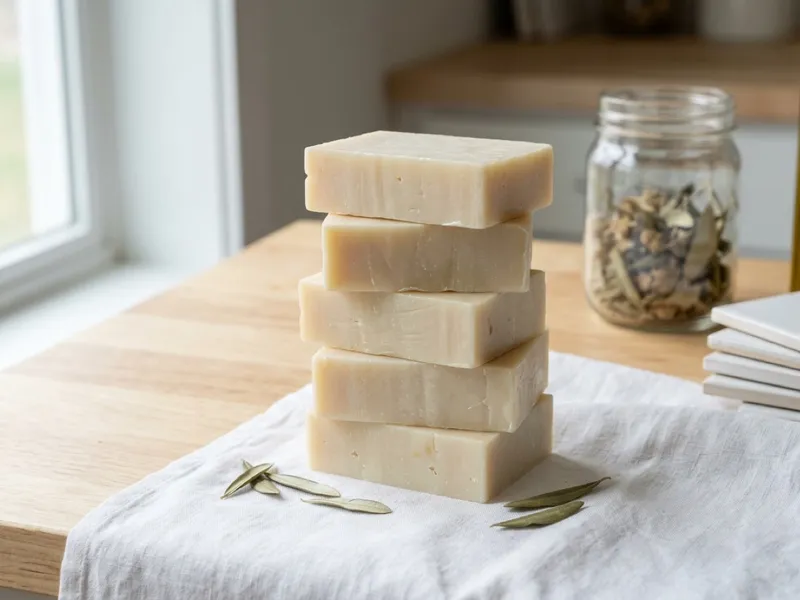
Stand the bars on a rack with space between them, somewhere with airflow and out of direct sun. Turn them once a week. Tallow bars are usable sooner, but the lather gets creamier and the bar lasts longer after a full 6-week cure.
Variations
Higher tallow
For an even longer-lasting bar, see the beef tallow soap recipe, which runs tallow at 75% with less olive oil.
Lavender
Add lavender essential oil at 3% of oil weight (30 g per 1000 g oils) at light trace. Lavender sits well over tallow’s faint base note.
Swap olive for lard
Replacing the olive oil with lard gives a whiter, harder bar that unmolds faster. Re-run the lye in a calculator first.
If something goes wrong
- Batter thickened before the lye went in
- The tallow cooled and began to set. Re-warm the oils to 110°F (43°C) until fully clear before adding lye. False trace and separation
- Cured bars smell faintly beefy
- The tallow came from trim fat or was rendered only once. Buy rendered tallow labeled for soap or cosmetics, or re-render with salt water. Why soap smells bad
- White powder on top
- Soda ash from the surface meeting air. It is cosmetic; steam it off or plane the top. Soda ash on soap
FAQ
Does tallow soap smell like beef?
Well-rendered tallow has almost no smell, and the finished bar smells clean and faintly waxy. A meaty smell means the tallow was rendered from trim fat or not strained well. Buying tallow rendered for soap or cosmetics avoids the problem.
Can I use grocery-store tallow?
Yes, if it is plain rendered beef tallow with nothing else in the ingredient list. Some shelf-stable tallow is sold for cooking and works fine. Avoid blends with vegetable oils unless you adjust the formula in a lye calculator.
Why add olive oil and coconut to tallow?
Tallow on its own makes a very hard bar with a small, creamy lather. Olive oil adds conditioning and working time, and coconut adds bigger bubbles. The blend in this recipe sits in the typical range for every bar-quality number.
Is tallow soap better than vegetable soap?
It is different rather than better. Tallow gives a hard, creamy, long-lasting bar at low cost. Palm-free vegetable bars can get close using shea and cocoa butter. Pick based on what you can source and who will use the soap.
How long does tallow soap last?
Cured tallow bars keep their feel for a year or more stored cool and dry. Tallow is a stable fat, so dreaded orange spots are less common than in high-linoleic formulas.
Comments
No comments yet. Made this recipe? Be the first to say how it went.