Cracked Soap: Why the Top Splits and How to Fix It
A crack down the top of a loaf is usually a heat crack: the soap got too hot during gel. It's cosmetic. Cracks that show up later with a dry, crumbly texture can mean too much lye.
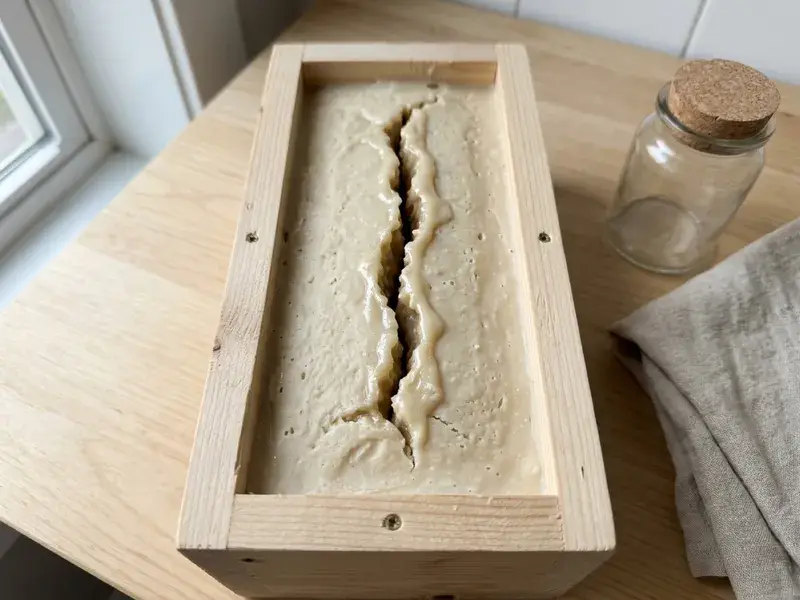
Is it safe to use?
Heat cracks that form in the first day are cosmetic, and the bars are fine after a normal cure. If the cracks appeared during cure and the soap is also crumbly or harsh, check your lye weights and test with pH strips.
Crumbly texture as well as cracks? Crumbly soap
On this page
Causes, ranked by likelihood
- Most likely
Overheating during gel
Sugars in honey, milk, beer or fruit purees, a warm room or heavy insulation push the soap past a normal gel. The center expands and splits the set surface.
- Common
Too much lye
Excess lye makes soap hard and brittle. Cracks that appear over days, with a dry, chalky feel, point here rather than to heat.
- Sometimes
A very low-water, hard recipe
Heavily water-discounted, high-clay or salt recipes can shrink and develop hairline cracks as they cure.
Fix this batch
Cool it now, tidy it later
- If you catch the crack forming, remove any insulation and move the mold somewhere cool. In a hot kitchen, a fridge works.
- Once the soap is firm, plane the top flat with a soap planer or vegetable peeler, or cut bars so the crack becomes the bevelled edge.
- Cure as normal. Heat-cracked bars are fine to use.
- If the cracks came later with a crumbly texture, re-check your weights before deciding to use, rebatch or discard.
Prevent it next time
Keep the heat in check
- Soap at 80–100°F (27–38°C) when the recipe contains honey, milk or other sugars, and skip the insulation.
- Freeze milk into cubes or chill the lye solution before mixing in sugary liquids.
- Keep added sugars modest; around a tablespoon of honey per 500 g of oils is a common starting point.
- Use a water discount sensibly, around a 33–38% lye concentration, rather than pushing it as far as it will go.
When the crack showed up tells you why
Note when you first saw it. A crack that opened in the first 24 hours, while the loaf was warm, is almost always heat. A crack that appeared on day four or five on the drying rack is a moisture or lye problem, and that’s the one to investigate.
The science behind it
FAQ
Is cracked soap safe to use?
Heat-cracked soap is. The crack is just the surface splitting while the inside expanded. Soap that cracked during cure and also feels harsh needs checking first.
Why does my soap crack in the middle?
The center of a loaf holds the most heat. When it overheats, it rises and splits the top, which set earlier because it was cooler.
Can I prevent cracks by not gelling?
Often, yes. Putting the mold in the fridge or freezer right after pouring keeps the temperature low, especially for milk and honey soaps.
What's the glossy ridge around the crack?
Usually a little soap that pushed up through the crack while hot. It's the same soap and can be planed off.
Comments
No comments yet. Made this recipe? Be the first to say how it went.