Lard Soap Recipe (Bright White Pork Fat Bar)
A snow-white, mild bar with 65% lard; cheap, easy to find, and creamy once it has cured.
This page has affiliate links. We earn a small commission at no cost to you. Disclosure
Formula not yet verified. These numbers haven't been re-run by a second maker. Don't make this batch until this notice is gone.
- Yield
- 10 bars
- Method
- Cold process
- Difficulty
- Beginner
- Cure
- 6 weeks
- Superfat
- 5%
- Lye conc.
- 33%
On this page
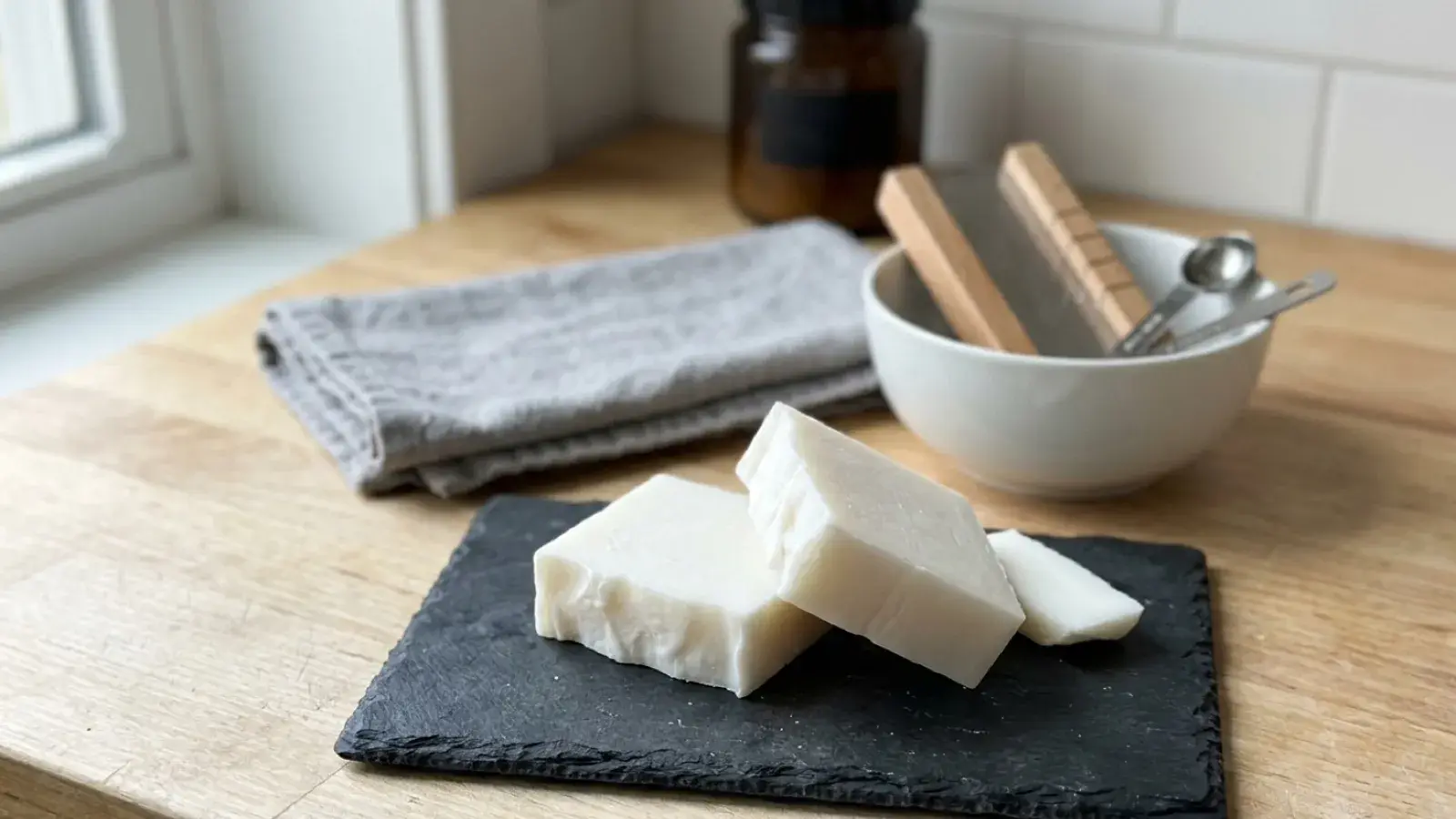
This lard soap recipe makes the whitest bar you can get from a natural fat: 65% lard, with coconut for lather and a little olive oil for working time. It’s cheap, the lard is on most grocery shelves, and the cured bar is mild, firm and creamy.
Lard is the soap fat of farmhouse kitchens for a reason. Its fatty acid profile sits close to the middle of every bar-quality range, so on its own it already makes a reasonable soap. What it lacks is a big, open lather, which is why this formula leans on 18% coconut. The thing to plan for is patience. Ungelled lard soap is soft for its first few days, and new makers often cut it too early, leaving dented, sticky bars.
Choosing your lard
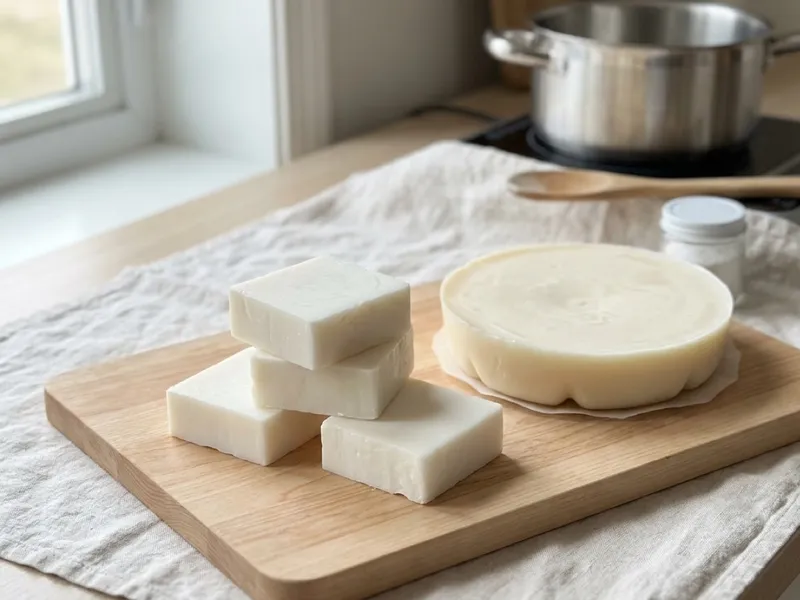
There are three kinds you’ll come across. Leaf lard comes from the fat around the pig’s kidneys; it’s the whitest and has almost no smell, and it’s what bakers prize for pastry. Regular rendered lard, sold in blocks or tubs for baking and frying, is fine for soap as long as it’s plain lard. Home-rendered back fat works too, but it can carry more of a pork smell unless you render it gently and strain it well.
All three use the same lye amount in practice, so you can swap them freely in this formula. If your lard is a blend with vegetable shortening or other fats, don’t use it as-is; run the actual blend through the lye calculator first.
Why this recipe works
- Lard, 65%. A balanced mix of palmitic, stearic and oleic acids: a firm, mild bar with a low, creamy lather and a very white color.
- Coconut, 18%. Lard is low in the fatty acids that make big bubbles. Coconut fills that gap and helps the loaf firm up for cutting.
- Olive, 12%. A little extra conditioning and a slightly slower trace, which helps if you want to swirl or add color.
- Castor, 5%. Keeps the lather steady and dense.
Ingredients
| Oil | % | Grams | Ounces |
|---|---|---|---|
| Lard | 65% | 650 g | 22.93 oz |
| Coconut oil (76°) | 18% | 180 g | 6.35 oz |
| Olive oil | 12% | 120 g | 4.23 oz |
| Castor oil | 5% | 50.0 g | 1.76 oz |
| Lye solution | |||
| Sodium hydroxide (NaOH) 5% superfat | 138 g | 4.87 oz | |
| Distilled water 33% lye concentration | 280 g | 9.88 oz | |
Equipment
Instructions
Step 1: Make the lye solution
Put on goggles and gloves. Weigh the distilled water into a heat-safe pitcher and add the lye to it, never the other way around. Stir until clear and let it cool to 90–100°F (32–38°C).
Step 2: Melt the lard and coconut
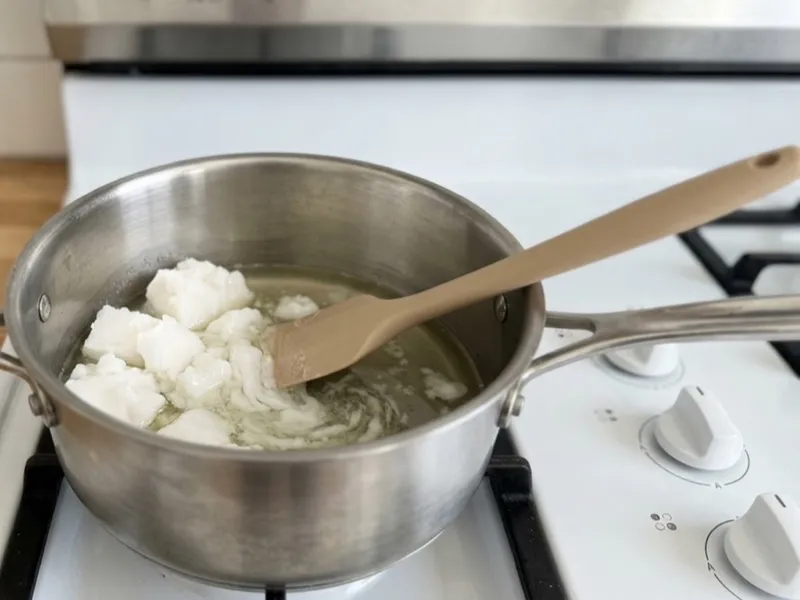
Weigh the lard and coconut oil into a pot and melt over low heat. Lard melts at a lower temperature than tallow, so it goes clear quickly. Take it off the heat and add the olive and castor oils.
Step 3: Bring both to 90–100°F
Let the oils and lye solution settle to 90–100°F (32–38°C). Lard soap behaves well at these moderate temperatures; there's no need to soap hot. Lower temperatures also help keep the bar its brightest white.
Step 4: Blend to light-medium trace
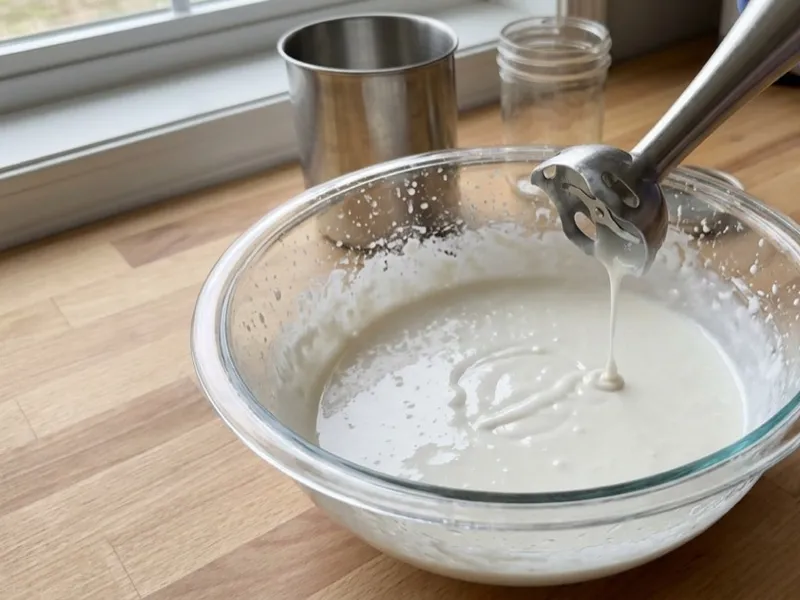
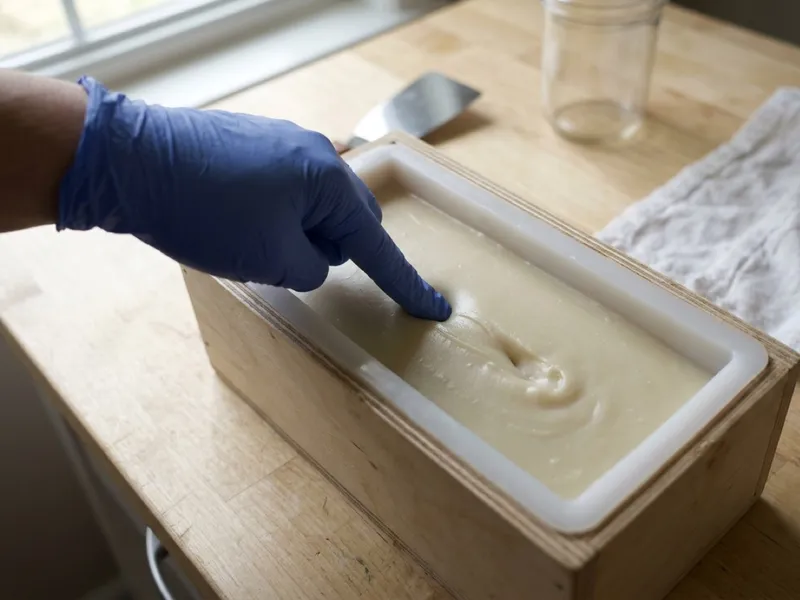
Pour the lye solution into the oils and stick blend in short bursts, stirring between. Lard batters trace at a moderate pace, usually 3–5 minutes. Stop at light to medium trace, when drips sit on the surface for a second before sinking.
Step 5: Pour and gel or not, your choice
Pour into the mold. For the whitest bar, leave it uncovered at room temperature so it doesn't gel. For a slightly harder, more translucent bar that can be cut sooner, cover with cardboard and a towel to encourage gel.
Step 6: Unmold patiently
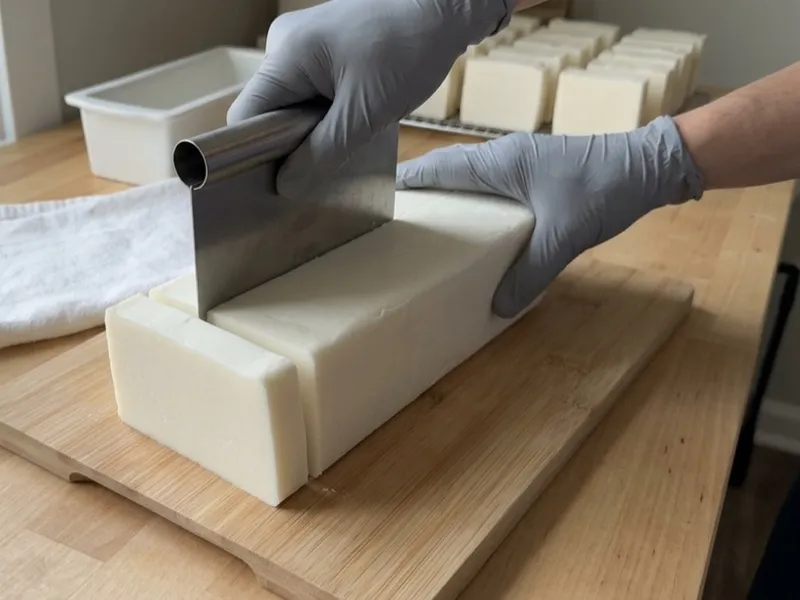
Check after 48 hours. Ungelled lard soap can still be soft and sticky at this point. If it dents easily or pulls away from the mold walls in strings, wait another day or two. Cut into bars once the loaf feels like firm cheese.
Step 7: Cure for six weeks
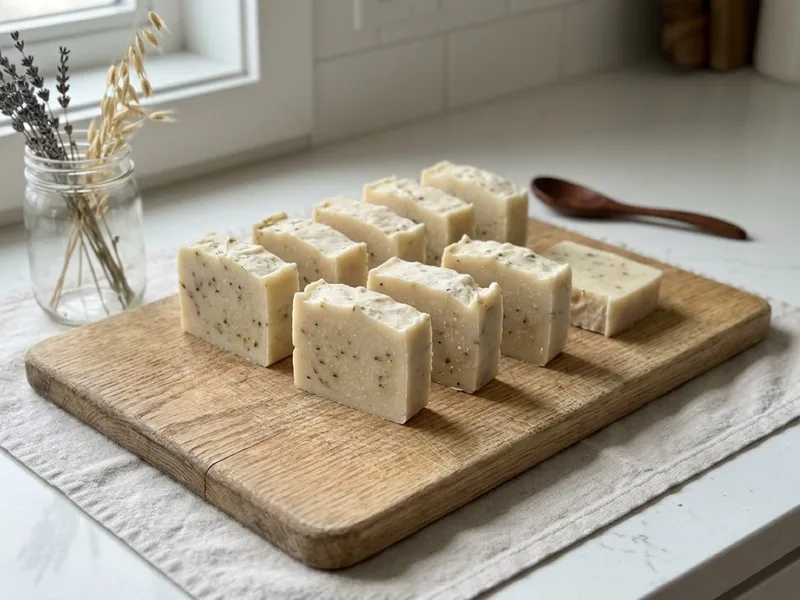
Cure on a rack with airflow for 6 weeks, turning weekly. Lard bars feel soft for the first couple of weeks, then harden noticeably. The lather gets creamier the longer they cure.
Variations
Leaf lard
Leaf lard, from around the pig’s kidneys, has the mildest smell and makes the cleanest white. Use it at the same 65%.
Lard and goat milk
Replace the water with frozen goat milk for a creamy ivory bar. Follow the freezing method in the goat milk soap recipe.
Light lavender
Lavender essential oil at 3% of oil weight (30 g per 1000 g) holds well in lard soap and won’t speed trace.
If something goes wrong
- Still soft after three days
- Normal for an ungelled lard loaf in a cool room. Give it more time, or encourage gel next batch. Soft soap that won’t harden
- White powder on the top
- Soda ash, common on ungelled soap. It is harmless; steam or plane it off. Soda ash on soap
- Faint pork smell
- Some grocery lard carries a cooked-pork note. Leaf lard or lard rendered for baking smells cleaner.
FAQ
Can I use lard from the grocery store?
Yes. Check that the ingredient list is just lard. Shelf-stable lard sold for baking works well and is one of the cheapest soap fats you can buy.
Why is lard soap so white?
Lard itself is very white, and unlike olive or avocado oil it has no color to pass on to the bar. Soaping at moderate temperatures and skipping gel keeps it as white as possible.
Is lard soap good for everyday use?
Many makers think so. It makes a mild, creamy, long-lasting bar. The coconut in this recipe gives it enough lather to work as a hand and body bar.
Does lard soap go rancid?
Lard is relatively stable, and a 5% superfat leaves little spare oil. Store cured bars cool, dry and out of the sun, and use them within about a year for the best scent and feel.
Lard or tallow, which is better for soap?
Tallow makes a harder bar with a denser lather. Lard is softer, whiter, a little milder, and easier to find in most stores. Both make excellent soap.
Comments
No comments yet. Made this recipe? Be the first to say how it went.