Coconut Oil Soap Recipe (Big-Lather Balanced Bar)
A coconut-forward bar at 33% coconut oil, balanced with olive and shea and a slightly higher superfat for big, fast lather.
This page has affiliate links. We earn a small commission at no cost to you. Disclosure
Formula not yet verified. These numbers haven't been re-run by a second maker. Don't make this batch until this notice is gone.
- Yield
- 10 bars
- Method
- Cold process
- Difficulty
- Beginner
- Cure
- 4 weeks
- Superfat
- 7%
- Lye conc.
- 33%
On this page
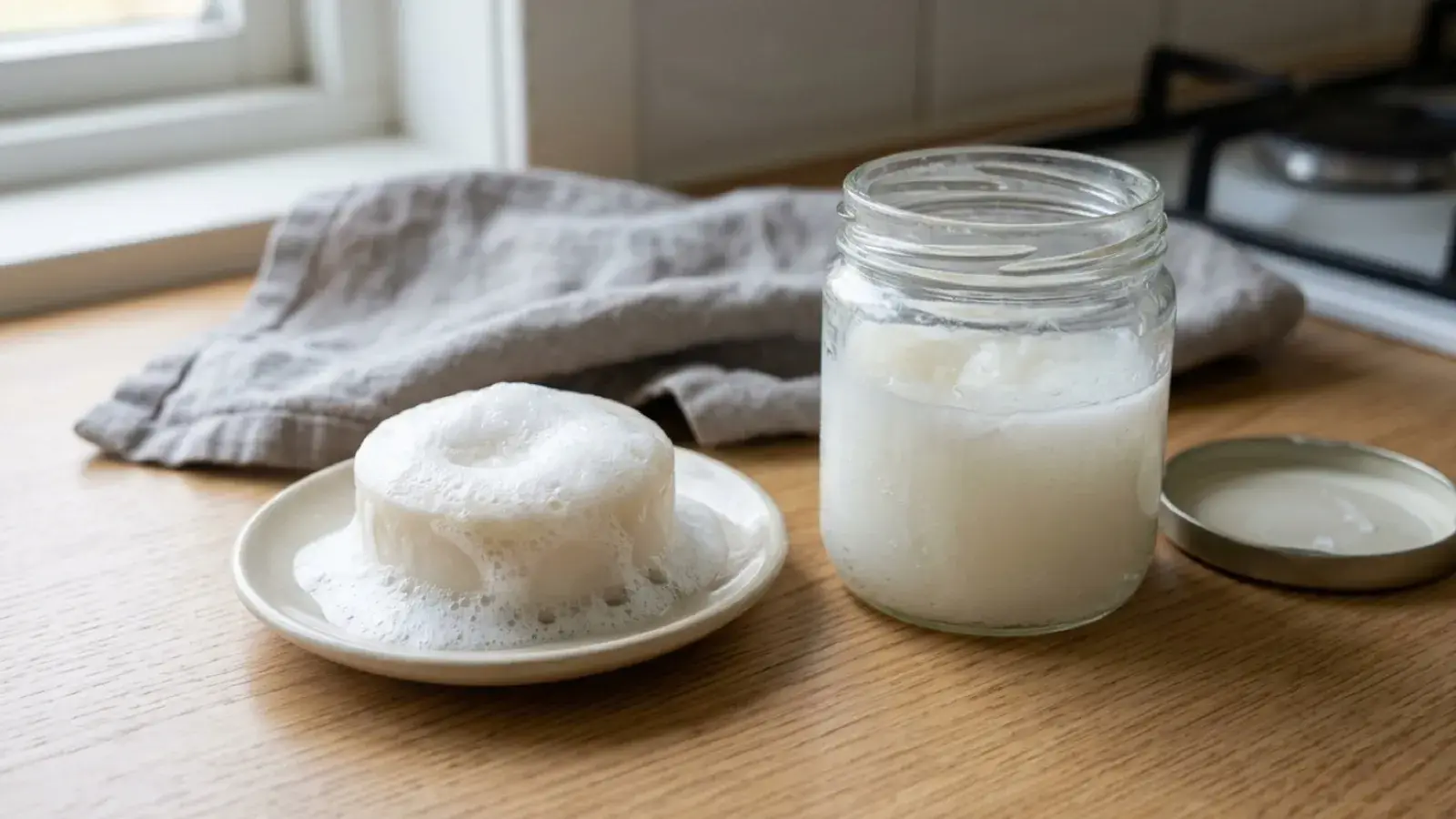
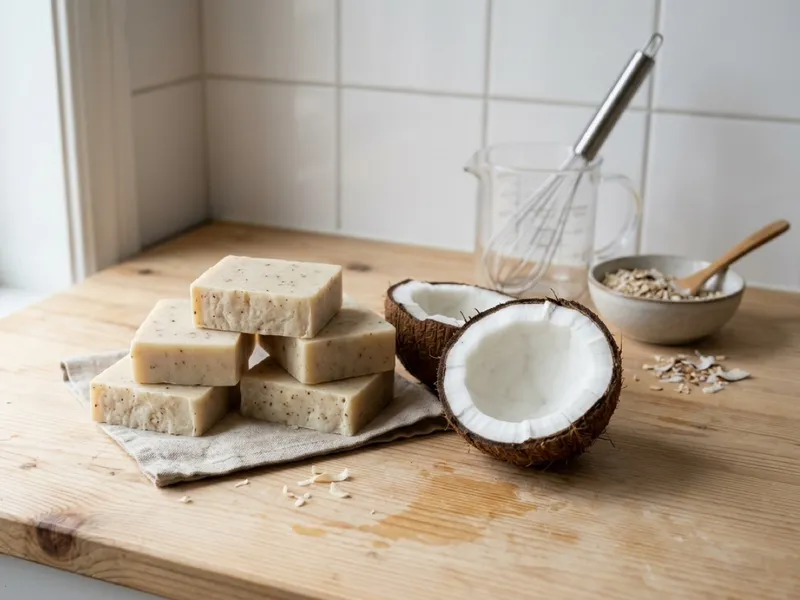
This coconut oil soap recipe puts coconut front and center at 33% of the oils, the high end for a bar you’d use on your body, and balances it with olive oil and shea butter. The payoff is a hard white bar that foams up fast and big, in any water.
Coconut oil is the lather oil. No other common soap fat makes bubbles as quickly, and none cleans as thoroughly. That’s also its catch: push it too high in a body bar and the soap starts to feel tight on the skin. The answer here is two adjustments that work together. Shea butter at 25% adds hardness and a creamy layer to the lather without adding more cleansing, and the superfat rises from 5% to 7% to leave a little more oil in the finished bar.
Where this sits among coconut bars
Think of coconut as a dial. Around 15–25% it’s a supporting oil, which is how most recipes on this site use it. At about a third, as here, it’s the defining feature; you’ll notice the lather the first time you use the bar. At 100%, as in our 100% coconut oil soap, it’s a different product entirely and needs a 20% superfat to be comfortable. If you try this recipe and want a little less, drop coconut to 25%, raise the olive to match, and recalculate in the lye calculator.
Why this recipe works
- Coconut, 33%. Lauric and myristic acids make the big, fast bubbles and a bar that lathers even in cold or hard water. A third of the oils is about as high as a body bar goes before it starts to feel tight.
- Olive, 37%. The mild counterweight to all that coconut, and it slows trace enough to work comfortably.
- Shea, 25%. Adds hardness from a different direction (stearic acid) plus a creamy edge to the bubbles.
- 7% superfat. Two points above our usual 5%. The extra unsaponified oil softens the feel of a coconut-forward bar.
Ingredients
| Oil | % | Grams | Ounces |
|---|---|---|---|
| Coconut oil (76°) | 33% | 330 g | 11.64 oz |
| Olive oil | 37% | 370 g | 13.05 oz |
| Shea butter | 25% | 250 g | 8.82 oz |
| Castor oil | 5% | 50.0 g | 1.76 oz |
| Lye solution | |||
| Sodium hydroxide (NaOH) 7% superfat | 138 g | 4.88 oz | |
| Distilled water 33% lye concentration | 281 g | 9.91 oz | |
| Additives | |||
| Sweet orange essential oil (10x) Optional; 3% of oils. | 3% | 30.0 g | 1.06 oz |
| Lemongrass essential oil Optional; 1% of oils. Anchors the orange; can speed trace slightly. | 1% | 10.0 g | 0.35 oz |
Equipment
Instructions
Step 1: Make the lye solution
Put on goggles and gloves. Add the lye to the distilled water, never the reverse, and stir until clear. Leave it to cool to 90–100°F (32–38°C).
Step 2: Melt the coconut and shea
Melt the coconut oil and shea butter together over low heat until completely clear. Shea can leave small grains if it isn't fully melted, so let it go a minute past the point where it looks liquid. Stir in the olive and castor oils.
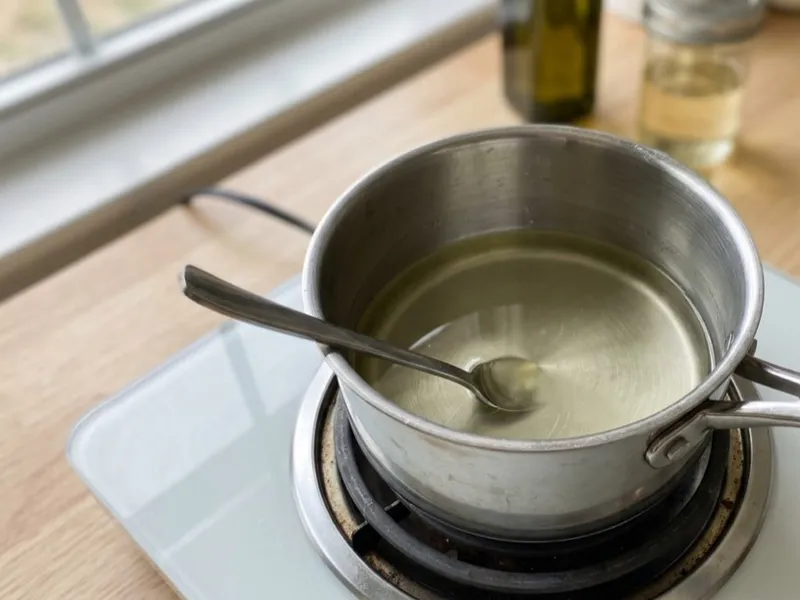
Step 3: Add the scent to the oils
If you're using the essential oils, stir them into the warm oils now rather than at trace. Lemongrass can speed trace a little, and blending it in early means you won't be rushing to mix it into a thickening batter.
Step 4: Blend to light trace
With the oils and lye both at 90–100°F (32–38°C), pour the lye in and stick blend in short bursts. Coconut-heavy batter traces in 1–3 minutes. Stop at light trace, when drips leave a faint trail.
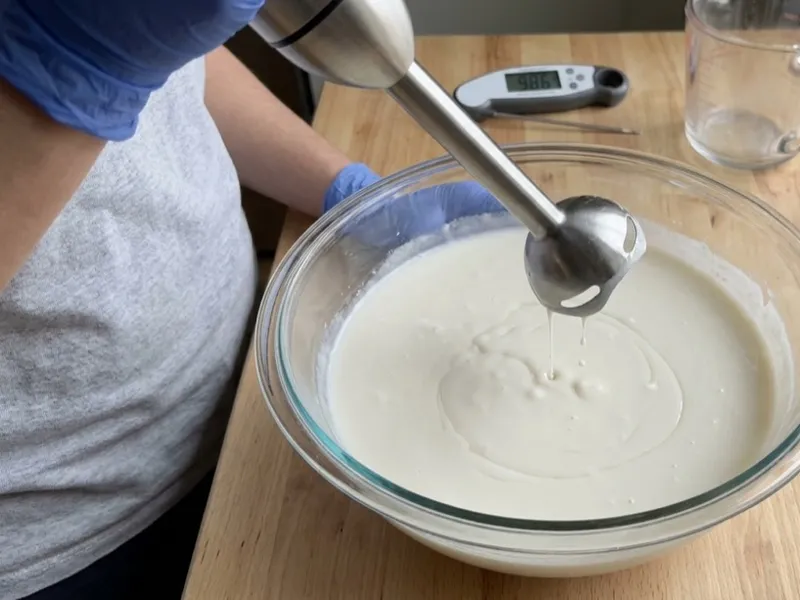
Step 5: Pour and gel
Pour into the mold and cover with cardboard and a towel. Coconut soaps gel easily and cut more cleanly when they do. Check after the first hour; if the top starts to crack or bulge, uncover it.
Step 6: Cut while it's still giving
Unmold and cut after 24 hours. Coconut-heavy soap hardens quickly, and a loaf left for three or four days can crack or crumble along the knife. You want it firm but still a little yielding.
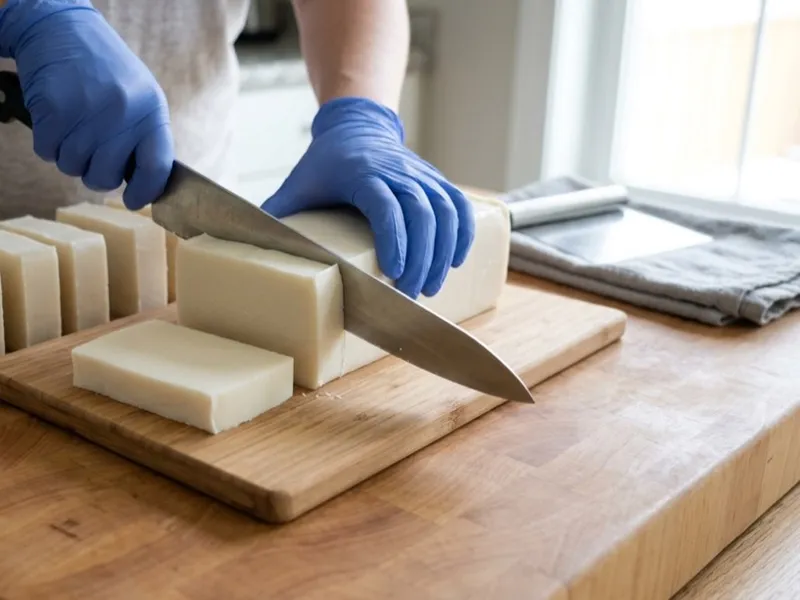
Step 7: Cure four weeks
Cure on a rack with airflow for 4 weeks, turning weekly. This bar is usable earlier than an olive-heavy recipe, but the extra weeks make it milder and harder.
Variations
All the coconut
For a laundry-strength or salt-bar base, see the 100% coconut oil soap, which uses a 20% superfat to compensate.
Coconut milk
Replace half the water with frozen coconut milk and add the lye slowly over ice. The bar comes out creamier and slightly tan.
Unscented
Leave out both essential oils. Refined coconut oil has no scent; virgin coconut oil’s aroma does not survive into the bar.
If something goes wrong
- Bar feels tight after washing
- Some people find 33% coconut too much. Drop coconut to 25% and raise olive by 8% next batch, and re-run the lye.
- Loaf cracked on top
- It overheated during gel. Soap cooler or skip the towel. Why soap cracks
- Crumbly when cut
- It was cut too late. Coconut bars harden fast; cut at 24 hours. Crumbly soap
FAQ
How much coconut oil is too much in soap?
For an everyday body bar, most makers stay between 15% and 30–35% coconut at a normal superfat. Above that, the bar cleans aggressively and many people find it drying unless the superfat goes up, which is what the 100% coconut recipe does.
Can I use virgin coconut oil?
Yes. It uses the same lye amount as refined. The coconut scent does not survive saponification, so refined coconut oil is the cheaper choice for the same bar.
What does 76° coconut oil mean?
It is ordinary coconut oil labeled by its melting point, about 76°F (24°C). It is the standard soapmaking coconut oil and what our lye numbers assume. Fractionated coconut oil is different and should not be swapped in.
Why is the superfat 7% instead of 5%?
Coconut oil makes a very cleansing soap. Leaving a little more unsaponified oil in the bar softens that, and coconut oil is stable enough that the extra oil is unlikely to go rancid.
Comments
No comments yet. Made this recipe? Be the first to say how it went.