Cocoa Butter Soap Recipe (15% Cocoa Butter)
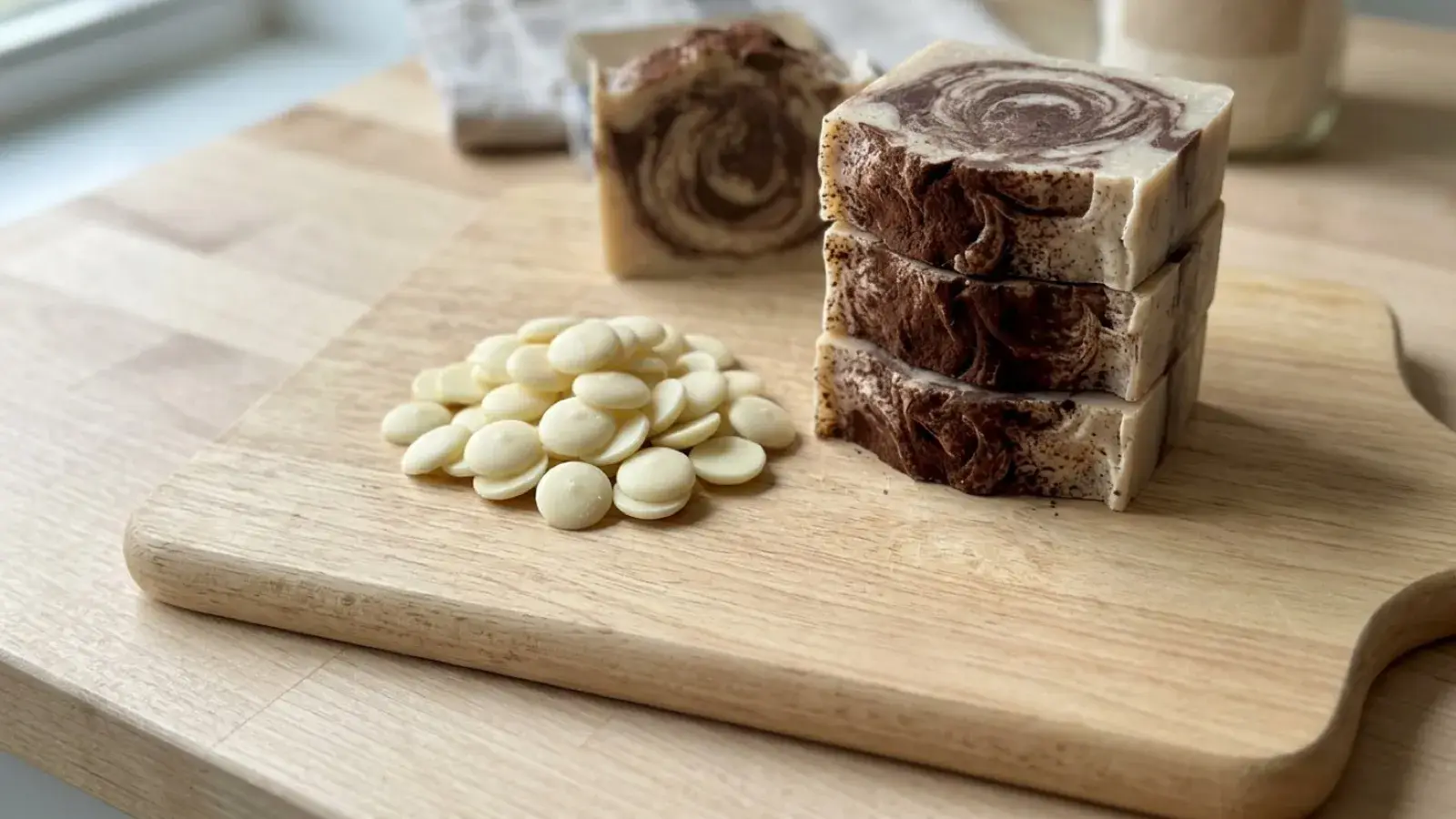
A hard, smooth bar with cocoa butter at 15%, the sweet spot before cocoa butter starts making bars brittle.
This page has affiliate links. We earn a small commission at no cost to you. Disclosure
Formula not yet verified. These numbers haven't been re-run by a second maker. Don't make this batch until this notice is gone.
- Yield
- 10 bars
- Method
- Cold process
- Difficulty
- Intermediate
- Cure
- 6 weeks
- Superfat
- 5%
- Lye conc.
- 33%
On this page
This cocoa butter soap recipe uses cocoa butter at 15% of the oils, which is about as high as it goes before the bar starts to turn brittle. What you get is a hard, glossy bar with a creamy lather and, if you use unrefined cocoa butter, a soft chocolate scent that carries through the cure.
Cocoa butter is one of the hardest fats in soapmaking, and that’s both why people love it and why it needs a limit. A little makes a bar last; too much makes one that cracks when you cut it and chips at the edges in the dish. The other thing it asks for is heat. Cocoa butter sets quickly as it cools, so soaping too cold gives you a batter that thickens from fat setting, not from saponification.
Why 15% is the line
Cocoa butter is roughly 60% saturated fat, split between palmitic and stearic acid. Those fatty acids make soap hard and creamy, and other hard fats in the same recipe stack with them. Here the shea and coconut already add hardness, so 15% cocoa butter brings the total to a firm bar without pushing it into brittle territory. The shea is there instead of more cocoa butter on purpose; it adds butter content with a softer feel.
If you want even more hardness without adding cocoa butter, the palm-free soap recipe shows how to combine cocoa, shea and coconut into a long-lasting bar.
Why this recipe works
- Cocoa butter, 15%. Palmitic and stearic acids make a hard, glossy, slow-wearing bar with a creamy lather. At 15% you get that firmness without the brittleness that higher amounts can bring.
- Olive, 45%. The largest oil, for a mild feel and a slow trace that leaves time for a swirl.
- Coconut, 25%. Cocoa butter adds no big bubbles; coconut does.
- Shea + castor, 15%. Shea rounds out the butter content; castor keeps the lather stable.
Ingredients
| Oil | % | Grams | Ounces |
|---|---|---|---|
| Cocoa butter | 15% | 150 g | 5.29 oz |
| Olive oil | 45% | 450 g | 15.87 oz |
| Coconut oil (76°) | 25% | 250 g | 8.82 oz |
| Shea butter | 10% | 100 g | 3.53 oz |
| Castor oil | 5% | 50.0 g | 1.76 oz |
| Lye solution | |||
| Sodium hydroxide (NaOH) 5% superfat | 139 g | 4.90 oz | |
| Distilled water 33% lye concentration | 282 g | 9.95 oz | |
| Additives | |||
| Cocoa powder (unsweetened) Optional, for a brown swirl. Disperse in 1 tbsp of the olive oil before adding at trace. | 0.8% | 8.0 g | 0.28 oz |
Equipment
Instructions
Step 1: Make the lye solution
Put on goggles and gloves. Add the lye to the distilled water, never the reverse, and stir until clear. Cool to 100–110°F (38–43°C).
Step 2: Melt the cocoa butter fully
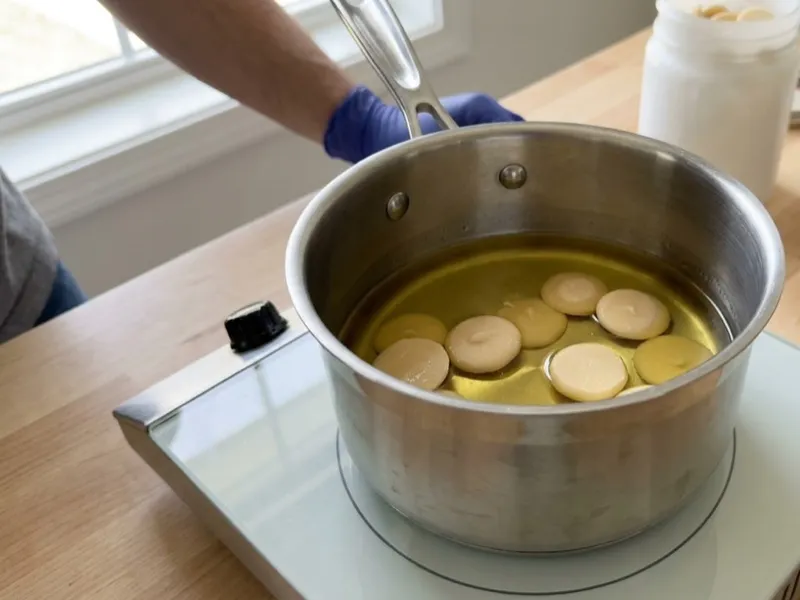
Melt the cocoa butter, shea and coconut over low heat. Cocoa butter needs more heat than coconut; keep going until the pot is completely clear with no waxy flakes. Take it off the heat and stir in the olive and castor oils.
Step 3: Soap warm
Bring the oils and lye to 100–110°F (38–43°C). Cocoa butter starts to set as the blend cools, which can make it look like trace before the lye has done anything. Keeping things warm avoids that false trace.
Step 4: Blend to light trace
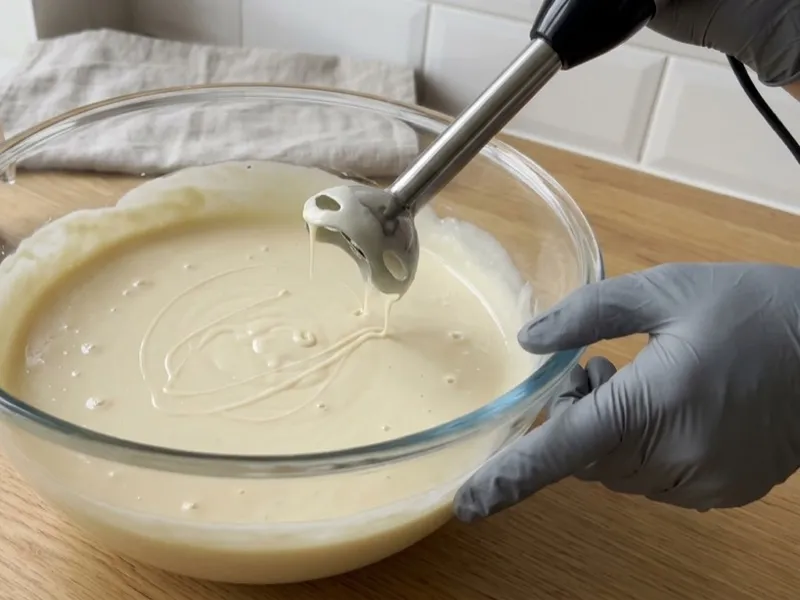
Pour the lye in and stick blend in short bursts. Expect light trace in 2–4 minutes. If you're swirling, stop at the lightest trace you can recognize.
Step 5: Swirl in the cocoa (optional)
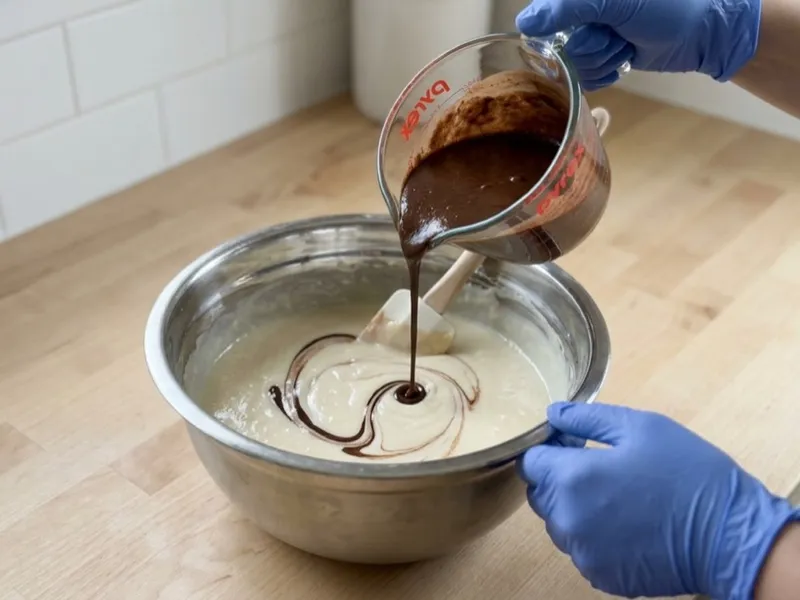
Pour about a cup of batter into a small jug and whisk in the cocoa powder dispersed in olive oil. Pour the brown batter back into the main pot in three thin streams, give the pot one slow stir with a spatula, and pour the whole thing into the mold.
Step 6: Keep it from overheating
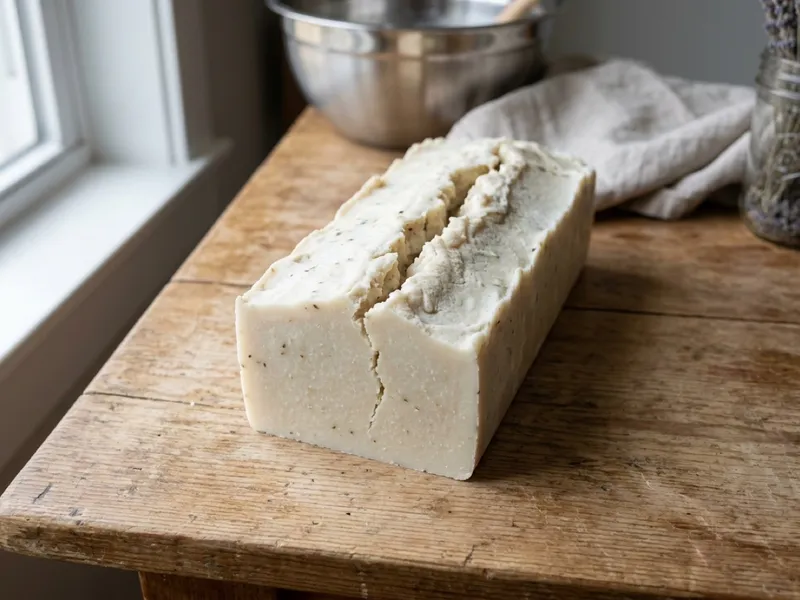
Cover the mold with cardboard only. Hard-butter bars that overheat are more likely to crack across the top. If the room is warm, leave the mold uncovered.
Step 7: Cut and cure
Unmold and cut after 24–48 hours, once firm. Cure on a rack with airflow for 6 weeks, turning weekly. The bar becomes notably hard and smooth by the end of the cure.
Variations
Cocoa and coffee
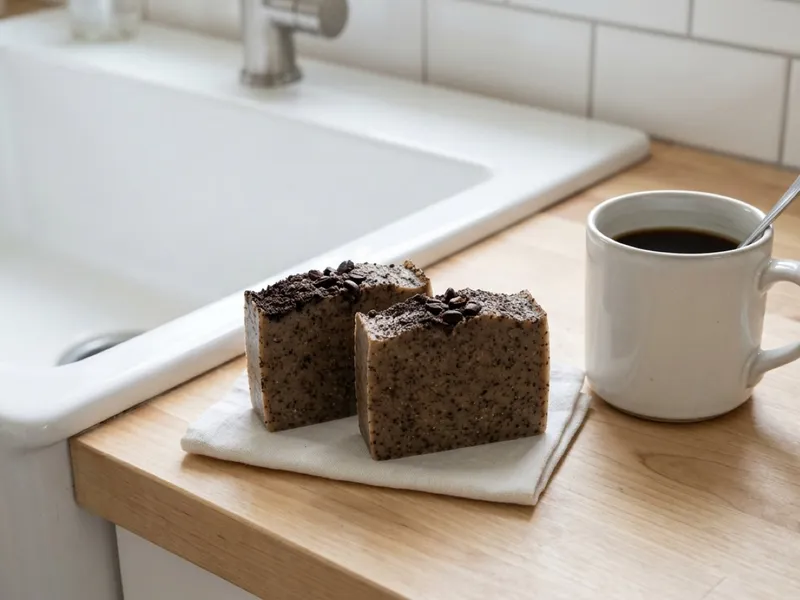
Replace the water with chilled brewed coffee and add the lye slowly. Pairs naturally with the chocolate scent.
Plain and pale
Use deodorized cocoa butter and skip the cocoa powder for a white bar that takes fragrance cleanly.
Orange and cocoa
Sweet orange (10x) essential oil at 3% of oil weight (30 g per 1000 g) for a chocolate-orange bar.
If something goes wrong
- Bars crack or chip when cut
- Too much hard butter, or the loaf was left too long. Keep cocoa butter at 15% or below and cut at 24–48 hours. Why soap cracks
- Batter thick before blending
- The cocoa butter cooled and set. Re-warm to 110°F (43°C) and stir until clear. False trace and separation
- Brown lather or a muddy swirl
- Too much cocoa powder. Stay around 8 g per 1000 g oils and keep the swirl to a few streams.
FAQ
How much cocoa butter can you use in soap?
Most makers keep cocoa butter at 15% or less. Above that, bars tend to become brittle and can crack when cut or used.
Will cocoa butter soap smell like chocolate?
Unrefined cocoa butter gives a light chocolate scent that often comes through in the cured bar, fainter than in the jar. Deodorized cocoa butter has almost no scent.
Is cocoa butter soap the same as chocolate soap?
Not quite. Cocoa butter is the fat; cocoa powder is the brown solid. This recipe uses the butter for hardness and a small amount of powder only for color.
Can I replace the shea with more cocoa butter?
You could, but it would push cocoa butter to 25%, well above where cracking becomes likely. Swap the shea for mango butter instead if you want a different butter.
Comments
No comments yet. Made this recipe? Be the first to say how it went.