Carrot Soap Recipe (Carrot Juice Cold Process)
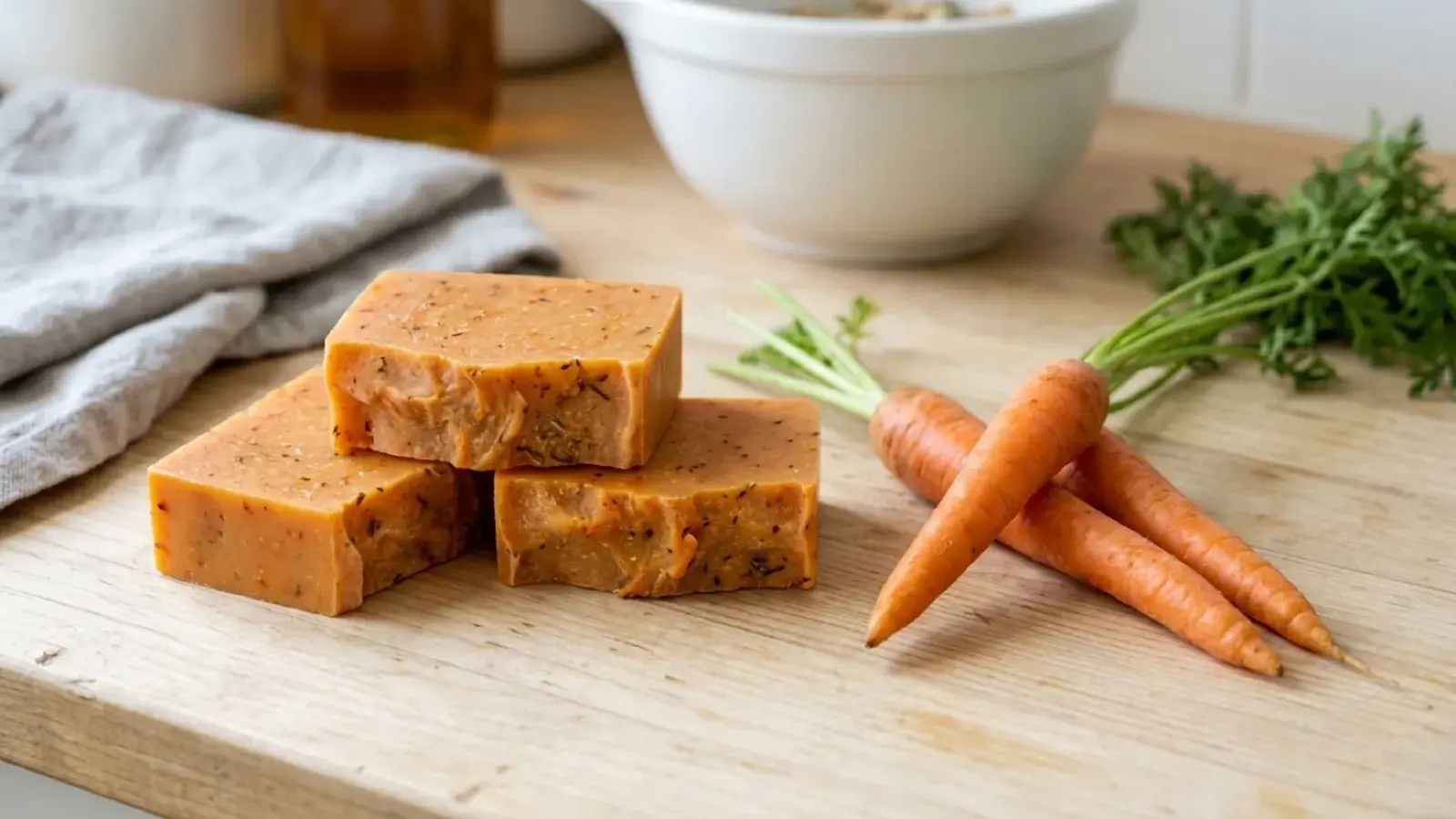
A palm-free bar made with strained carrot juice frozen into cubes, for a warm yellow-orange color and a creamy lather.
This page has affiliate links. We earn a small commission at no cost to you. Disclosure
Formula not yet verified. These numbers haven't been re-run by a second maker. Don't make this batch until this notice is gone.
- Yield
- 10 bars
- Method
- Cold process
- Difficulty
- Intermediate
- Cure
- 6 weeks
- Superfat
- 5%
- Lye conc.
- 33%
On this page
This carrot soap recipe uses strained carrot juice, frozen into cubes, as the whole liquid in a palm-free olive, avocado and shea bar. The juice gives the bar a warm yellow-orange color and the lye dissolves into it the same way it would into milk: slowly, over ice.
Juice rather than purée is the deliberate choice here. Purée leaves fiber suspended in the bar, and too much of it can brown, go soft or spoil. Strained juice dissolves completely into the lye solution, so the color spreads evenly and there’s nothing left behind to go off.
How much color to expect
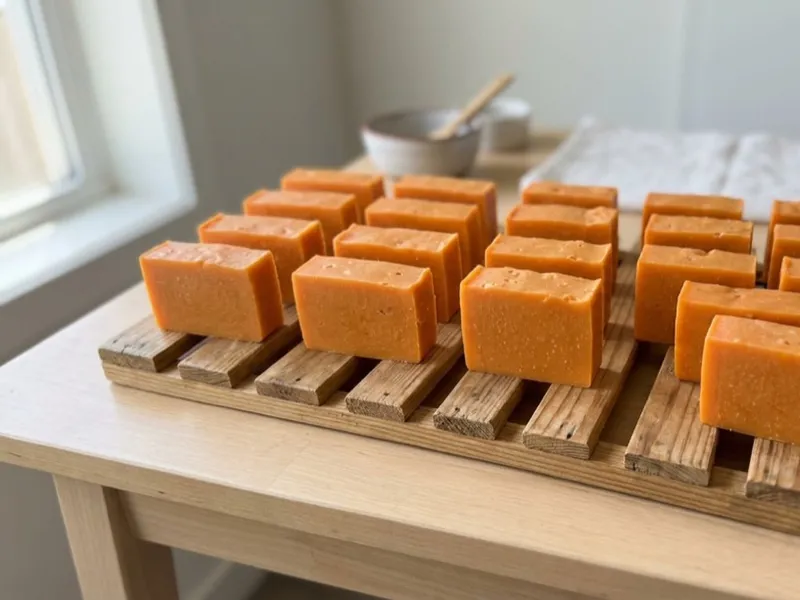
Carrot color comes from natural pigments that aren’t lightfast. Right out of the mold the bar is a sunny yellow-orange; after the cure it’s a softer peach; after several months in a bright room it can fade to cream. None of that changes how the soap works, but it does mean carrot soap is best stored in the dark and given as a fresh gift rather than kept for a year on a sunny shelf.
If you want the color to hold, the annatto variation is the most reliable fix. Annatto seed infused in oil gives a stable orange that pairs naturally with the carrot juice.
Why this recipe works
- Olive + avocado, 50%. Mild and conditioning. Unrefined avocado oil adds a slight green-gold that warms the carrot color rather than fighting it.
- Coconut, 25%. Bubbles and cleansing, kept moderate so the bar feels gentle.
- Shea, 15%. Hardness and a creamy feel without palm.
- Strained carrot juice as the liquid. All the carrot is dissolved into the lye solution, so there’s no pulp to discolor or go off. The juice’s natural sugars mean it needs freezing, like milk.
Ingredients
| Oil | % | Grams | Ounces |
|---|---|---|---|
| Olive oil | 35% | 350 g | 12.35 oz |
| Coconut oil (76°) | 25% | 250 g | 8.82 oz |
| Avocado oil | 15% | 150 g | 5.29 oz |
| Shea butter | 15% | 150 g | 5.29 oz |
| Sunflower oil (high oleic) | 5% | 50.0 g | 1.76 oz |
| Castor oil | 5% | 50.0 g | 1.76 oz |
| Lye solution | |||
| Sodium hydroxide (NaOH) 5% superfat | 138 g | 4.87 oz | |
| Carrot juice, strained and frozen 100% carrot juice, fresh-pressed or bottled with no additives, strained through a fine sieve and frozen in cubes. | 280 g | 9.89 oz | |
| Additives | |||
| Rosemary essential oil 2% of oil weight. A clean herbal scent that suits the earthy carrot. | 2% | 20.0 g | 0.71 oz |
Equipment
Instructions
Step 1: Juice, strain and freeze
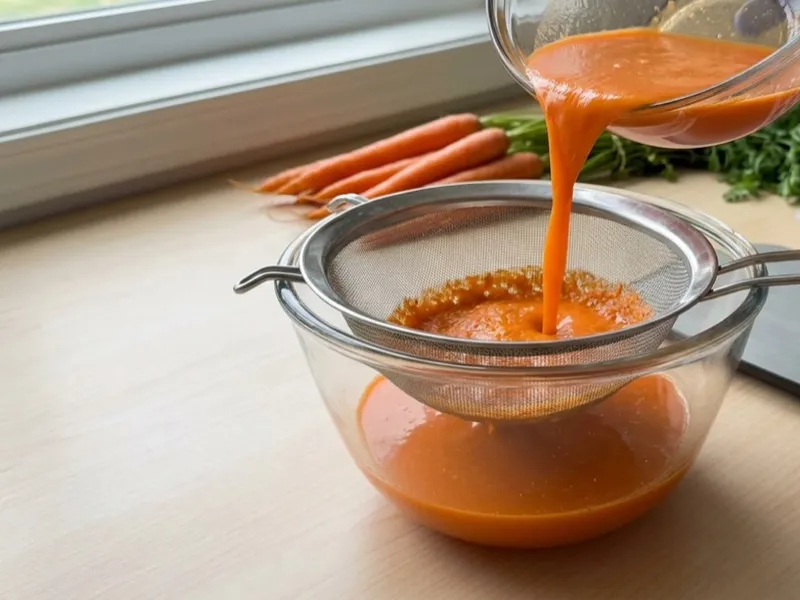
Juice fresh carrots or use bottled 100% carrot juice with nothing added. Pour it through a fine sieve or a coffee filter to remove pulp, then weigh out the liquid for your batch and freeze it in ice cube trays overnight.
Step 2: Melt and cool the oils
Put on goggles and gloves. Melt the shea butter and coconut oil, add the olive, avocado, sunflower and castor oils, and cool the blend to 85–95°F (29–35°C).
Step 3: Add lye to the frozen juice
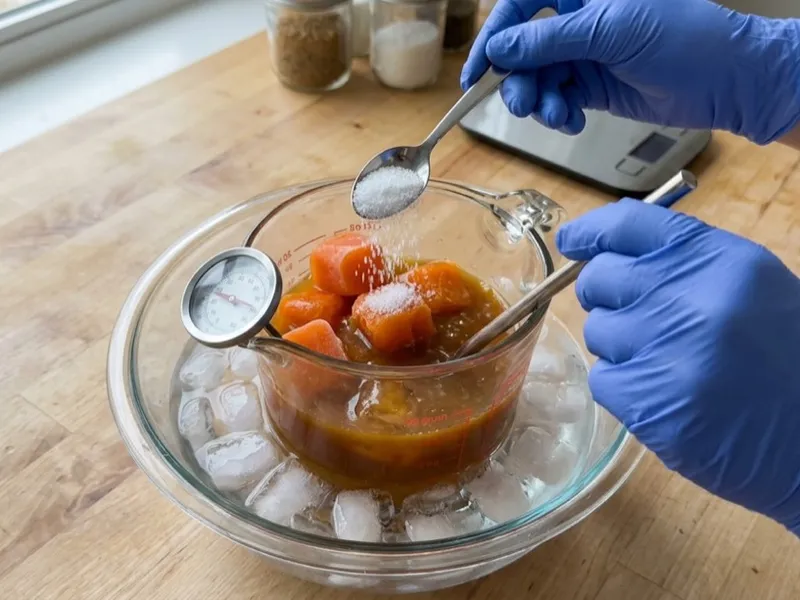
Put the frozen cubes in a heat-safe container inside a bowl of ice water. Sprinkle the lye over the cubes a spoonful at a time, stirring until each addition dissolves. Keep it under 85°F (29°C). The solution will turn a deep orange to brown and smell strongly vegetal; that’s expected and fades in the cure.
Step 4: Strain and blend to light trace
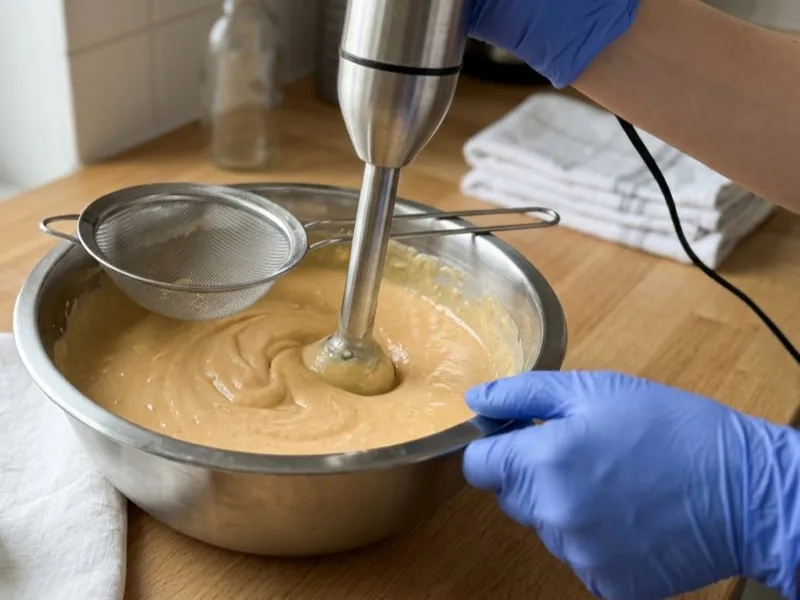
Pour the solution into the oils through a fine strainer to catch any remaining fibers. Stick blend in short bursts to light trace, then add the rosemary and stir.
Step 5: Pour and keep cool
Pour into the mold. For the brightest, most even color, refrigerate for 24 hours. If you let it gel at room temperature, the color goes deeper and more amber, but watch for overheating from the sugars.
Step 6: Unmold and cure out of the light
Unmold after 48 hours, cut and cure for 6 weeks on a rack in a shaded spot, turning weekly. Direct sun fades natural carrot color fastest, so keep curing and finished bars out of it.
Variations
Half juice
For a lighter yellow and less sugar heat, freeze carrot juice for only half of the liquid weight and make up the rest with distilled water ice.
Boosted color
Infuse annatto seeds in part of the olive oil (start with about 1 teaspoon per 100 g of oil), strain, and use that oil in the formula for a deeper, longer-lasting orange.
Carrot and honey
Add 1 tsp honey per 500 g oils, dissolved in a spoonful of the thawed juice, at light trace. It heats the batch, so chill the mold straight away.
If something goes wrong
- Color faded to pale cream
- Natural carrot color is not lightfast and fades over months, faster in sunlight. Store bars in the dark, or use annatto-infused oil for a steadier color. Fading and morphing color
- Brown spots in the bar
- Usually unstrained pulp. Fiber that isn’t dissolved can brown or spoil. Strain the juice and the lye solution next time.
- Loaf cracked or overheated
- The juice sugars added heat. Chill the mold right after pouring. Overheating soap
FAQ
Can I use carrot purée instead of juice?
You can, at a conservative 15–30 g per 1000 g of oils added at trace, with the water reduced by about the same weight. Purée adds flecks and more color, but too much can leave soft, spotty bars that spoil. Juice is more forgiving.
Will carrot soap stay orange?
It starts warm yellow-orange and usually softens toward peach or cream over months. Keeping bars out of light slows the fade.
Does carrot soap smell like carrots?
The lye solution smells strongly of cooked vegetables, but most of that fades in the cure. The rosemary carries the scent of the finished bar.
Is store-bought carrot juice OK?
Yes, if it’s 100% carrot with no added sugar, preservatives or other juices. Weigh it like any other liquid.
Comments
No comments yet. Made this recipe? Be the first to say how it went.