Buttermilk Soap Recipe (Split-Liquid Cold Process)
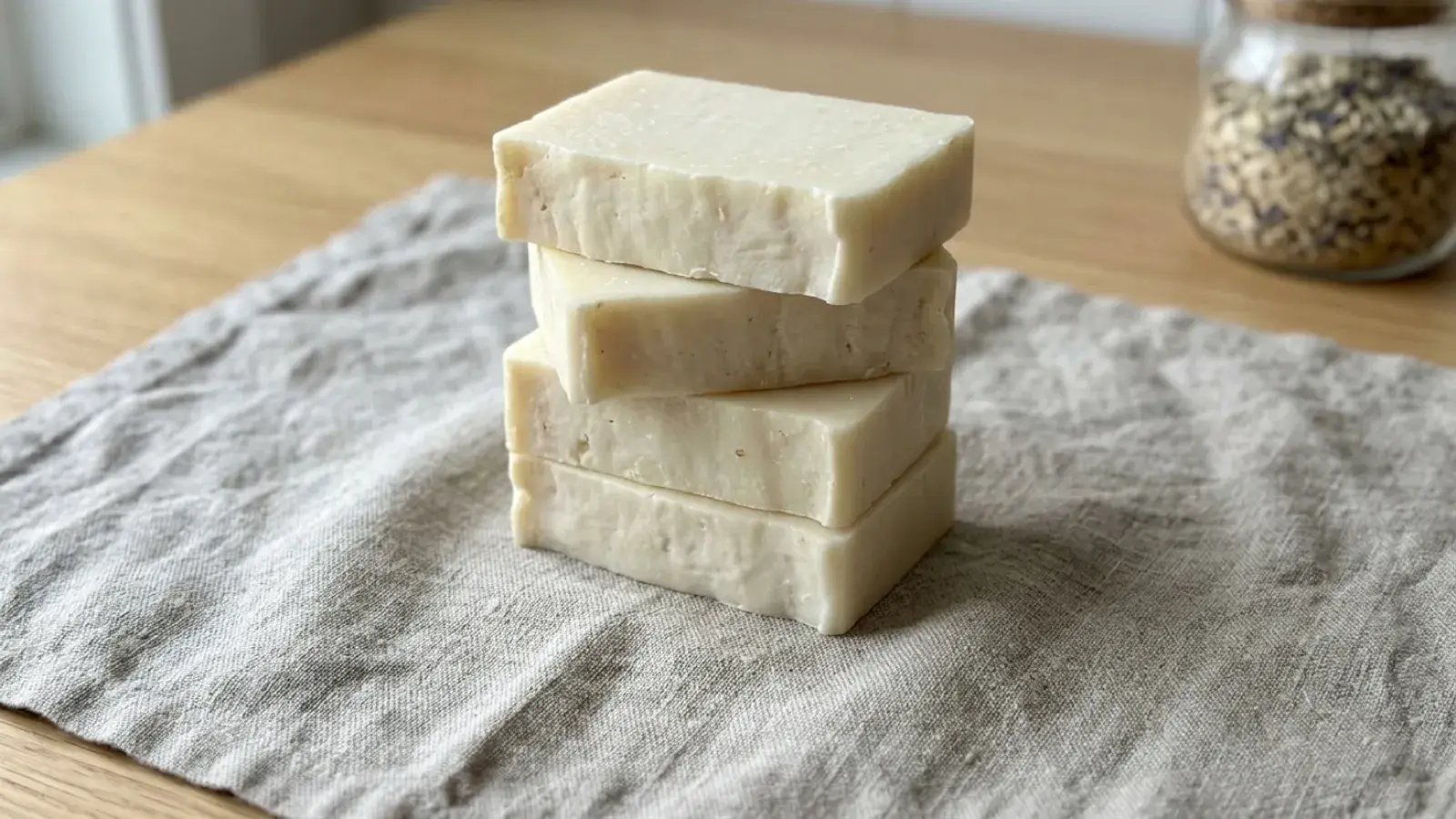
A dense, creamy lard-and-olive bar where half the liquid is water for the lye and half is buttermilk stirred in at trace.
This page has affiliate links. We earn a small commission at no cost to you. Disclosure
Formula not yet verified. These numbers haven't been re-run by a second maker. Don't make this batch until this notice is gone.
- Yield
- 10 bars
- Method
- Cold process
- Difficulty
- Intermediate
- Cure
- 6 weeks
- Superfat
- 5%
- Lye conc.
- 33%
On this page
This buttermilk soap recipe makes a dense, creamy bar from lard, olive and coconut oils, with the liquid split in two. Half of it is plain water that carries the lye; the other half is cold buttermilk, poured in at light trace. The milk never meets raw lye heat, so there’s no frozen-cube stage and much less risk of an orange, scorched solution.
The trade-off is a strong, hot lye solution and a batter that thickens once the buttermilk goes in. Both are manageable if you soap cool and have your mold ready before you start.
Why split the liquid?
Milk sugars scorch when lye heats them, and that heat is greatest in the first minutes after lye meets liquid. Freezing the milk is one fix. Splitting the liquid is another: lye goes into water, cools down, and the buttermilk joins later when the reaction has already started in the oils and the batter is cooler. Because the buttermilk is added cold, it pulls the batter temperature down at the same moment trace begins, which also helps keep a lard bar from overheating in the mold.
The method works for any milk, but it suits buttermilk especially well. Cultured buttermilk is thick, so it blends into the batter smoothly rather than separating, and you can see exactly when it’s fully mixed.
Why this recipe works
- Lard, 35%. A hard, white, long-lasting bar with a stable, creamy lather. It also keeps the batter fluid long enough to stir the buttermilk in.
- Olive, 30%. Mildness and a slow trace. Together with the lard, it gives the bar its dense, lotion-like feel.
- Coconut + castor, 25%. Coconut brings the bubbles buttermilk would otherwise dampen; castor makes that lather hold.
- Split liquid. The lye only ever touches water. The buttermilk joins the oils at trace, after the hottest part of the reaction is over, so its sugars and proteins have far less chance to scorch.
Ingredients
| Oil | % | Grams | Ounces |
|---|---|---|---|
| Lard | 35% | 350 g | 12.35 oz |
| Olive oil | 30% | 300 g | 10.58 oz |
| Coconut oil (76°) | 20% | 200 g | 7.05 oz |
| Shea butter | 10% | 100 g | 3.53 oz |
| Castor oil | 5% | 50.0 g | 1.76 oz |
| Lye solution | |||
| Sodium hydroxide (NaOH) 5% superfat | 137 g | 4.85 oz | |
| Distilled water + buttermilk, split 50/50 Dissolve the lye in the water half only. The buttermilk half goes in at light trace. | 279 g | 9.84 oz | |
| Additives | |||
| Sweet orange essential oil (10x) 3% of oil weight. Add with the buttermilk at trace. | 3% | 30.0 g | 1.06 oz |
| Patchouli essential oil Anchors the orange so it lasts through the cure. | 0.5% | 5.0 g | 0.18 oz |
Equipment
Instructions
Step 1: Split and weigh the liquid
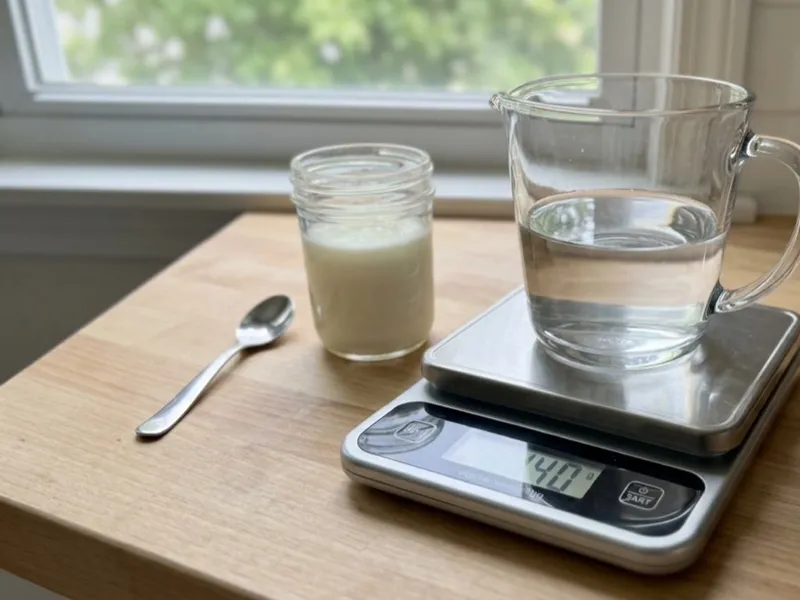
Work out the total liquid for your batch (at 1000 g of oils it comes to roughly 280 g). Weigh half as distilled water and half as cultured buttermilk. Keep the buttermilk in the fridge until you need it, and shake the carton first so the solids are evenly mixed.
Step 2: Make a strong lye solution in the water half
Put on goggles and gloves. Add the lye to the water, never the reverse, and stir until clear. Because it's only half the usual water, this solution is about 50% lye — strong and very hot. Set it somewhere safe and let it cool to 80–90°F (27–32°C). Cooler is better here because there's no frozen milk to absorb heat later.
Step 3: Melt and cool the oils
Melt the lard, coconut oil and shea butter, then stir in the olive and castor oils. Let them cool to 85–95°F (29–35°C). Starting cool is the main heat control in this recipe.
Step 4: Blend to light trace
Pour the lye solution into the oils and stick blend in short bursts. Stop at light trace, when a drizzle leaves a faint trail on the surface. The batter will look thin and slightly translucent; that's expected with the reduced water.
Step 5: Add the cold buttermilk and scent
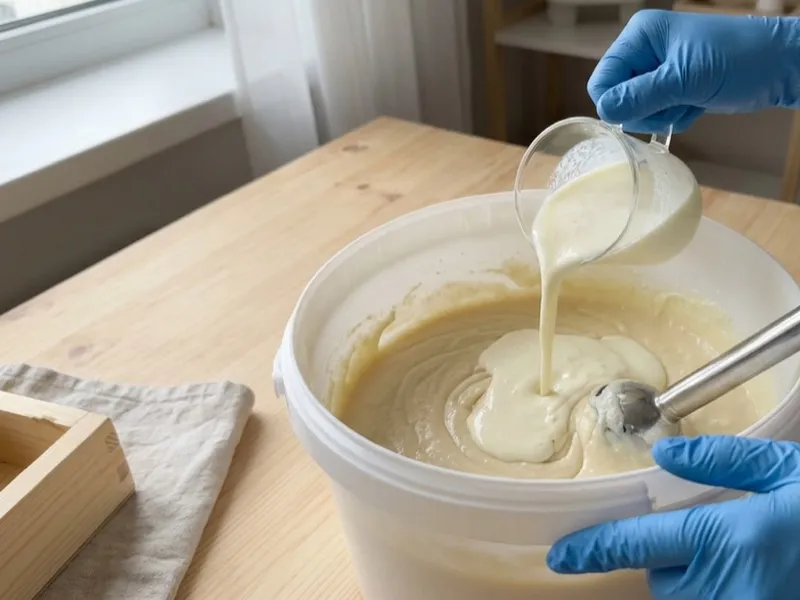
Pour in the chilled buttermilk with the essential oils, then hand stir for 30 seconds before pulsing the blender two or three times. The batter will turn creamy and opaque and will thicken noticeably within a minute or two. It may smell faintly of ammonia; that fades during the cure.
Step 6: Pour and keep it cool
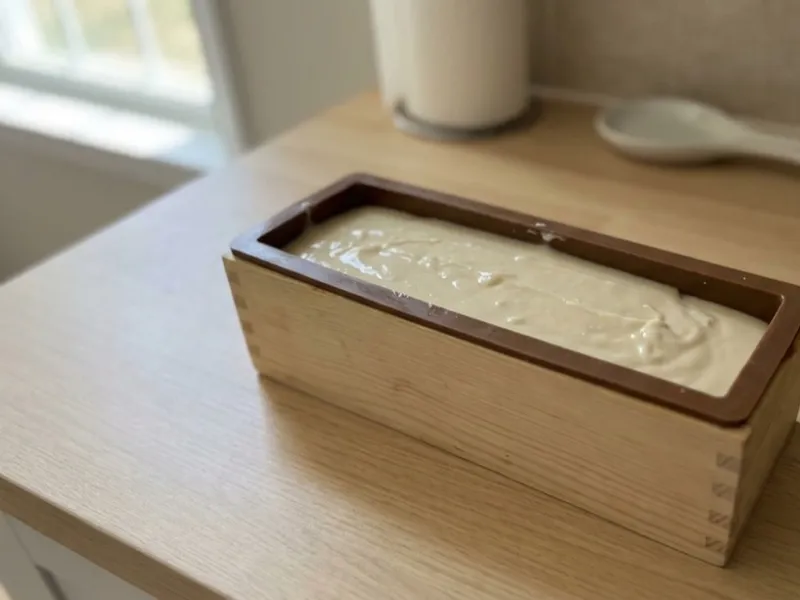
Pour into the mold and tap it on the counter to release air. Leave it uncovered at cool room temperature and check after an hour. If the center darkens or the top feels warm and glossy, move it to the fridge for the next 12 hours.
Step 7: Unmold, cut and cure
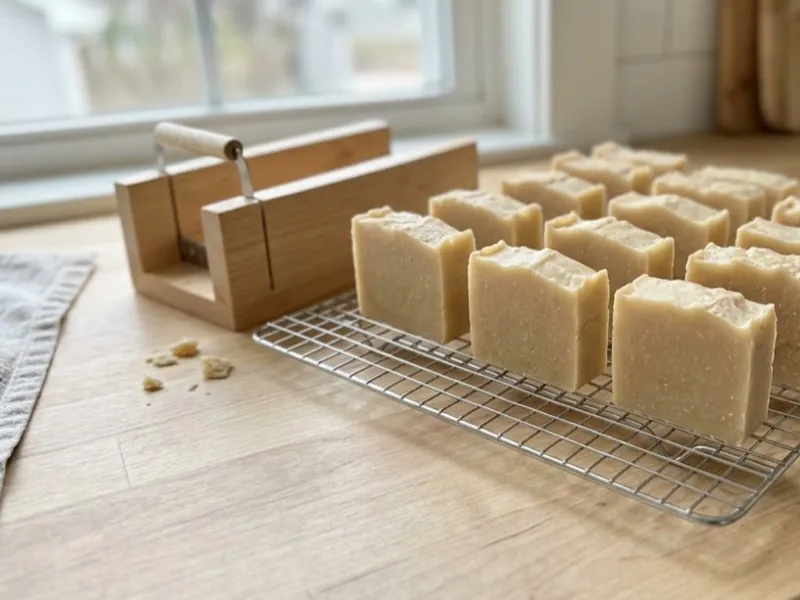
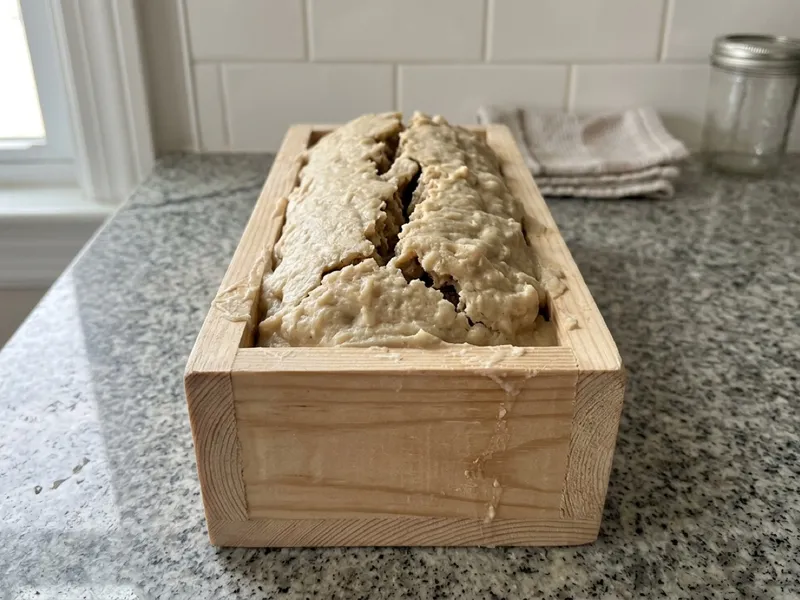
Unmold after 36–48 hours, when the loaf feels firm and no longer sticky. Cut into bars and cure on a rack with airflow for 6 weeks, turning them weekly. Expect a creamy beige rather than the bright white of a water-only lard bar.
Variations
Buttermilk powder
Use the same total liquid all as water, dissolve the lye in half of it, and whisk 15–20 g of buttermilk powder per 1000 g oils into the other half to add at trace.
Oatmeal buttermilk
Stir 10 g of finely ground oats per 1000 g oils into the buttermilk before adding it. Oats thicken trace further, so work quickly.
Unscented
Leave out the essential oils. Buttermilk soap has a faint, sweet dairy smell once cured, and many people like it plain.
If something goes wrong
- Batter thickened fast after the buttermilk
- Cultured buttermilk is thick and acidic and can push trace forward. Next time add it at the very first sign of trace and hand stir rather than blend. When soap seizes
- Brown or dark center
- The loaf heated through and the milk sugars browned. It is cosmetic, not a safety issue. Soap cooler and use the fridge sooner. Overheating soap
- Ammonia smell at cutting
- Common with milk soaps as the proteins meet lye. Leave the bars to cure in an airy spot and the smell fades within a couple of weeks.
FAQ
Can I use buttermilk for all of the liquid?
Yes. Freeze it in cubes and add the lye slowly over the ice, the same way as our goat milk soap. The split method on this page is an alternative that avoids freezing and keeps the lye away from the milk entirely.
Why is half the liquid enough to dissolve the lye?
Sodium hydroxide dissolves readily in an equal weight of water. A 50/50 lye solution is common among soapers; it's just stronger and hotter, so handle it with extra care and let it cool fully.
Does cultured buttermilk need to be fresh?
Use buttermilk that's within its date and smells normal. Its mild acidity uses up a very small amount of lye; at a 5% superfat that makes no practical difference to the finished bar.
What does buttermilk add to soap?
It makes the lather feel creamier and denser and gives the bar a soft beige color. It doesn't change how much lye the oils need.
Is store-bought buttermilk the same as homemade?
Store-bought cultured buttermilk is thicker and more consistent. The leftover liquid from churning butter is thinner and works too; either way, weigh it.
Comments
No comments yet. Made this recipe? Be the first to say how it went.