Soap Seized: Why It Happens and How to Save the Batch
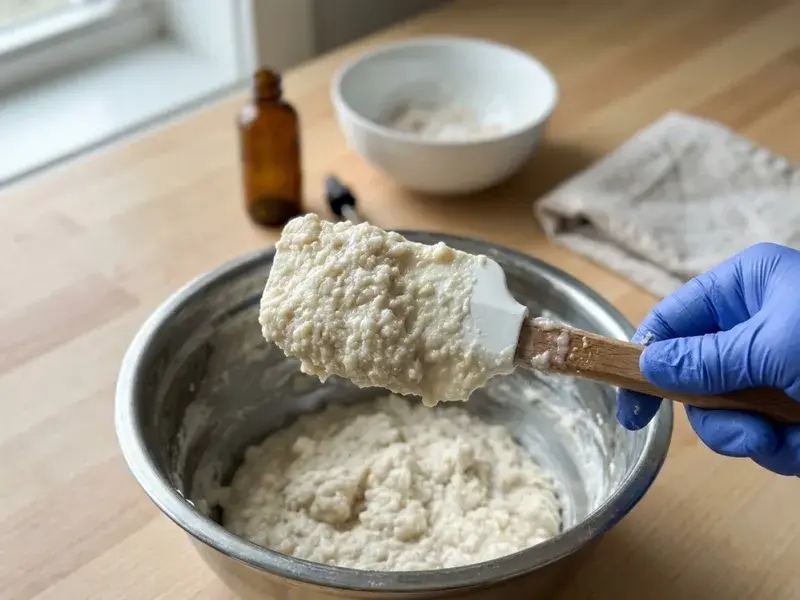
Soap seized because something sped saponification up so fast the batter set in the pot. Usually a fragrance oil. Glop it into the mold now, or cook it as hot process.
Is it safe to use?
Usually yes once cured, because the lye still reacts. But seized soap can trap pockets of unmixed lye, so check cut bars before using.
White clumps or wet pockets in cut bars? Lye pockets
Causes, ranked by likelihood
- Most likely
A fragrance oil accelerated
Floral and spice fragrances are common culprits. Supplier notes often warn about acceleration.
- Common
Ingredients were too hot
Heat speeds saponification. Lye and oils above about 120°F (49°C) trace much faster.
- Sometimes
Too much stick blending
Recipes high in hard oils thicken fast. Blending past trace can tip them into a seize.
Fix this batch
Get it in the mold, fast
- Stop blending. Switch to a spatula.
- Press the batter into the mold and bang it on the counter to remove air.
- If it won’t move, cook it on low heat as hot process until it looks like Vaseline, then mold it.
Prevent it next time
Test and slow down
- Check supplier notes for acceleration, or test new fragrances in a small batch.
- Add fragrance to the oils before the lye, and hand stir after adding it.
- Soap at 90–110°F (32–43°C).
The science behind it
FAQ
Can I still use seized soap?
Usually, after a full cure. Cut a bar and look for pockets of liquid or white crystals; if you find them, don't use it. Rebatching can fix it.
Can I stop a seize once it starts?
Not really. Once the batter sets, the goal is getting it into the mold or cooking it. Stop blending as soon as you feel it thicken suddenly.
Is seizing the same as ricing?
No. Ricing is small rice-like lumps forming in otherwise fluid batter; seizing is the whole batter setting.
Comments
No comments yet. Made this recipe? Be the first to say how it went.