Coconut Milk Soap Recipe (Palm-Free Cold Process)
A palm-free bar made with full-fat coconut milk frozen into cubes, for a silky, bubbly lather and a pale cream color.
This page has affiliate links. We earn a small commission at no cost to you. Disclosure
Formula not yet verified. These numbers haven't been re-run by a second maker. Don't make this batch until this notice is gone.
- Yield
- 10 bars
- Method
- Cold process
- Difficulty
- Beginner
- Cure
- 6 weeks
- Superfat
- 5%
- Lye conc.
- 33%
On this page
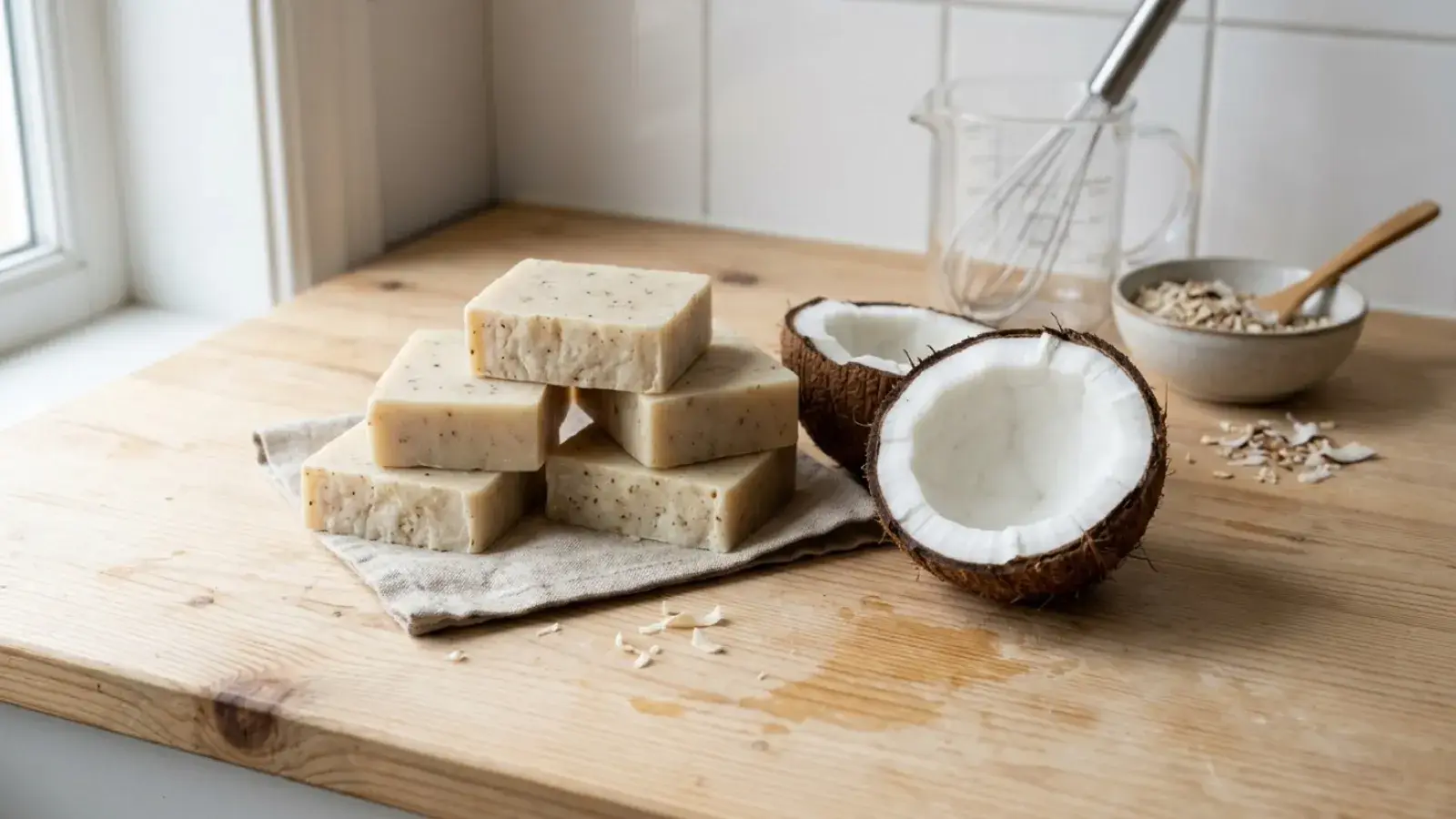
This coconut milk soap recipe swaps water for full-fat canned coconut milk, frozen into cubes, and pairs it with a palm-free blend of olive, coconut, high-oleic sunflower and two butters. The result is a pale cream bar with a dense, silky lather and no dairy anywhere in it.
Two things make coconut milk different from goat or cow milk. It carries its own fat, which quietly adds to the superfat, and the can separates, so it has to be blended smooth before freezing or the cubes won’t melt evenly.
Choosing the right coconut milk
Look for full-fat canned coconut milk with as few ingredients as possible: coconut and water, perhaps a little guar gum. Guar is harmless in soap. Skip coconut cream, which is fat-heavy enough to soften the bar noticeably, and anything sweetened, which browns easily.
Because full-fat coconut milk is mostly water with some fat and a little sugar, it behaves like a gentler version of dairy milk under lye. The fat partly saponifies in the lye solution, which is why the liquid can look curdled. The rest stays as free oil in the bar alongside the 5% superfat. In practice that makes the bar feel slightly richer and cure a little slower, so give it the full 6 weeks before judging it.
Why this recipe works
- Olive + high-oleic sunflower, 50%. The conditioning half of the bar. High-oleic sunflower is stable and traces about as slowly as olive, so you have time to work.
- Coconut oil, 25%. Fluffy bubbles and cleansing. The coconut milk adds a little more coconut fat on top, so the oil itself stays at a moderate 25%.
- Mango + cocoa butter, 20%. Hardness without palm. Cocoa butter is kept at 10% so the bar stays firm without turning brittle.
- Coconut milk as the liquid. Brings a creamy feel and a dense lather. Its fat isn’t in the lye calculation, so the bar ends up a touch richer than the stated 5% superfat.
Ingredients
| Oil | % | Grams | Ounces |
|---|---|---|---|
| Olive oil | 35% | 350 g | 12.35 oz |
| Coconut oil (76°) | 25% | 250 g | 8.82 oz |
| Sunflower oil (high oleic) | 15% | 150 g | 5.29 oz |
| Mango butter | 10% | 100 g | 3.53 oz |
| Cocoa butter | 10% | 100 g | 3.53 oz |
| Castor oil | 5% | 50.0 g | 1.76 oz |
| Lye solution | |||
| Sodium hydroxide (NaOH) 5% superfat | 140 g | 4.93 oz | |
| Full-fat coconut milk, frozen Canned coconut milk, blended smooth and frozen in cubes. Weigh it frozen. | 284 g | 10.00 oz | |
| Additives | |||
| Lemongrass essential oil 2% of oil weight. Can speed trace slightly; add at light trace. | 2% | 20.0 g | 0.71 oz |
Equipment
Instructions
Step 1: Blend and freeze the coconut milk
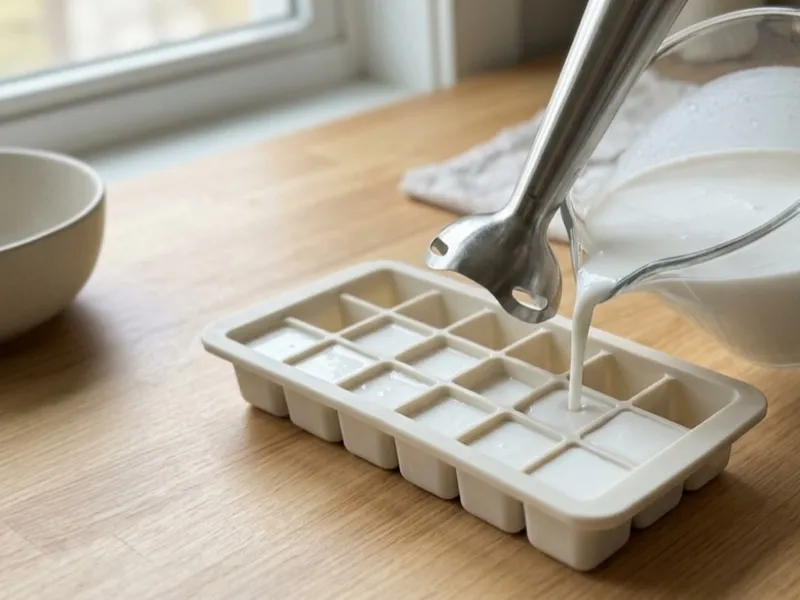
Canned coconut milk separates into a thick cream layer and thin water. Blend the whole can for 20 seconds until smooth, then pour it into ice cube trays and freeze overnight. Fully frozen cubes are what keep the lye solution cool.
Step 2: Weigh the oils and let them cool
Put on goggles and gloves. Melt the coconut oil, mango butter and cocoa butter, then add the olive, sunflower and castor oils. Let the blend cool to 90–100°F (32–38°C).
Step 3: Add the lye to the frozen cubes, slowly
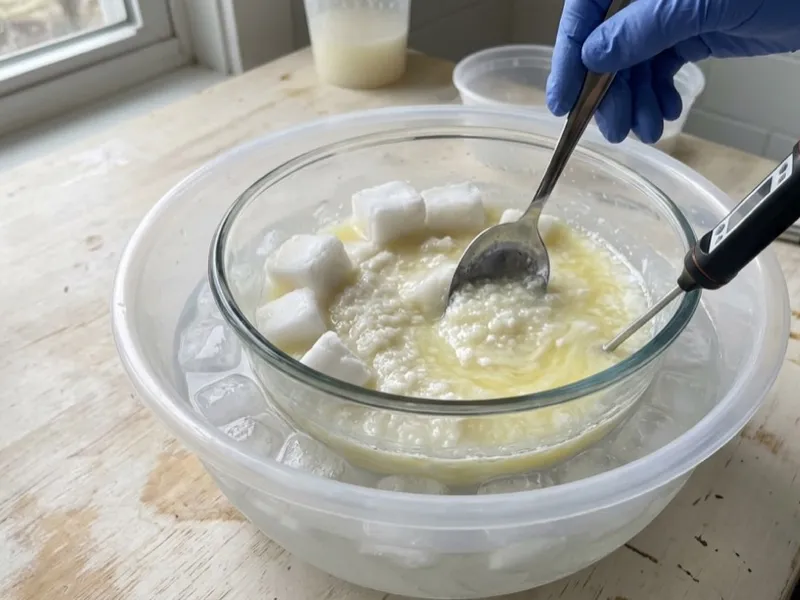
Weigh the frozen cubes into a heat-safe container set in a bowl of ice water. Sprinkle the lye over the cubes a spoonful at a time, stirring between additions and waiting for the cubes to soften before adding more. Aim to keep the solution under 85°F (29°C). It will turn a pale yellow and may look grainy or curdled where the coconut fat begins to react; that is normal.
Step 4: Strain into the oils and blend
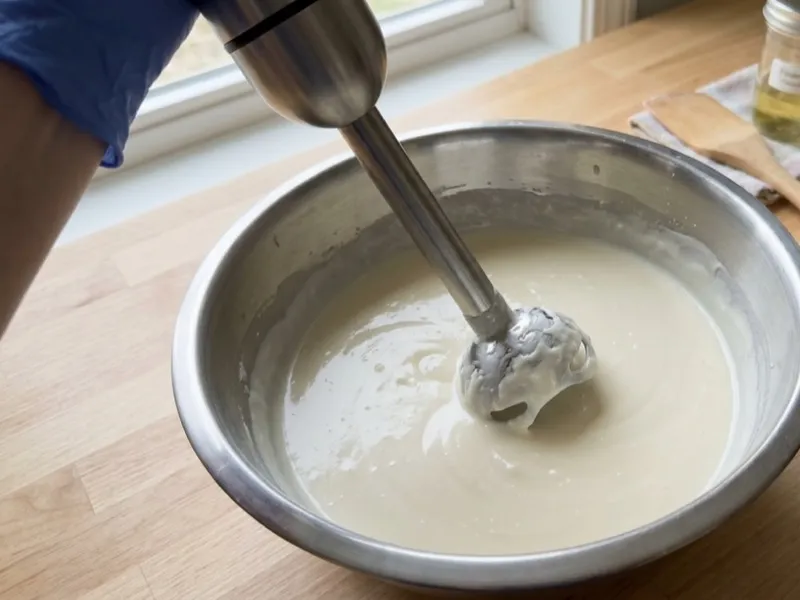
When the cubes have melted and the lye is fully dissolved, pour the solution into the oils through a fine strainer to catch any clumps. Stick blend in bursts to light trace, about 1–3 minutes. Add the lemongrass and blend a few more seconds.
Step 5: Pour and decide on gel
Pour into the mold. For a pale, even cream color, put the mold in the fridge for 24 hours. If you don't mind a slightly deeper color and want a faster firm-up, you can leave it at cool room temperature uncovered, checking for cracks or a hot spot after the first hour.
Step 6: Unmold and cure
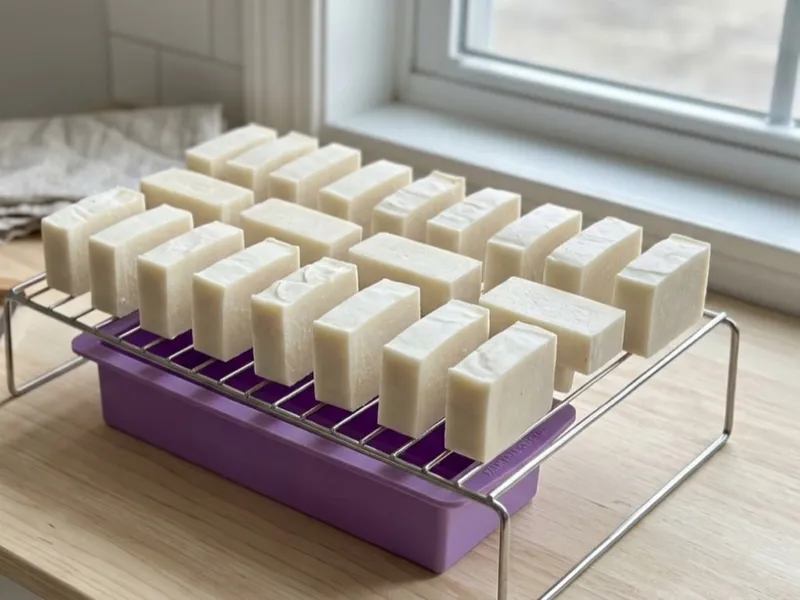
Unmold after 48 hours. Coconut milk soap releases cleanly but stays slightly soft at the edges for a day or two. Cut into bars and cure on a rack for 6 weeks, turning them once a week.
Variations
Coconut milk powder
Whisk 15–20 g of coconut milk powder per 1000 g oils into cool distilled water at the full liquid weight, then freeze and use as above.
Lime and lemongrass
Use lemongrass at 1.5% plus 1.5% 10x sweet orange for a brighter citrus top. Keep the total at or under 3% for this formula.
Toasted coconut topping
Sprinkle a thin layer of unsweetened desiccated coconut on top after pouring. It browns over time and softens if wet, so keep it light.
If something goes wrong
- Lye solution looks curdled
- Coconut fat starts to saponify on contact with the lye and forms soft clumps. Strain the solution into the oils; the batter will be smooth once blended.
- Bar is softer than expected
- The extra fat from the milk raises the effective superfat. Give the bars two extra weeks of cure, or next time use light coconut milk. Soft soap that won’t harden
- Tan streaks or a darker center
- Part of the loaf got warm enough to gel and brown slightly. It doesn’t affect use. Chill the mold straight after pouring next time. Gel phase explained
FAQ
Can I use carton coconut milk instead of canned?
You can, but drinking milk in cartons is mostly water with added stabilizers and sometimes sweeteners. Canned full-fat milk gives a creamier bar. Avoid sweetened versions; extra sugar means more heat and browning.
Does the fat in coconut milk change the lye amount?
Not in this recipe. The lye is calculated for the oils only, and the milk’s fat simply adds a little extra superfat. That’s why the oil formula keeps the superfat at 5% rather than raising it.
Is coconut milk soap vegan?
This formula is, since there’s no animal fat, beeswax or dairy in it. Check your fragrance and any colorant if you need to label it vegan.
Do I have to freeze coconut milk?
Freezing is the simplest way to control heat. Coconut milk usually has less sugar than dairy milk, but it still scorches if the lye goes into warm liquid. Very well-chilled milk works if you add the lye extra slowly in an ice bath.
Comments
No comments yet. Made this recipe? Be the first to say how it went.