Citrus Soap Recipe (Orange Essential Oil That Lasts)
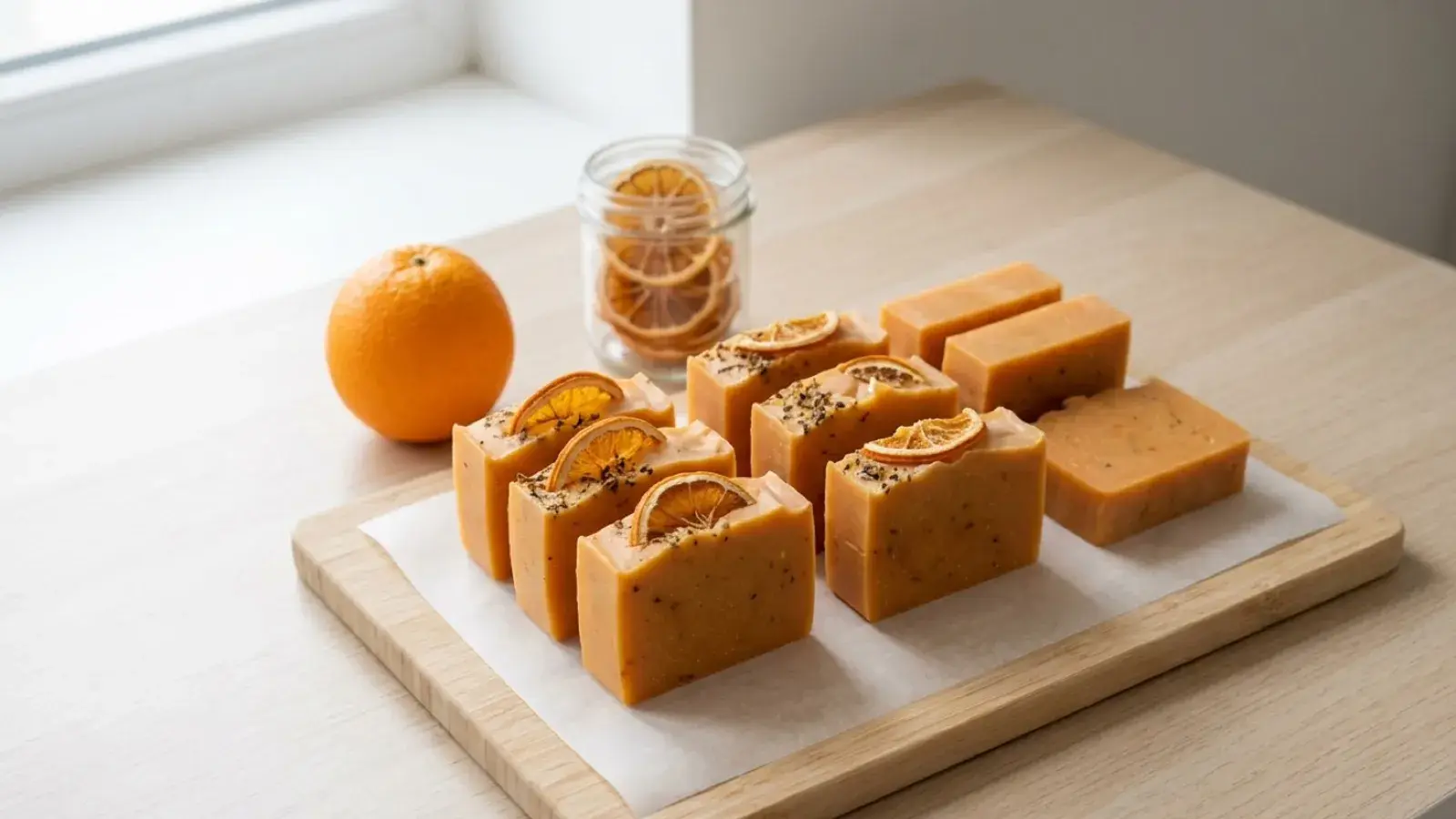
A sunny orange bar that keeps its scent, made with 10-fold sweet orange anchored by patchouli.
This page has affiliate links. We earn a small commission at no cost to you. Disclosure
Formula not yet verified. These numbers haven't been re-run by a second maker. Don't make this batch until this notice is gone.
- Yield
- 10 bars
- Method
- Cold process
- Difficulty
- Beginner
- Cure
- 4 weeks
- Superfat
- 5%
- Lye conc.
- 33%
On this page
This citrus soap recipe uses 10-fold sweet orange at 4% and patchouli at 1%, poured into a bright orange, palm-free bar. That’s 40 g and 10 g per 1000 g of oils. The combination matters. Plain single-fold orange, the cheap kind sold for cleaning, can be almost gone from a cold process bar within weeks.
Most “my orange soap doesn’t smell” problems come from the oil, not the recipe. Orange is the most-requested and fastest-fading essential oil in soap making. Below is how to get around that.
Folded oil and an anchor
Single-fold orange is the oil as it comes off the peel. It’s mostly limonene, which is light and leaves quickly, especially from a warm loaf. 5-fold and 10-fold orange have been concentrated, so the same weight smells stronger and holds on longer. They cost a bit more per bottle but less per bar that still smells of orange.
Even folded orange needs something heavier to hold onto. Patchouli is the classic anchor, and at 1% it reads as depth rather than as patchouli. If you dislike patchouli, use litsea cubeba, which is lemony and bright. It isn’t in our usage chart yet, so follow your supplier’s IFRA guidance and keep it to a small share of the blend. Lemongrass and cedarwood also work.
Two process habits help too. Add the scent at light trace instead of into hot oils, and skip the towel over the mold. A warm, fully insulated loaf drives off top notes. If you’d rather not fight evaporation at all, a citrus fragrance oil at the supplier’s rate is a fair choice; see fragrance oils vs essential oils.
Why this recipe works
- Olive + high-oleic sunflower, 55%. Mild, conditioning and slow to trace. High-oleic sunflower is the stable kind; regular sunflower is mostly linoleic and more prone to orange spots.
- Coconut, 25%. A lively, bubbly lather that matches a bright scent.
- Shea, 15%. A firmer bar that lasts in the shower.
- 10-fold orange + patchouli. Folded orange is concentrated so more of it survives saponification, and patchouli holds it in the bar. Together 5%, within our chart’s limits for both.
Ingredients
| Oil | % | Grams | Ounces |
|---|---|---|---|
| Olive oil | 35% | 350 g | 12.35 oz |
| Coconut oil (76°) | 25% | 250 g | 8.82 oz |
| Sunflower oil (high oleic) | 20% | 200 g | 7.05 oz |
| Shea butter | 15% | 150 g | 5.29 oz |
| Castor oil | 5% | 50.0 g | 1.76 oz |
| Lye solution | |||
| Sodium hydroxide (NaOH) 5% superfat | 138 g | 4.88 oz | |
| Distilled water 33% lye concentration | 281 g | 9.91 oz | |
| Additives | |||
| Sweet orange essential oil (10-fold) 4% of oil weight. 5-fold also works at the same rate. | 4% | 40.0 g | 1.41 oz |
| Patchouli essential oil 1% of oil weight. The anchor that slows the orange fading. | 1% | 10.0 g | 0.35 oz |
| Orange mica (cold-process stable) Optional. Disperse in 1 tbsp of the sunflower oil. | 0.3% | 3.0 g | 0.11 oz |
Equipment
Instructions
Step 1: Make the lye solution
In goggles and gloves, add the lye to the distilled water, never the reverse, and stir until clear. Let it cool to around 90–100°F (32–38°C).
Step 2: Prepare oils and scent
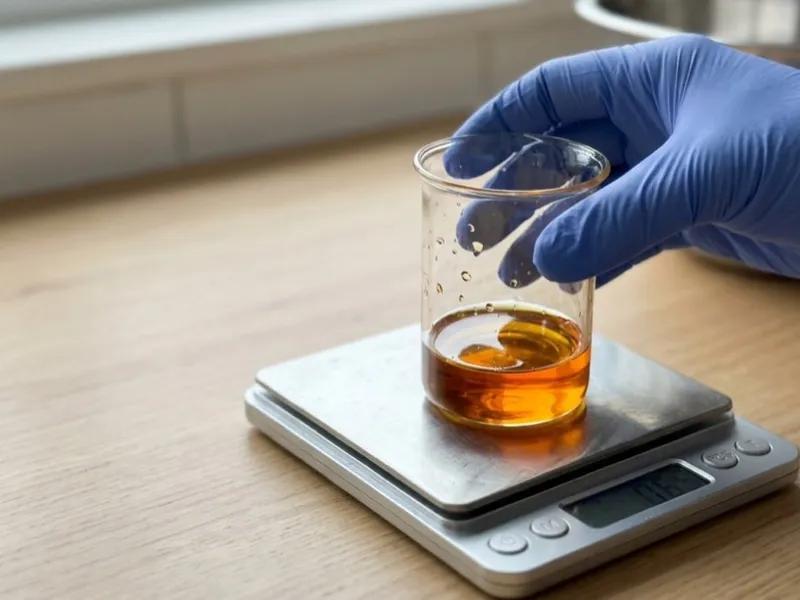
Melt the coconut oil and shea butter, add the olive, sunflower and castor oils, and cool to 90–100°F (32–38°C). Weigh the orange and patchouli together into a glass container and swirl to combine. Disperse the orange mica in a tablespoon of the sunflower oil, taken from the weighed oils.
Step 3: Blend to light trace
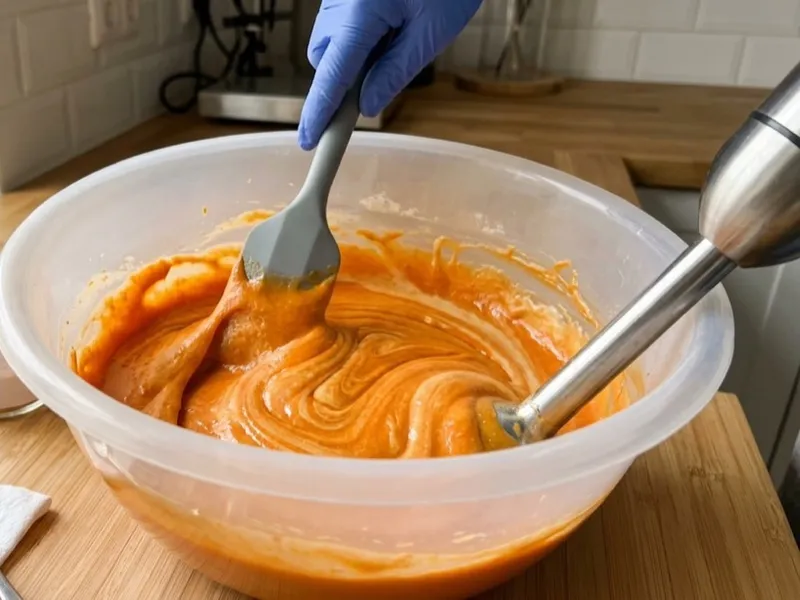
Pour the lye solution into the oils and stick blend in short bursts until the batter is just at light trace, about 1–3 minutes. Citrus oils can thin batter slightly, so don't panic if it loosens after you add them.
Step 4: Add scent and color
Stir in the essential oil blend and mica with a spatula, then pulse briefly until the color is even. A deep orange batter will lighten slightly as it sets.
Step 5: Pour and keep it cool-ish
Pour into the mold and cover with cardboard only. You don't need a towel; a cooler loaf holds more of the citrus top notes. Unmold after 24–48 hours.
Step 6: Cut and cure
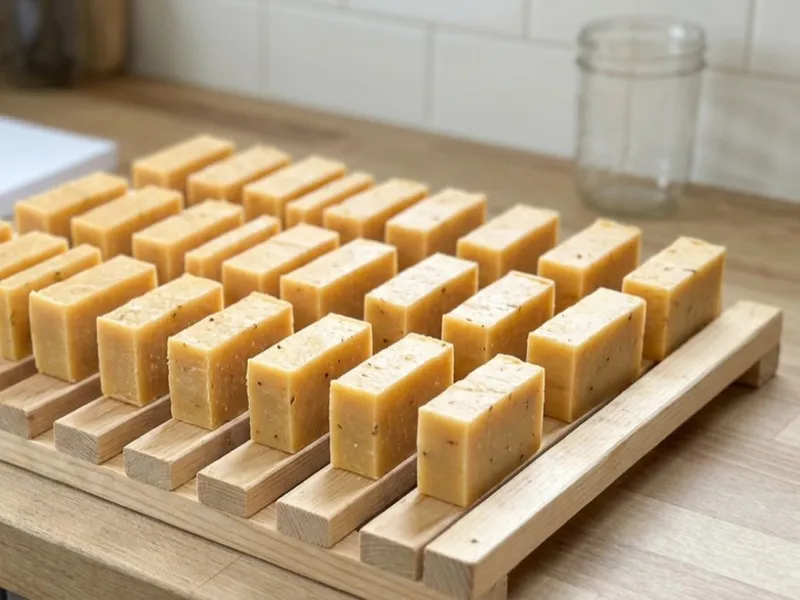
Cut into 1-inch (2.5 cm) bars and cure 4 weeks on a rack with airflow. Once cured, store bars in a closed box. Citrus is the first scent to fade on an open shelf.
Variations
Orange and litsea
Replace the patchouli with litsea cubeba for a lemony, brighter anchor. Litsea isn’t in our usage chart yet; follow your supplier’s IFRA rate and keep it low.
Orange and lemongrass
Add 10 g lemongrass per 1000 g oils and drop orange to 30 g. Lemongrass can accelerate trace, so stir it in by hand.
Fragrance oil
A citrus fragrance oil (grapefruit, lemon, yuzu) can replace the essential oils at the supplier’s recommended rate. Fragrance oils usually hold citrus notes longer than essential oils do.
If something goes wrong
- Smells of nothing after a month
- Single-fold orange was used, or it went into hot oils. Use 5- or 10-fold orange with an anchor, add it at light trace, and skip heavy insulation.
- Orange spots appearing months later
- That is rancidity (DOS), not scent oil. Use high-oleic sunflower, keep bars out of humid air, and use fresh oils. Shelf life and orange spots
- Color went pale
- Some orange micas and natural colorants fade in lye. Use one rated for cold process, or annatto-infused oil for a softer natural orange. Fading and morphing color
FAQ
Why does orange essential oil fade in soap?
Sweet orange is mostly light, volatile compounds that evaporate quickly, and single-fold oil has very little else to hold it. In a warm, fresh loaf, a lot of it leaves before the soap sets.
What is 10-fold orange oil?
Orange oil that has been concentrated (folded) by removing some of its most volatile parts. It smells stronger and lasts longer in soap than single-fold at the same weight.
How much orange essential oil do I use in soap?
This recipe uses 4% (40 g per 1000 g oils) of 10-fold orange plus 1% patchouli. Our usage chart lists 3–5% as typical for 10-fold orange, with 5% as the maximum.
Do citrus essential oils cause photosensitivity in soap?
Some cold-pressed citrus oils, notably bergamot and lime, are restricted in leave-on products for this reason. Sweet orange is generally not in that group and soap is rinsed off, but check the supplier's safety data sheet and IFRA information for any citrus oil you use.
Comments
No comments yet. Made this recipe? Be the first to say how it went.