Eucalyptus Soap Recipe (with Cedarwood and Green Clay)
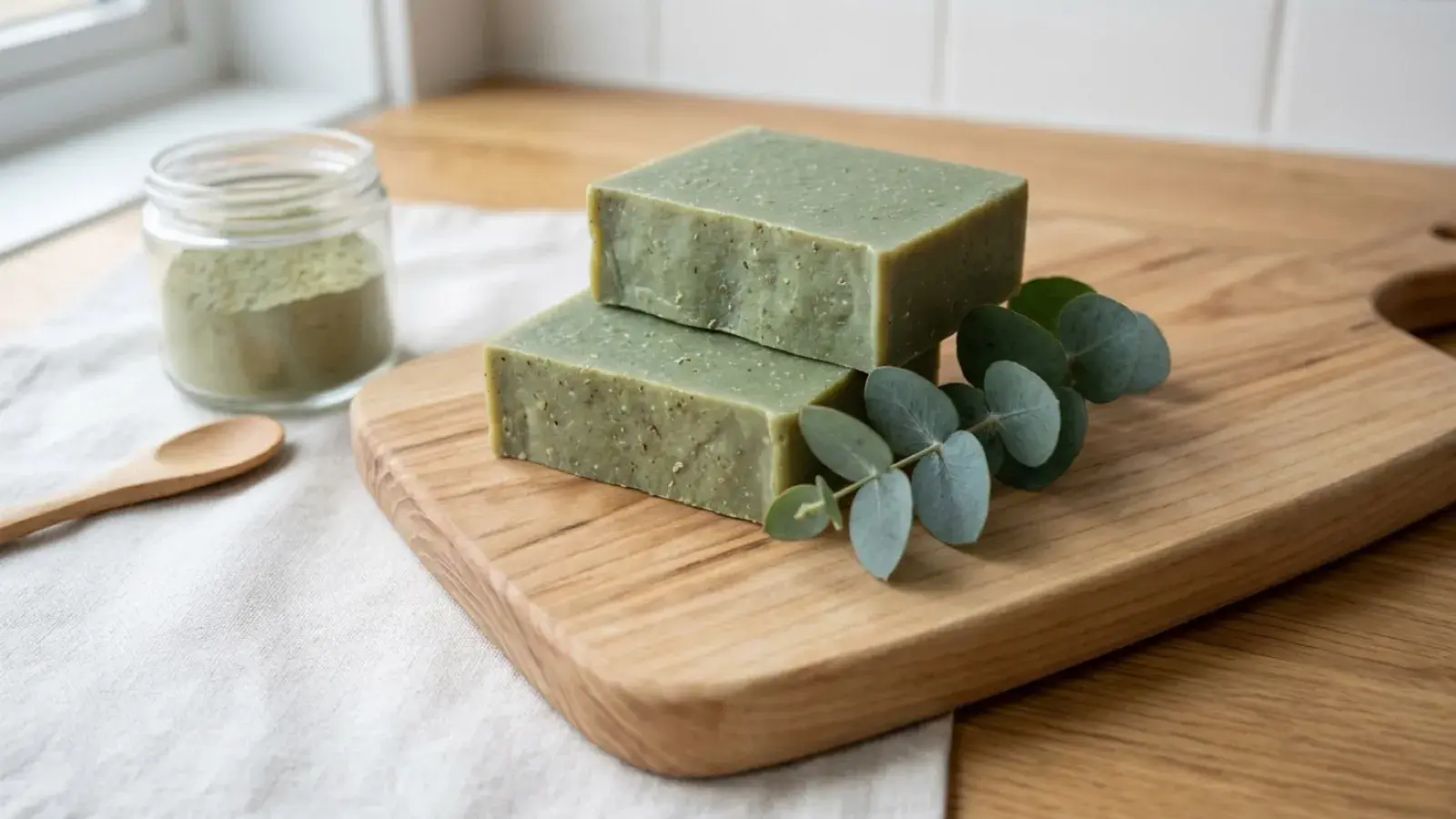
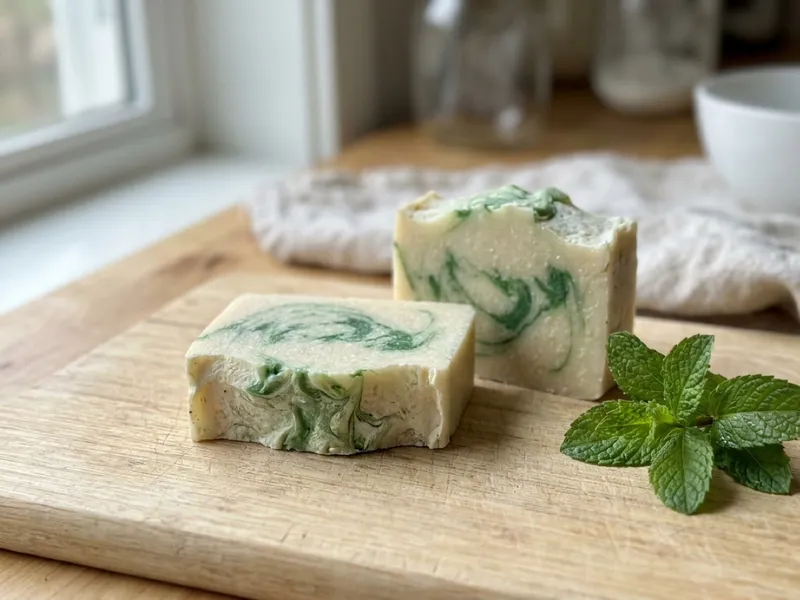
A fresh, clean-scented lard bar with eucalyptus and cedarwood essential oils and a soft green from French clay.
This page has affiliate links. We earn a small commission at no cost to you. Disclosure
Formula not yet verified. These numbers haven't been re-run by a second maker. Don't make this batch until this notice is gone.
- Yield
- 10 bars
- Method
- Cold process
- Difficulty
- Beginner
- Cure
- 4 weeks
- Superfat
- 5%
- Lye conc.
- 33%
On this page
This eucalyptus soap recipe pairs 3% eucalyptus essential oil with 1.5% cedarwood in a hard, creamy lard bar tinted sage green with French clay. That’s 30 g and 15 g per 1000 g of oils. Eucalyptus is bright, open and very recognizable. It’s also a top note that fades quickly, so on its own it’s hard to keep in a bar. The cedarwood is here to fix that.
Why the cedarwood is there
Essential oils evaporate at different rates. Eucalyptus is quick. Cedarwood (Atlas) is slow, woody and mild enough that at 1.5% you mostly notice it as depth rather than as “cedar.” Put together, the bar opens with eucalyptus. As that softens over the cure, the cedarwood keeps the bar from smelling of plain soap. Both stay inside the limits in our essential oil usage chart.
Which eucalyptus you buy changes the bar too. Globulus is the common one, sharp and strong. Radiata is softer and a little sweet. If your household finds globulus too much, radiata at the same rate is a gentler version of the same idea.
The clay
French green clay gives the green color without a pigment. Hydrate it in a little of the recipe water first and blend it into the oils before the lye. Dry clay added at trace clumps, speckles and thickens the batter. Read more about natural greens and how they age in natural soap colorants, or see our clay soap recipe for a bar built around clay.
Why this recipe works
- Lard, 35%. A hard, white, creamy-lathering bar at low cost. White is a good canvas for a soft clay green.
- Olive, 30%. Conditioning and a little extra working time.
- Coconut, 25%. Big, quick lather.
- Eucalyptus 3% + cedarwood 1.5%. Eucalyptus gives the bright, open scent; cedarwood is a slower base note that keeps the bar smelling of something after the eucalyptus fades.
Ingredients
| Oil | % | Grams | Ounces |
|---|---|---|---|
| Lard | 35% | 350 g | 12.35 oz |
| Olive oil | 30% | 300 g | 10.58 oz |
| Coconut oil (76°) | 25% | 250 g | 8.82 oz |
| Shea butter | 5% | 50.0 g | 1.76 oz |
| Castor oil | 5% | 50.0 g | 1.76 oz |
| Lye solution | |||
| Sodium hydroxide (NaOH) 5% superfat | 140 g | 4.94 oz | |
| Distilled water Reserve 20 g to mix the clay into a slurry. | 284 g | 10.03 oz | |
| Additives | |||
| Eucalyptus essential oil 3% of oil weight. Our chart’s maximum is 4%. | 3% | 30.0 g | 1.06 oz |
| Cedarwood (Atlas) essential oil 1.5% of oil weight. Anchors the eucalyptus. | 1.5% | 15.0 g | 0.53 oz |
| French green clay Mixed into a slurry with 20 g of the recipe water. | 1% | 10.0 g | 0.35 oz |
Equipment
Instructions
Step 1: Make the lye solution
Set aside 20 g of the recipe water for the clay. In goggles and gloves, add the lye to the remaining water, never the reverse, and stir until clear. Cool to 90–100°F (32–38°C).
Step 2: Make the clay slurry
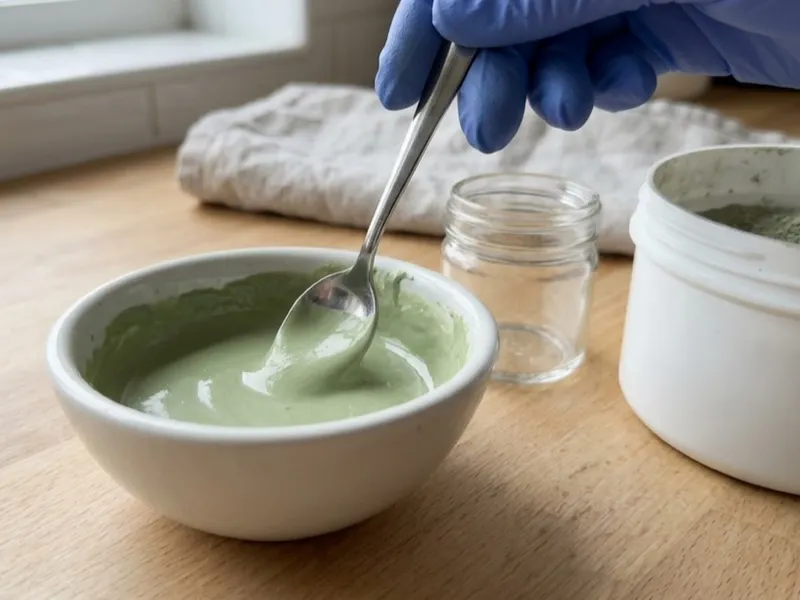
Stir the French green clay into the reserved 20 g of water until it's smooth, like thin yogurt, with no dry lumps. Let it sit 10 minutes to hydrate. Clay absorbs liquid, so pre-wetting it stops it from pulling moisture out of the batter and thickening it.
Step 3: Melt and cool the fats
Melt the lard, coconut oil and shea butter, add the olive and castor oils, and cool to 90–100°F (32–38°C). Weigh the eucalyptus and cedarwood into a glass cup.
Step 4: Blend in the clay, then the lye
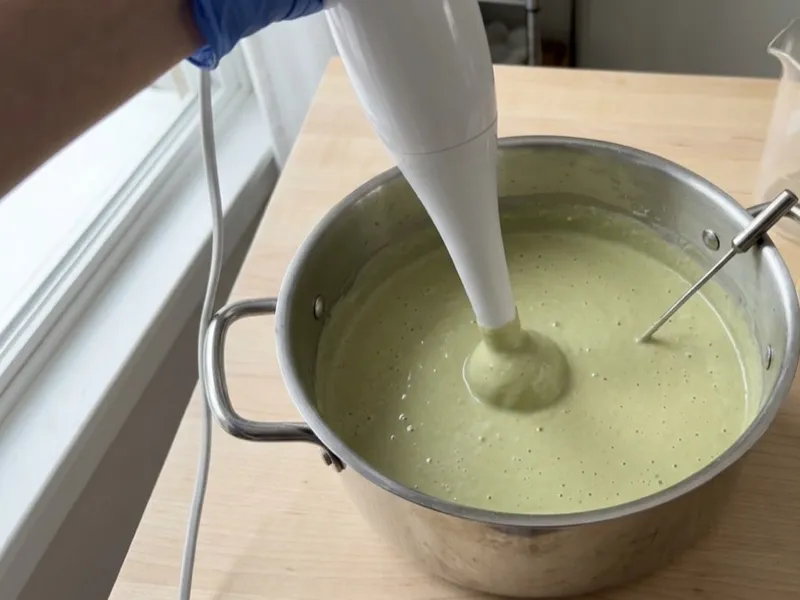
Stick blend the clay slurry into the oils first so it disperses evenly. Then pour in the lye solution and blend in short bursts to light trace, about 1–3 minutes. Lard traces a little faster than all-vegetable recipes.
Step 5: Add the essential oils and pour
Stir in the essential oils by hand, pulse once or twice, and pour into the mold. Tap the mold to release air. Texture the top with a spoon if you like.
Step 6: Insulate lightly and unmold
Cover with cardboard. Clay soaps can run warm; if the top starts to look glossy and dark in the center, uncover the loaf. Unmold at 24–48 hours.
Step 7: Cut and cure
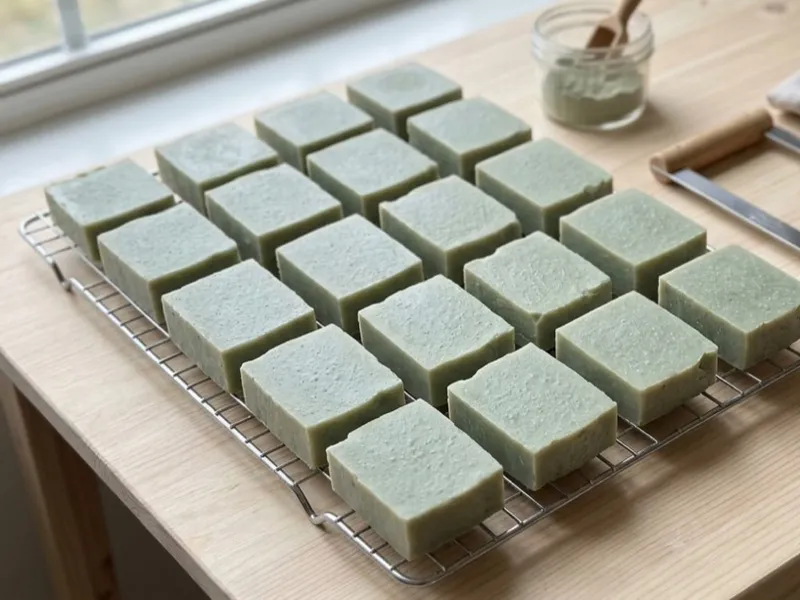
Cut into 1-inch (2.5 cm) bars and cure for 4 weeks on a rack with airflow. The clay green settles to a soft sage as the bars dry.
Variations
Eucalyptus and peppermint
Replace the cedarwood with 10 g peppermint per 1000 g oils for a sharper, cooler scent. The mint fades faster, so store bars covered.
Eucalyptus and lemon
25 g eucalyptus, 10 g 10-fold sweet orange or lemon, and 10 g cedarwood per 1000 g oils for a brighter, citrus-edged bar.
Palm-free vegan
Replace the lard with 20% shea and 15% high-oleic sunflower. Re-run the lye in the calculator before you make it.
If something goes wrong
- The scent faded fast
- Eucalyptus is a volatile top note. Keep the cedarwood anchor, soap at moderate temperatures, and avoid heavy insulation.
- Clay specks or streaks
- The clay was added dry or not hydrated. Pre-mix it with water and blend it into the oils before the lye.
- Crack or dark center
- The loaf overheated. Clay holds heat. Insulate less, or pour at the low end of the temperature range. Overheating soap
FAQ
How much eucalyptus essential oil should I use in soap?
This recipe uses 3% of oil weight (30 g per 1000 g of oils). Our usage chart lists 2–4% as typical and 4% as the maximum for eucalyptus.
Which eucalyptus oil is best for soap?
Eucalyptus globulus is the most common and has the classic strong, medicinal-fresh scent. Eucalyptus radiata is softer and slightly sweeter. Both work at the same rate; choose by smell.
Why add clay to eucalyptus soap?
For color and feel. French green clay gives a natural sage tone and a slightly silky, slippery lather. It doesn't change the scent.
Can I put eucalyptus leaves in soap?
Dried leaves turn brown and can feel scratchy. Use a sprig for photos or packaging instead.
Comments
No comments yet. Made this recipe? Be the first to say how it went.