Fall Spice Soap Recipe (Layered, Orange and Clove)
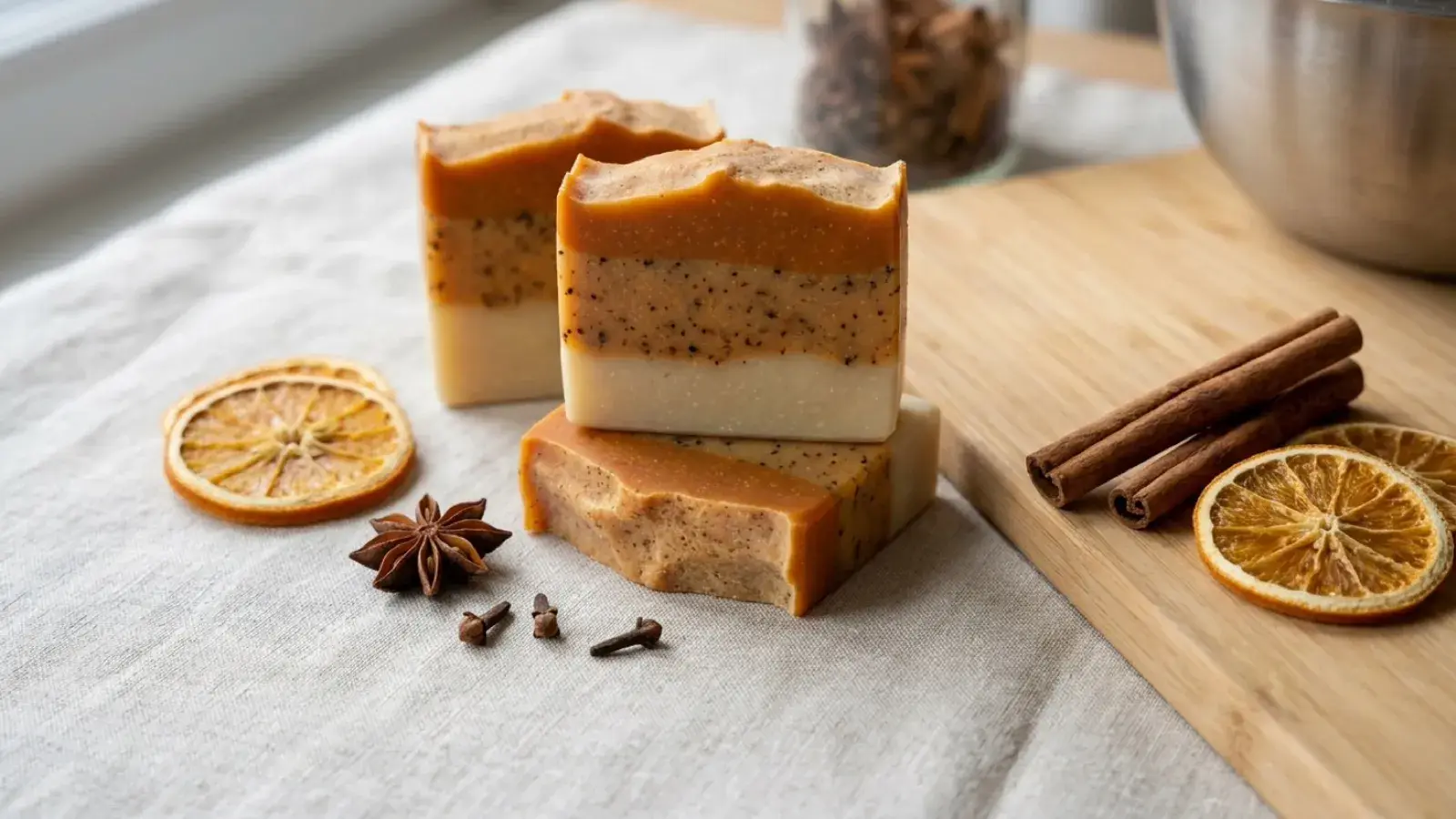
A layered brown, gold and orange tallow bar with a warm orange, clove and cedarwood blend, keeping the spice low so it doesn't seize.
This page has affiliate links. We earn a small commission at no cost to you. Disclosure
Formula not yet verified. These numbers haven't been re-run by a second maker. Don't make this batch until this notice is gone.
- Yield
- 10 bars
- Method
- Cold process
- Difficulty
- Intermediate
- Cure
- 4 weeks
- Superfat
- 5%
- Lye conc.
- 33%
On this page
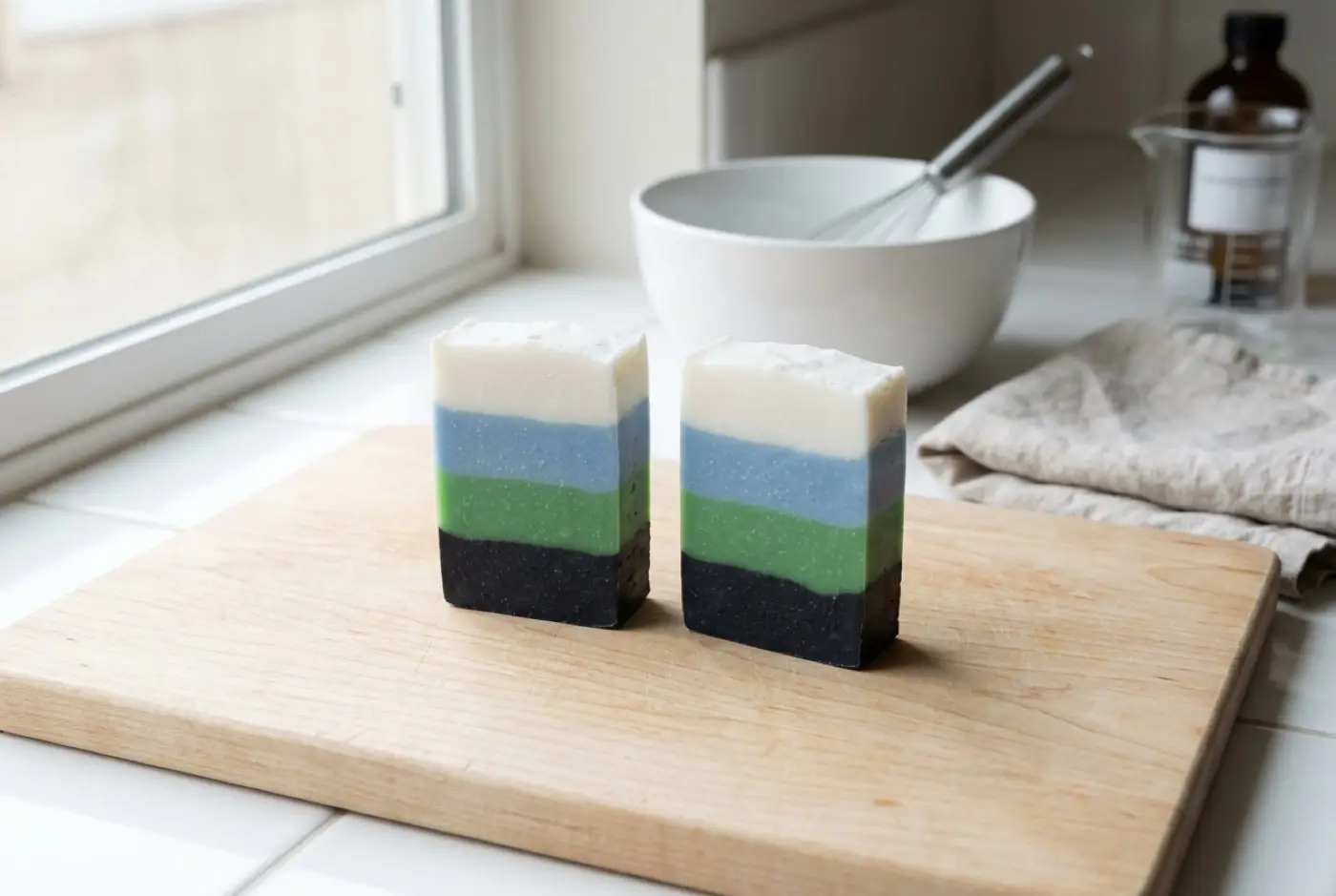
This fall soap recipe makes a layered tallow bar, brown on the bottom and orange on top with a thin gold line between. It’s scented with 10-fold orange, cedarwood, patchouli and a small amount of clove. The scent reads as warm and spiced. Clove stays at 0.5%, half the maximum in our essential oil usage chart, because spice oils are the quickest way to seize a pot.
Why layers, not a swirl
Spice oils speed up trace. A swirl needs thin, fluid batter that stays that way for several minutes, which is exactly what clove takes away. Layers work the other way round. They need a batter thick enough to hold its shape, so the extra speed helps. Pour the first layer, wait until it firms, dust the gold line, then pour the second. Our layered soap guide covers spatula pours, wait times and why mica lines sometimes split.
Keep cinnamon out. Cinnamon bark oil isn’t recommended for soap. It accelerates hard and is a well-known skin sensitizer. Clove bud at a low rate gives most of the warmth people want from “fall spice.” If you love a pumpkin spice or cinnamon scent, use a fragrance oil made for cold process at the supplier’s rate. Expect it to brown the bar if it contains vanillin.
Plan the colors around the scent. Clove can darken soap slightly, and many fall fragrance oils turn bars brown. Brown oxide, a warm orange mica and a gold line still look right if the bar darkens a shade. For more seasonal bars, see our pumpkin soap and Christmas soap.
Why this recipe works
- Tallow, 30%. A hard, long-lasting bar with a creamy lather. It traces at a moderate pace, which suits layers.
- Olive, 35%. Conditioning and a little extra working time.
- Coconut, 25%. Lather and firmness.
- Clove at 0.5%. Enough to read as spice in the blend, half our chart’s maximum, so it warms the scent without seizing the pot.
Ingredients
| Oil | % | Grams | Ounces |
|---|---|---|---|
| Olive oil | 35% | 350 g | 12.35 oz |
| Tallow (beef) | 30% | 300 g | 10.58 oz |
| Coconut oil (76°) | 25% | 250 g | 8.82 oz |
| Shea butter | 5% | 50.0 g | 1.76 oz |
| Castor oil | 5% | 50.0 g | 1.76 oz |
| Lye solution | |||
| Sodium hydroxide (NaOH) 5% superfat | 141 g | 4.98 oz | |
| Distilled water 33% lye concentration | 287 g | 10.12 oz | |
| Additives | |||
| Sweet orange essential oil (10-fold) 2.5% of oil weight. | 2.5% | 25.0 g | 0.88 oz |
| Cedarwood (Atlas) essential oil 1% of oil weight. | 1% | 10.0 g | 0.35 oz |
| Patchouli essential oil 0.5% of oil weight. Anchors the orange. | 0.5% | 5.0 g | 0.18 oz |
| Clove bud essential oil 0.5% of oil weight. Our chart’s maximum is 1%; it accelerates trace and darkens soap. | 0.5% | 5.0 g | 0.18 oz |
| Brown oxide For the bottom layer. Disperse in 1 tsp oil. | 0.2% | 2.0 g | 0.07 oz |
| Orange mica (cold-process stable) For the top layer. Disperse in 1 tsp oil. | 0.3% | 3.0 g | 0.11 oz |
| Gold mica Dusted between layers for a thin line. | 0.1% | 1.0 g | 0.04 oz |
Equipment
Instructions
Step 1: Prepare colors and scent
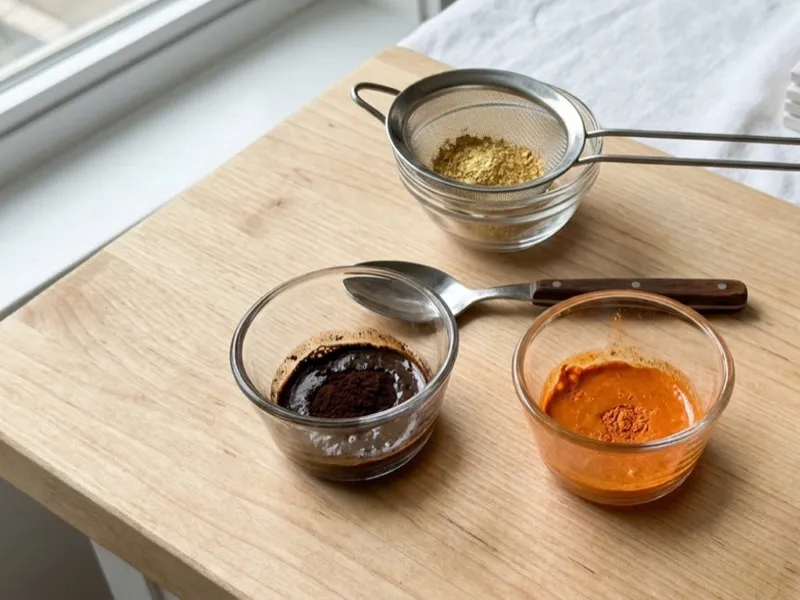
Disperse the brown oxide and the orange mica in a teaspoon of oil each, in separate cups. Put the gold mica in a small sieve or tea strainer. Weigh the four essential oils together into a glass cup and swirl.
Step 2: Make the lye solution
Wearing goggles and gloves, add the lye to the water, never the reverse, and stir until clear. Cool to 90–100°F (32–38°C). Melt the tallow, coconut and shea, add the liquid oils, and bring them to the same range.
Step 3: Blend to emulsion and add scent
Pour the lye into the oils and stick blend just until emulsified and smooth. Stir in the essential oil blend by hand. The clove will start thickening the batter within a minute or two; that's expected.
Step 4: Split and pour the brown layer
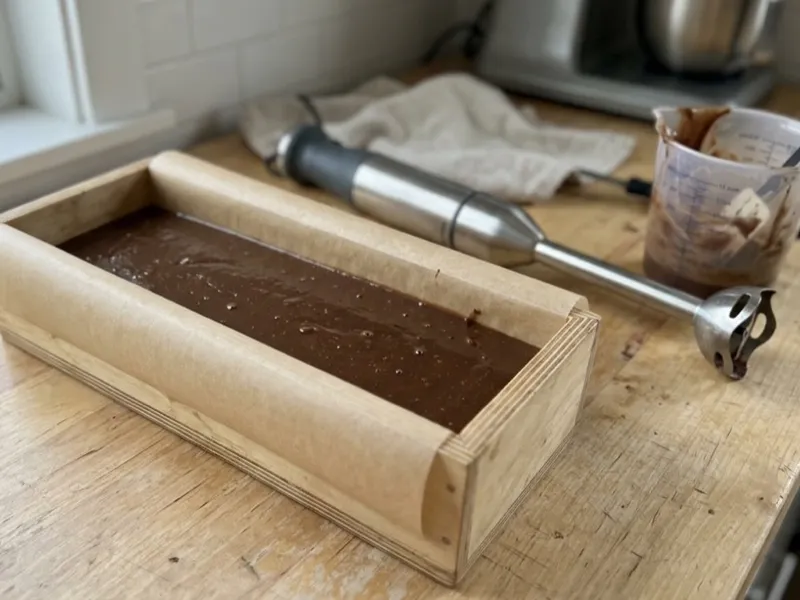
Pour half the batter into a jug and stir in the brown oxide. Pour it into the mold and tap to level. Let it firm to a medium trace that holds a spoonful dropped on top, usually 5–10 minutes.
Step 5: Add the gold line
Tap a light, even dusting of gold mica over the brown layer through the sieve. Too thick a line can make the bars split along it later.
Step 6: Pour the orange layer
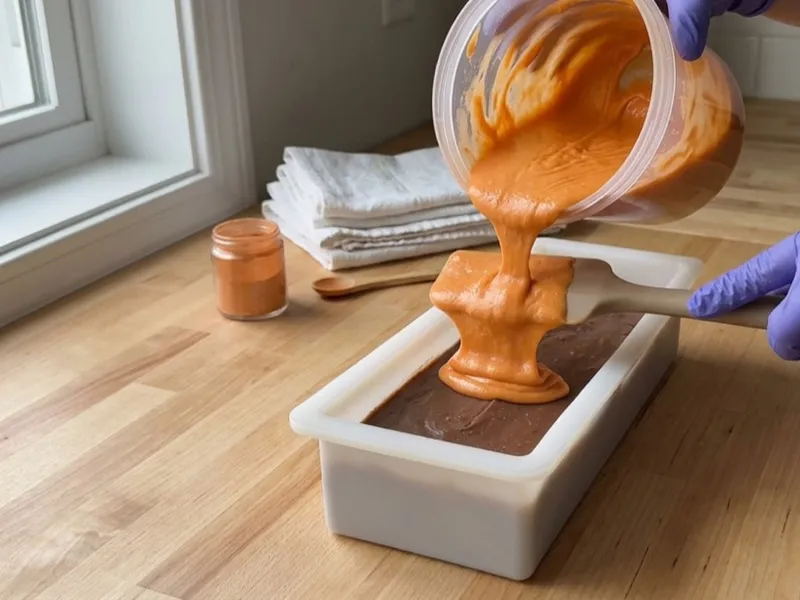
Stir the orange mica into the remaining batter. Pour it slowly over a spatula held just above the brown layer so it doesn't break through. Texture the top with the back of a spoon.
Step 7: Insulate, unmold, cut and cure
Cover with cardboard and a towel. Unmold after 24–48 hours, cut with the layers facing the side, and cure 4 weeks with airflow. The clove may darken the bar slightly over the first week.
Variations
Pumpkin spice fragrance
A pumpkin spice fragrance oil at the supplier’s recommended rate replaces the essential oils. Most contain vanillin, so expect the whole bar to turn brown, and choose brown and gold colors that work with that.
Palm-free
Replace the tallow with 20% shea and 10% cocoa butter. Re-run the lye numbers before making it.
Cocoa powder line
Use a dusting of cocoa powder between the layers instead of gold mica for a natural brown line.
If something goes wrong
- Batter thickened before the second layer
- Spice oils accelerate trace. Work faster, soap cooler, or move the clove to the top layer only so the first layer stays fluid. Soap seized
- Layers split apart when cut
- Too much mica in the line, or the first layer had set too far before the second was poured. Use a light dusting and pour within 10–15 minutes.
- Second layer broke through the first
- The bottom layer wasn’t firm enough. Wait until it holds a spoonful on top before pouring.
FAQ
Can I use cinnamon essential oil in soap?
Cinnamon bark oil is not recommended for soap; it's a strong skin sensitizer and accelerates trace badly. For a cinnamon impression, use a skin-safe fragrance oil designed for cold process, or let clove and orange carry the warmth.
How much clove oil is safe in soap?
Our usage chart gives 0.5–1% as typical and 1% as the maximum for clove bud. This recipe uses 0.5%. Use clove bud, not clove leaf or stem.
Why do spice oils make soap trace faster?
Compounds like eugenol in clove react with the batter and speed up saponification. That's why this recipe uses layers, which need a thicker batter, instead of a swirl, which needs a thin one.
Can I add real spices like ground cinnamon?
Ground cinnamon and clove can feel scratchy and may cause skin irritation for some people. A light dusting on top or in a line is safer than mixing them in.
Comments
No comments yet. Made this recipe? Be the first to say how it went.