Soap Color Fading or Morphing: Why It Happens and How to Prevent It
Soap colors fade or morph because the colorant isn't stable in high-pH soap, a fragrance with vanillin is turning it brown, or light is breaking down a natural colorant. It's cosmetic.
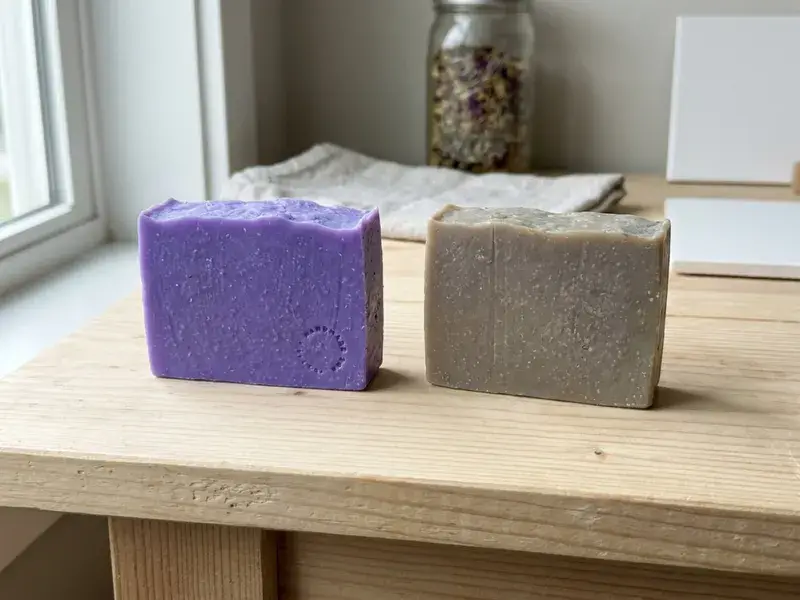
Is it safe to use?
Color changes are cosmetic and don't affect how the soap washes. The only concern is labeling: if you sell, describe the color the customer will actually get.
Orange spots, plus an off smell? Soap smells bad
On this page
Causes, ranked by likelihood
- Most likely
The colorant isn't stable in soap
Fresh cold process soap is strongly alkaline. Some micas, especially those colored with dyes, and many plant colorants shift or fade at that pH. Purples and reds are the usual casualties.
- Common
Vanillin in the fragrance
Fragrances containing vanillin, including many vanilla, chocolate and bakery scents, turn soap tan to dark brown over days or weeks, whatever the colorant.
- Sometimes
Light and time
Natural colorants such as spirulina, nettle and many botanicals fade with exposure to light. Gel phase also changes how intense a color looks.
Fix this batch
Work with what you have
- Accept the color and rename the bar if needed. The soap is fine.
- Store the bars in a dark, cool place to slow further fading of natural colorants.
- For browning from vanillin, there is no reversing it. Note the fragrance in your batch log so you can plan for it next time.
- If the color matters, rebatch with a lye-stable colorant while the soap is still fresh.
Prevent it next time
Choose and test colorants
- Buy colorants labeled stable for cold process. Iron oxides, ultramarines and titanium dioxide hold up well.
- Test any new colorant in a small batch and watch it for 4–6 weeks before using it in a full batch.
- Check fragrance listings for vanillin content and discoloration notes, and use a vanilla color stabilizer if you want to keep soap pale.
- Cure and store bars out of direct light, especially those colored with botanicals.
Fading, morphing and browning are three different problems
Makers use “fading” for all three, but the fixes don’t overlap.
- Morphing happens fast, often in the pot or in the first day. The colorant reacted with the lye. The fix is a different colorant.
- Browning creeps in over one to three weeks and affects the whole bar, regardless of color. That’s vanillin. The fix is a different fragrance or a stabilizer.
- Fading is slow, takes weeks or months, and is worst on the side facing a window. That’s light. The fix is storage.
Note the timeline, and you’ll know which fix you need. Our guide to natural soap colorants lists which hold up best.
The science behind it
FAQ
Why did my purple soap turn gray?
Many purples and some micas aren't stable at soap's high pH and morph toward gray or blue. Ultramarine violet is a common stable option.
How do I stop vanilla fragrance from turning soap brown?
You can't fully stop it with high-vanillin fragrances, but a vanilla color stabilizer slows it. Many makers lean into it by keeping part of the bar uncolored as a contrast.
Will natural soap colors fade?
Many do. Clays and oxides are among the most stable natural-looking options. Herbs and green plant powders fade fastest.
Why is my soap a different color after gel phase?
Gelled soap usually looks brighter and more saturated. Ungelled soap looks paler and more matte, and a partial gel can show a darker ring in the center.
Comments
No comments yet. Made this recipe? Be the first to say how it went.