Spring Floral Soap Recipe (Pastel Hanger Swirl)
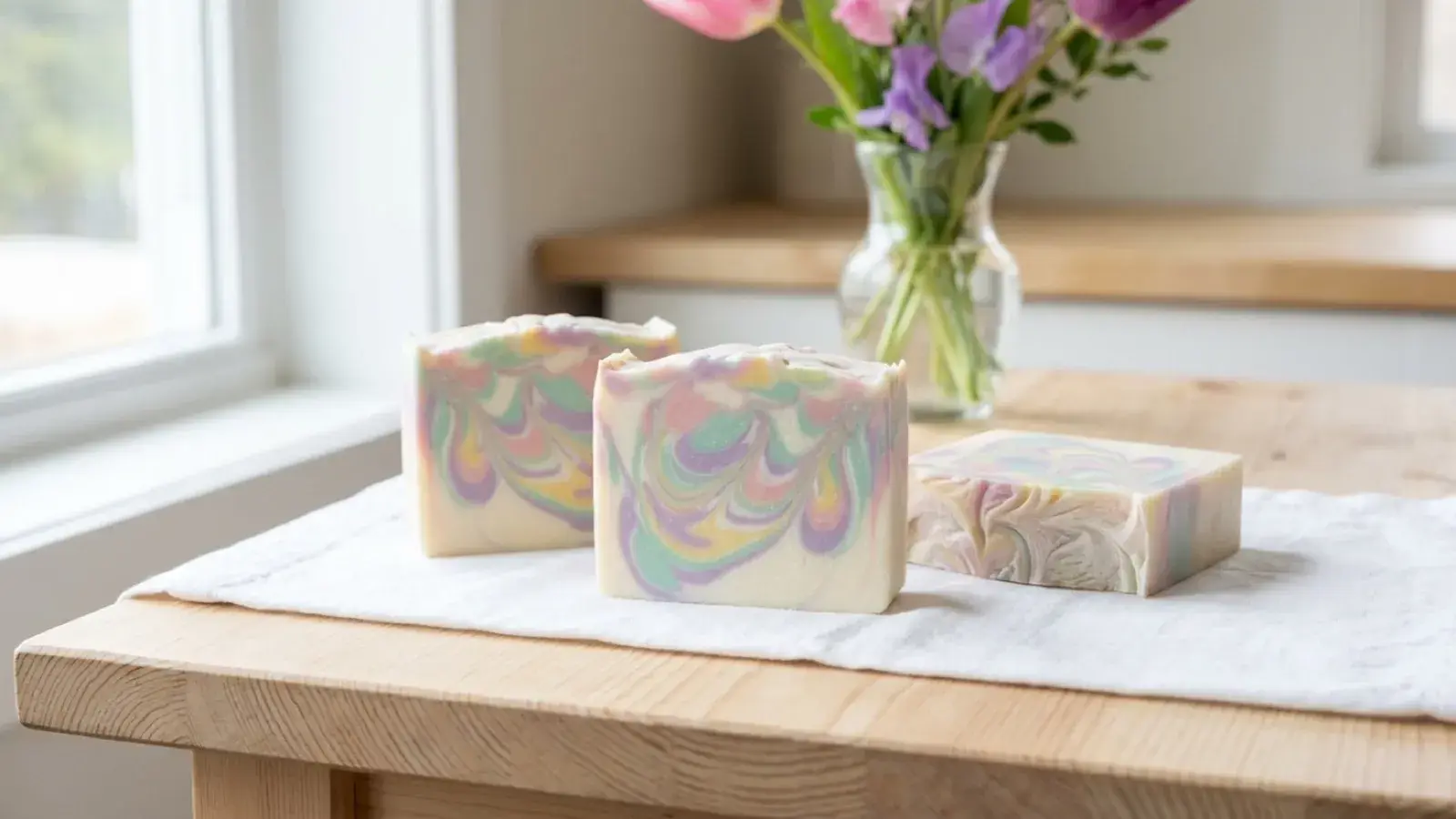
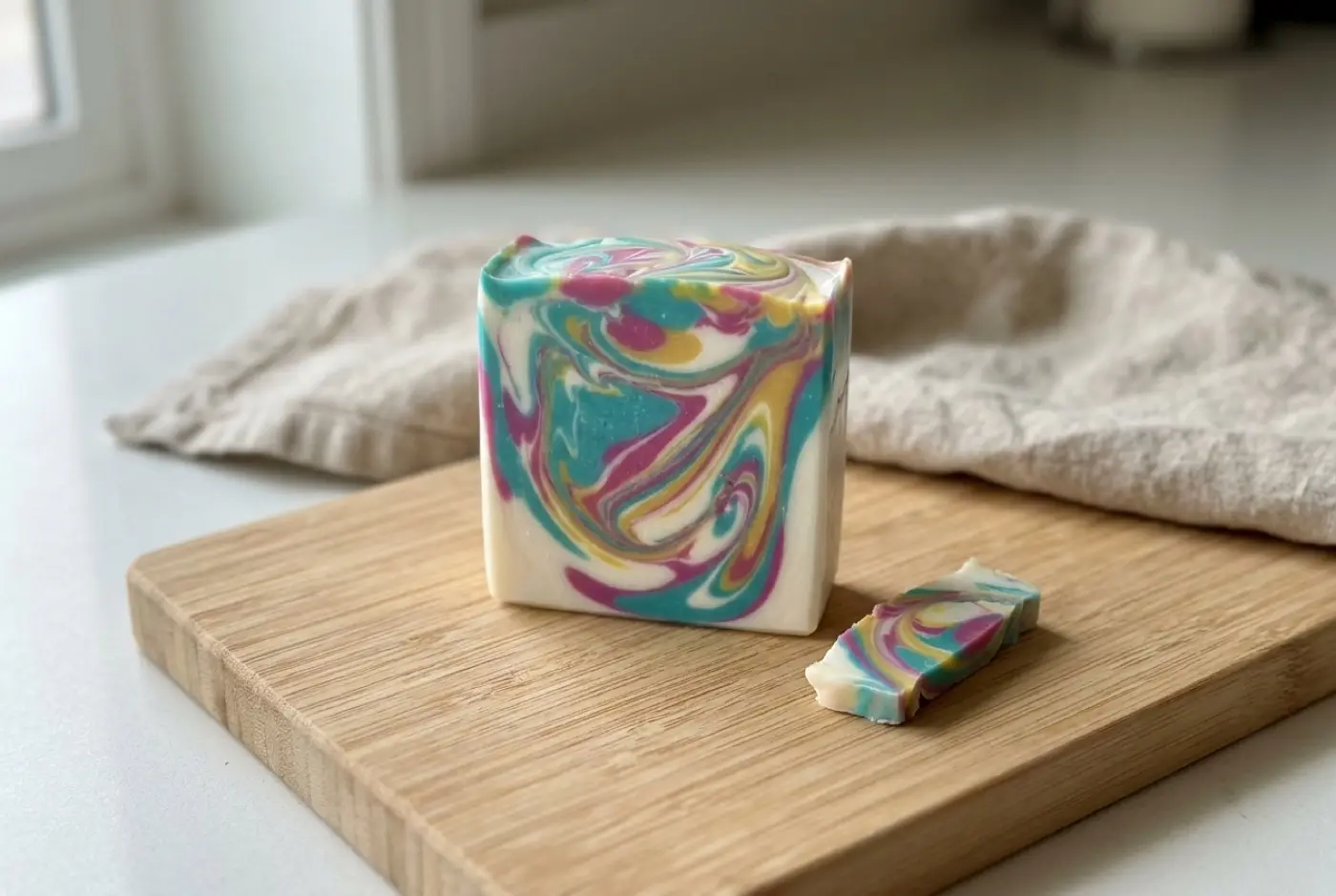
A pastel pink, lilac and cream hanger-swirl bar with a light lavender and orange blend, and a note on which flower scents actually exist as essential oils.
This page has affiliate links. We earn a small commission at no cost to you. Disclosure
Formula not yet verified. These numbers haven't been re-run by a second maker. Don't make this batch until this notice is gone.
- Yield
- 10 bars
- Method
- Cold process
- Difficulty
- Intermediate
- Cure
- 4 weeks
- Superfat
- 5%
- Lye conc.
- 31%
On this page
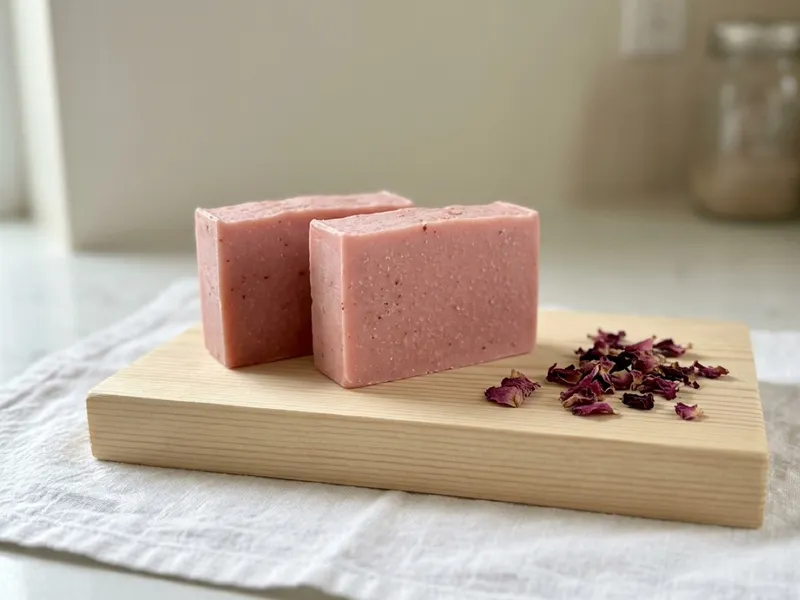
This spring soap recipe makes a pastel hanger-swirl bar in pink, lilac and cream, colored with rose clay and ultramarine violet and scented with lavender and orange. The formula is deliberately fluid: mostly olive and avocado with a little extra water. That gives you time to pour thin layers and pull a hanger through them before anything sets.
Most spring flowers don’t come in a bottle
Lilac, peony, lily of the valley, sweet pea and gardenia are the scents people ask for in spring. None of them is sold as an essential oil. These flowers don’t give up a usable oil, so every bar you’ve smelled with those names was scented with a fragrance oil. That’s not a flaw. It’s how the category works.
That leaves two honest routes. You can use essential oils that suit spring, as this recipe does. Lavender gives the floral side, 10-fold orange keeps it bright, and both behave well in a swirl. Or you can use a floral fragrance oil at the supplier’s recommended rate and name the bar for the scent. If you do, read the supplier’s notes on acceleration. Many florals thicken batter quickly, and a hanger swirl needs fluid batter. Our fragrance oils vs essential oils page goes through the trade-offs.
The swirl
A hanger swirl works because the batter is in thin, flat layers when the wire goes through. Stop blending at emulsion, pour each color from a little height, and make one pass with the hanger. The swirl techniques guide covers the hanger swirl alongside simpler drop and in-the-pot swirls.
Why this recipe works
- Olive + avocado, 60%. A slow-moving base, so the batter stays thin enough for a hanger swirl.
- Coconut + shea, 35%. Enough hardness that a high-olive bar still unmolds in two days.
- Lavender + orange. A light, fresh floral-citrus scent that behaves well at trace, so it doesn’t thicken the swirl. 4% total, inside our chart’s limits.
- Clay and ultramarine. Soft pastels that don’t morph in lye. Uncolored batter gives the cream.
Ingredients
| Oil | % | Grams | Ounces |
|---|---|---|---|
| Olive oil | 45% | 450 g | 15.87 oz |
| Coconut oil (76°) | 25% | 250 g | 8.82 oz |
| Avocado oil | 15% | 150 g | 5.29 oz |
| Shea butter | 10% | 100 g | 3.53 oz |
| Castor oil | 5% | 50.0 g | 1.76 oz |
| Lye solution | |||
| Sodium hydroxide (NaOH) 5% superfat | 138 g | 4.88 oz | |
| Distilled water Slightly more water than usual for a fluid batter. Reserve 10 g for the rose clay. | 308 g | 10.86 oz | |
| Additives | |||
| Lavender essential oil 2.5% of oil weight. | 2.5% | 25.0 g | 0.88 oz |
| Sweet orange essential oil (10-fold) 1.5% of oil weight. Brightens the lavender. | 1.5% | 15.0 g | 0.53 oz |
| Rose clay Pink portion. Slurry with 10 g of the recipe water. | 0.5% | 5.0 g | 0.18 oz |
| Ultramarine violet Lilac portion. Disperse in 1 tsp oil. | 0.1% | 0.5 g | 0.02 oz |
Equipment
Instructions
Step 1: Prepare colors, scent and a hanger
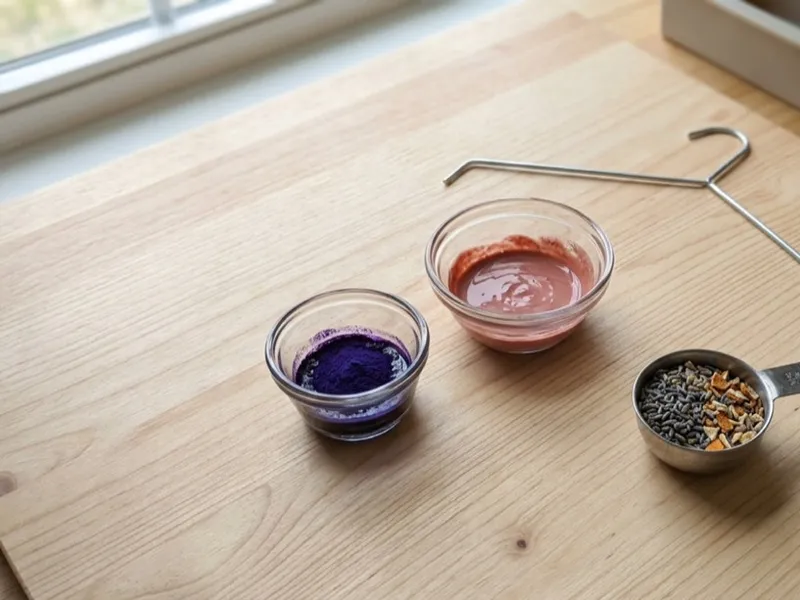
Mix the rose clay into 10 g of the recipe water to a smooth slurry. Disperse the ultramarine violet in a teaspoon of oil. Weigh the lavender and orange together. Bend a wire hanger tool, or a length of stiff wire, into an L that fits the inside of your mold.
Step 2: Make the lye solution and cool everything
Wearing goggles and gloves, add the lye to the remaining water, never the reverse, and stir until clear. Cool it and the oils to 85–95°F (29–35°C).
Step 3: Emulsify only
Pour the lye into the oils and stick blend in a few short bursts just until smooth and emulsified. The batter should still pour like thin custard. Stir in the essential oils by hand.
Step 4: Split into three colors
Keep about 40% of the batter plain for cream, and divide the rest between two jugs. Stir the rose clay slurry into one (pink) and the ultramarine into the other (lilac).
Step 5: Pour the layers
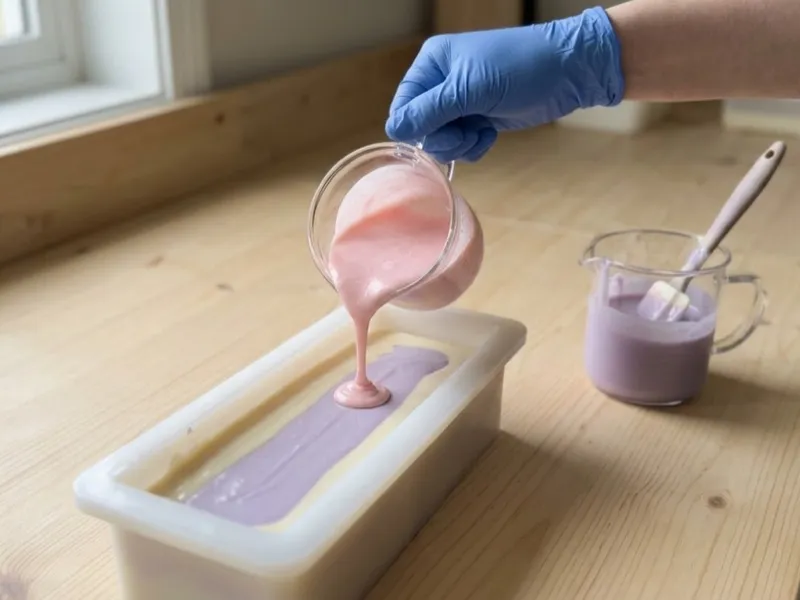
Pour the three colors into the mold in thin alternating layers, cream, pink, lilac, cream, and so on, pouring each from a little height so it settles flat. Don't stir.
Step 6: Hanger swirl
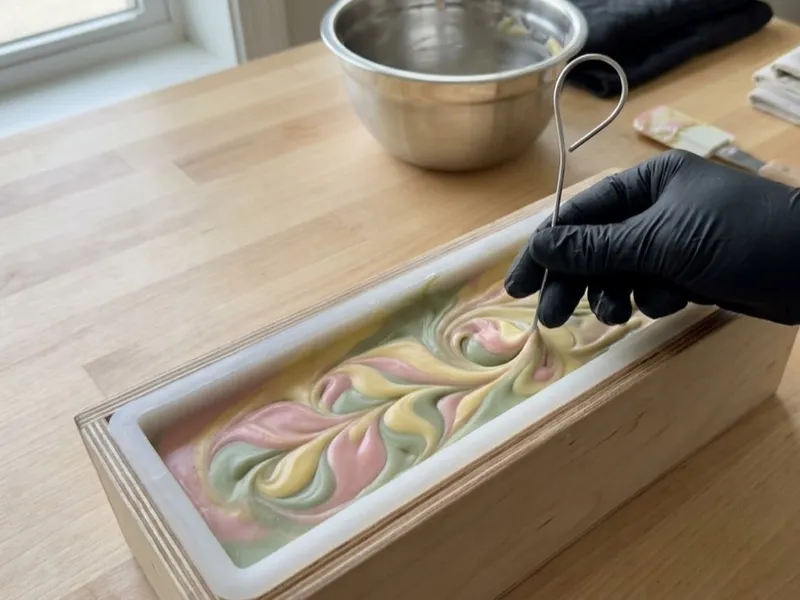
Push the hanger tool to the bottom at one end of the mold. Lift it up and down in loops along the length of the loaf, in one pass, then pull it straight out. One pass gives clear petals; more passes blur the colors.
Step 7: Unmold, cut and cure
Cover with cardboard and leave at room temperature. Unmold after 48 hours, as this high-olive loaf takes a little longer to firm. Cut so the swirl shows on the face and cure 4 weeks.
Variations
Floral fragrance oil
For lilac, peony, sweet pea or lily of the valley, use a skin-safe fragrance oil at the supplier’s recommended rate. Florals often accelerate trace, so use layers instead of a swirl if the supplier says it moves fast.
Lavender-forward
Use 35 g lavender and 5 g orange for a more classic floral bar.
Yellow daffodil
Swap the lilac portion for a yellow oxide or a cold-process yellow mica, and use a lemon or grapefruit fragrance oil.
If something goes wrong
- Colors blended into one muddy shade
- The batter was too thick or the hanger made too many passes. Stop at emulsion and do a single pass.
- Lilac turned gray-blue
- Ultramarine violet is stable, but too much reads as gray in cream soap. Use less, or test the shade in a small cup first. Fading and morphing color
- Soft and sticky at 24 hours
- Normal for a high-olive, high-water batter. Wait to 48–72 hours before unmolding. Soft soap that won’t harden
FAQ
Is there a lilac or peony essential oil?
Not commercially. Lilac, peony, lily of the valley, gardenia and sweet pea scents in soap are fragrance oils. Rose and jasmine absolutes exist but are very expensive for soap.
Which floral essential oils work in cold process soap?
Lavender is the reliable one and is what this recipe uses. Rose geranium and ylang ylang are also used; they aren't in our usage chart yet, so follow the supplier's IFRA rates.
What is a hanger swirl?
A technique where you pour thin layers of colored batter and then pull a bent wire through the loaf in loops, so the layers fold into petal or feather shapes when cut.
Why does my floral soap thicken so fast?
Many floral fragrance oils accelerate trace. Check reviews on the supplier's page, add the scent at emulsion, and choose layers or a simple pour for fast movers.
Comments
No comments yet. Made this recipe? Be the first to say how it went.