Coffee Soap Recipe (Brewed Coffee and Grounds Kitchen Bar)
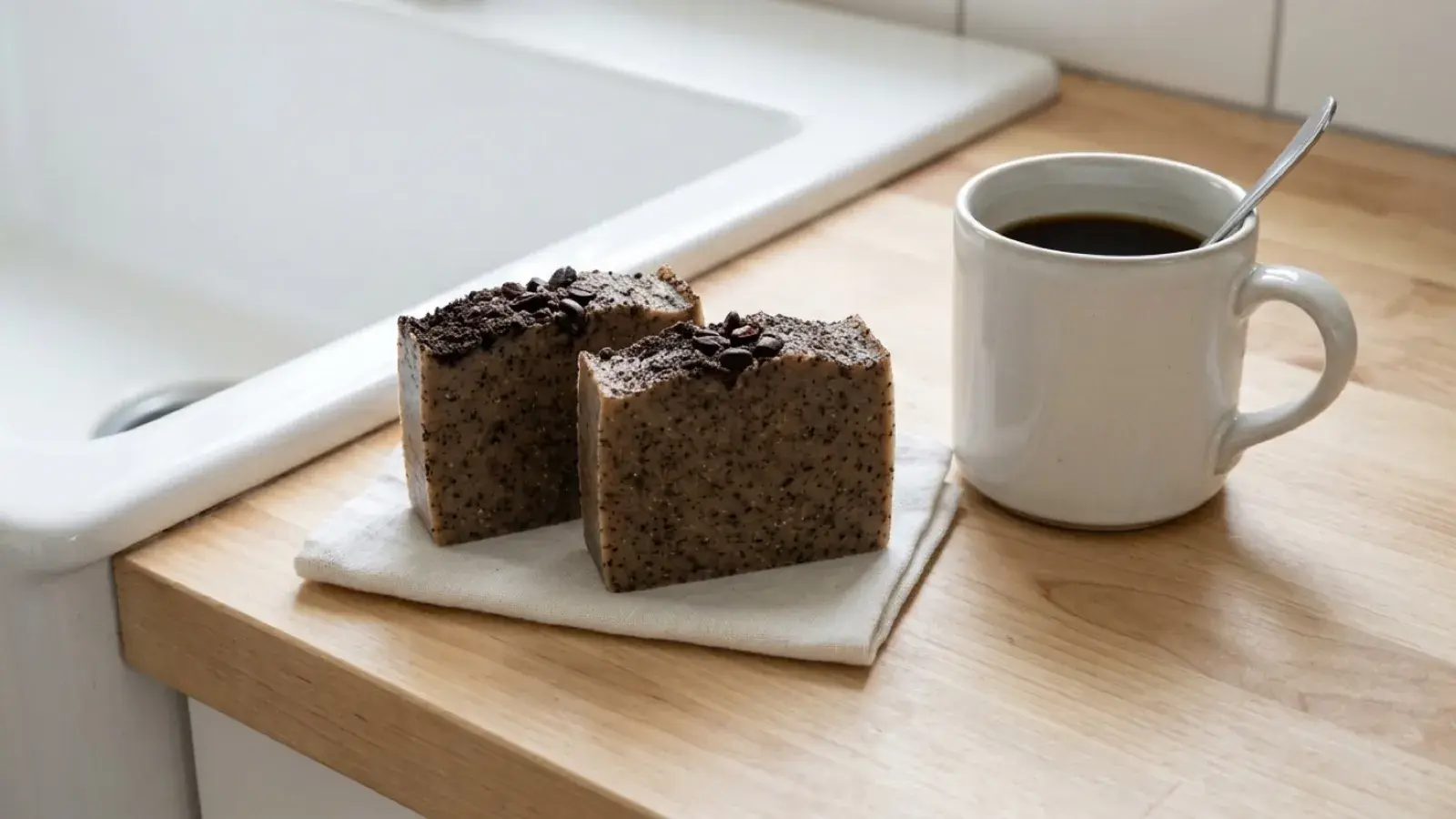
A dark, scrubby cold process bar made with frozen brewed coffee as the liquid and used grounds for texture, built for the kitchen sink.
This page has affiliate links. We earn a small commission at no cost to you. Disclosure
Formula not yet verified. These numbers haven't been re-run by a second maker. Don't make this batch until this notice is gone.
- Yield
- 10 bars
- Method
- Cold process
- Difficulty
- Beginner
- Cure
- 6 weeks
- Superfat
- 5%
- Lye conc.
- 33%
On this page
This coffee soap recipe puts coffee in twice. Strong brewed coffee, frozen into cubes, replaces the water for the lye, and dried used grounds go in at trace for a gentle scrub. The result is a hard, dark brown kitchen bar with fast, bubbly lather, made to sit by the sink and get used every day.
Coffee is an easy liquid as these things go: far less sugar than milk or juice, so it does not overheat the way they do. It does misbehave in the lye bowl, though. Hot lye turns brewed coffee nearly black and releases a sharp, burnt smell. Freezing the coffee and adding the lye slowly over ice keeps both the heat and the smell down, and working outdoors or next to an exhaust fan handles the rest.
Why the smell disappears
Most of what you smell in a cup of coffee is volatile and breaks down in the lye solution, so cured coffee bars smell faintly earthy at most. The grounds keep a little more of the aroma than the brew does. If coffee scent matters to you, add a fragrance oil sold for soap, or pair the coffee with peppermint for a mint-mocha bar.
Why this recipe works
- Coconut, 30%. Higher than an everyday face-and-body bar for brisk, fast lather at the sink. That is the point of a kitchen bar.
- Olive + sunflower, 45%. Balance out the coconut so hands do not feel stripped after repeated washing.
- Cocoa + shea, 20%. A hard, long-lasting bar that survives sitting by a wet sink. Cocoa butter adds a faint chocolate note that suits coffee.
- Coffee grounds, 1%. Gentle grit for scrubbing hands after chopping onions or garlic. More than 2% makes the bar rough.
Ingredients
| Oil | % | Grams | Ounces |
|---|---|---|---|
| Olive oil | 35% | 350 g | 12.35 oz |
| Coconut oil (76°) | 30% | 300 g | 10.58 oz |
| Cocoa butter | 10% | 100 g | 3.53 oz |
| Shea butter | 10% | 100 g | 3.53 oz |
| Sunflower oil (high oleic) | 10% | 100 g | 3.53 oz |
| Castor oil | 5% | 50.0 g | 1.76 oz |
| Lye solution | |||
| Sodium hydroxide (NaOH) 5% superfat | 141 g | 4.98 oz | |
| Brewed coffee, chilled Brew strong, cool completely, and freeze into cubes for the best results. | 287 g | 10.11 oz | |
| Additives | |||
| Used coffee grounds, dried Spread on a plate to dry for a day. Stir in at light trace. Up to 20 g for a scrubbier bar. | 1% | 10.0 g | 0.35 oz |
Equipment
Instructions
Step 1: Brew and freeze the coffee
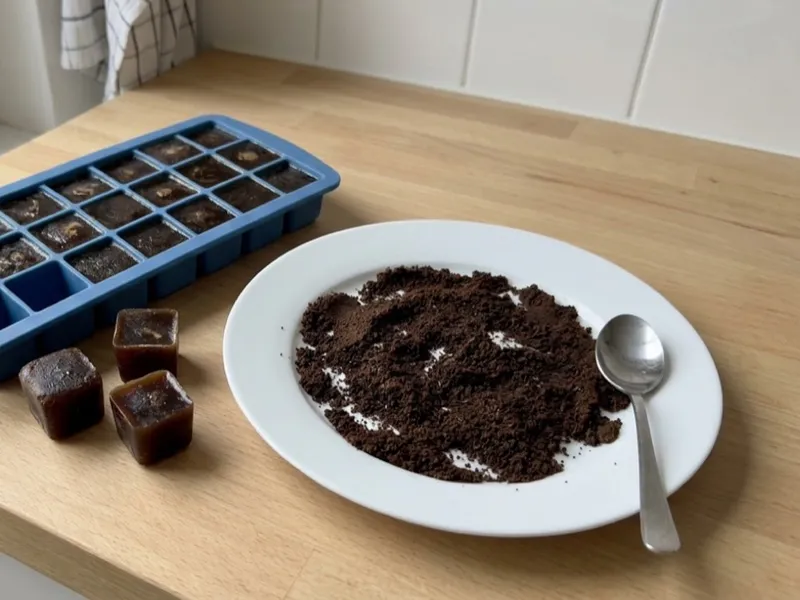
Brew a strong pot of coffee, about twice your usual strength, with no milk or sugar. Let it cool, weigh out the liquid amount from the calculator, and freeze it in ice cube trays overnight. Dry the used grounds on a plate at the same time.
Step 2: Make the lye solution outdoors or by a fan
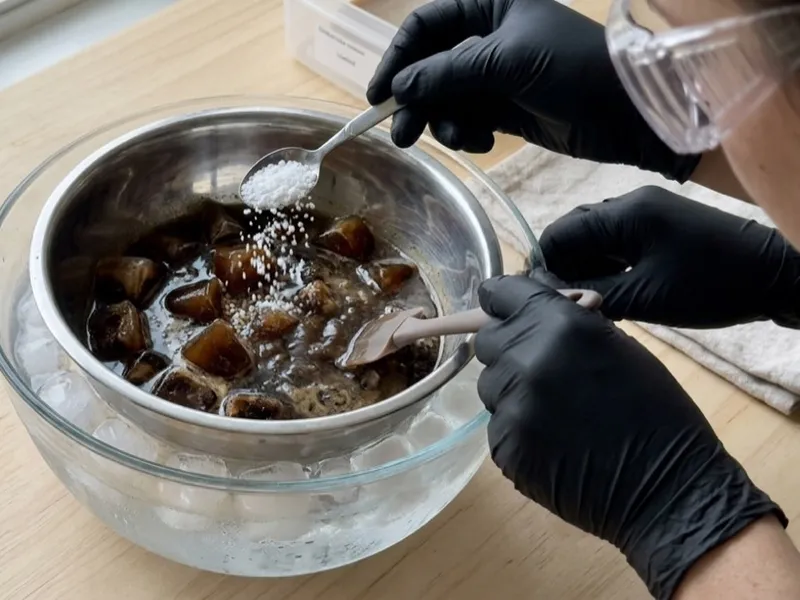
Put on goggles and gloves. Set the bowl of coffee cubes in a larger bowl of ice water. Sprinkle the lye over the cubes a spoonful at a time, stirring as they melt. The solution will turn very dark and smell harsh, like burnt coffee and ammonia; ventilate well. Keep it under 90°F (32°C).
Step 3: Melt and cool the oils
Melt the coconut oil, cocoa butter and shea, then add the olive, sunflower and castor oils. Cool to 90–100°F (32–38°C).
Step 4: Blend to light trace
Strain the coffee lye solution into the oils. Stick blend in short bursts to light trace. The batter will be a milky caramel color that darkens over the next day.
Step 5: Add the grounds
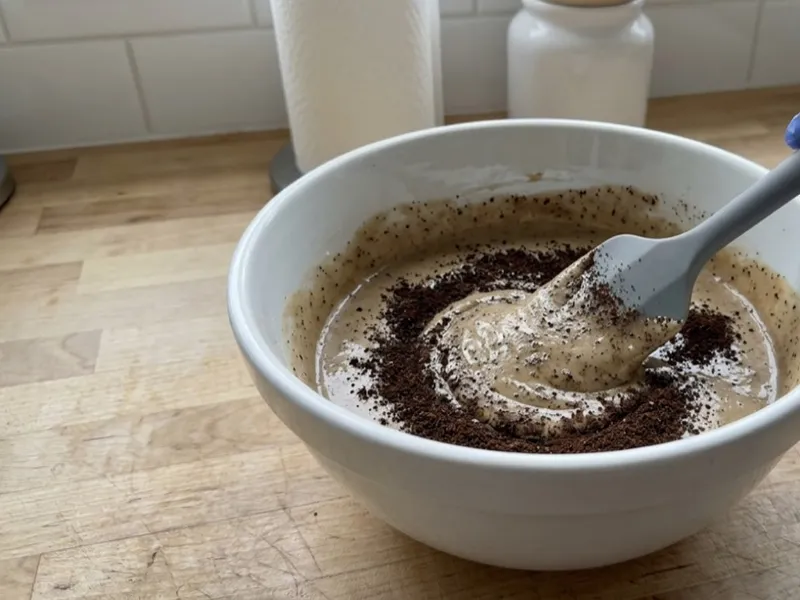
Stir the dried grounds in with a spatula, then pulse once or twice. Thicken the batter just slightly so the grounds stay suspended instead of sinking to the bottom.
Step 6: Pour and gel
Pour into the mold and cover with a towel. Coffee has only a little sugar compared with milk or juice, so a normal gel is fine. Check after an hour; if the top cracks, uncover it.
Step 7: Unmold, cut and cure
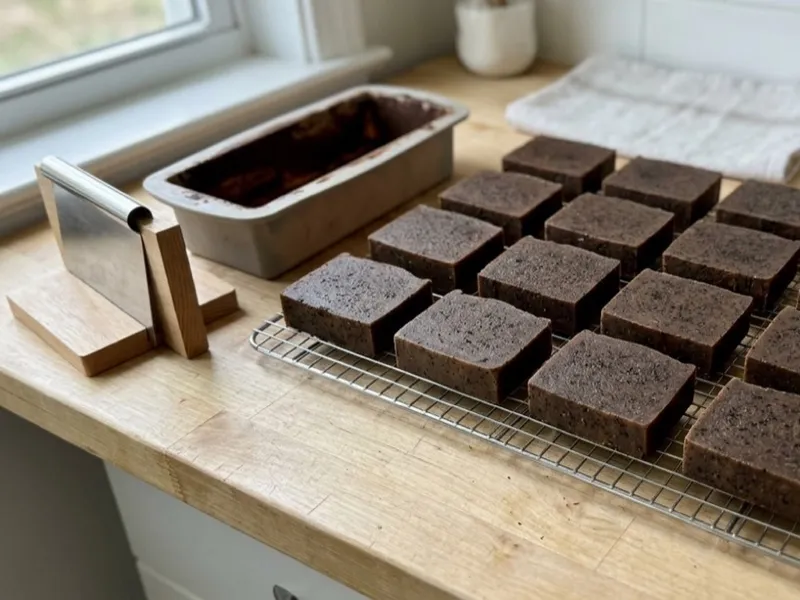
Unmold after 24–48 hours and cut. Cure on a rack for 6 weeks, turning weekly. The bars darken to a coffee brown and the harsh lye-solution smell is gone well before the cure ends.
Variations
Mocha
Replace the cocoa butter with more shea and add 10 g cocoa powder per 1000 g oils, dispersed in oil, at trace.
Mint mocha
Add peppermint essential oil at 2% of oil weight (20 g per 1000 g) at trace.
Coffee layer
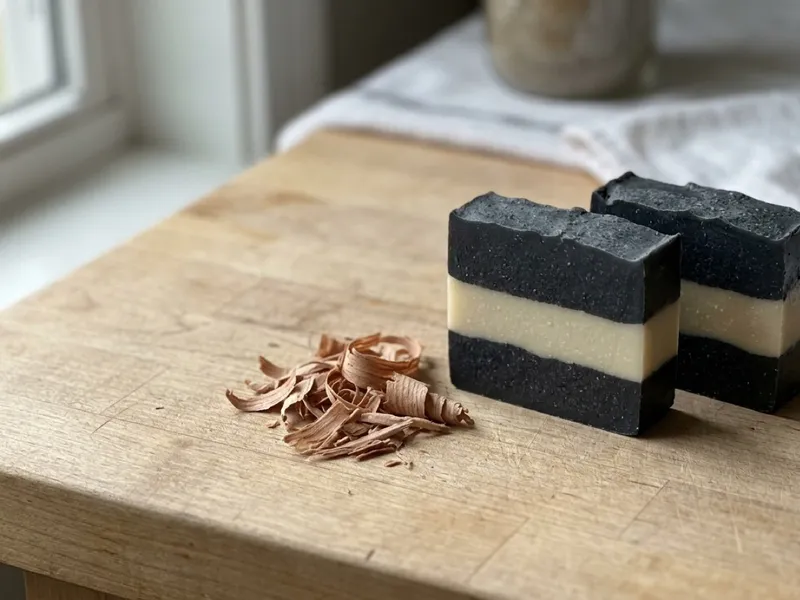
Use plain distilled water for half the batch and coffee for the other half, then layer them for a two-tone bar.
If something goes wrong
- Grounds sank to the bottom
- The batter was too thin. Blend to a slightly thicker trace before adding the grounds. Understanding trace
- Bar smells nothing like coffee
- Coffee aroma does not survive lye well. Add a coffee-friendly fragrance if you want the smell.
- Lye solution overheated
- The coffee was not cold enough. Freeze it fully next time and add the lye slowly over ice.
FAQ
Does coffee soap smell like coffee?
Only faintly once cured. Most of the brewed aroma is lost to the lye. The grounds keep a little scent, and many makers add a fragrance for a stronger coffee smell.
Can I use instant coffee?
Yes. Dissolve it in distilled water, chill or freeze it, and use it the same way as brewed coffee.
Is coffee soap good for kitchen smells?
Many cooks keep a coffee bar at the sink for washing up after garlic or onions, and the grounds give a gentle scrub. How well it handles strong smells varies from person to person.
Do I need to adjust the lye for coffee?
No adjustment is needed for plain black coffee in this recipe. Do not use coffee with milk, sugar or flavor syrups.
Comments
No comments yet. Made this recipe? Be the first to say how it went.