Soft Soap That Won't Harden: Causes and How Long to Wait
Soap that won't harden is usually a soft-oil recipe with lots of water that just needs more time. If it's greasy, weeping oil or still soft after a week, too little lye is the likely cause.
Is it safe to use?
Slow-setting but evenly textured soap is fine and just needs time. Soap that's greasy, has pools of oil or never firms up is short on lye and shouldn't be used as is.
Oil pooling on the surface or a curdled texture? False trace and separation
On this page
Causes, ranked by likelihood
- Most likely
A soft-oil recipe that needs more time
Recipes high in olive, sunflower, rice bran or other liquid oils set slowly. A 100% olive (castile) loaf can need a week or more in the mold.
- Common
Too much water
Full-water recipes, or a calculator's default water on a soft recipe, leave a lot of liquid to evaporate. The bar firms slowly and stays sticky.
- Common
The soap didn't gel
Ungelled soap, especially in cold rooms or chilled milk batches, often takes a few extra days to firm up enough to unmold.
- Sometimes
Too little lye
A weighing error, old lye that's absorbed moisture, or potassium hydroxide (KOH) used by mistake instead of sodium hydroxide (NaOH) leaves oils unsaponified. The bar stays soft and greasy.
Fix this batch
Give it time, then check the texture
- Leave the loaf in the mold, uncovered, in a warm, dry room for another 2–4 days.
- If it's firm enough to hold its shape but sticks, put the mold in the freezer for a couple of hours, then unmold while cold.
- Cut and cure as normal. Soft bars firm up a lot over a 4–6 week cure.
- If it's still greasy or weeping oil after a week, re-check your weights and lye type. Rebatch with corrected lye, or discard.
Prevent it next time
Build in firmness
- Use a water discount on soft recipes, around a 33–38% lye concentration instead of a full-water default.
- Add sodium lactate to the cooled lye solution at about 1–3% of oil weight for a firmer, easier unmold.
- Include some hard oils or butters, such as coconut oil, tallow, lard or cocoa butter, unless you're deliberately making castile.
- Store lye sealed and dry, and check the label says sodium hydroxide before you weigh it.
Soft and slow, or soft and short on lye?
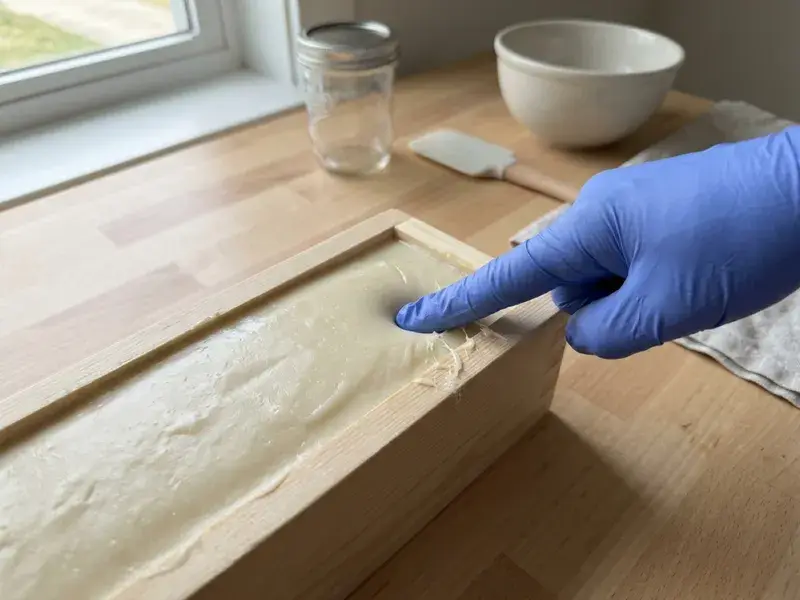
Press a gloved finger into the corner of the loaf. Slow soap feels like firm cheese: it dents, but the surface is uniform and dry to slightly tacky. It gets a little firmer every day you check it.
Lye-short soap feels different. It’s slick or greasy, may leave an oily film on the glove, and sometimes has a layer of oil on top or beads of oil along the sides. It doesn’t change much from day three to day seven.
If you see the second kind, don’t wait out the cure hoping it improves. The rebatching guide covers adding the missing lye safely, which needs the actual weights from your batch. Without them, it’s safer to discard the batch.
The science behind it
FAQ
How long should soap take to harden?
Most balanced recipes unmold in 24–48 hours. High-olive or ungelled batches can take 3–7 days, and 100% olive soap sometimes longer.
Will soft soap harden while it cures?
Yes, if the lye was right. Water evaporates over the cure and the bar gets noticeably harder. Castile keeps hardening for months.
Can I put soft soap in the oven to harden it?
A warm oven at the pour stage (CPOP) helps the next batch gel and set. On a soft loaf that's already days old, time and airflow work better than heat.
Why is my soap soft in the middle but hard on the edges?
That's usually a partial gel: the warm center gelled and the cooler edges didn't, or the reverse. It evens out during cure.
Comments
No comments yet. Made this recipe? Be the first to say how it went.