Palm-Free Soap Recipe (Hard, Long-Lasting Bar)
A hard, slow-wearing bar with no palm or palm kernel oil, built from shea, cocoa butter and coconut.
This page has affiliate links. We earn a small commission at no cost to you. Disclosure
Formula not yet verified. These numbers haven't been re-run by a second maker. Don't make this batch until this notice is gone.
- Yield
- 10 bars
- Method
- Cold process
- Difficulty
- Beginner
- Cure
- 6 weeks
- Superfat
- 5%
- Lye conc.
- 35%
On this page
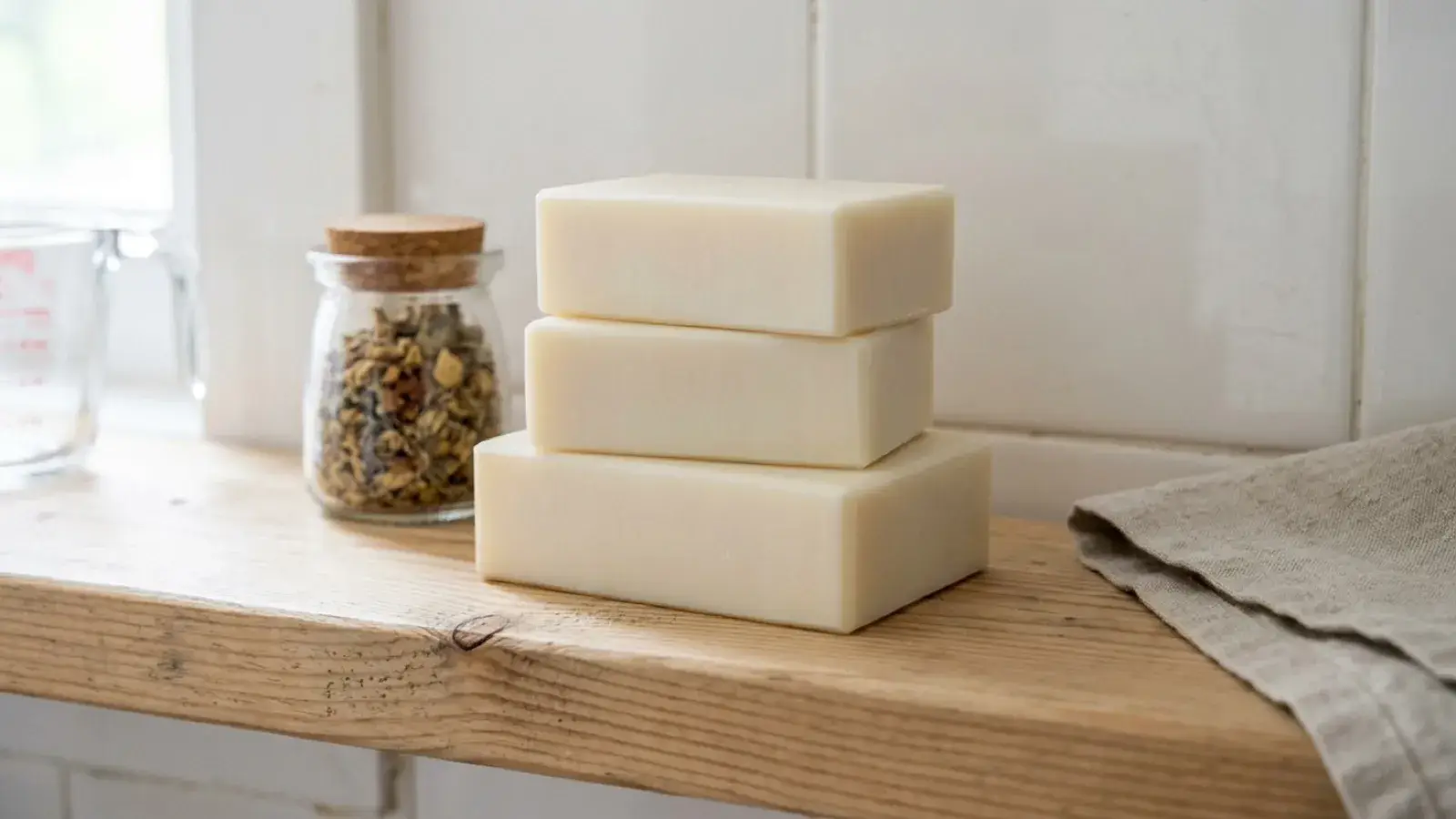
This palm-free soap recipe makes a hard, long-lasting bar with no palm oil and no palm kernel oil. The hardness comes from shea butter and cocoa butter instead, with coconut for lather, olive and high-oleic sunflower for mildness, and a little less water than usual so the loaf firms up quickly.
Palm oil earns its place in commercial soap because it’s cheap and makes a firm, durable bar. Removing it isn’t hard; replacing what it did is the actual job. The key is palmitic and stearic acid, the saturated fatty acids that keep a bar from going soft in the dish. Shea and cocoa butter supply them, and splitting the work between the two lets this recipe get to a palm-like hardness without loading up on cocoa butter, which makes bars brittle above about 15%.
Where palm hides
The obvious oils are easy to leave out, but palm turns up elsewhere in soap supplies. Stearic acid, a common hardener, is frequently made from palm oil. Palm kernel oil and palm kernel flakes sometimes appear in “coconut replacement” blends. All-vegetable shortening may contain palm. If avoiding palm matters to you, read supplier labels for every fat, not just the ones in the recipe title.
Sodium lactate, the optional hardener here, is usually made by fermenting plant sugars rather than from palm (ask your supplier if you need certainty), and the bar works without it; it simply makes the loaf ready to cut a day sooner. For a softer, simpler palm-free bar, the three-oil beginner soap is also palm-free.
Why this recipe works
- Shea + cocoa butter, 32%. Together they supply the palmitic and stearic acids palm oil would normally bring: hardness and a creamy, long-lasting lather. Splitting it between two butters keeps cocoa butter below the level where bars turn brittle.
- Coconut, 25%. Lather and hardness. Coconut comes from a different tree than palm and palm kernel oil.
- Olive + high-oleic sunflower, 38%. The mild, conditioning share. High-oleic sunflower is a cheap, stable stand-in for part of the olive oil.
- 35% lye concentration. Less water means the loaf firms up sooner and the bar shrinks less during cure.
Ingredients
| Oil | % | Grams | Ounces |
|---|---|---|---|
| Olive oil | 30% | 300 g | 10.58 oz |
| Coconut oil (76°) | 25% | 250 g | 8.82 oz |
| Shea butter | 20% | 200 g | 7.05 oz |
| Cocoa butter | 12% | 120 g | 4.23 oz |
| Sunflower oil (high oleic) | 8% | 80.0 g | 2.82 oz |
| Castor oil | 5% | 50.0 g | 1.76 oz |
| Lye solution | |||
| Sodium hydroxide (NaOH) 5% superfat | 138 g | 4.88 oz | |
| Distilled water Slightly less water than usual (35% lye concentration) for a firmer unmold. | 257 g | 9.05 oz | |
| Additives | |||
| Sodium lactate (60% solution) Optional; stir into the cooled lye solution. Helps the loaf harden for unmolding. | 1.5% | 15.0 g | 0.53 oz |
| Lavender essential oil Optional; 3% of oils. | 3% | 30.0 g | 1.06 oz |
| Cedarwood (Atlas) essential oil Optional; 1.5% of oils. | 1.5% | 15.0 g | 0.53 oz |
Equipment
Instructions
Step 1: Make the lye solution
Put on goggles and gloves. Add the lye to the distilled water, never the reverse, and stir until clear. The solution is a little stronger than usual because there's less water, so it gets hot; let it cool to 100–110°F (38–43°C). Stir in the sodium lactate once it has cooled below about 130°F (54°C).
Step 2: Melt the butters fully
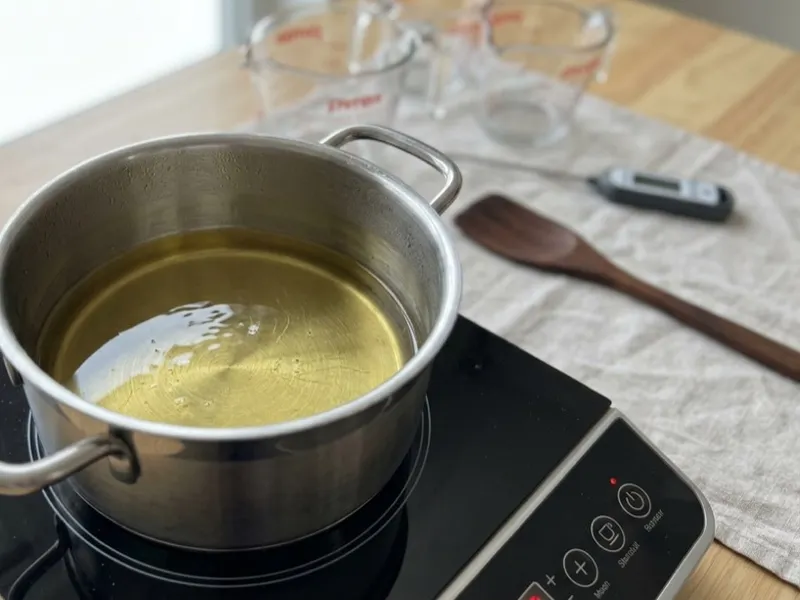
Melt the shea, cocoa butter and coconut over low heat until completely clear with no waxy flakes. Take the pot off the heat and add the olive, high-oleic sunflower and castor oils, then the essential oils.
Step 3: Soap warm
Bring the oils and lye solution to 100–110°F (38–43°C). With 32% hard butters, this blend starts setting if it cools too far, which can look like trace when it isn't.
Step 4: Blend to light trace
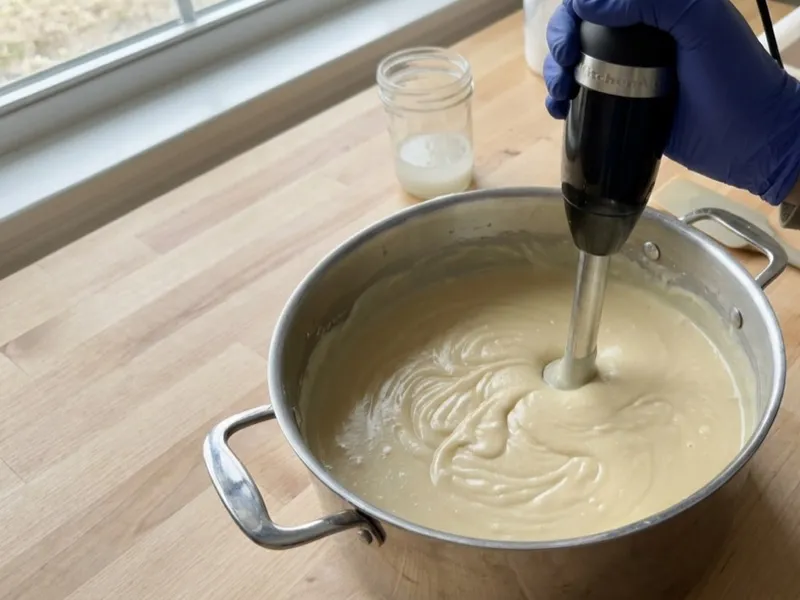
Pour the lye in and stick blend in short bursts with stirring between. Expect light trace in 2–4 minutes. Pour at light trace; this batter thickens steadily once it starts.
Step 5: Pour and gel
Pour into the mold and cover with cardboard and a towel. Gel gives palm-free bars a harder, smoother finish. Check it after an hour, and uncover it if the top starts cracking or rising.
Step 6: Unmold and cut
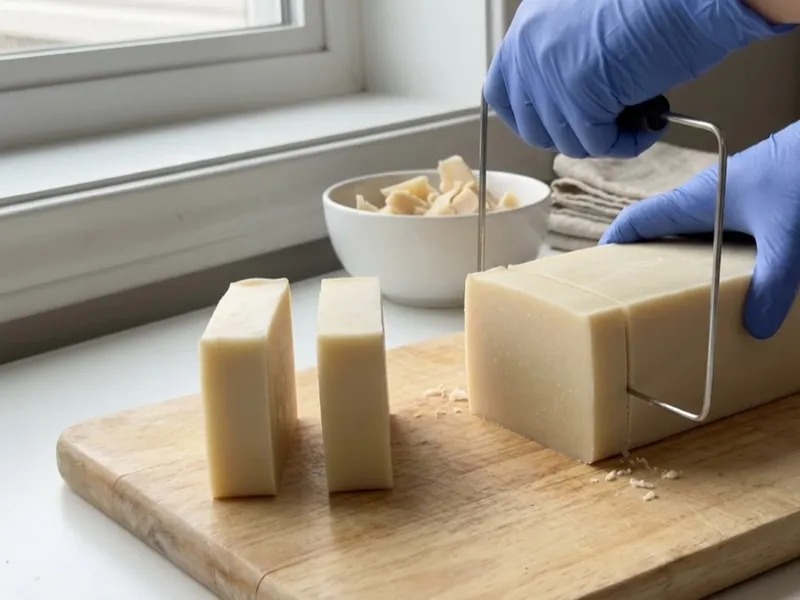
Unmold after 24 hours. With the sodium lactate and lower water, the loaf should be firm enough to cut cleanly; without the sodium lactate, give it 36–48 hours.
Step 7: Cure six weeks
Cure the bars on a rack with airflow for 6 weeks, turning weekly. This is where a palm-free bar earns its staying power; a full cure makes a noticeably harder bar that lasts longer in the dish.
Variations
Babassu for coconut
Babassu oil can replace the coconut for a similar lather. Recalculate the lye.
Kokum butter
Swap the cocoa butter for kokum butter for an even harder bar with no chocolate scent. Recalculate the lye.
Animal-fat palm-free
If the goal is only to avoid palm, tallow or lard makes a hard bar too; see the tallow and lard recipes.
If something goes wrong
- Bars crack or chip
- Too many hard butters or cut too late. Keep cocoa butter around 12% and cut within 24–48 hours. Why soap cracks
- White film on the bars
- Lower-water batches can show more soda ash. Gel the loaf or spritz the top with alcohol after pouring. Soda ash on soap
- Batter seized
- The butters cooled and set, or a fragrance accelerated it. Soap at 100–110°F (38–43°C) and test new fragrances first. Soap seized
FAQ
What does palm oil do in soap?
It contributes palmitic acid, which makes a bar harder and longer-lasting and gives a stable, creamy lather. Palm-free recipes replace it with other hard fats such as shea, cocoa butter, tallow or lard.
Is coconut oil a palm oil?
No. Coconut oil comes from the coconut palm, a different species from the oil palm. Palm kernel oil, from the oil palm's seed, is the one palm-free makers avoid.
Is stearic acid palm-free?
Not always. Stearic acid is often made from palm oil. If you add it to a palm-free recipe, look for a supplier that states the source.
Is this soap vegan?
The oils are all plant-based. Check your fragrance, colorants and any additives if you need the whole bar to be vegan.
Why use sodium lactate?
It is a salt of lactic acid that helps cold process soap harden faster in the mold. It is optional; the bars just need an extra day before cutting without it.
Comments
No comments yet. Made this recipe? Be the first to say how it went.