Oatmeal Milk and Honey Soap Recipe (Cold Process)
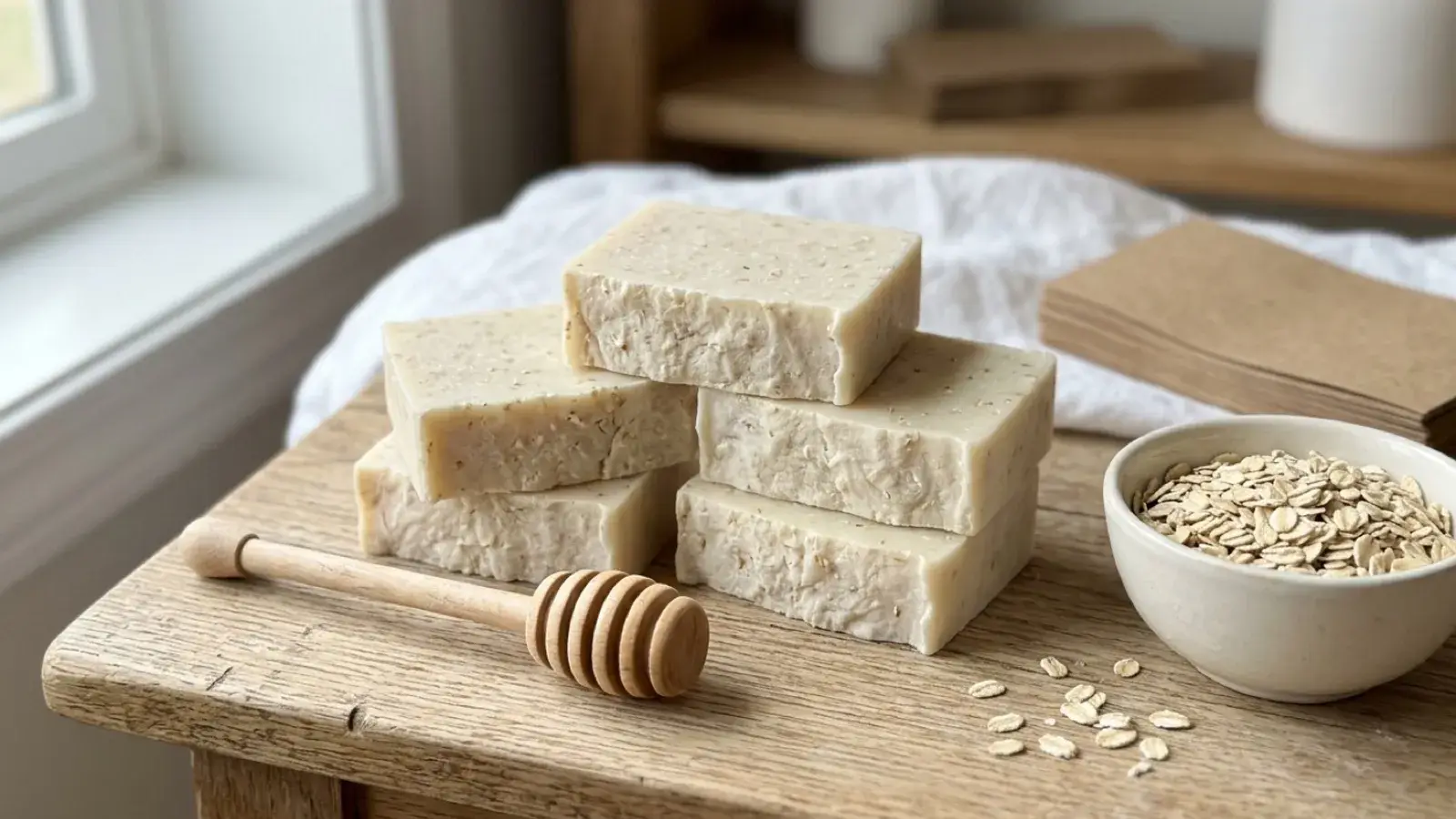
The classic oatmeal, milk and honey bar, made with frozen milk, a little honey and colloidal oats, and kept cool so three sugar sources don't overheat it.
This page has affiliate links. We earn a small commission at no cost to you. Disclosure
Formula not yet verified. These numbers haven't been re-run by a second maker. Don't make this batch until this notice is gone.
- Yield
- 10 bars
- Method
- Cold process
- Difficulty
- Intermediate
- Cure
- 6 weeks
- Superfat
- 5%
- Lye conc.
- 33%
On this page
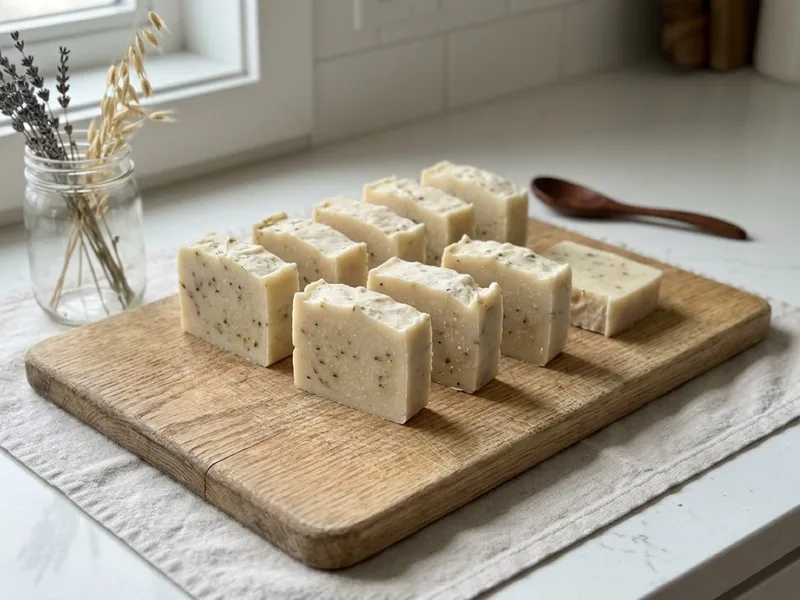
This oatmeal milk and honey soap recipe makes a creamy, pale beige bar. The lye goes into frozen milk, a little honey goes in at trace, and colloidal oats are blended through. The difficulty is heat. Milk sugar, honey and oat starch each warm a batch on their own. Together they can crack, darken or volcano a loaf if you treat it like a plain bar.
The answer is to keep everything cool from start to finish. Freeze the milk. Soap at 80–90°F (27–32°C) instead of 100°F. Hold the honey to about 2 teaspoons per 1000 g of oils, and send the loaf straight to the fridge instead of wrapping it in towels.
Where the heat comes from
Milk sugar (lactose) scorches when hot lye hits it, which is why the milk is frozen and the lye goes in slowly over an ice bath. Honey is mostly sugar, and sugars make saponification run hotter. In larger amounts it also speeds trace, so it’s the last thing in. Oats add starch and a little more heat, and whole oats can leave soggy bits, so they’re ground fine.
Any one of these is easy to manage. Stacked together, they’re why this bar is rated Intermediate even though the steps look simple. If you want to focus on one at a time first, see our goat milk soap, honey soap and oatmeal soap recipes.
Most bars sold under this name are unscented or very lightly scented. The milk and honey don’t leave much scent of their own, so the bar smells clean and soft. If you add a fragrance oil, check its vanillin content. Many “oatmeal milk and honey” fragrances turn soap brown.
Why this recipe works
- Olive, 40%. Mild and slow-tracing, so there is time to work in the honey and oats.
- Lard + shea, 35%. A hard, white, creamy bar. Lard keeps the color pale, which shows if anything scorches.
- Coconut, 20%. Kept a little lower than usual for a gentler-feeling bar that still lathers.
- Frozen milk, small honey, fine oats. Each one adds sugar and heat. Freezing, a modest honey amount and colloidal oats keep the batch under control.
Ingredients
| Oil | % | Grams | Ounces |
|---|---|---|---|
| Olive oil | 40% | 400 g | 14.11 oz |
| Lard | 25% | 250 g | 8.82 oz |
| Coconut oil (76°) | 20% | 200 g | 7.05 oz |
| Shea butter | 10% | 100 g | 3.53 oz |
| Castor oil | 5% | 50.0 g | 1.76 oz |
| Lye solution | |||
| Sodium hydroxide (NaOH) 5% superfat | 137 g | 4.84 oz | |
| Whole milk (cow or goat), frozen Freeze in ice cube trays overnight. All of the liquid is milk. | 278 g | 9.82 oz | |
| Additives | |||
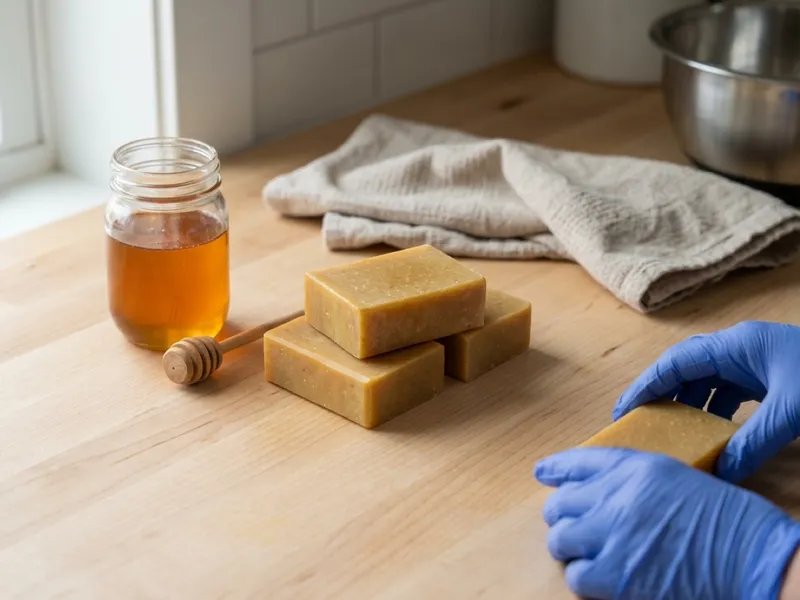
| Raw honey About 2 tsp. Mixed into a spoonful of the warm oils before adding at trace. | 1.4% | 14.0 g | 0.49 oz |
| Colloidal oatmeal Finely ground oats, so they disperse without scratchy bits. | 1.5% | 15.0 g | 0.53 oz |
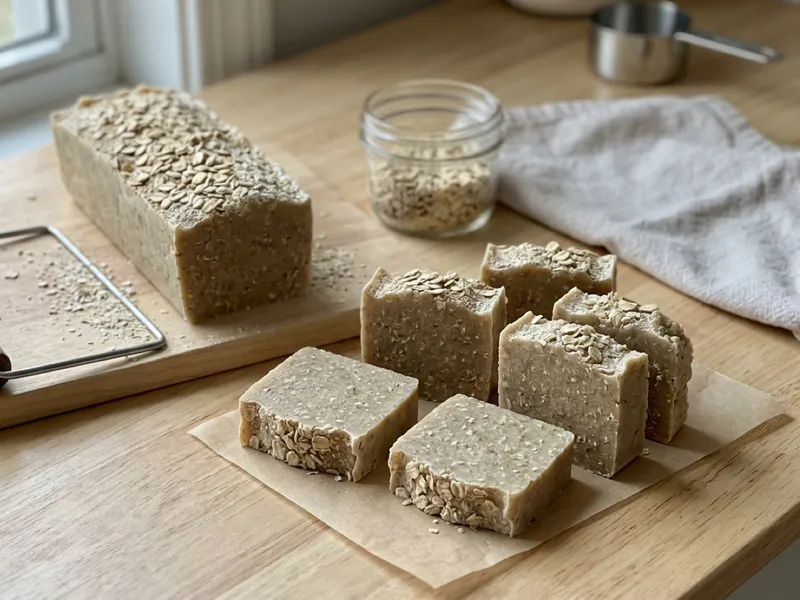
| Rolled oats Optional. A few on top for decoration only. | 0.3% | 3.0 g | 0.11 oz |
Equipment
Instructions
Step 1: Freeze the milk
The day before, weigh the milk and freeze it in ice cube trays. Frozen milk is what lets you add lye without the sugars scorching orange.
Step 2: Prepare oils, honey and oats
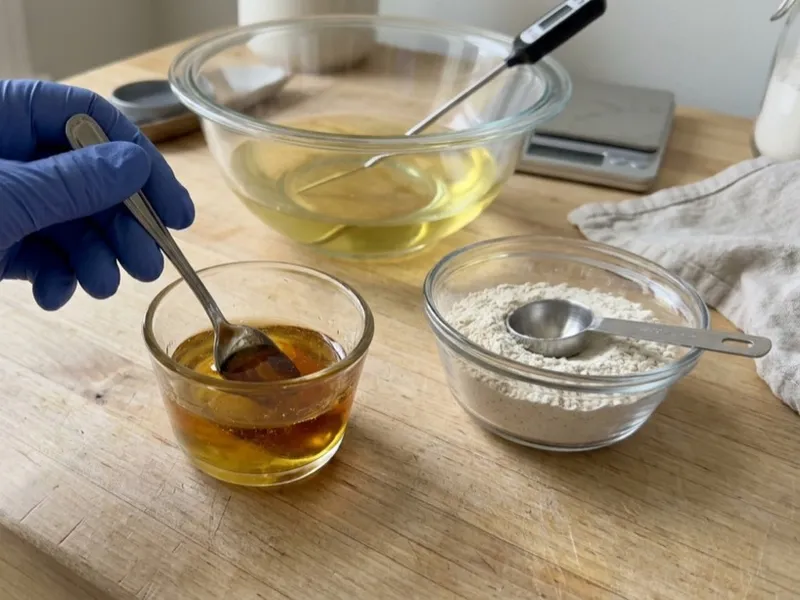
Melt the lard, coconut and shea, add the olive and castor, and cool to 80–90°F (27–32°C), cooler than a plain bar. In a small cup, stir the honey into 2 tablespoons of the warm oils until smooth. Weigh the colloidal oats into another cup.
Step 3: Add lye to the milk over ice
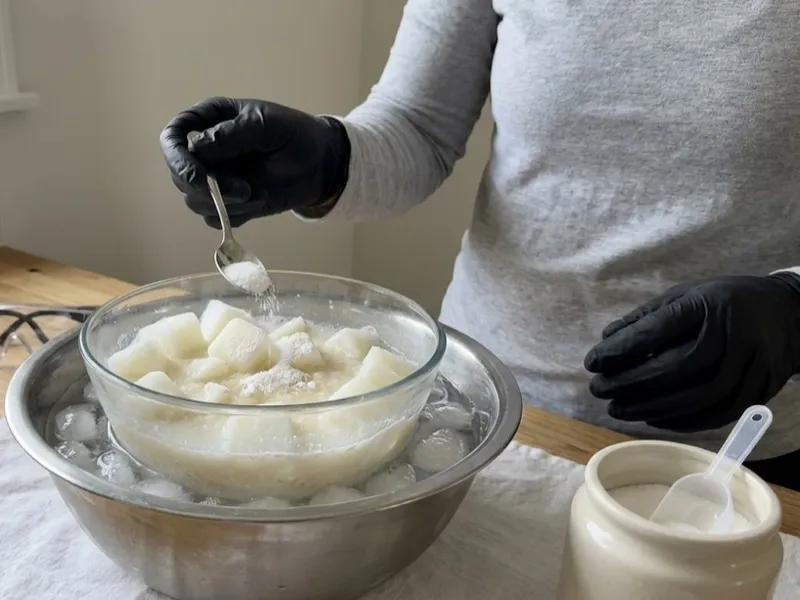
Wearing goggles and gloves, put the bowl of milk cubes in a larger bowl of ice water. Sprinkle the lye over the cubes a spoonful at a time, stirring between each, until it's all dissolved. Keep the solution below 85°F (29°C). Pale yellow is normal; bright orange means it got too warm.
Step 4: Blend to light trace
Strain the milk solution into the oils and stick blend in short bursts to light trace, about 1–3 minutes.
Step 5: Add oats, then honey
Blend the colloidal oats in with a few pulses until no clumps remain. Then stir in the honey-oil mixture by hand. Honey can speed trace and heat the batch, so it goes in last and you pour right after.
Step 6: Pour and refrigerate
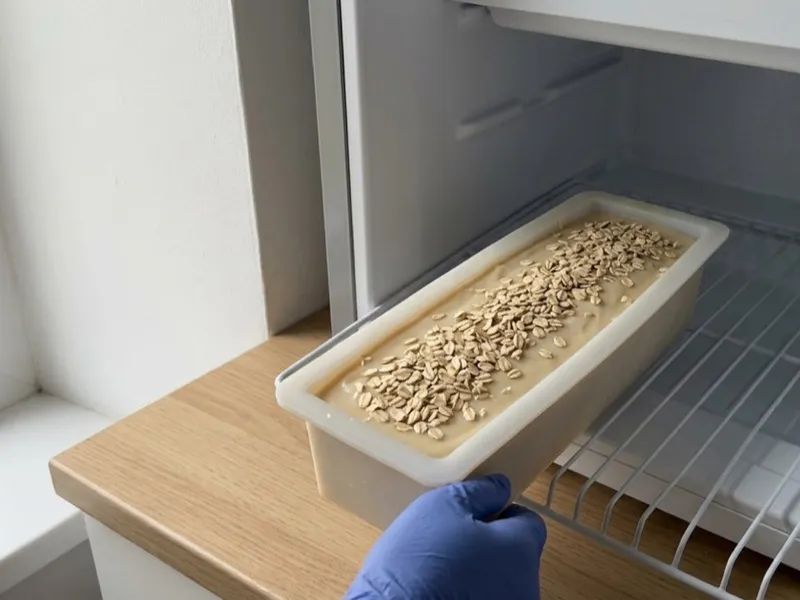
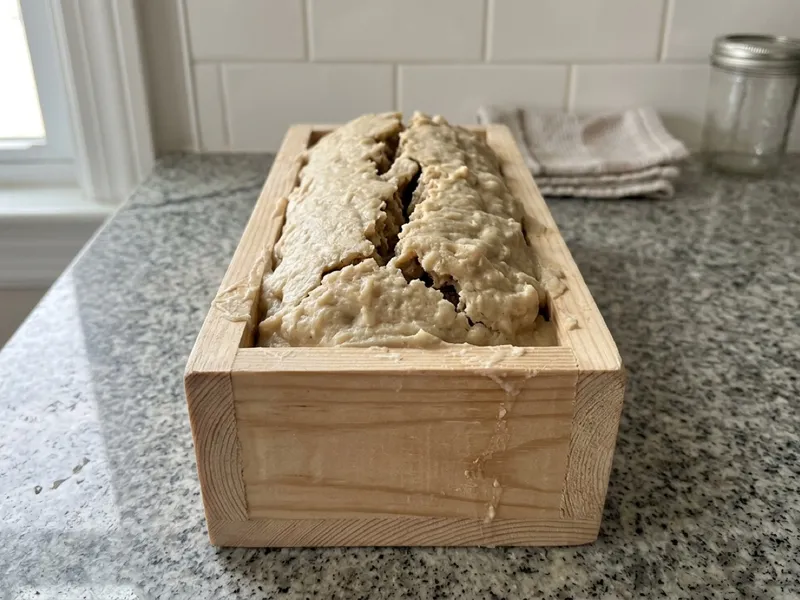
Pour into the mold, sprinkle a few rolled oats on top if you like, and put the mold straight into the fridge, uncovered, for 24 hours. Don't insulate. Three sugar sources together can overheat and crack the loaf.
Step 7: Unmold, cut and cure
Leave it at room temperature another 24 hours, then unmold and cut. Cure 6 weeks on a rack with airflow, turning the bars weekly. Milk bars firm up more slowly than water bars.
Variations
Lightly scented
Add 25 g lavender essential oil per 1000 g oils (2.5%) for a soft scent. Avoid “oatmeal milk and honey” fragrance oils high in vanillin unless you’re happy with a brown bar.
Goat milk powder
Make the lye with two thirds of the liquid as distilled water. Whisk 30 g goat milk powder into the remaining third (cool water) and add it at light trace. It runs cooler than frozen fresh milk.
Oat milk
Homemade oat milk can replace the dairy at the same weight. Freeze it the same way; it contains starch and sugar too.
If something goes wrong
- Crack or volcano on top
- The loaf overheated. Milk, honey and oats all add heat. Refrigerate right after pouring and keep honey at this amount. Overheating soap
- Dark tan or brown bar
- Sugars scorched in the lye step, or the soap gelled. Add lye more slowly over ice and skip insulation.
- Honey left sticky spots
- The honey wasn’t mixed into oil first. Next time thin it in a spoonful of warm oils before adding.
FAQ
How much honey goes in oatmeal milk and honey soap?
This recipe uses about 14 g per 1000 g of oils (roughly 2 teaspoons). More honey means more heat and a darker, stickier bar. Our honey soap recipe goes into higher amounts.
Should oatmeal milk and honey soap be scented?
It's usually unscented or lightly scented. The milk and honey add no lasting scent of their own, so the bar smells softly of clean soap. Lavender at a low rate is a common choice.
Can I use regular oatmeal?
Grind it to a fine powder first. Whole or roughly ground oats turn soggy and can feel scratchy. Colloidal oatmeal is pre-ground very fine.
How is this different from goat milk soap?
The method for the milk is the same. This bar adds honey and oats, which raise the heat and darken the color, so it is soaped cooler and refrigerated with no insulation.
Comments
No comments yet. Made this recipe? Be the first to say how it went.