Oatmeal Soap Recipe (Cold Process, Colloidal or Ground Oats)
A soft, creamy cold process bar with finely milled oats stirred in at trace, plus how to keep the oats from turning into scratchy brown flecks.
This page has affiliate links. We earn a small commission at no cost to you. Disclosure
Formula not yet verified. These numbers haven't been re-run by a second maker. Don't make this batch until this notice is gone.
- Yield
- 10 bars
- Method
- Cold process
- Difficulty
- Beginner
- Cure
- 6 weeks
- Superfat
- 5%
- Lye conc.
- 33%
On this page
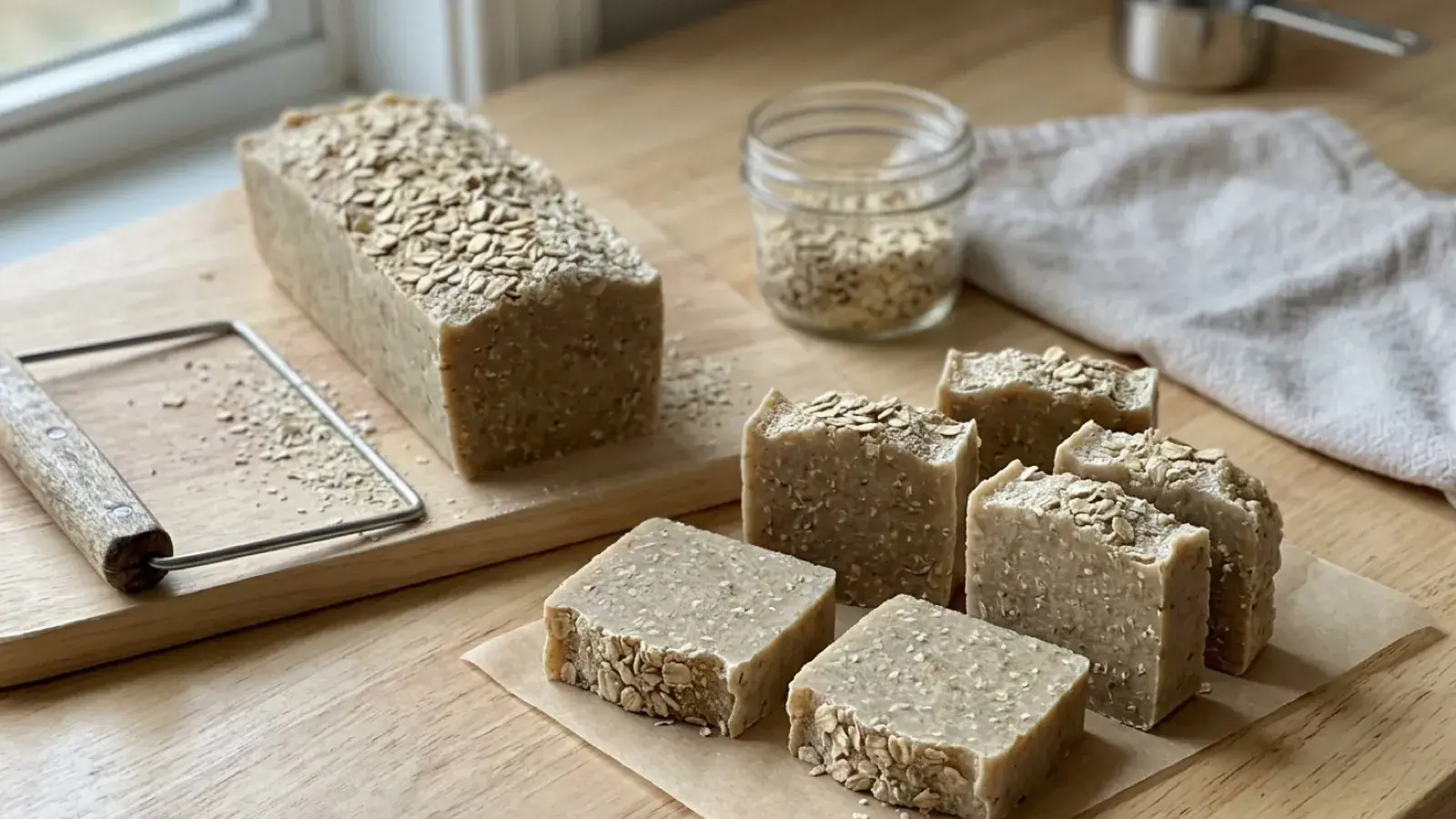
This oatmeal soap recipe is a mild, olive-and-shea cold process bar with 1% colloidal oatmeal blended in at light trace. Colloidal oats are milled so fine they vanish into the batter, giving the lather a softer, slightly silky feel without any grit. The one decision that matters is the grind: the finer the oats, the better they behave.
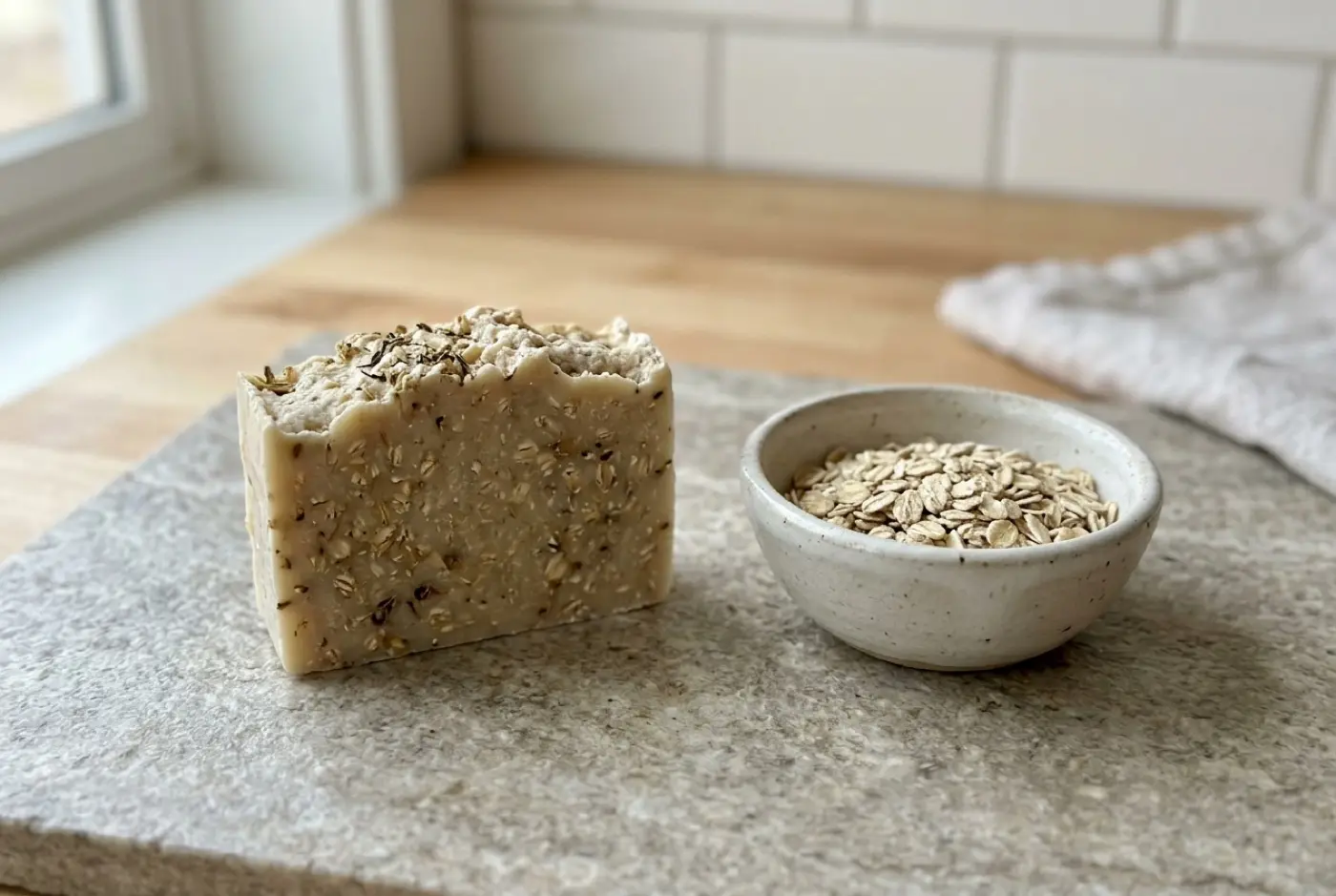
Most disappointing oatmeal bars come from whole rolled oats. Each flake drinks up water from the batter, swells, and dries into a soft brown speck that feels like wet cardboard against your skin. Grind them to flour or buy colloidal oatmeal, and keep the visible oats for a thin layer on top, where they look good and do not get soggy.
Colloidal, ground, or whole oats
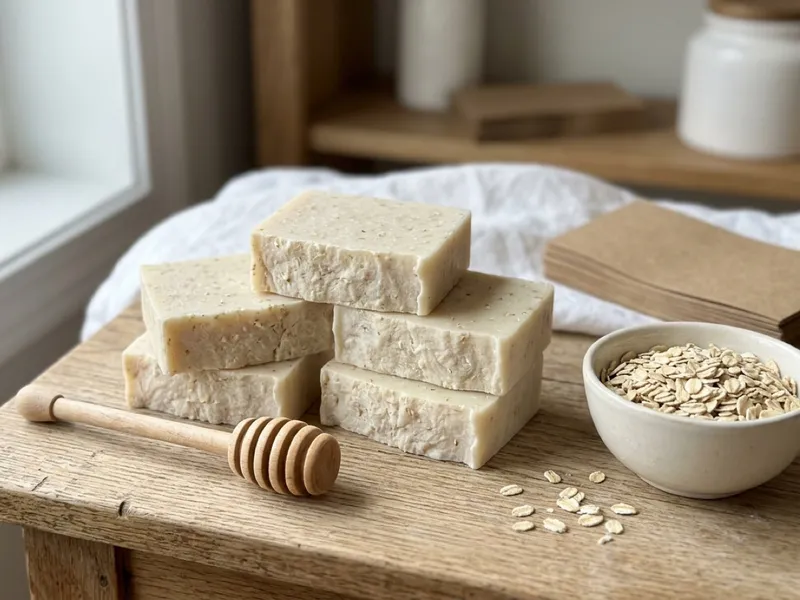
Colloidal oatmeal is the smoothest choice and the one this recipe is built around. It disperses fully, so the bar looks evenly cream-colored. Ground rolled oats work almost as well if you sift out the larger bits, and they add a faint texture you can feel. Whole flakes belong on top of the loaf as decoration, not inside it. Whichever you use, a little goes a long way: past about 2% of the oil weight, oats start to soften the bar and quiet the lather.
Why this recipe works
- Olive, 40%. The mild, conditioning backbone. It also slows trace, which gives you time to whisk in the oats without a rush.
- Coconut, 25%. Lather and a bar that firms up in a day or two. Oats mute bubbles slightly, so this is not the place to cut coconut lower.
- Shea, 20%. A dense, creamy bar that pairs with the soft feel the oats give the lather.
- Sweet almond + castor, 15%. Almond adds a silky slip; castor keeps the lather stable and fine-bubbled.
Ingredients
| Oil | % | Grams | Ounces |
|---|---|---|---|
| Olive oil | 40% | 400 g | 14.11 oz |
| Coconut oil (76°) | 25% | 250 g | 8.82 oz |
| Shea butter | 20% | 200 g | 7.05 oz |
| Sweet almond oil | 10% | 100 g | 3.53 oz |
| Castor oil | 5% | 50.0 g | 1.76 oz |
| Lye solution | |||
| Sodium hydroxide (NaOH) 5% superfat | 138 g | 4.87 oz | |
| Distilled water 33% lye concentration | 280 g | 9.89 oz | |
| Additives | |||
| Colloidal oatmeal Whisk into a few spoonfuls of the warm oils before blending, or stir in at light trace. Up to 20 g for a more noticeable feel. | 1% | 10.0 g | 0.35 oz |
| Rolled oats, ground fine (optional topping) Sprinkle on top after pouring. Grind in a coffee grinder so no whole flakes remain. | 0.5% | 5.0 g | 0.18 oz |
Equipment
Instructions
Step 1: Prepare the oats
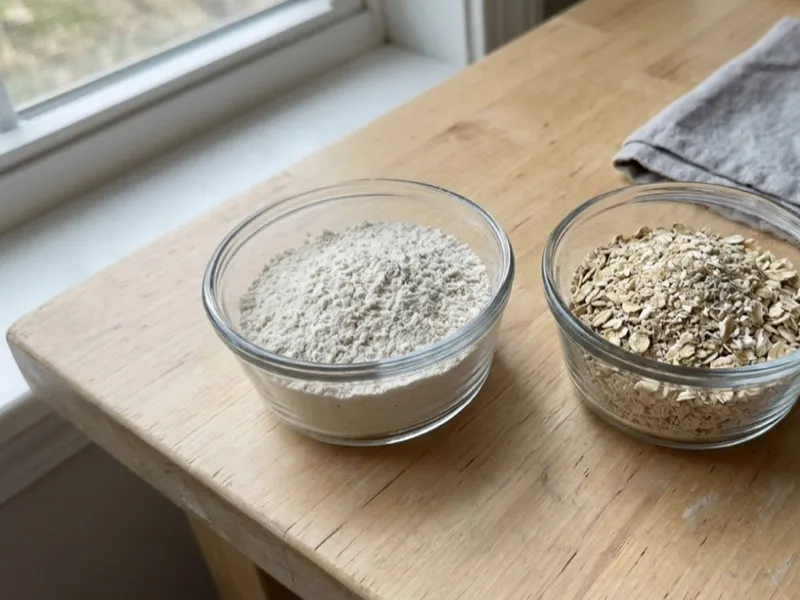
Weigh the colloidal oatmeal. If you are using rolled oats instead, grind them in a clean coffee grinder until they look like flour, then sift out any large pieces. Whole flakes soak up water in the batter, swell, and turn into soft brown specks that feel scratchy in the dish.
Step 2: Gear up and make the lye solution
Put on goggles and gloves and work with a window open. Add the lye to the distilled water, never the reverse, and stir until clear. Set it aside to cool to about 100°F (38°C), roughly 30–45 minutes.
Step 3: Melt the oils and disperse the oats
Melt the coconut oil and shea butter on low heat, then add the olive, almond and castor oils. Let the oils cool to 95–105°F (35–40°C). Spoon about 30 g of the warm oils into a small cup and whisk the colloidal oats into it until there are no dry lumps.
Step 4: Blend to light trace
Pour the lye solution into the oils down the shaft of the stick blender. Blend in short bursts, stirring between bursts, until the batter looks like thin pudding and leaves a faint trail. This usually takes 2–4 minutes.
Step 5: Add the oats
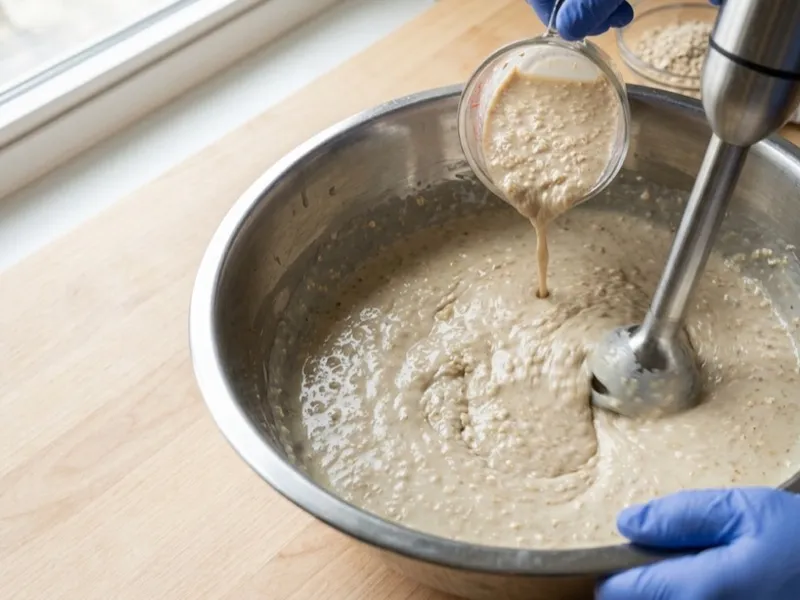
Pour in the oat slurry and stick blend for 5–10 seconds, just until it disappears. Over-blending at this point thickens the batter quickly. Look for an even oatmeal-cream color with no streaks.
Step 6: Pour, top and keep it moderate
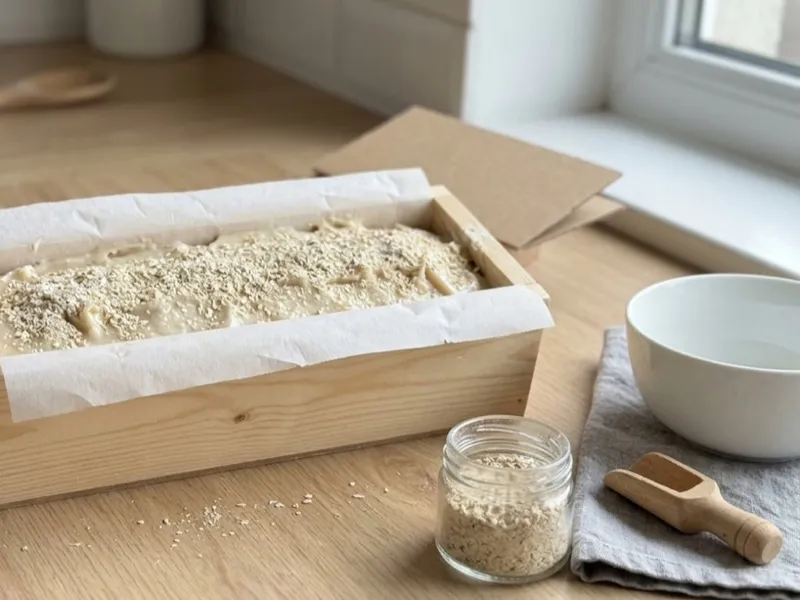
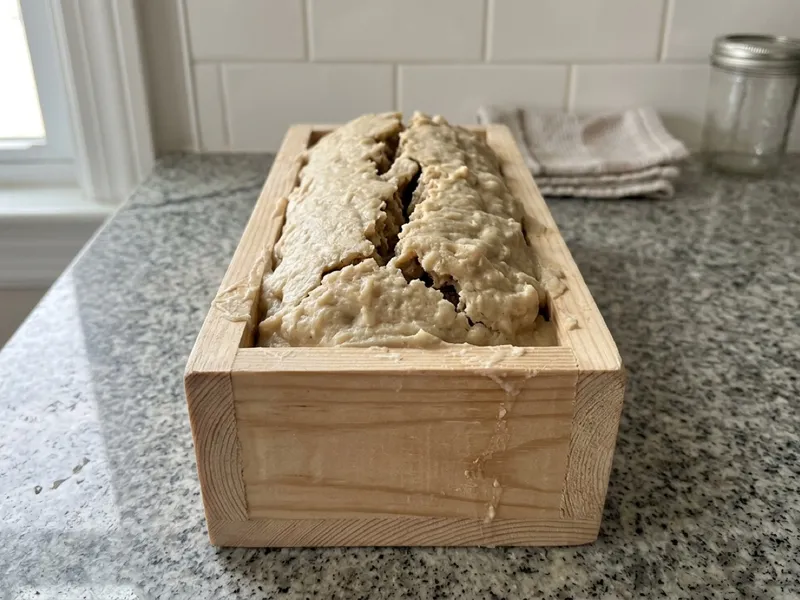
Pour into the mold, tap it on the counter to release air, and sprinkle the ground oats over the top. Cover loosely with cardboard. Oats are fine with gel, but if your kitchen is above about 80°F (27°C), leave the lid off so the center does not darken.
Step 7: Unmold, cut and cure
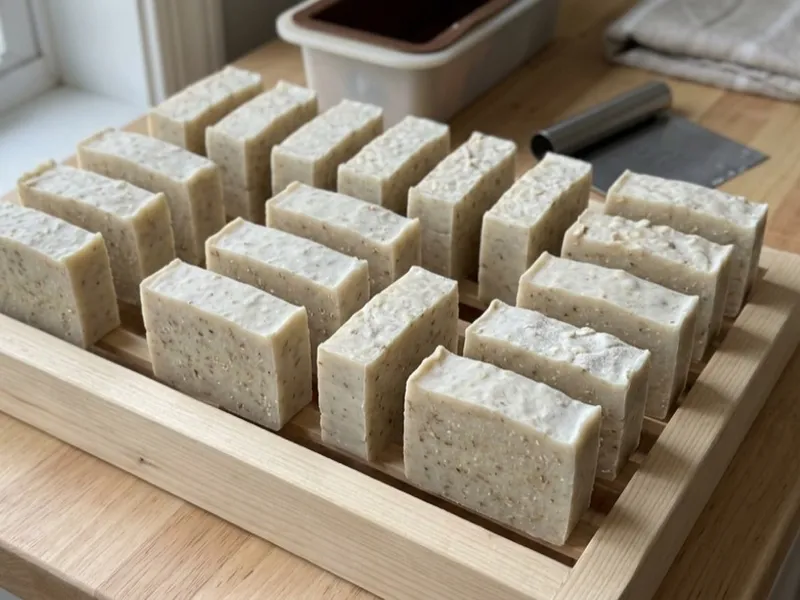
Unmold after 24–48 hours, once the loaf feels firm and no longer tacky. Cut into bars about 1 inch (2.5 cm) thick. Cure on a rack with airflow for 6 weeks, turning them once a week. The bars lighten slightly as they dry.
Variations
Oat milk
Replace up to half the water with chilled, unsweetened homemade oat milk and freeze it first. It contains starches and sugars, so treat it like milk: add lye slowly over ice.
Lavender oatmeal
Add lavender essential oil at 3% of oil weight (30 g per 1000 g) at light trace with the oats.
Oatmeal
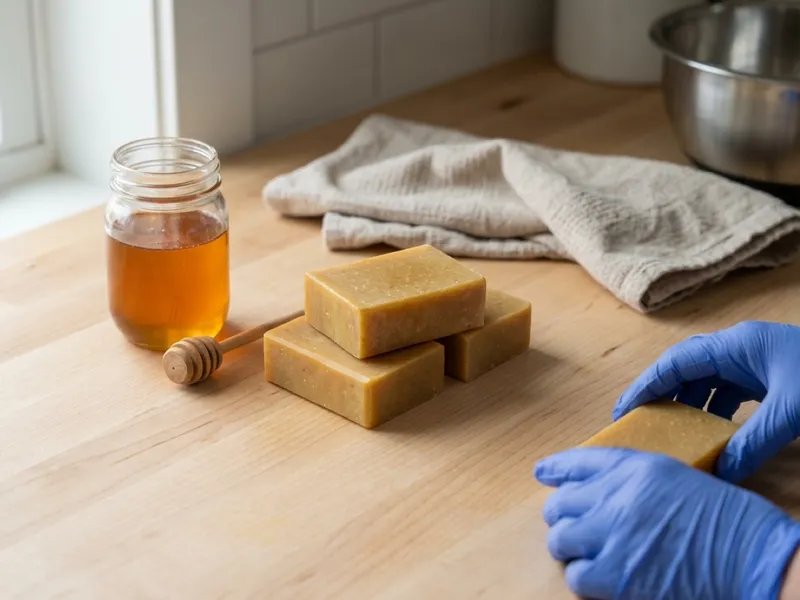
For the classic three-additive bar with its own heat management, see the oatmeal, milk and honey recipe.
If something goes wrong
- Brown specks or soggy flakes
- Whole or coarsely ground oats absorbed water and darkened. Grind finer or switch to colloidal oats.
- Dark center ring
- The loaf gelled hot in the middle and the oats darkened there. Use cooler oils or skip the insulation. Gel phase explained
- Batter thickened fast after adding oats
- You blended too long once the oats were in. Stir by hand with a spatula after the first few seconds.
FAQ
How much oatmeal do I put in soap?
About 1–2% of the oil weight, or 10–20 g of colloidal oats per 1000 g of oils. More than that makes a softer, crumbly bar with less lather.
Can I use regular oatmeal from the pantry?
Yes, if you grind it to a fine powder first. Plain rolled oats, without sugar or flavoring, work well. Instant flavored packets do not.
Should I put the oats in the lye water?
No. Hot lye cooks oats into a gummy mush and can make the solution smell scorched. Add them to the oils or at trace.
Why is my oatmeal soap tan instead of white?
Oats are naturally tan and darken a little in soap, especially if the loaf gets hot. Keeping the batch cooler and using colloidal oats keeps it lighter.
Comments
No comments yet. Made this recipe? Be the first to say how it went.