Rose Soap Recipe (Rose Clay, Honest About Rose Oil)
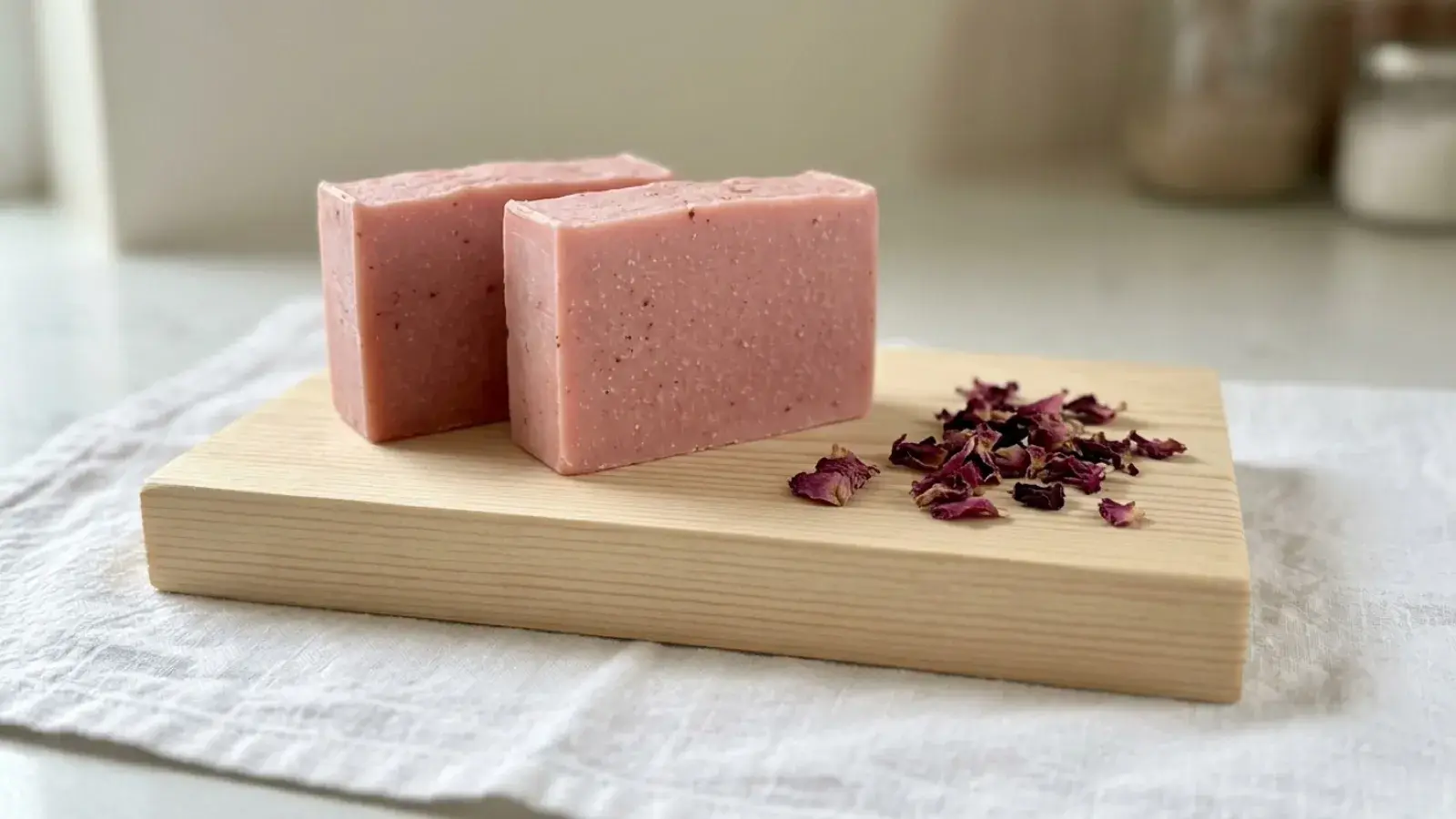
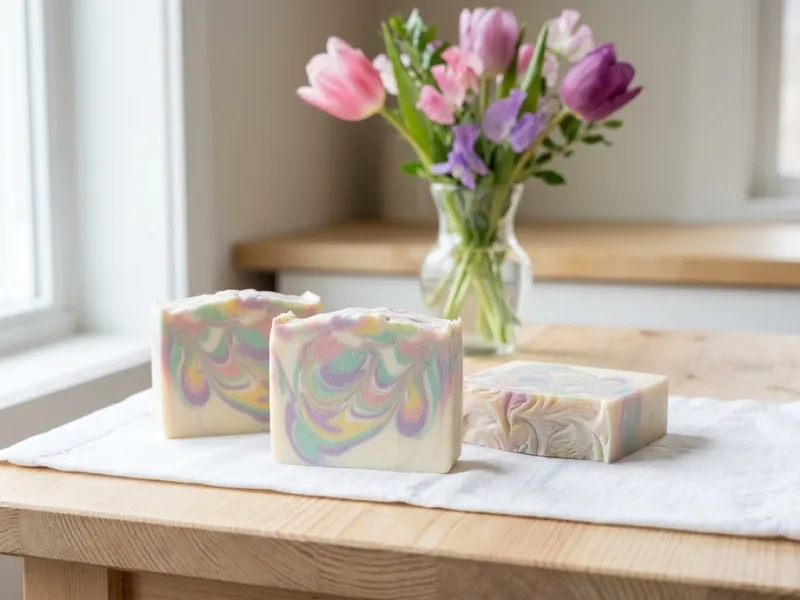
A soft pink, creamy bar colored with rose clay and scented with a rose fragrance oil, plus what real rose oil would cost.
This page has affiliate links. We earn a small commission at no cost to you. Disclosure
Formula not yet verified. These numbers haven't been re-run by a second maker. Don't make this batch until this notice is gone.
- Yield
- 10 bars
- Method
- Cold process
- Difficulty
- Beginner
- Cure
- 4 weeks
- Superfat
- 5%
- Lye conc.
- 33%
On this page
This rose soap recipe makes a dusty pink bar with a creamy lather. It’s colored with 8 g of rose clay per 1000 g of oils and scented with a skin-safe rose fragrance oil. We’re going to be straight about the scent. Real rose oil is beautiful and wildly expensive, and in soap it’s hard to justify.
What real rose would cost
Rose otto (steam-distilled) and rose absolute (solvent-extracted) take a very large quantity of petals to produce. They are priced accordingly, often well beyond what most makers pay for every other ingredient in a loaf combined. Soap also needs much more scent than perfume, because most of it washes away. Putting enough real rose in a bar to smell like rose would make each bar cost more than you could sell it for.
So most rose soaps, including commercial ones, use one of three things:
- A rose fragrance oil. It gives you a full, recognizable rose at the supplier’s recommended rate. This is what the recipe uses. Choose one listed as skin-safe for cold process, and check its vanillin content if you want the bar to stay pink. Our fragrance oils vs essential oils page explains the trade-offs.
- Rose geranium essential oil. It’s not rose, but it’s rosy, green and affordable. It isn’t in our usage chart yet, so follow the supplier’s IFRA rate.
- A blend with a touch of real rose. A small amount on top of rose geranium, as a note. It’s honest to label it “with rose absolute” only if it really contains some.
The color is simpler. Rose clay gives a soft, matte pink that holds up in lye. For a stronger color, increase the clay a little rather than reaching for petals, which brown inside the bar.
Why this recipe works
- Olive + sweet almond, 50%. A mild, conditioning base with a silky feel.
- Coconut, 25%. Lather and a firm bar.
- Cocoa butter + shea, 20%. A hard, creamy, long-lasting bar. Deodorized cocoa butter keeps the chocolate note out of the rose.
- Rose clay. A soft, natural pink that doesn’t fade the way many plant colorants do.
Ingredients
| Oil | % | Grams | Ounces |
|---|---|---|---|
| Olive oil | 35% | 350 g | 12.35 oz |
| Coconut oil (76°) | 25% | 250 g | 8.82 oz |
| Sweet almond oil | 15% | 150 g | 5.29 oz |
| Cocoa butter | 10% | 100 g | 3.53 oz |
| Shea butter | 10% | 100 g | 3.53 oz |
| Castor oil | 5% | 50.0 g | 1.76 oz |
| Lye solution | |||
| Sodium hydroxide (NaOH) 5% superfat | 139 g | 4.90 oz | |
| Distilled water Reserve 20 g to mix the rose clay into a slurry. | 282 g | 9.95 oz | |
| Additives | |||
| Rose fragrance oil (skin-safe) 5% of oil weight. Use your supplier’s recommended rate if it is lower. | 5% | 50.0 g | 1.76 oz |
| Rose clay Mixed into a slurry with 20 g of the recipe water. More clay gives a deeper, dustier pink. | 0.8% | 8.0 g | 0.28 oz |
Equipment
Instructions
Step 1: Make the lye solution
Set aside 20 g of the recipe water. Wearing goggles and gloves, add the lye to the rest of the water, never the reverse, and stir until clear. Cool to 90–100°F (32–38°C).
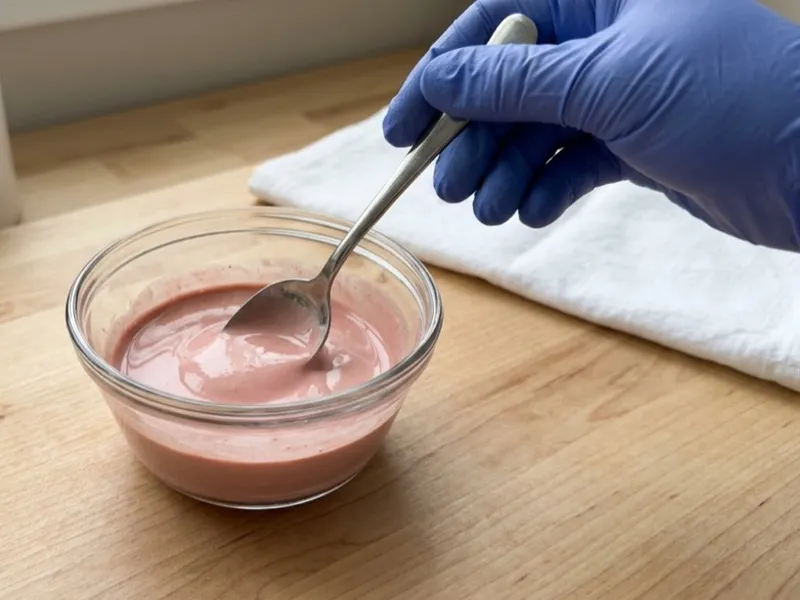
Step 2: Hydrate the rose clay
Stir the rose clay into the reserved 20 g of water until smooth with no lumps. Leave it 10 minutes. Wet clay disperses evenly; dry clay leaves pink specks.
Step 3: Melt the butters and add the oils
Melt the cocoa butter, shea and coconut oil, add the olive, almond and castor oils, and cool to 90–100°F (32–38°C). Weigh the fragrance oil into a glass cup.
Step 4: Blend in the clay, then the lye
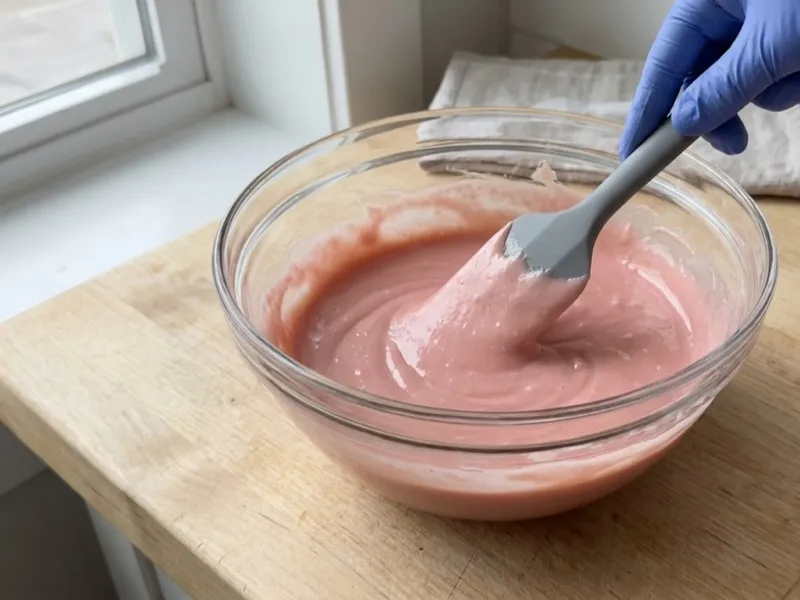
Stick blend the clay slurry into the oils first. Then add the lye solution and blend in short bursts to light trace, usually 1–3 minutes.
Step 5: Add the fragrance
Stir in the rose fragrance oil by hand. Many florals accelerate trace, so watch the batter. If it starts thickening quickly, stop blending and pour. If it stays fluid, pulse once to mix.
Step 6: Pour and decorate
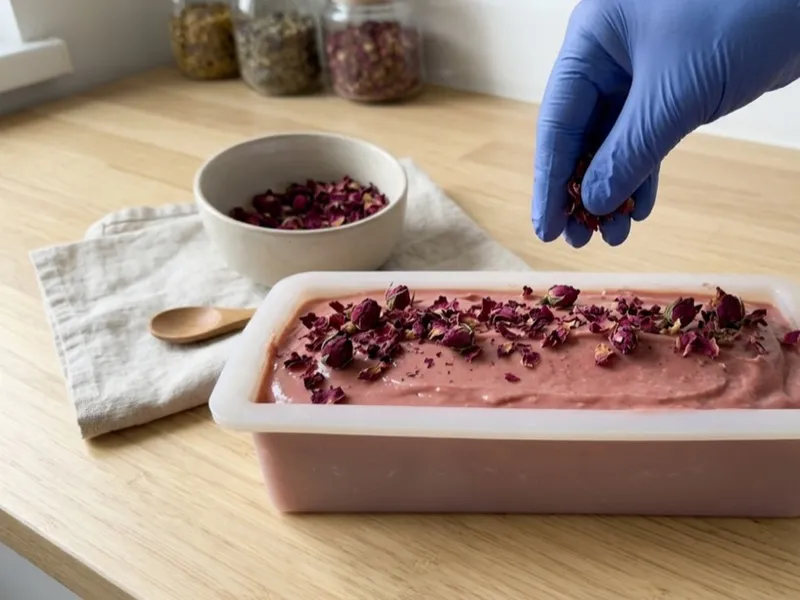
Pour into the mold and tap to settle. If you want petals, sprinkle a few dried rose petals or buds on top now. They stay prettier on top than mixed in.
Step 7: Insulate, unmold, cut and cure
Cover with cardboard and a light towel. Many rose fragrances contain vanillin, which can turn soap tan to brown; check the supplier’s vanillin content and skip insulation if you want to keep the pink clear. Unmold at 24–48 hours, cut, and cure 4 weeks.
Variations
Rose geranium essential oil
For an all-essential-oil bar, use rose geranium, which smells rosy and green. It isn’t in our usage chart yet; use the supplier’s IFRA rate and expect a lighter scent than a rose fragrance oil.
Madder root pink
Infuse madder root powder in part of the olive oil for a soft pink to coral, instead of clay. Strain it well. Colors from plant infusions vary batch to batch.
A touch of real rose
If you have rose absolute or otto, add a small amount on top of rose geranium as a note rather than as the whole scent. It won’t be strong at soap-friendly amounts.
If something goes wrong
- Pink turned beige or brown
- The fragrance oil probably contains vanillin. Choose a rose fragrance listed as low or no vanillin, or accept a darker bar. Fading and morphing color
- Batter thickened fast after scent
- Some floral fragrance oils accelerate trace. Add scent at very light trace and stir by hand. Soap seized
- Petals turned brown
- Petals inside the bar brown in lye. Keep them on top, sparingly.
FAQ
Can I use real rose essential oil in soap?
You can, but it's rarely practical. Rose otto and rose absolute are among the most expensive aromatics sold. At the amounts soap needs to smell strongly, a single loaf could cost more in rose oil than you would charge for the whole batch.
What gives soap a natural pink color?
Rose clay is the simplest. Madder root infused in oil gives pink to coral, and some makers use pink kaolin blends. Plant pinks can shift over time; clay is the most predictable of the natural options.
Does rose clay change the feel of the bar?
Slightly. Clays add a little slip and a smoother lather. At this amount the effect is mostly color.
Why did my rose soap turn brown?
Vanillin in the fragrance oil is the usual cause. Check the supplier's vanillin percentage before buying.
Comments
No comments yet. Made this recipe? Be the first to say how it went.