Honey Soap Recipe (Cold Process Without Scorching)
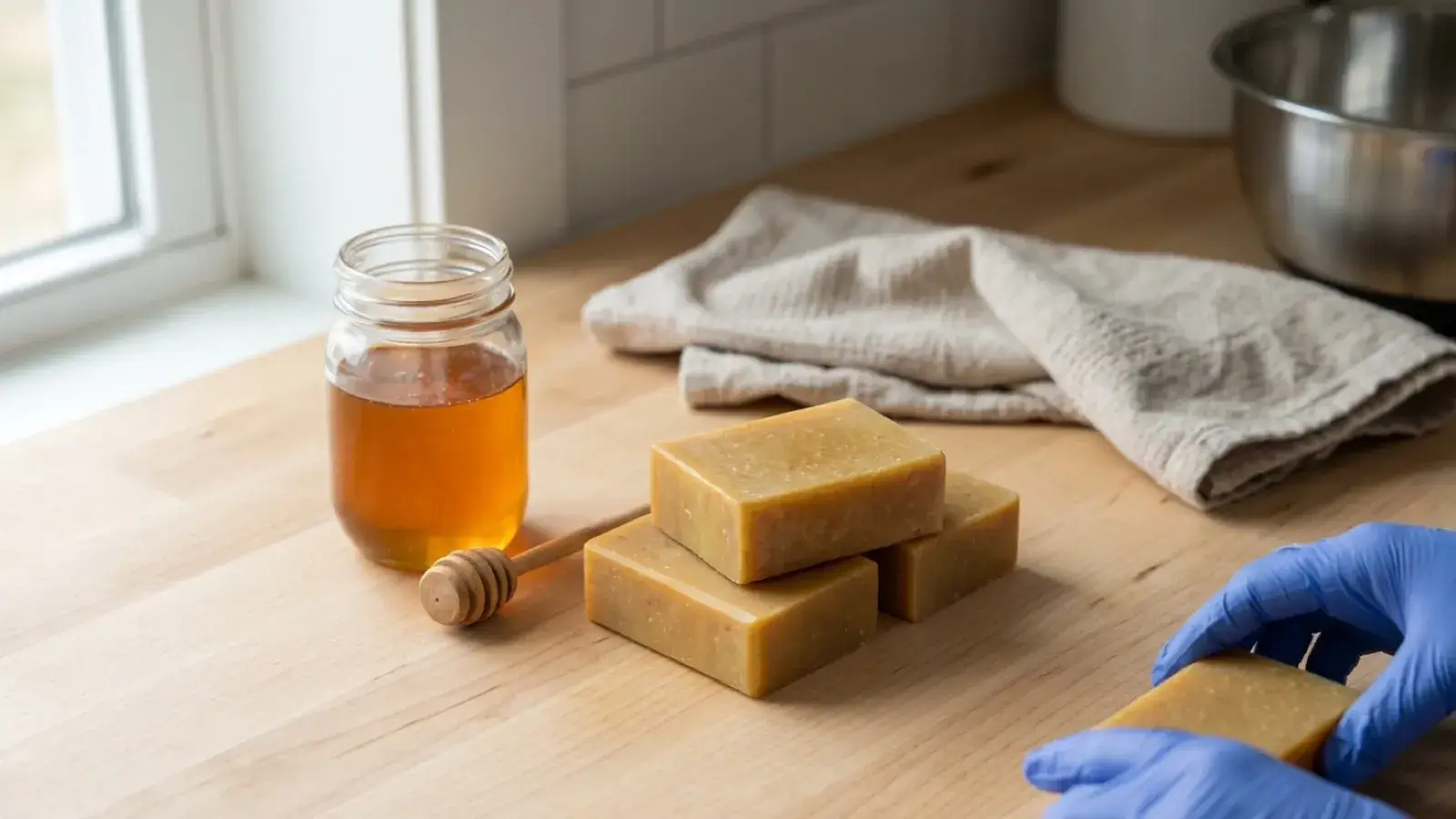
A warm golden cold process bar with a spoonful of honey, diluted first and kept cool so it doesn't overheat, crack or turn dark brown.
This page has affiliate links. We earn a small commission at no cost to you. Disclosure
Formula not yet verified. These numbers haven't been re-run by a second maker. Don't make this batch until this notice is gone.
- Yield
- 10 bars
- Method
- Cold process
- Difficulty
- Intermediate
- Cure
- 6 weeks
- Superfat
- 5%
- Lye conc.
- 33%
On this page
This honey soap recipe stirs 15 g of honey per 1000 g of oils into a mild olive and cocoa butter bar. That is about a tablespoon per kilo of oils, enough for a warm golden color and a glossy, slightly richer lather. The catch is heat: honey is sugar, and sugar makes cold process soap run hot. Thin the honey before it goes in, soap at cool temperatures, and do not wrap the mold.
Why honey overheats soap
Saponification gives off heat on its own. Sugars add to it, and honey is about 80% sugar. A honey loaf that would sit at a gentle gel can climb fast enough to crack down the middle or push batter up out of the mold. Thick honey makes it worse because it clumps and creates hot, caramelized pockets that show up as brown streaks.
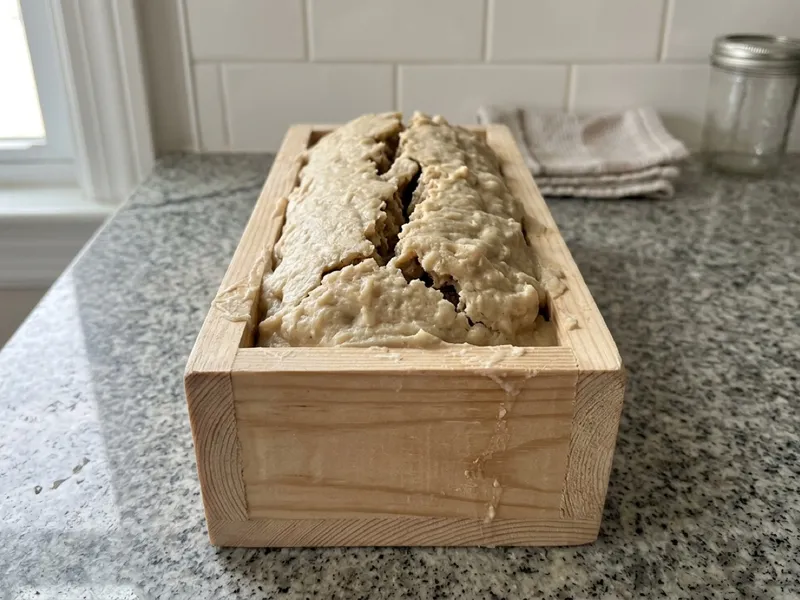
The fix is three habits. Dilute the honey in an equal weight of water taken from the batch, so it disperses evenly. Soap with oils and lye solution around 90°F (32°C) instead of the usual 100–110°F (38–43°C). Leave the mold uncovered, and if it warms up, put it in the fridge. A small translucent ring in the center is normal partial gel; a crack or a raised dome is the warning sign.
Why this recipe works
- Olive, 45%. Slow to trace, which matters here because honey speeds things up once it hits the batter.
- Coconut, 25%. Lather and firmness. Honey adds bubbles too, so 25% is plenty.
- Cocoa butter, 10%. Hardness without stearic-heavy fats that would accelerate trace further. Its faint chocolate smell suits honey.
- Honey, 1.5%. Enough for a golden tint and a richer, glossier lather. More than about 2% raises the overheating risk sharply.
Ingredients
| Oil | % | Grams | Ounces |
|---|---|---|---|
| Olive oil | 45% | 450 g | 15.87 oz |
| Coconut oil (76°) | 25% | 250 g | 8.82 oz |
| Sweet almond oil | 15% | 150 g | 5.29 oz |
| Cocoa butter | 10% | 100 g | 3.53 oz |
| Castor oil | 5% | 50.0 g | 1.76 oz |
| Lye solution | |||
| Sodium hydroxide (NaOH) 5% superfat | 140 g | 4.93 oz | |
| Distilled water Hold back 15 g of the water to dilute the honey. | 284 g | 10.00 oz | |
| Additives | |||
| Raw or pure honey Dilute 1:1 with the reserved 15 g of warm water and stir in at light trace. Do not put honey in the lye water. | 1.5% | 15.0 g | 0.53 oz |
Equipment
Instructions
Step 1: Dilute the honey
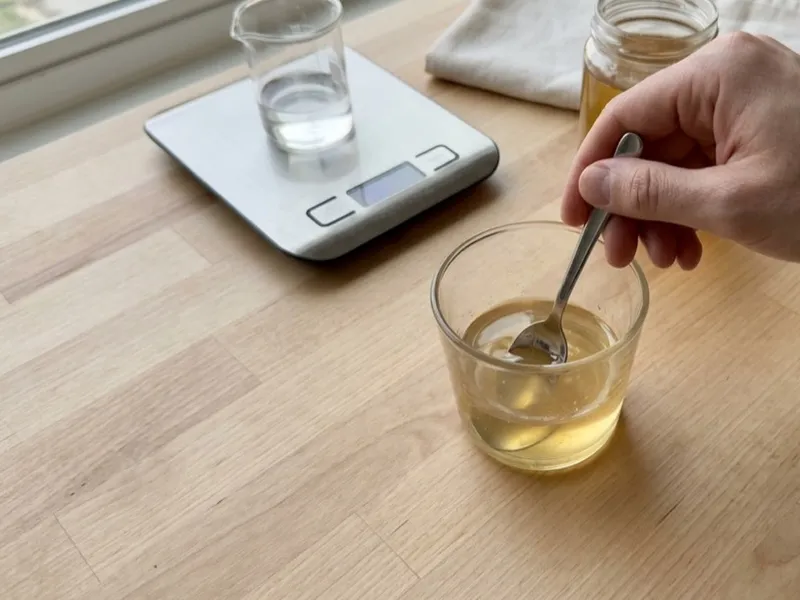
Weigh 15 g of honey into a small cup. Take 15 g of the distilled water from your total, warm it slightly, and stir it into the honey until smooth and runny. Thinned honey blends in evenly; thick honey sinks and forms sticky, overheated pockets.
Step 2: Make the lye solution with the rest of the water
Put on goggles and gloves. Add the lye to the remaining water, never the reverse, and stir until clear. Holding back 15 g makes the solution slightly stronger, about 34%, which is fine. Cool it to 85–95°F (29–35°C).
Step 3: Melt and cool the oils
Melt the coconut oil and cocoa butter gently, then add the olive, almond and castor oils. Let them cool to 85–95°F (29–35°C). Soaping cool is the first line of defense against honey heat.
Step 4: Blend to light trace, then add the honey
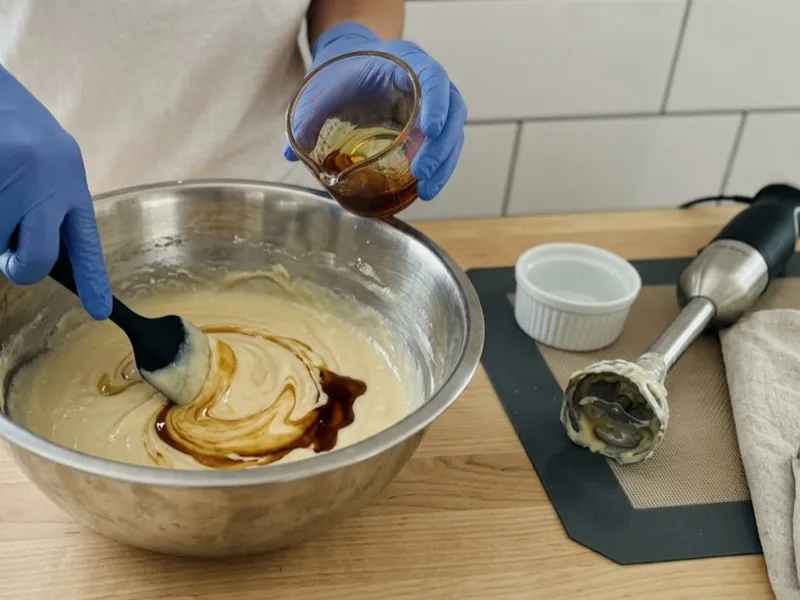
Pour the lye solution into the oils and stick blend in short bursts until you reach a thin, light trace. Add the honey mixture and stir it in with a spatula, then give it two or three quick pulses. Expect the batter to darken a shade and thicken.
Step 5: Pour and leave it uncovered
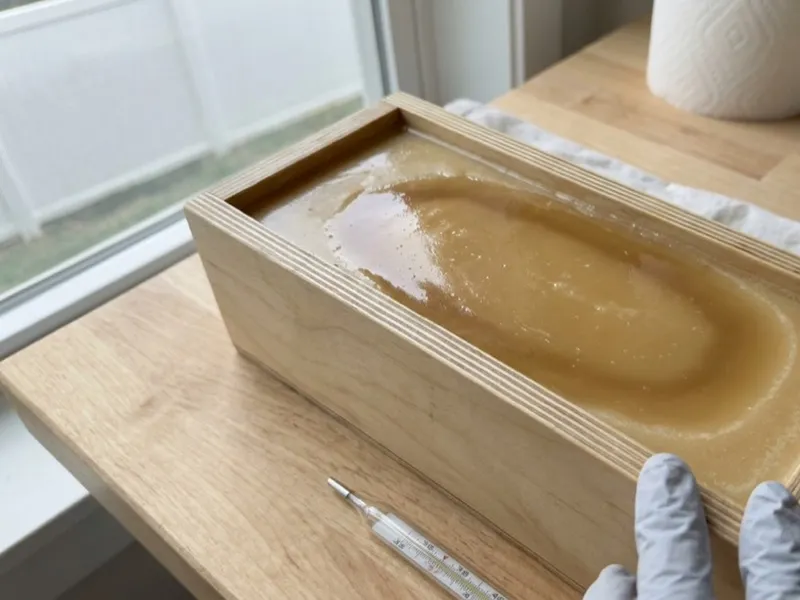
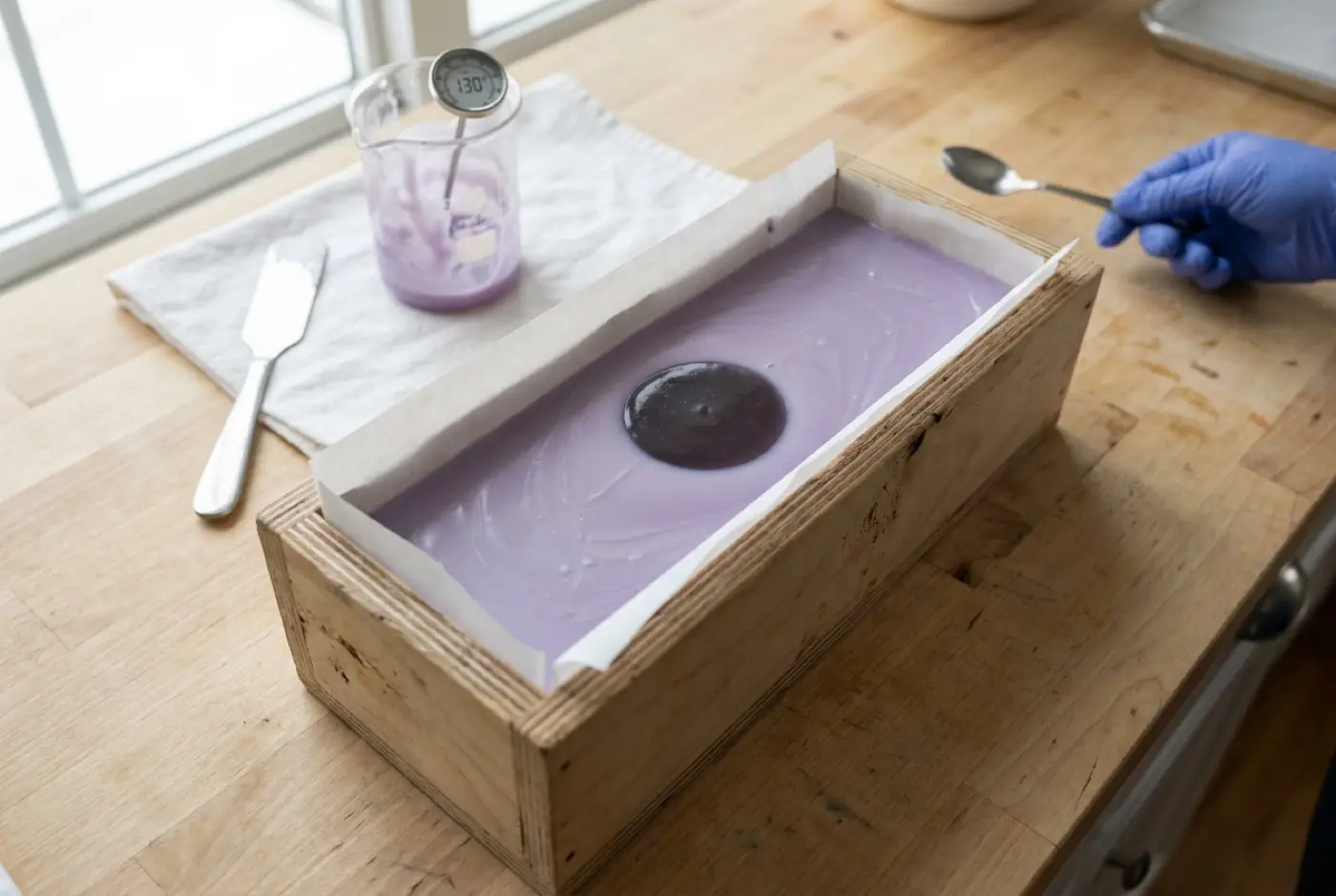
Pour into the mold and leave it uncovered in a cool room. Do not insulate. Check after 30 minutes and again at 2 hours. If the top feels warm, looks glossy in the center, or starts to crack, move the mold to the fridge.
Step 6: Unmold and cut
Unmold after 24–48 hours. Honey soap can stay a little soft and sticky at first; wait an extra day if it smears when cut.
Step 7: Cure
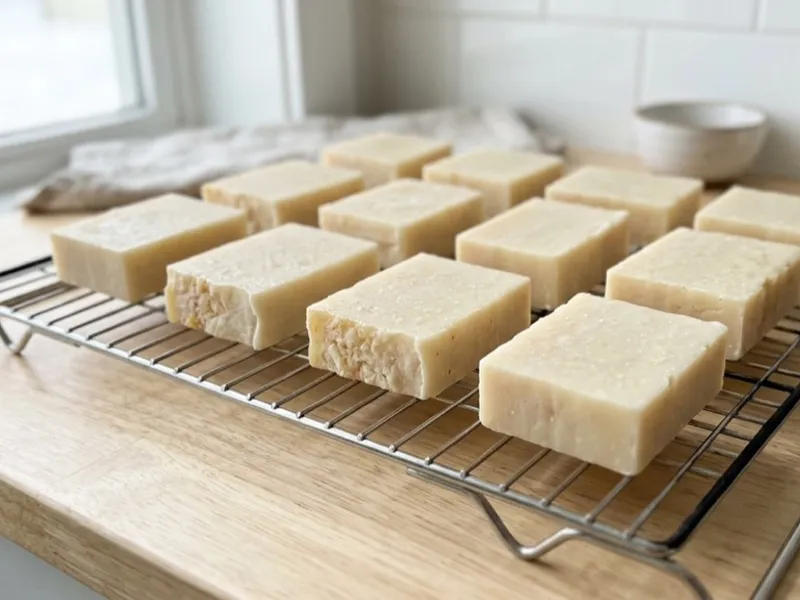
Cure the bars on a rack with airflow for 6 weeks, turning weekly. Honey can attract a little moisture, so store cured bars somewhere dry.
Variations
Beeswax touch
Replace 2% of the olive with beeswax for a firmer bar. Beeswax speeds trace, so soap at about 150°F (65°C) to keep it melted, and keep the honey at 1%.
Honey and oats
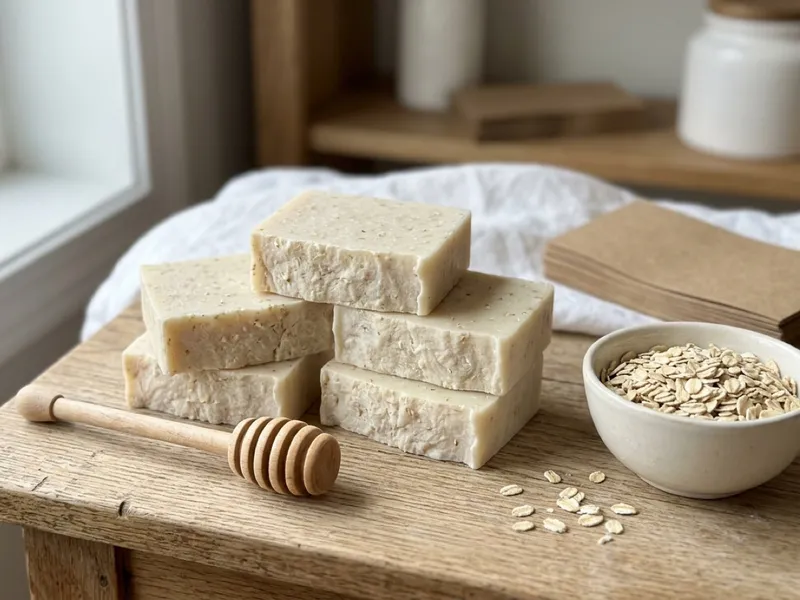
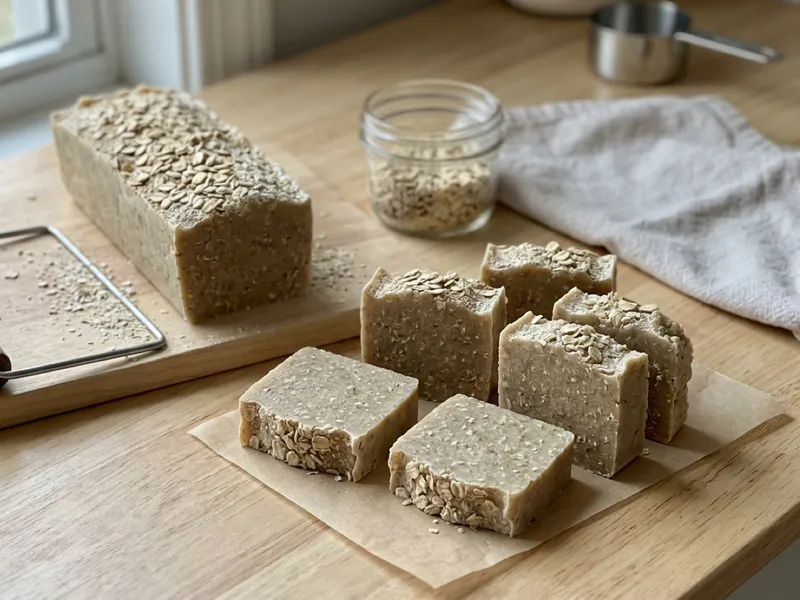
Add 10 g colloidal oatmeal per 1000 g oils, whisked into the oils before blending.
Lavender honey
Lavender essential oil at 3% of oil weight (30 g per 1000 g), added just before the honey.
If something goes wrong
- Crack or volcano on top
- The honey pushed the loaf into an overheated gel. Soap cooler and skip insulation; move to the fridge at the first sign of heat. Why soap cracks
- Brown streaks or dark center
- Undiluted honey clumped and caramelized. Thin it with water before adding. Overheating soap
- Batter thickened to mashed potatoes
- Honey accelerated trace. Add it at the lightest trace and stir by hand.
FAQ
How much honey do I add to soap?
About 1–2% of the oil weight, so 10–20 g per 1000 g of oils. This recipe uses 15 g. Larger amounts make a softer, stickier bar and a much hotter loaf.
Can I add honey to the lye water?
It is not recommended for this recipe. Hot lye scorches the sugars and turns the solution orange-brown, and it can foam. Diluting the honey and adding it at trace is easier to control.
Why did my honey soap get so hot?
Sugars add fuel to the heat soap already makes while it saponifies. Cool temperatures, no insulation and the fridge as a backup keep it in check.
Does honey soap smell like honey?
Only faintly, if at all, once cured. The honey shows up in the color and lather. Add a fragrance if you want a honey scent.
Can I use honey powder instead?
Yes. Dissolve it in the reserved water and use it the same way, at a similar weight.
Comments
No comments yet. Made this recipe? Be the first to say how it went.