Peppermint Soap Recipe (Cold Process with Rosemary)
A crisp, cooling-scented bar with peppermint and rosemary essential oils, kept within peppermint's 3% limit.
This page has affiliate links. We earn a small commission at no cost to you. Disclosure
Formula not yet verified. These numbers haven't been re-run by a second maker. Don't make this batch until this notice is gone.
- Yield
- 10 bars
- Method
- Cold process
- Difficulty
- Beginner
- Cure
- 4 weeks
- Superfat
- 5%
- Lye conc.
- 33%
On this page
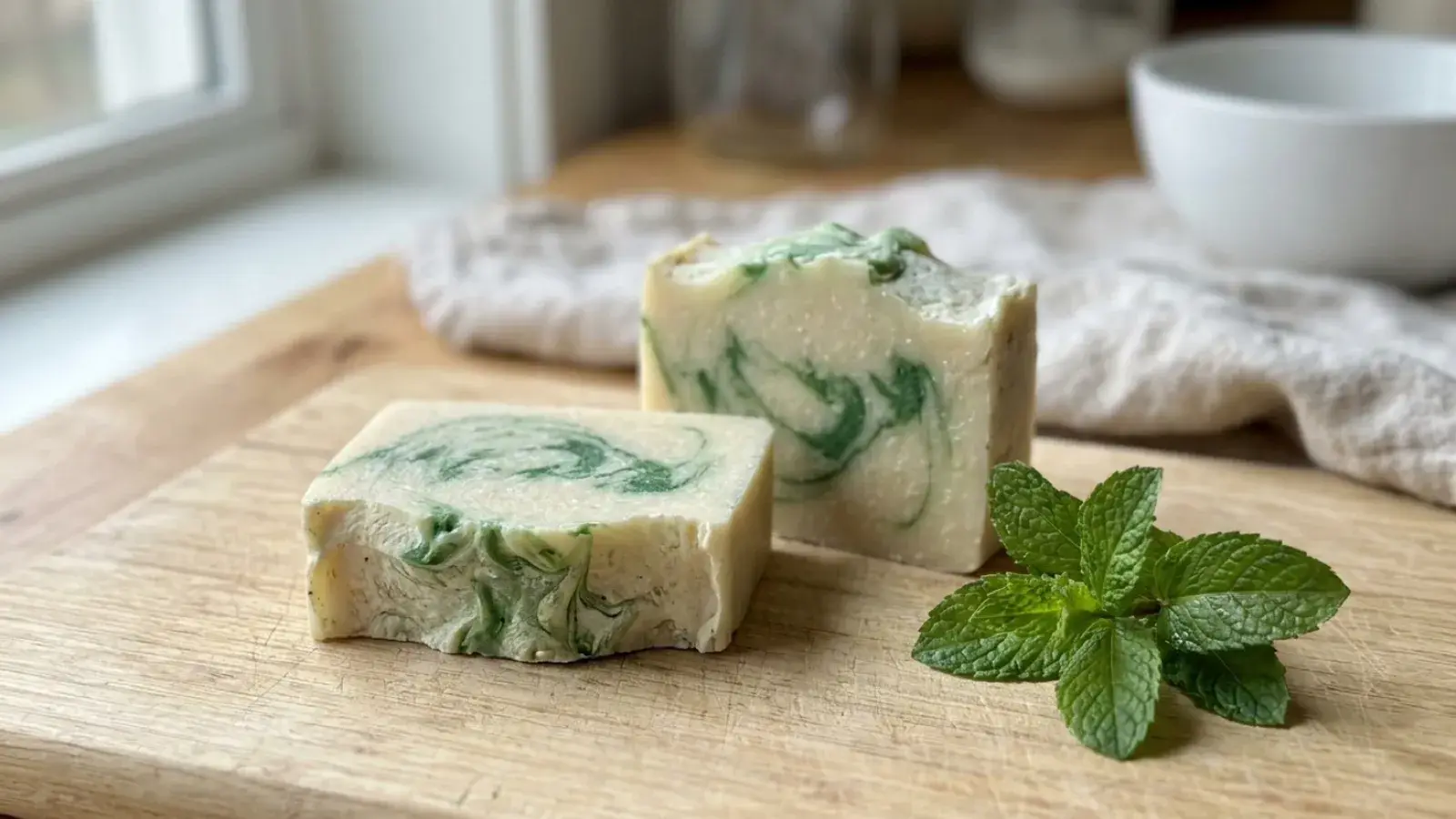
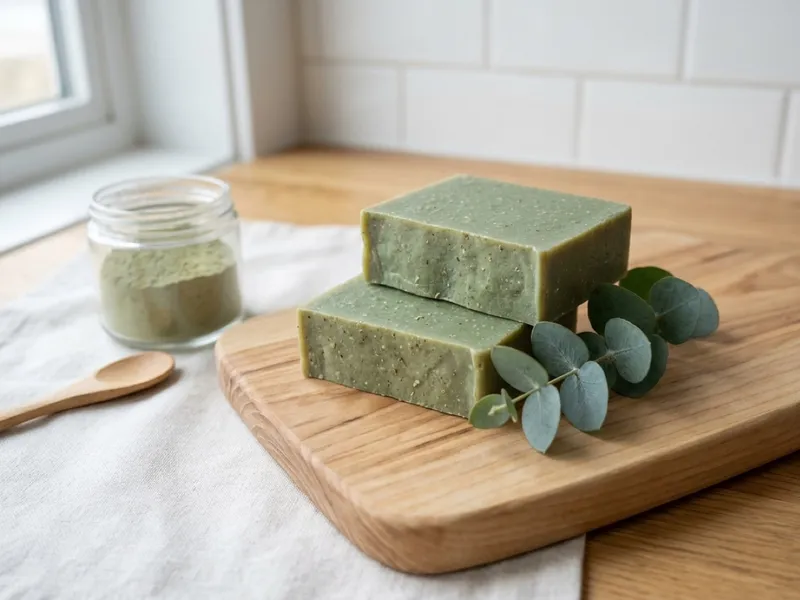
This peppermint soap recipe makes a bright, palm-free bar with a green stripe. It uses 2.5% peppermint and 1% rosemary essential oil, which is 25 g and 10 g per 1000 g of oils. Peppermint is strong and quick to fade. This formula stays inside its 3% limit and uses a slightly cooler soap so more of the scent survives the cure.
The temptation with peppermint is to keep adding more. That doesn’t work well. It’s one of the most volatile essential oils in soap making, and extra oil mostly ends up in the air of your kitchen. Over the limit, it also smells harsh up close.
Making the mint last
Three choices in this recipe keep the scent around longer than a straight peppermint bar. Rosemary acts as a supporting note. The blend smells like peppermint first, and the rosemary carries it after the brightest part fades. A cooler soap, 90–100°F (32–38°C), with only light insulation, means less heat pushing peppermint out of the loaf while it saponifies. Covered storage after the cure keeps more scent in the bar than an open shelf does.
The stripe is a simple three-layer pour (the layered soap guide covers spatula pours in more depth). The color comes from chromium oxide green, a pigment that doesn’t fade or change in lye. Natural greens like spirulina, nettle or French green clay all work, but plant greens fade toward khaki over a few months. If you sell bars, that’s worth knowing before you photograph them.
Unrefined cocoa butter gives this bar a faint chocolate note, which works with mint. If you want only peppermint, use deodorized cocoa butter.
Why this recipe works
- Olive + avocado, 60%. Slow-moving, conditioning oils that give you time to split off and color part of the batter.
- Coconut, 25%. The bubbly lather you want in a fresh, wake-up kind of bar.
- Cocoa butter, 10%. Hardness without palm. Unrefined cocoa butter smells of chocolate, which pairs well with mint; use deodorized if you want pure peppermint.
- Peppermint 2.5% + rosemary 1%. A strong mint scent below the 3% peppermint maximum. Rosemary makes it smell fuller and helps it last.
Ingredients
| Oil | % | Grams | Ounces |
|---|---|---|---|
| Olive oil | 40% | 400 g | 14.11 oz |
| Coconut oil (76°) | 25% | 250 g | 8.82 oz |
| Avocado oil | 20% | 200 g | 7.05 oz |
| Cocoa butter | 10% | 100 g | 3.53 oz |
| Castor oil | 5% | 50.0 g | 1.76 oz |
| Lye solution | |||
| Sodium hydroxide (NaOH) 5% superfat | 139 g | 4.91 oz | |
| Distilled water 33% lye concentration | 282 g | 9.96 oz | |
| Additives | |||
| Peppermint essential oil 2.5% of oil weight. Our chart’s upper limit is 3%. | 2.5% | 25.0 g | 0.88 oz |
| Rosemary essential oil 1% of oil weight. Rounds out and anchors the mint. | 1% | 10.0 g | 0.35 oz |
| Chromium oxide green For a stripe in one third of the batter. Disperse in 1 tsp oil. | 0.1% | 1.0 g | 0.04 oz |
Equipment
Instructions
Step 1: Prepare lye and oils
Wearing goggles and gloves, add the lye to the distilled water, never the reverse, and stir until clear. Melt the cocoa butter and coconut oil, add the liquid oils, and let both the lye solution and oils settle to 90–100°F (32–38°C). A slightly cooler soap holds peppermint better.
Step 2: Weigh the essential oils
Weigh the peppermint and rosemary together into a glass cup. Work in a ventilated room; peppermint vapor is strong enough to sting your eyes at close range, so don't lean over the cup.
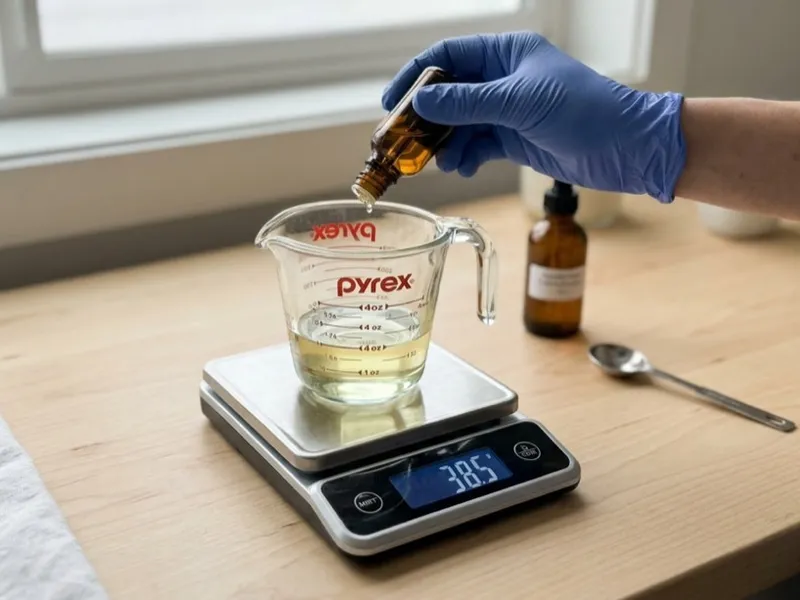
Step 3: Blend to light trace and scent the batter
Pour the lye solution into the oils and stick blend in short bursts until light trace, usually 1–3 minutes. Stir in the essential oil blend with a spatula, then give it two short pulses to fully mix.
Step 4: Split and color a third
Pour about one third of the batter into a separate jug. Stir in the dispersed chromium oxide green until even. Leave the rest uncolored.
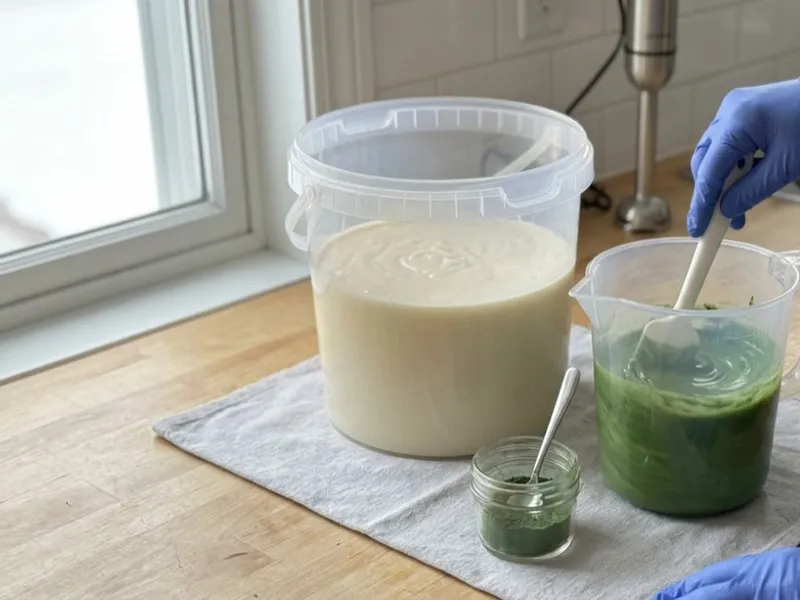
Step 5: Pour in layers
Pour half the white batter into the mold, then pour the green over a spatula so it lands gently in a stripe. Finish with the remaining white. Tap the mold to settle.
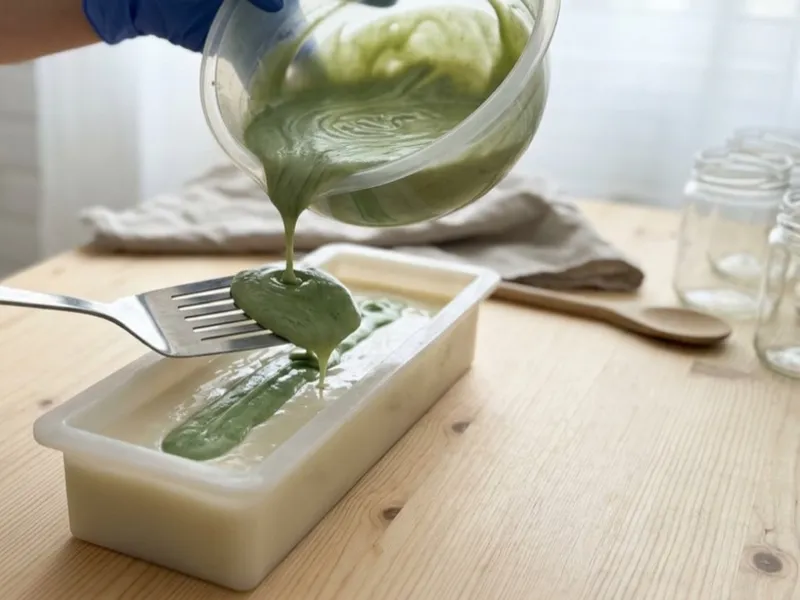
Step 6: Insulate lightly and unmold
Cover with a piece of cardboard and leave at room temperature. Heavy insulation is unnecessary and extra heat pushes more peppermint out of the bar. Unmold at 24–48 hours.
Step 7: Cut and cure
Cut into 1-inch (2.5 cm) bars and cure for 4 weeks on a rack with airflow. Wrap or box the bars once cured; peppermint scent lasts longer in a closed box than on an open shelf.
Variations
Peppermint and eucalyptus
Replace the rosemary with 10 g eucalyptus per 1000 g oils for a sharper, more open scent. Keep peppermint at 25 g.
Chocolate mint
Use unrefined cocoa butter and stir 1 tbsp cocoa powder into the colored third instead of chrome green for a brown stripe.
Fragrance oil
A skin-safe peppermint or spearmint fragrance oil can replace the essential oils at the supplier’s recommended rate. Some mint fragrances accelerate trace, so test small first.
If something goes wrong
- The mint scent faded within weeks
- Peppermint is a top note and evaporates. Add it at light trace (not into hot oils), soap cooler, skip heavy insulation, and store cured bars covered.
- Green stripe looks speckled
- Undispersed oxide. Mix the chromium oxide into oil until no specks remain before it touches batter.
- Bars feel tingly or too strong
- You may be over 3% or measured by volume. Weigh essential oils; 25 g per 1000 g oils is already strong. Essential oil usage chart
FAQ
How much peppermint essential oil should I use in soap?
This recipe uses 2.5% of oil weight (25 g per 1000 g). Our usage chart gives 1–3% as the typical range and 3% as the maximum. Going higher doesn't make the scent last much longer, but it does make the bar harsher to smell up close.
Why does my peppermint soap lose its smell?
Peppermint evaporates faster than base notes like cedarwood or patchouli. Pairing it with an anchor (rosemary here), keeping the soap cool, and storing bars covered all help.
Can I add dried mint leaves?
You can, but dried mint turns brown to black in soap and adds no scent. Use it on top or for speckles only if you like that look.
Can I use spirulina to make peppermint soap green?
Yes, but expect it to fade toward tan over months, especially in light. Chromium oxide green is the stable option.
Comments
No comments yet. Made this recipe? Be the first to say how it went.