Pine Tar Soap Recipe (Cold Process, Hand-Stirred)
A dark, smoky, old-fashioned bar with 7% pine tar, made with a slow-moving formula and hand stirring because pine tar traces fast.
This page has affiliate links. We earn a small commission at no cost to you. Disclosure
Formula not yet verified. These numbers haven't been re-run by a second maker. Don't make this batch until this notice is gone.
- Yield
- 10 bars
- Method
- Cold process
- Difficulty
- Intermediate
- Cure
- 6 weeks
- Superfat
- 5%
- Lye conc.
- 30%
On this page
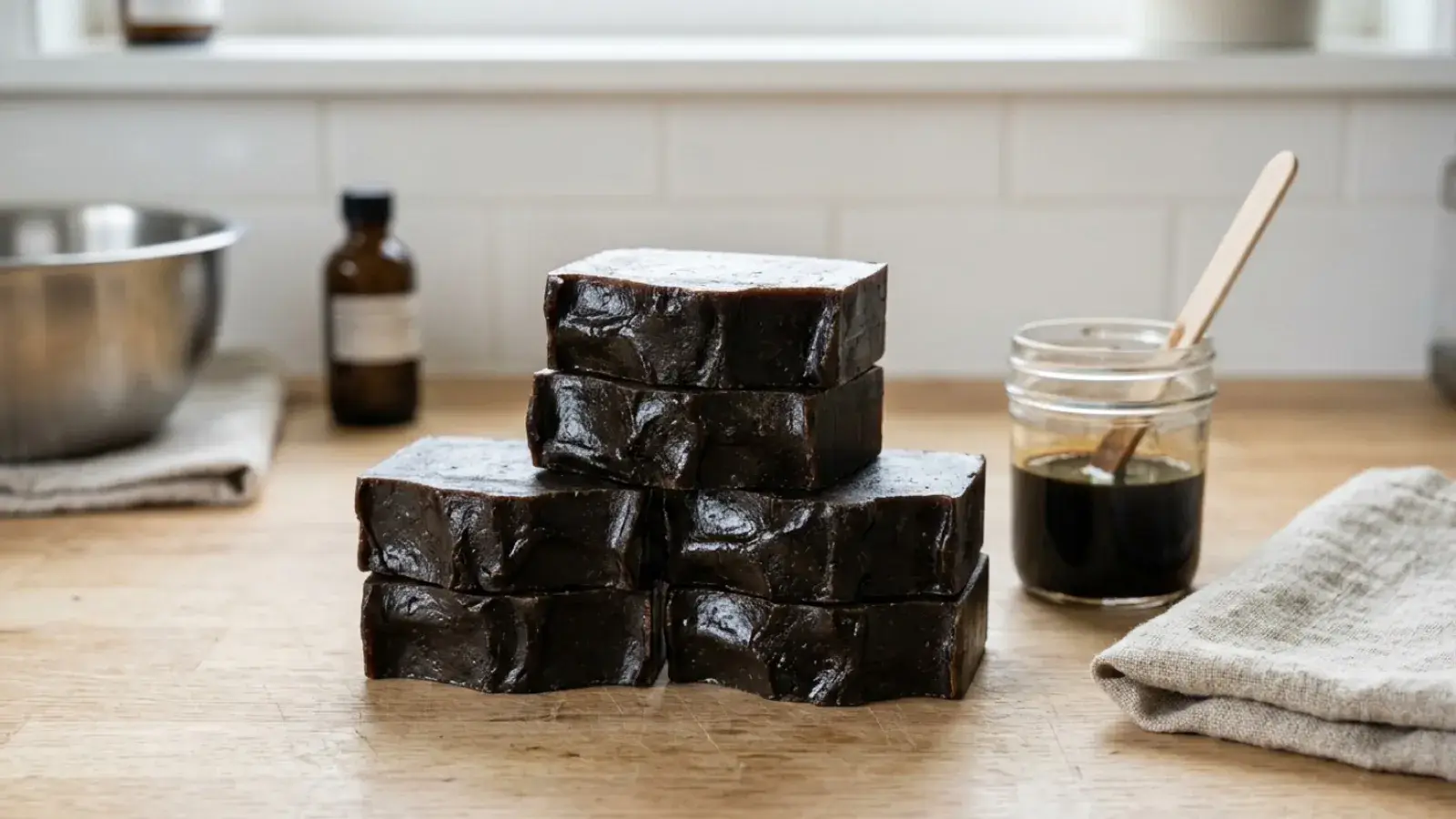
This pine tar soap recipe makes a dark, glossy bar with a smoky, campfire scent, using 7% pine tar (70 g per 1000 g of oils) in a slow-moving, olive-heavy base. Pine tar is one of the fastest-tracing additives in soap making. The whole recipe is built around one rule: soap cool, stick blend as little as possible and stir by hand.
If you’ve made a few batches already, it isn’t hard. You just need to be ready before you start. Set the mold out, keep the spatula next to the pot, and have the pine tar already weighed. Once the lye goes in you’ll have a few minutes, not twenty.
How pine tar behaves in the pot
Pine tar is made by slowly heating pine wood. It’s thick, sticky and very dark, and it contains resins that react quickly with lye. In practice, that means three things.
It accelerates trace. Even with 50% olive and extra water, expect the batter to go from thin to thick in a few minutes. Stick blending a pine tar batch the way you would a plain bar is the usual cause of a seized pot. Use two or three pulses to start the emulsion, then whisk.
It’s not in the lye calculation here. Lye calculators don’t agree on pine tar. Some list a small SAP value for it. Some makers add a little extra lye, and others leave it out and accept a slightly higher effective superfat, which is the approach this recipe takes. That’s why the formula is marked unverified until a second maker has run and test-batched it.
It smells strong. Fresh pine tar soap smells like a smoked campfire, and the smell gets into everything around it. It softens a lot over the cure. Many people grow fond of it. Cure these bars away from your other soaps, and label them clearly so nobody expects a floral bar.
Pine tar soap has a long folk history, but this is a soap like any other. We describe its scent, color and lather, not what it does for skin.
Why this recipe works
- Olive, 50%. The slowest-tracing common soap oil. Pine tar speeds trace hard, so the base has to start slow.
- Coconut + shea, 35%. Enough hardness and lather to make a usable bar, kept moderate because hard fats also speed trace.
- Pine tar, 7%. Gives the dark color, the smoky campfire scent and a slightly tacky, rich lather. Measured as an additive, not an oil.
- 30% lye concentration. Extra water buys a few more minutes of working time before the batter sets up.
Ingredients
| Oil | % | Grams | Ounces |
|---|---|---|---|
| Olive oil | 50% | 500 g | 17.64 oz |
| Coconut oil (76°) | 25% | 250 g | 8.82 oz |
| Shea butter | 10% | 100 g | 3.53 oz |
| Avocado oil | 10% | 100 g | 3.53 oz |
| Castor oil | 5% | 50.0 g | 1.76 oz |
| Lye solution | |||
| Sodium hydroxide (NaOH) 5% superfat | 138 g | 4.88 oz | |
| Distilled water A little more water than usual (30% lye concentration) to slow trace. | 323 g | 11.40 oz | |
| Additives | |||
| Pine tar (kiln-burned 7% of oil weight. Usual range 5–10%. Not in the lye calculation; see notes below. | 7% | 70.0 g | 2.47 oz |
Equipment
Instructions
Step 1: Set up everything first
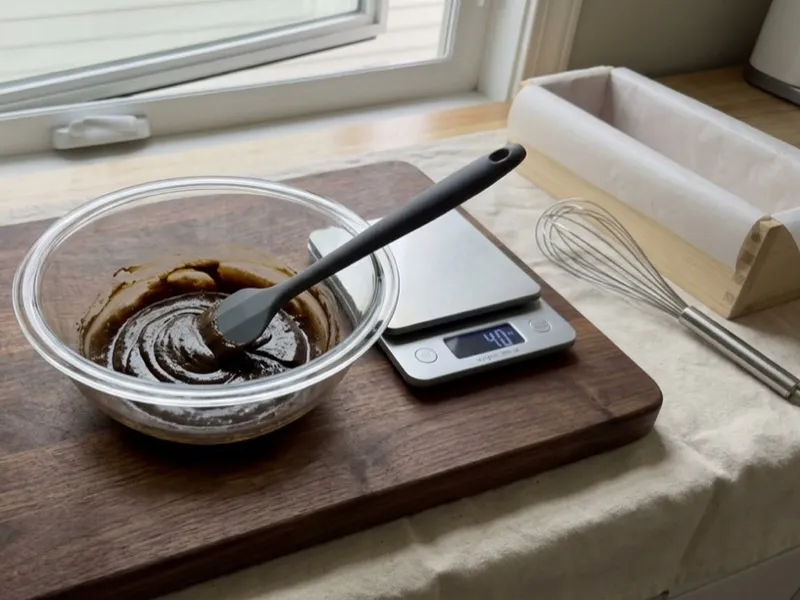
Line up the mold, a sturdy silicone spatula and a whisk before you touch lye. Weigh the pine tar into a heat-safe glass or steel container. Cover the work surface; pine tar stains wood, fabric and grout. Open a window, because the smell is strong.
Step 2: Make the lye solution and cool it well
In goggles and gloves, add the lye to the water, never the reverse, and stir until clear. Let it cool all the way to 80–90°F (27–32°C). Warmer soap traces faster, and with pine tar you want every minute.
Step 3: Warm the pine tar with the oils
Melt the coconut oil and shea butter, add the olive, avocado and castor oils, then stir in the pine tar until it's fully combined. Pine tar is thick when cold and mixes far more easily into warm oil. Cool the oil mix to 80–90°F (27–32°C).
Step 4: Combine and hand-stir to trace
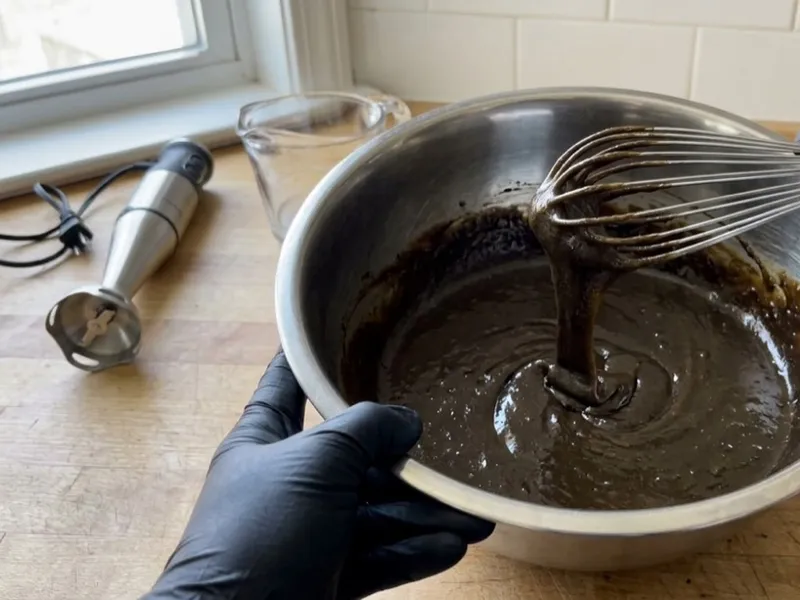
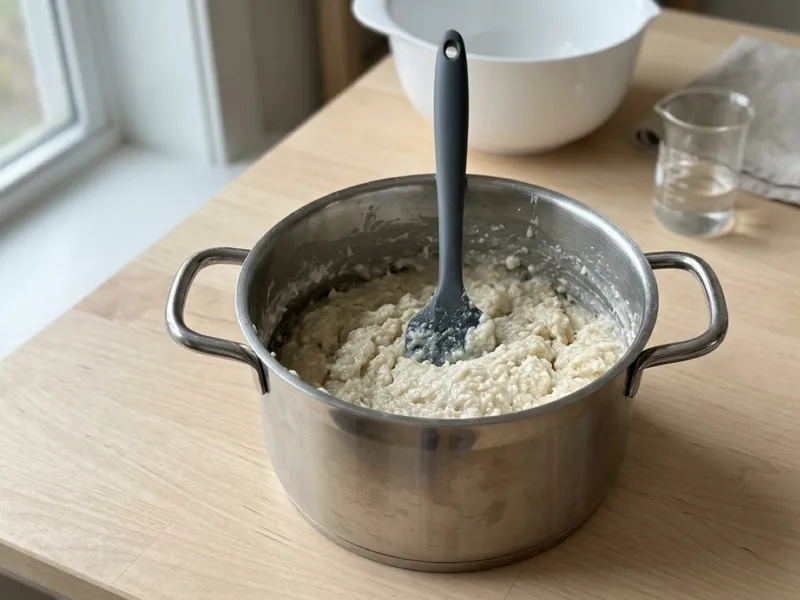
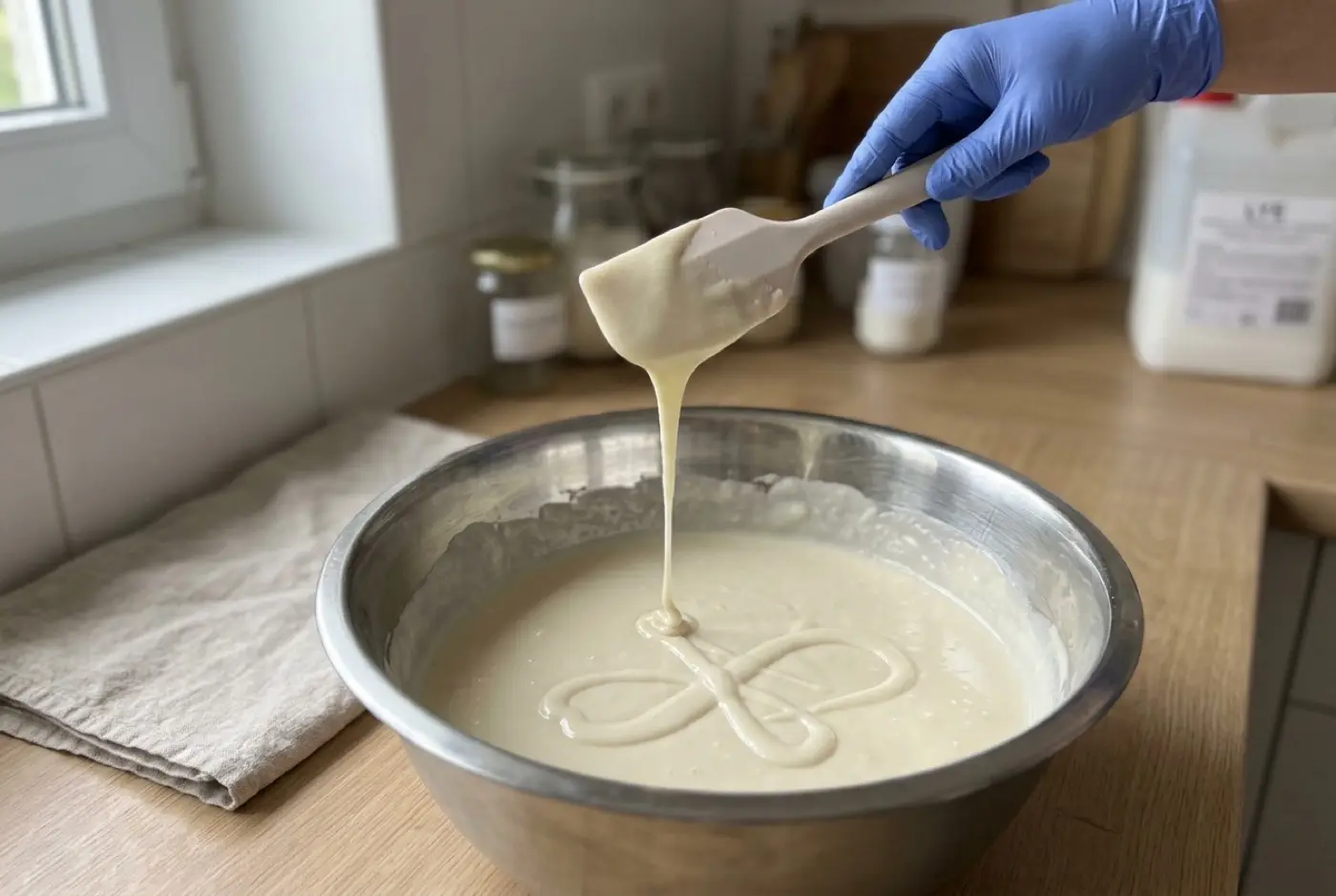
Pour the lye solution into the oil and tar mixture. Give it no more than two or three short pulses with the stick blender to start the emulsion, then switch to the whisk. Stir by hand. It will thicken quickly, often within a few minutes. Stop as soon as it reaches light-to-medium trace.
Step 5: Pour immediately
Pour or spoon the batter into the mold right away and bang the mold on the counter to knock out air pockets. If it has thickened to a pudding texture, glop it in and smooth the top with the spatula. A rustic top is normal for pine tar.
Step 6: Insulate lightly and unmold
Cover with cardboard. Pine tar loaves can run warm, so check after an hour; if the center looks glossy and spreading, uncover it and move it somewhere cool. Unmold after 24–48 hours.
Step 7: Cut and cure
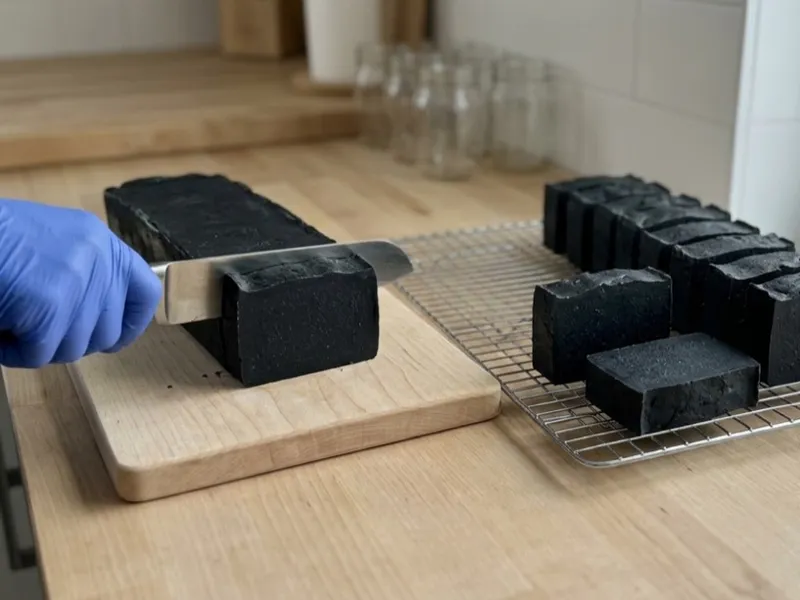
Cut with a straight knife into 1-inch (2.5 cm) bars. Cure 6 weeks on a rack with airflow, well away from other soaps; the smoky smell transfers. It mellows considerably over the cure.
Variations
Lard-based
Swap the shea and avocado for 20% lard (olive 50, lard 20, coconut 25, castor 5) for a more traditional bar. Re-run the lye numbers in the calculator.
Cedarwood top note
Add 20 g cedarwood (Atlas) essential oil per 1000 g oils to soften the tar smell. Stir it into the oils before the lye goes in.
Lower tar
Use 50 g pine tar per 1000 g oils (5%) for a lighter, less smoky bar that is slightly easier to handle.
If something goes wrong
- Seized in the pot
- The batter set up too fast to pour. Next time soap cooler, use less stick blending and hand stir. If it happens, glop it into the mold and press it down; it can still finish. What to do when soap seizes
- Separated or oily streaks
- Usually false trace from hand stirring too soon after cold, thick tar. Warm the tar into the oils so it is fully liquid before the lye goes in. False trace and separation
- Sticky bars
- Common with pine tar early in the cure. A full 6-week cure in dry air usually firms the surface.
FAQ
How much pine tar do you put in soap?
Most makers use 5–10% of oil weight. This recipe uses 7%, or 70 g per 1000 g of oils, which gives a dark bar with a clear smoky scent without being overwhelming.
Do I need to adjust the lye for pine tar?
Pine tar contains resin acids that react with some lye. Some makers add a small amount of extra lye to account for this, while others treat it as part of the superfat. This recipe leaves it out of the lye calculation, so the effective superfat is slightly higher than 5%. A second maker should check the numbers before this formula is marked verified.
Why does pine tar make soap trace so fast?
Pine tar's resins and acids react quickly with lye. That's why this recipe uses a slow, olive-heavy base, cooler temperatures, extra water and a hand stir.
What kind of pine tar should I use?
Use pure, kiln-burned pine tar sold for soap making or as traditional pine tar. Avoid products sold for animal hooves that contain other additives.
Comments
No comments yet. Made this recipe? Be the first to say how it went.