Christmas Soap Recipe (Red and Green Swirl, Cedar and Orange)
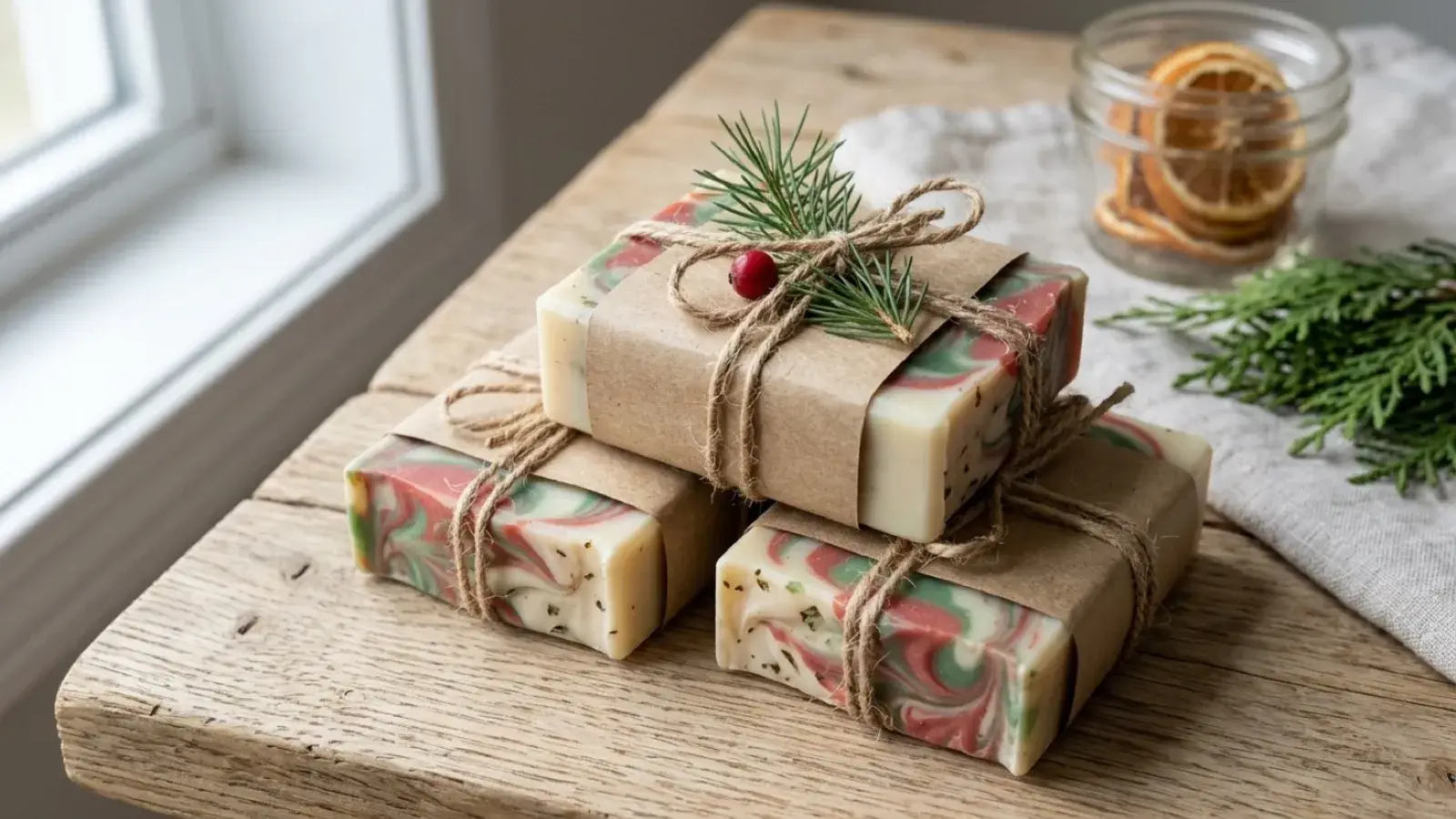
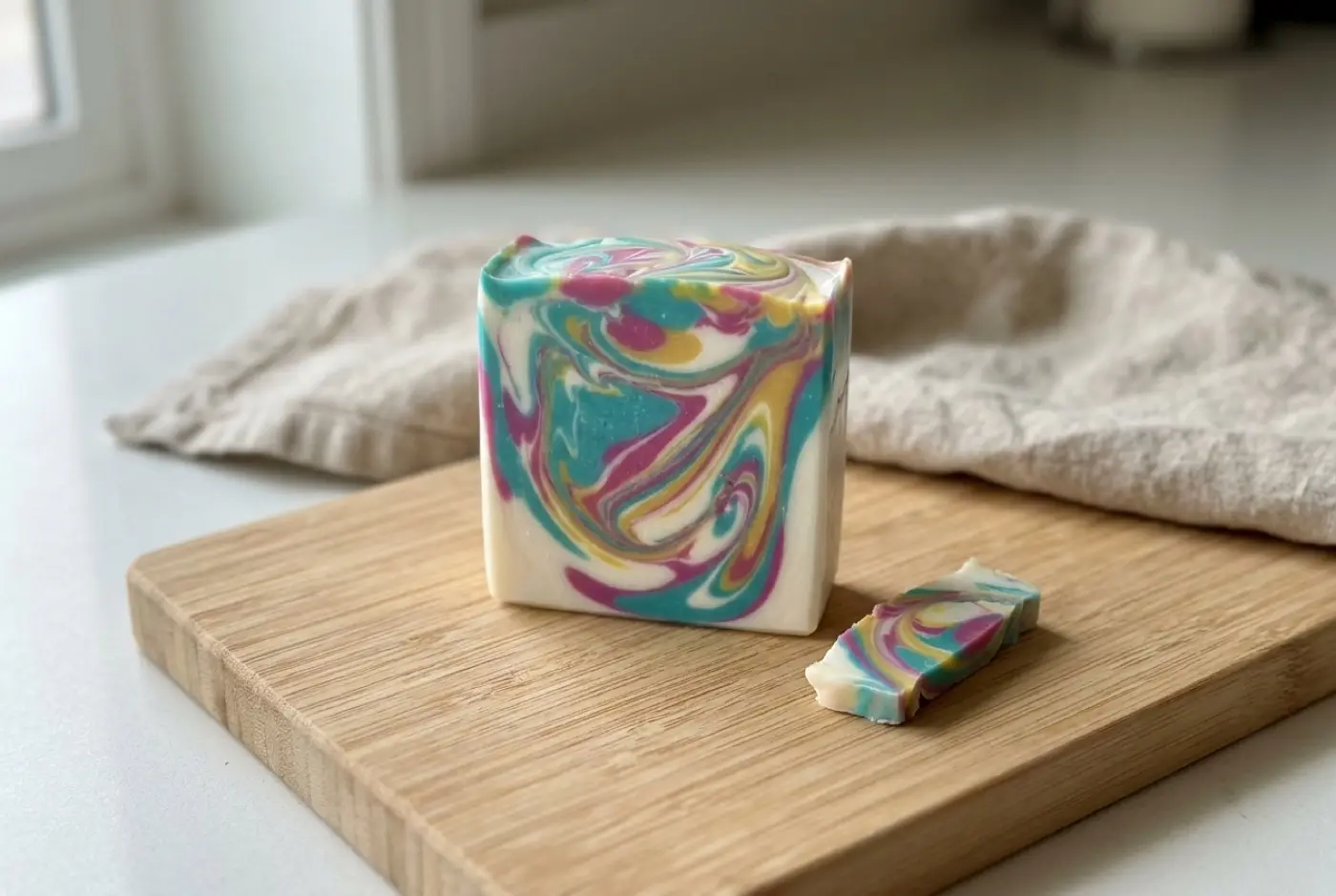
A red, green and white swirled gift bar scented with cedarwood, sweet orange and rosemary, made with a slow-moving formula so the swirl has time.
This page has affiliate links. We earn a small commission at no cost to you. Disclosure
Formula not yet verified. These numbers haven't been re-run by a second maker. Don't make this batch until this notice is gone.
- Yield
- 10 bars
- Method
- Cold process
- Difficulty
- Intermediate
- Cure
- 4 weeks
- Superfat
- 5%
- Lye conc.
- 31%
On this page
This Christmas soap recipe makes a red, green and white swirled bar scented with cedarwood, 10-fold sweet orange and rosemary. It smells like a tree and a bowl of oranges, with no spice oils. Spices would thicken the batter before you could swirl it. The formula is high in liquid oils and uses a little extra water, so you have time to split the batter three ways and pour.
Timing matters as much as technique. A holiday bar needs about four weeks to cure, so to give it in December, make it by early November.
Getting a swirl that stays festive
Keep the batter thin. For a swirl, stop at a smooth emulsion, before real trace. Soaping at 85–95°F (29–35°C) and leaving spice oils out both help. Our swirl techniques guide covers drop, in-the-pot and hanger swirls with this kind of batter.
Use stable colors. Christmas colors are hard in cold process. Many red micas bleed or turn brown, and natural greens fade to khaki. Red iron oxide and chromium oxide green don’t change, and titanium dioxide gives the white portion contrast. Disperse each one in a little oil first so nothing speckles.
Watch the fragrance. If you switch to a fragrance oil, check two things on the supplier’s page. Does it accelerate trace, and how much vanillin does it contain? Vanillin turns soap tan to brown, and a brown swirl reads as mud.
If swirling feels like too much for a gift batch, the layered variation below is calmer and still looks seasonal. Our layered soap guide explains how to get clean lines. For wrapping ideas, see how to wrap and package soap.
Why this recipe works
- Olive + apricot kernel, 58%. Slow-tracing liquid oils keep the batter thin long enough to split into three colors and swirl.
- Coconut + shea, 37%. Enough hardness and lather for a bar people will actually use, not just display.
- Cedar, orange, rosemary. A tree-and-peel scent without spice oils, which speed up trace and would make the swirl hard. 5% total, each within our chart’s limits.
- Oxides, not plant colors. Red and green from plants often fade or turn brown. Oxides stay put, so the bars still look festive in December.
Ingredients
| Oil | % | Grams | Ounces |
|---|---|---|---|
| Olive oil | 40% | 400 g | 14.11 oz |
| Coconut oil (76°) | 25% | 250 g | 8.82 oz |
| Apricot kernel oil | 18% | 180 g | 6.35 oz |
| Shea butter | 12% | 120 g | 4.23 oz |
| Castor oil | 5% | 50.0 g | 1.76 oz |
| Lye solution | |||
| Sodium hydroxide (NaOH) 5% superfat | 139 g | 4.89 oz | |
| Distilled water Slightly more water than usual to keep the batter fluid for swirling. | 308 g | 10.88 oz | |
| Additives | |||
| Cedarwood (Atlas) essential oil 2.5% of oil weight. The evergreen base of the blend. | 2.5% | 25.0 g | 0.88 oz |
| Sweet orange essential oil (10-fold) 1.5% of oil weight. | 1.5% | 15.0 g | 0.53 oz |
| Rosemary essential oil 1% of oil weight. Adds a fresh, needle-like note. | 1% | 10.0 g | 0.35 oz |
| Titanium dioxide For the white portion. Disperse in 1 tbsp oil. | 0.3% | 3.0 g | 0.11 oz |
| Chromium oxide green For the green portion. Disperse in 1 tsp oil. | 0.2% | 2.0 g | 0.07 oz |
| Red iron oxide For the red portion; gives a deep brick red. Disperse in 1 tsp oil. | 0.2% | 2.0 g | 0.07 oz |
Equipment
Instructions
Step 1: Plan the timing and colors
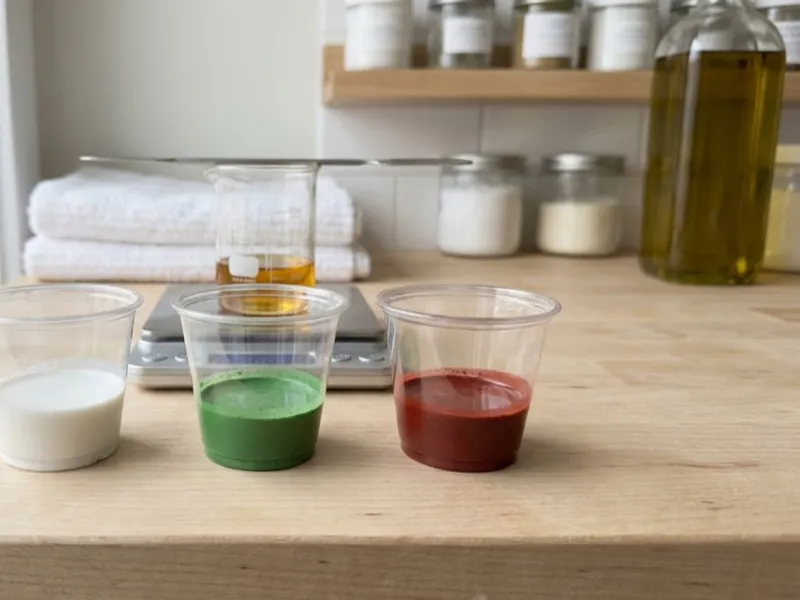
Make this by early November for December giving; it needs 4 weeks to cure. Disperse each colorant in oil in its own cup before you start (titanium dioxide, chrome green, red oxide), and weigh the three essential oils together.
Step 2: Make the lye solution and cool it
Wearing goggles and gloves, add the lye to the water, never the reverse, and stir until clear. Cool it and the melted oils to 85–95°F (29–35°C). Cooler soap stays fluid longer.
Step 3: Emulsify, not trace
Pour the lye solution into the oils and stick blend in very short bursts just until the batter is emulsified and smooth, with no oily streaks. Stop before it thickens. Stir in the essential oil blend by hand.
Step 4: Split into three
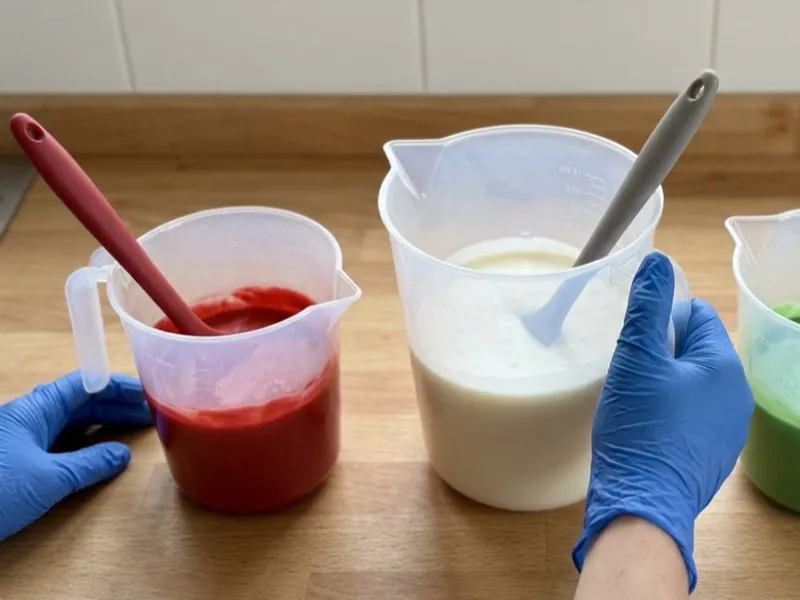
Pour about half the batter into one jug for white, and a quarter each into two jugs for red and green. Stir each color in by hand with a spatula; the oxides mix in easily if they were well dispersed.
Step 5: Drop swirl
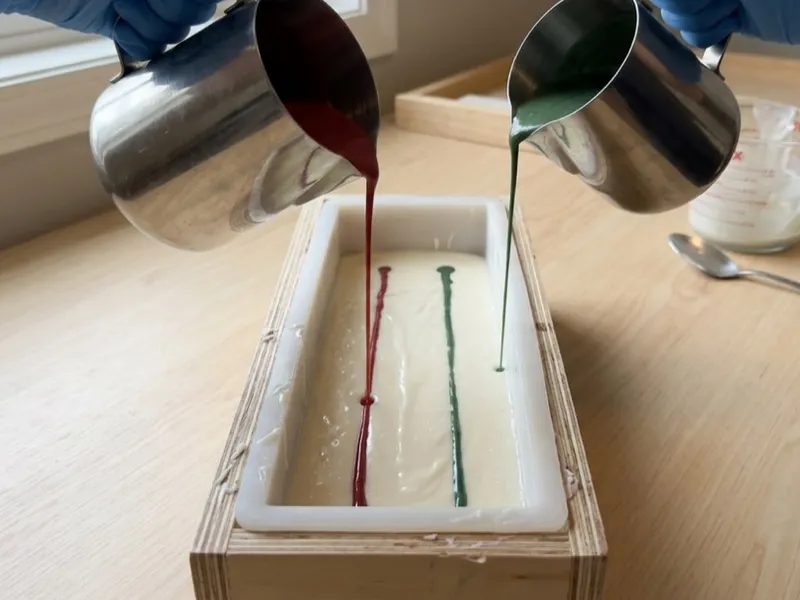
Pour a layer of white into the mold. Then pour red and green from high up in thin lines along the length of the loaf, so they sink into the white. Repeat white, red, green until the jugs are empty. Finish by running a chopstick in loops through the loaf once, then stop. See our swirl techniques guide for pour patterns.
Step 6: Insulate lightly and unmold
Cover with cardboard and a light towel. Titanium dioxide can cause glycerin rivers if the loaf gets very hot, so don't overdo the insulation. Unmold after 24–48 hours.
Step 7: Cut, cure and wrap
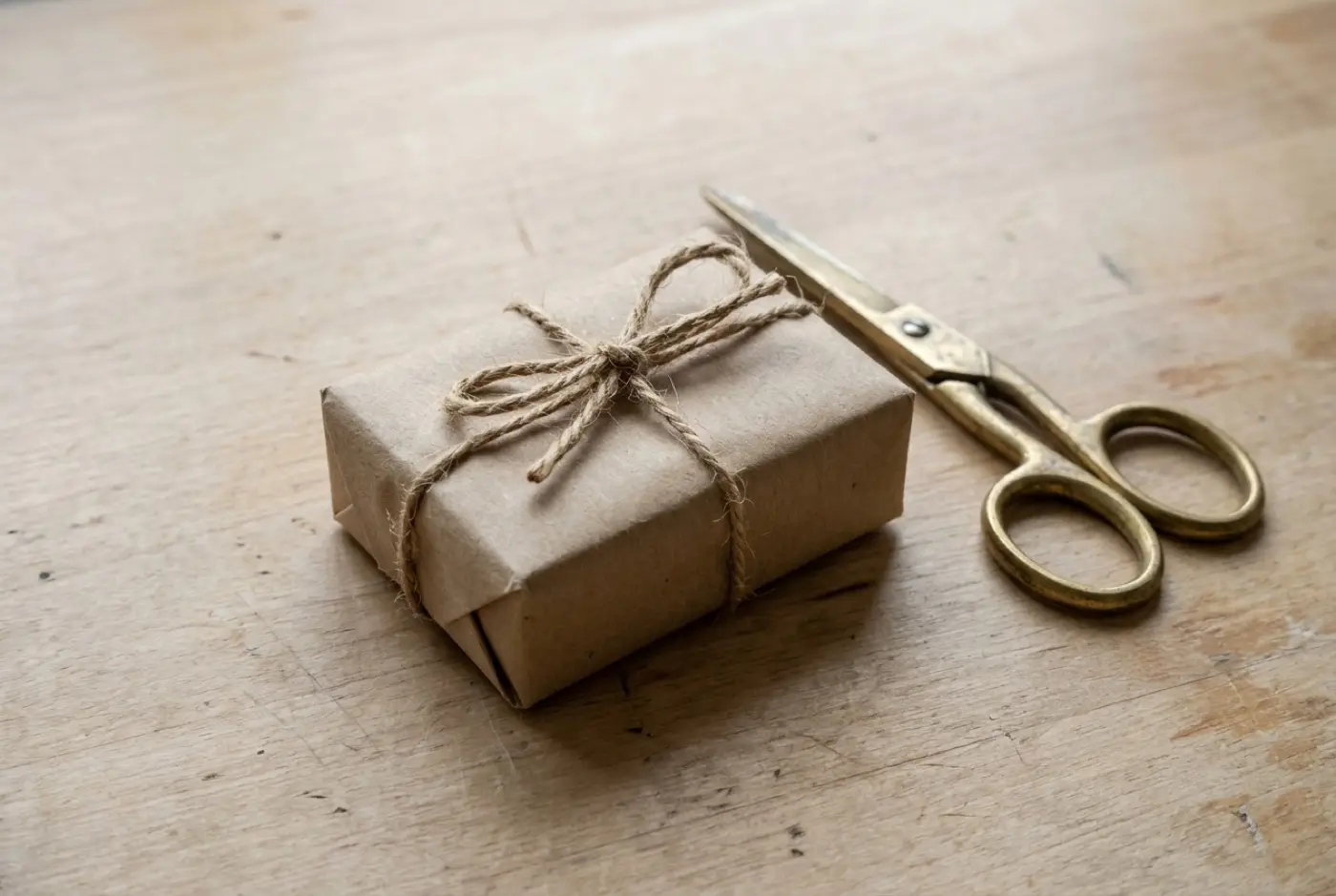
Cut into 1-inch (2.5 cm) bars, cure 4 weeks with airflow, then wrap. Kraft paper and twine or a cigar band label keeps the swirl on show.
Variations
Candy cane
Red and white only, with 25 g peppermint and 10 g rosemary per 1000 g oils instead of the cedar blend. Do a tight in-the-pot swirl for stripes.
Layered tree colors
If swirling feels risky, pour a green bottom layer, a thin gold mica line, and a white top, waiting for light trace between layers.
Fragrance oil
Christmas tree, fir or cranberry fragrance oils work at the supplier’s recommended rate. Check for acceleration and vanillin; a brown bar won’t swirl visibly.
If something goes wrong
- Swirl turned muddy
- The batter was too thick, or it was stirred too much after pouring. Pour at thin emulsion and stop after one pass with the chopstick.
- White streaks or crackle lines
- Glycerin rivers, usually from titanium dioxide plus heat. Use less TD, disperse it in oil, and insulate less. It’s cosmetic.
- Red turned brown or bled
- Some red micas and plant reds morph in lye. Red iron oxide is stable; test any mica in a small cup first. Fading and morphing color
FAQ
When should I make Christmas soap?
By early November. Cold process soap needs about 4 weeks to cure, plus time to wrap. Batches made in December will still be soft and fresh on the day.
Can I use cinnamon or clove for a Christmas scent?
Cinnamon bark oil isn't recommended for soap. Clove bud works at very low amounts, at most 1% in our chart, but it speeds trace and darkens soap, which fights a swirl. This recipe keeps spices out for that reason; our fall spice soap uses clove carefully.
Why is my green and red soap brown?
Either a fragrance oil with vanillin, or plant-based colorants changing in lye. Oxides are the most reliable red and green for cold process.
Can I make Christmas soap with melt and pour?
Yes, and it's ready the same day. It's a good choice if you're short on time; see our melt and pour guide.
Comments
No comments yet. Made this recipe? Be the first to say how it went.